Team Black Miner 2.47 adds dual mining for Quantus and Vertcoin
Source report: 2026-11-15 · Editorial analysis published: 2026-11-15
The developer adds Quantus on AMD and NVIDIA and posts the new packages on BitcoinTalk after the GitHub repository became unavailable.
A new pair for a single GPU
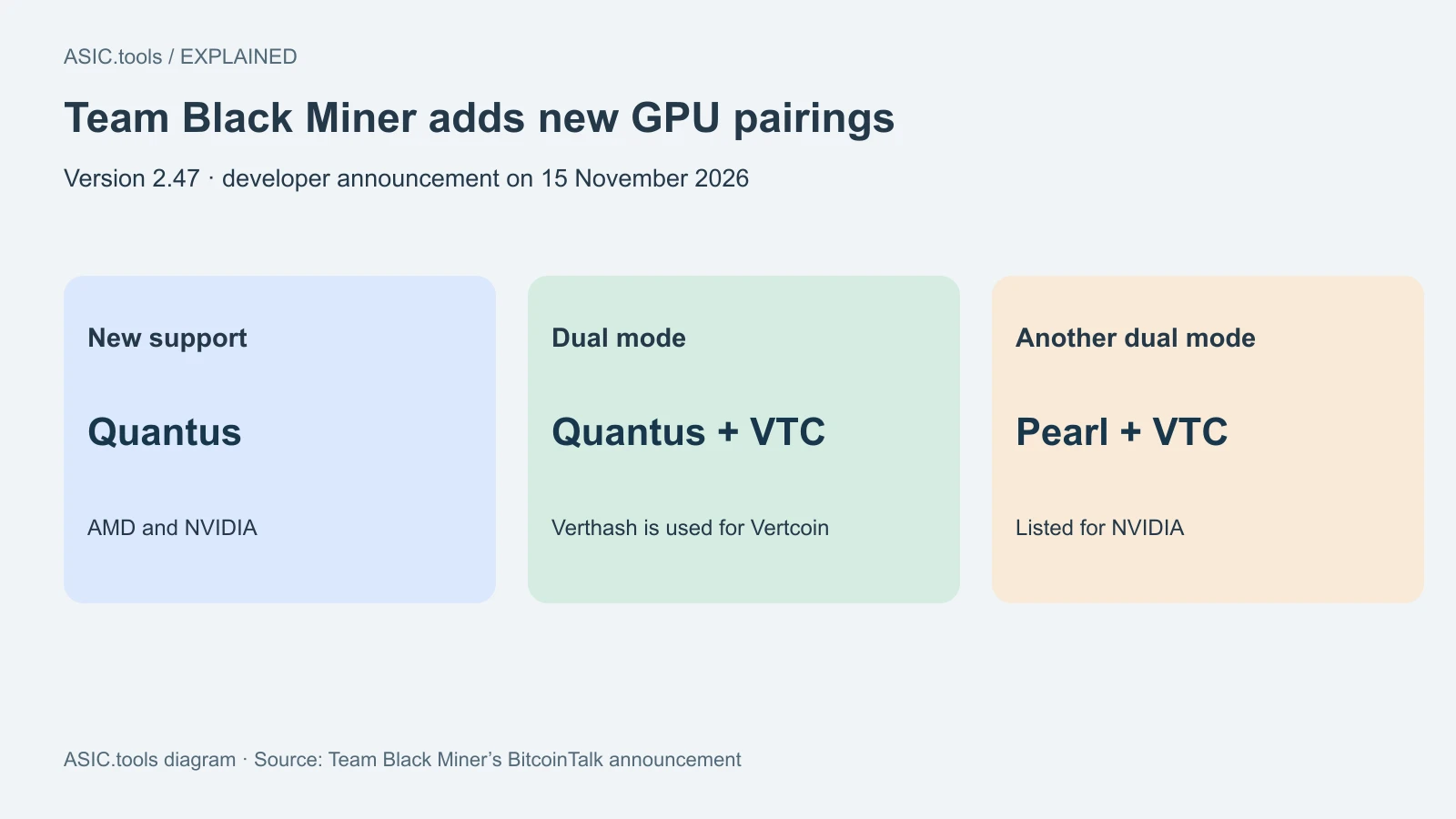
On November 15, Team Black Miner developer sp_ posted version 2.47 in the project’s BitcoinTalk thread. The mining program adds Quantus support on AMD and NVIDIA graphics cards. It also lists a dual mode for Quantus and Verthash, the algorithm used here for Vertcoin. Another new pairing, Pearl with Verthash, is explicitly listed for NVIDIA. These are changes in software for graphics cards. A Bitcoin ASIC is built for a different workload and does not gain these coins through this release.
Dual mining runs two workloads on one graphics card. If the workloads stress different resources, the second may use capacity the first leaves idle. That is a reason to measure, not a revenue figure. Each coin has its own accepted work and pool conditions. The announcement does not supply a compatibility matrix for every card or an independently tested return for the new combinations.
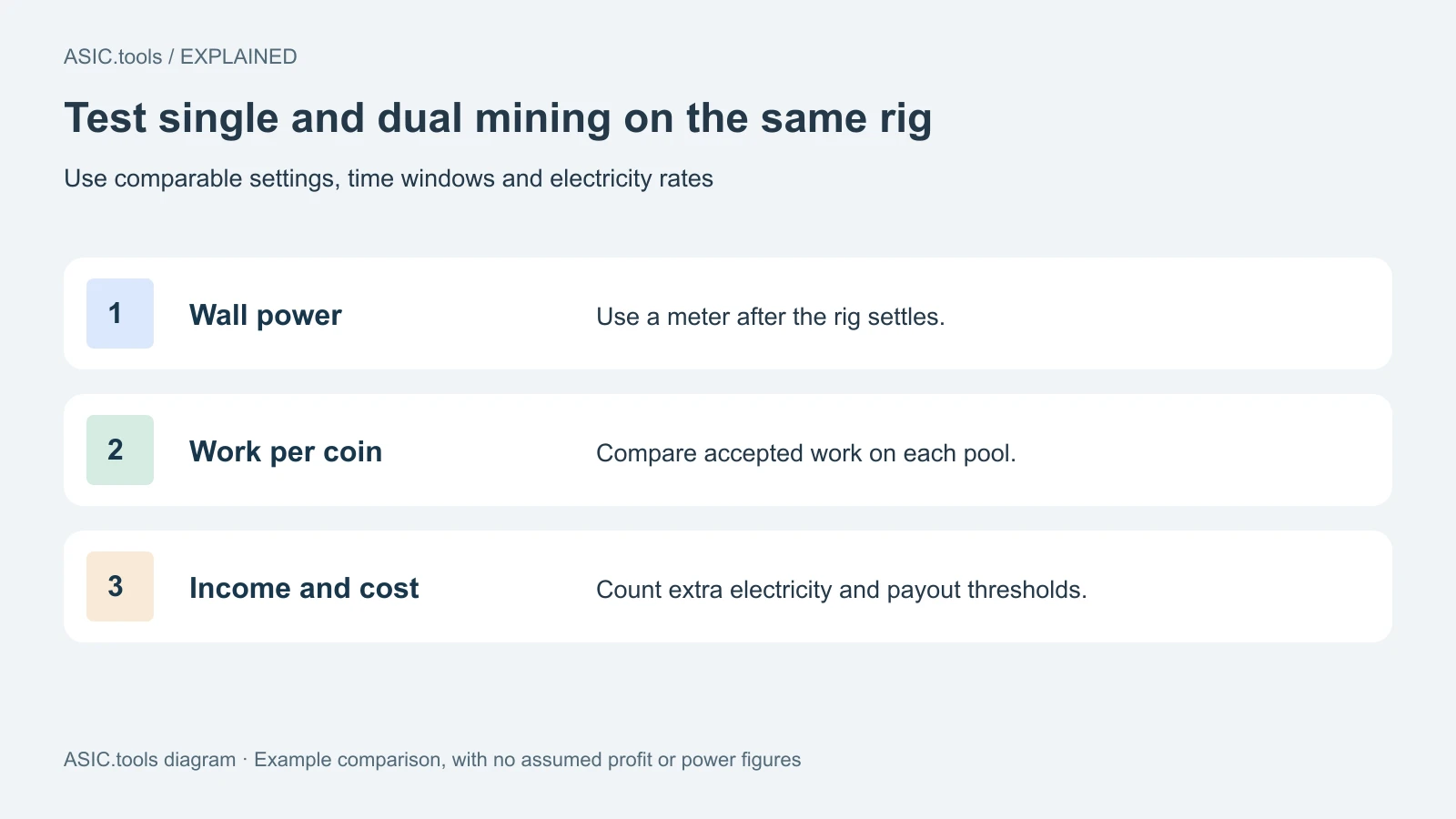
What to compare on the same card
A useful test starts with the existing single mode at known settings. Let the card and fans settle, then capture wall power, temperature and the pool’s accepted work over a representative interval. Repeat the measurement in dual mode without changing the comparison period or the other cards in the rig. Capture the accepted work credited on both coins. A fast number in the miner’s console tells only part of the story if one pool rejects or receives work late.
Running two workloads may change power use, temperature or the speed of the first job. Any extra revenue should be weighed against added electricity and any lost revenue from the original coin. Use the same tariff for the periods being compared, and check minimum payout thresholds: a balance that takes much longer to withdraw has a different practical value. This gives the operator a clear record of what the second workload added.
The other changes in 2.47
The release notes describe options for AMD core and memory clock controls on Linux and Windows and a new NVIDIA memory offset. A clock tells the card how fast a part is asked to run. Offsets adjust a frequency relative to its normal setting. If you use those controls, change one value at a time and look for restarts, temperature jumps and rejected shares, or smaller proofs of work the pool uses for accounting.
The developer reports a Pearl hashrate increase of 2.5% on an RTX 4070 as one example. The post does not give enough information to infer the same improvement on another card or estimate the change in wall power. It also lists fixes for EPIC-Progpow pool issues and general stability. Users can check those against the same pool and rig they already use.
Where the release was posted
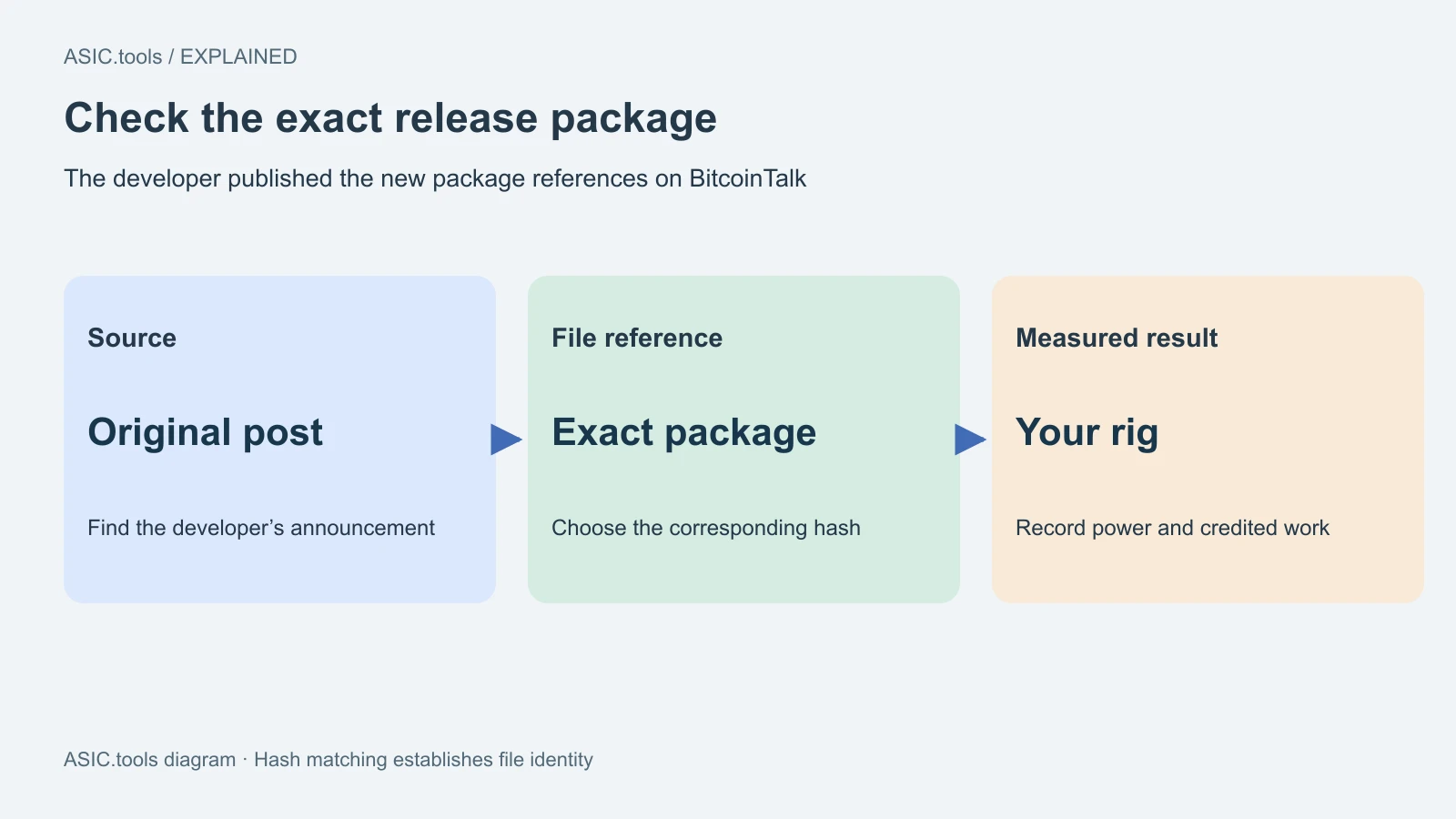
The developer says the GitHub account was closed, and the old repository was unavailable when checked. The forum post supplies separate archives and VirusTotal references. Those references can help compare file hashes, but do not establish that a binary is safe or that the program delivers the quoted results. This report verified the author’s post and its version details. It did not run either binary.
Anyone reviewing this update can start with the original developer thread, keep a copy of their working configuration and compare the file hash with the reference for the exact package. The main reasons to test are the new combinations and the clock controls. Keep the measured power and credited work from that test alongside the software version so the result can be reproduced.
Source: Team Black Miner ↗ · Team Black Miner development thread ↗
Mining calculator ↗