Starcloud says its second spacecraft will carry Bitcoin mining ASICs later in 2026
Source report: 2026-09-22 · Editorial analysis published: 2026-09-26
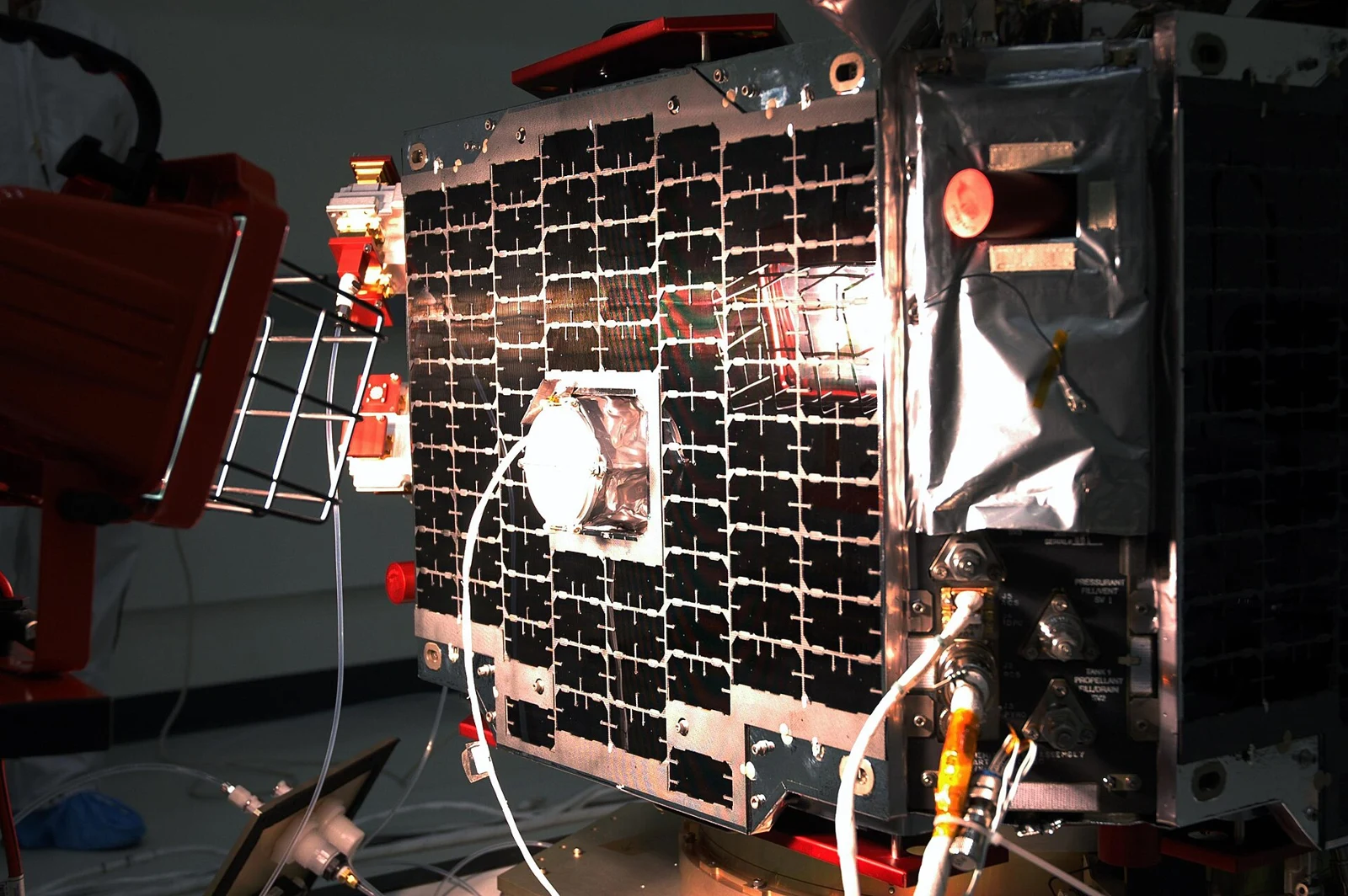
Starcloud’s CEO says the company intends to operate Bitcoin ASICs aboard its second spacecraft. The plan has no disclosed miner model, hashrate, power budget, launch date or pool architecture, and the official Starcloud-2 project page cited by the report did not mention Bitcoin mining.
Analysis and practical implications
This section is our analysis and illustrative calculations, separate from the source report.
The announcement is a plan, not an operating mine
Tom’s Hardware reported on September 22 that Starcloud CEO Philip Johnston said the company would place Bitcoin mining ASICs on its second spacecraft, expected to launch later in 2026. He described the company as aiming to become the first to mine Bitcoin in space. The statement came through an interview rather than a detailed technical release. No block, pool share or orbital mining telemetry has been shown. Until launch, commissioning and valid share submission are independently confirmed, the claim should be described as an intended experiment rather than a completed space-mining operation.
What is known about Starcloud-2
Starcloud was founded in 2024 around the broader idea of orbital data centers. The report describes Starcloud-2 as the second of four planned satellite launches and the company’s first commercial mission, with a GPU cluster also expected aboard. However, the official project page reviewed by Tom’s Hardware did not mention Bitcoin mining or ASICs. The company has not identified the ASIC model, number of units, firmware, power mode, expected hashrate, orbit, launch provider or communications design for pool work, leaving the mining portion impossible to size economically.
Why continuous solar power is attractive
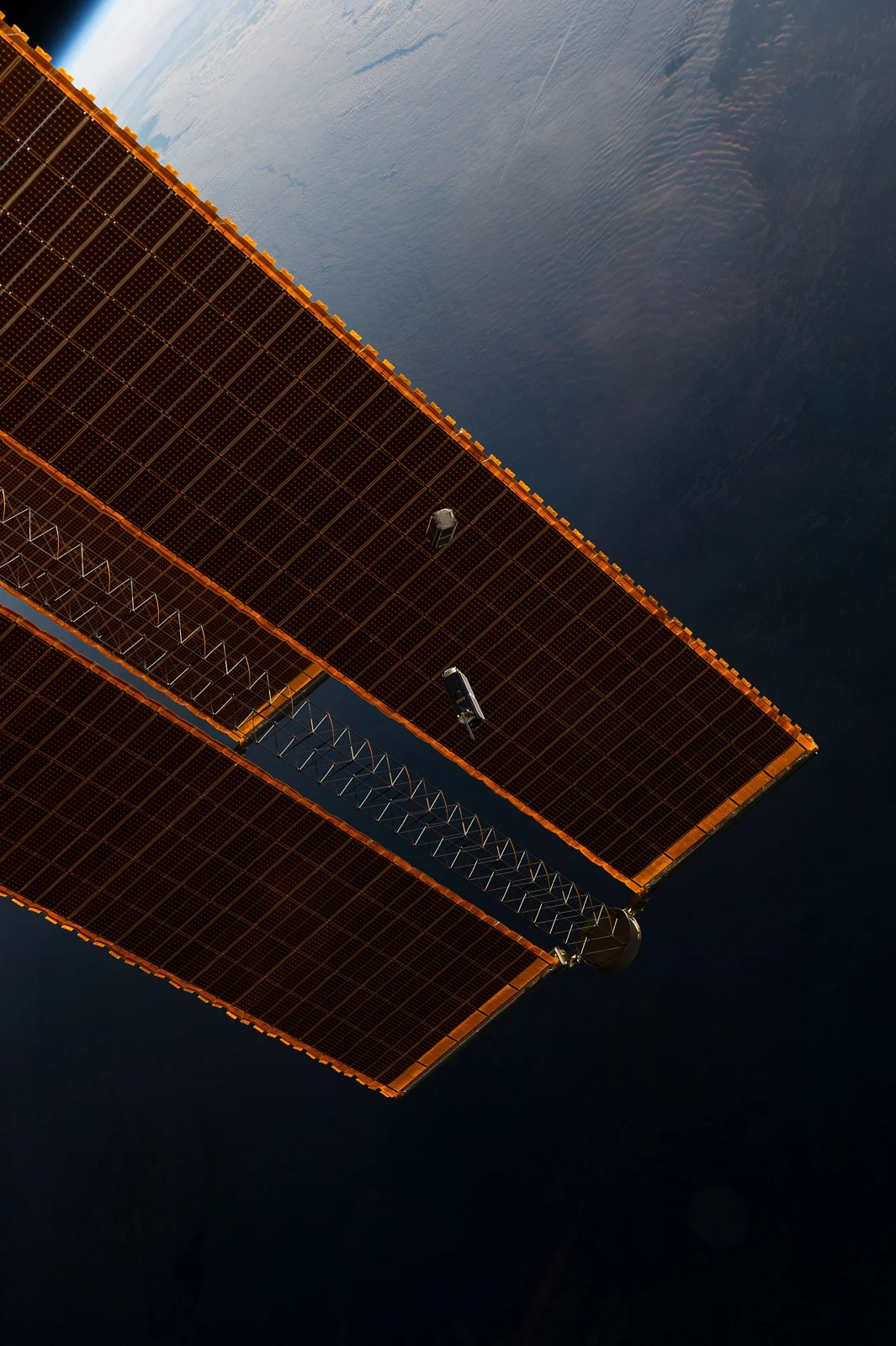
A spacecraft in a favorable orbit can receive sunlight for a large share of each cycle, making solar generation appealing for workloads that can run whenever power is available. Mining tolerates interruption better than many customer-facing AI services because a miner can stop hashing without losing a stored job. Yet “near-continuous” sunlight is not free baseload. Arrays degrade, orientation changes, eclipses occur, batteries and power electronics add mass, and all generated electricity competes with communications, thermal control and the spacecraft bus.
Heat rejection in vacuum is the central engineering issue
Electronics still convert almost all input electricity into heat. On Earth, ASICs move that heat with air or liquid to an environment that supports convection. A spacecraft cannot use surrounding vacuum as cooling air; it must conduct heat to radiators and emit it as infrared radiation. Radiator area, surface temperature, pumps or heat pipes, shielding and pointing constraints determine the sustainable power level. A small demonstration may be feasible, but scaling to megawatts would require large structures whose mass and deployment risk can dominate the economics.
Mining traffic is small but communications still matter
Bitcoin pool jobs and returned shares use little bandwidth compared with AI datasets, which is favorable for an orbital test. Latency is also less critical than for interactive services because modern pool protocols tolerate round trips. Reliability still matters: the spacecraft needs secure firmware, accurate time, authenticated pool connections, protection from stale work and a recovery path after link loss. Ground stations, spectrum authorization and network routing add operating dependencies. The company has not disclosed whether shares would pass through a dedicated ground link or another satellite network.
Radiation and maintenance change hardware risk
Commercial ASICs are designed for terrestrial temperature, vibration and radiation conditions. Launch loads, vacuum outgassing, thermal cycling and energetic particles can damage power supplies, memory, controllers or hash boards. Shielding adds mass, while redundancy adds both mass and idle power. Failed fans are irrelevant if the cooling design is fanless, but a failed regulator or controller cannot be swapped by a technician. A meaningful design review would disclose component screening, error detection, safe-mode behavior, firmware update controls and the expected service life.
The cost comparison needs the full spacecraft system
Johnston reportedly contrasted a roughly $1,000-per-kilowatt ASIC with a $30,000-per-kilowatt Nvidia B200 example. Hardware acquisition is only one line of an orbital cost model. Launch, satellite structure, solar arrays, radiators, communications, insurance, ground operations and loss probability must be allocated to usable hashing hours. Revenue also varies with Bitcoin price, difficulty, fees and uptime. Without total mass, power and hashrate, there is no basis to claim orbital mining is cheaper than a ground site with solar, curtailed energy or conventional cooling.
Evidence to watch before calling it a first
The strongest milestone would be launch documentation listing the mining payload, followed by on-orbit telemetry and cryptographically verifiable pool shares tied to the spacecraft. Operators should look for miner model, wall-equivalent input power, radiator temperature, sustained hashrate, uptime, accepted and rejected shares, orbit and ground-station records. A successful short demo would prove communication and thermal integration, not automatically a profitable business. ASIC.tools will update the story only when Starcloud or an independent pool provides those measurements and the planned spacecraft actually reaches operation.
Source: Tom's Hardware / Starcloud ↗
Mining calculator ↗