BitFuFu mined 137 BTC in October as Bitcoin difficulty rose
Source report: 2026-11-06 · Editorial analysis published: 2026-11-06
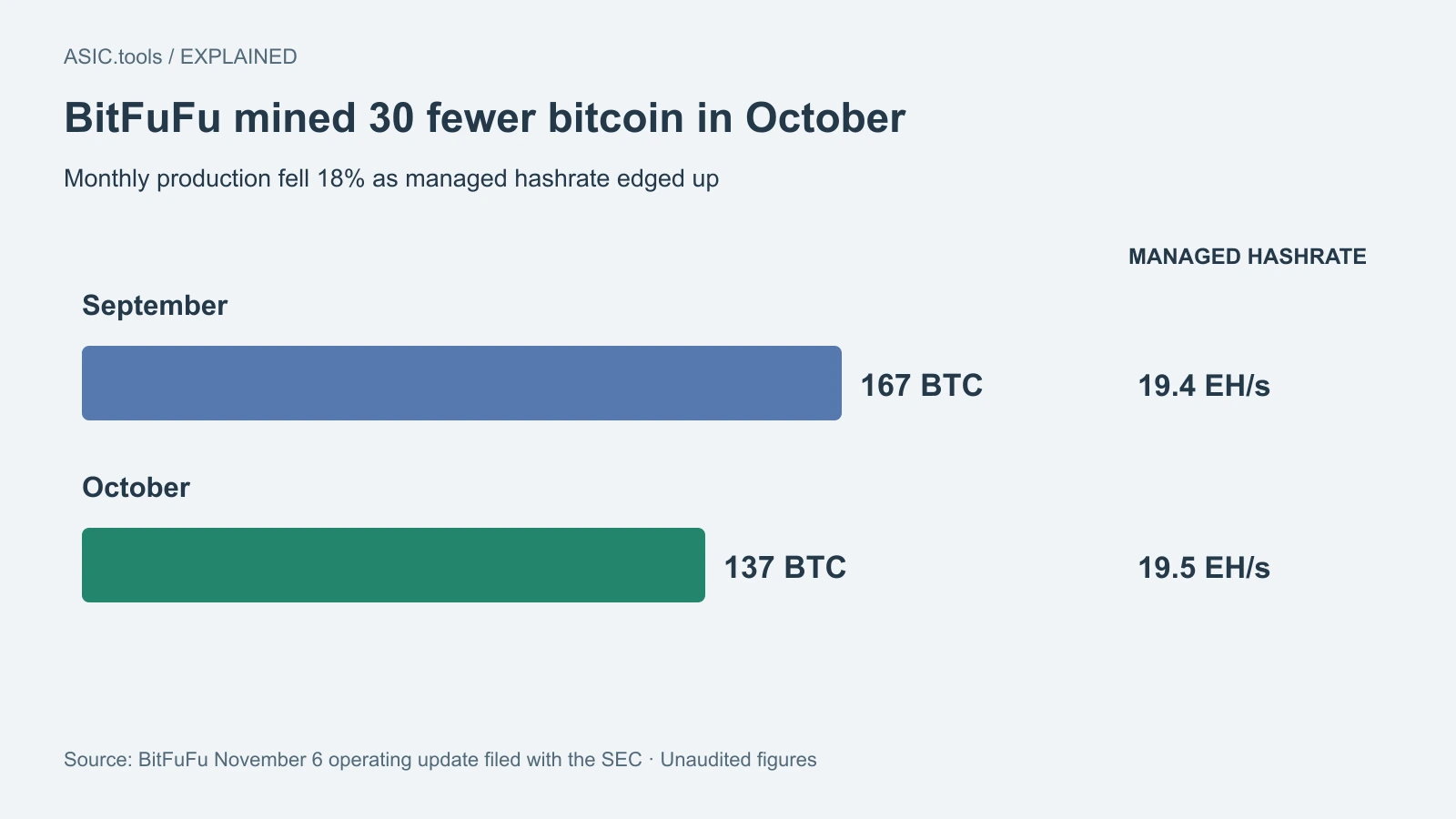
BitFuFu reported an 18% drop in monthly production even as managed hashrate edged up. Its own mining accounted for the decline.
More computing power, fewer coins
BitFuFu reported on November 6 that its Bitcoin mining operation produced 137 BTC in October, down from 167 BTC in September. That is 30 BTC fewer, a decline of about 18%. At the same time, the computing power it managed edged up from 19.4 to 19.5 exahashes per second. The two numbers describe different parts of the business. One measures the coins produced over a month and the other describes the computing power managed by the company.
The operator attributes the lower output primarily to rising network difficulty. Its filing gives 132.76 trillion at the start of October and 148.36 trillion at the end, an increase of about 11.8%. BitFuFu cites Blockchain.com for those figures. Its mining update, published as an exhibit to an SEC filing, is unaudited.
Difficulty governs how much computing work it takes on average to find a block. When it rises, a miner has a lower expected yield from the same amount of work, all else equal. October also had one extra day, yet BitFuFu's reported daily average fell from 5.6 to 4.4 BTC. The averages are rounded and sit alongside the exact monthly totals.
Keep the reporting cutoffs in view when comparing monthly updates. The October and September figures are presented as of October 31 and September 30. A month-end hashrate describes the fleet reported at the cutoff, while the coins were produced across the month. When a machine was added or taken out during the period, the pool’s daily work log can show its contribution more clearly than either month-end snapshot.
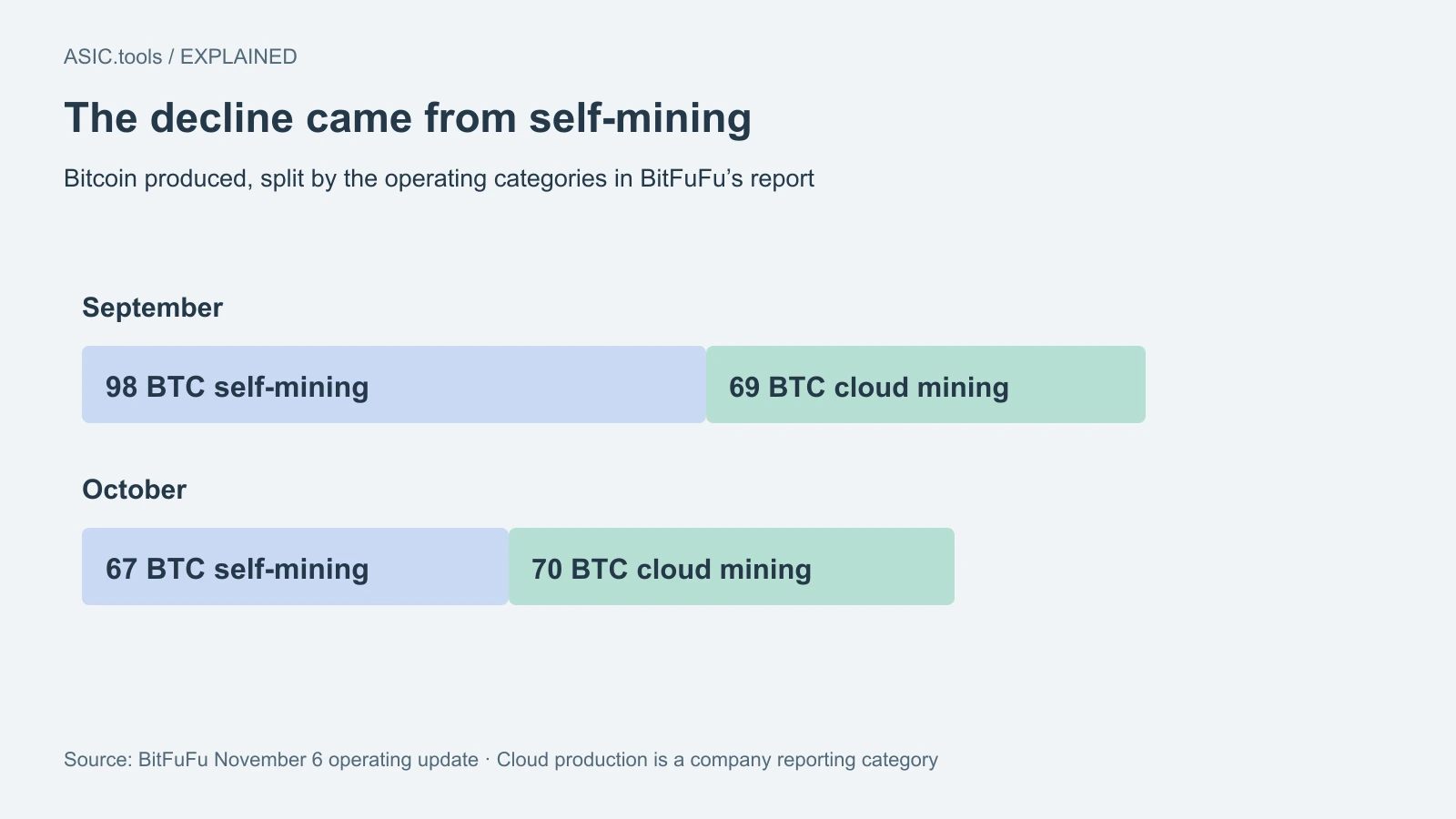
The decline came from self-mining
BitFuFu's own mining produced 67 BTC, down from 98 BTC in September. It reported 70 BTC under cloud mining, up from 69 BTC. The 31 BTC decline in self-mining and the 1 BTC increase in cloud mining account for the 30 BTC drop overall. The cloud figure describes production in the company's reporting category. An individual customer's settlement depends on their contract and account record.
The managed hashrate breaks down another way. BitFuFu reported 3.7 EH/s from its own equipment in October and 15.8 EH/s from equipment belonging to third parties and hosting customers. In September the figures were 3.8 and 15.6 EH/s. One EH/s is a quintillion attempts per second. The small gain in the combined figure came from equipment outside the company's own fleet.
The filing says the reported computing power can support both self-mining and cloud mining. Ownership of the machines and the service using their work are therefore separate questions. To compare a cloud contract with self-operated hardware, use the amount of work that the contract assigns and the amounts credited to the account. The operator's combined 19.5 EH/s covers a much wider operation.
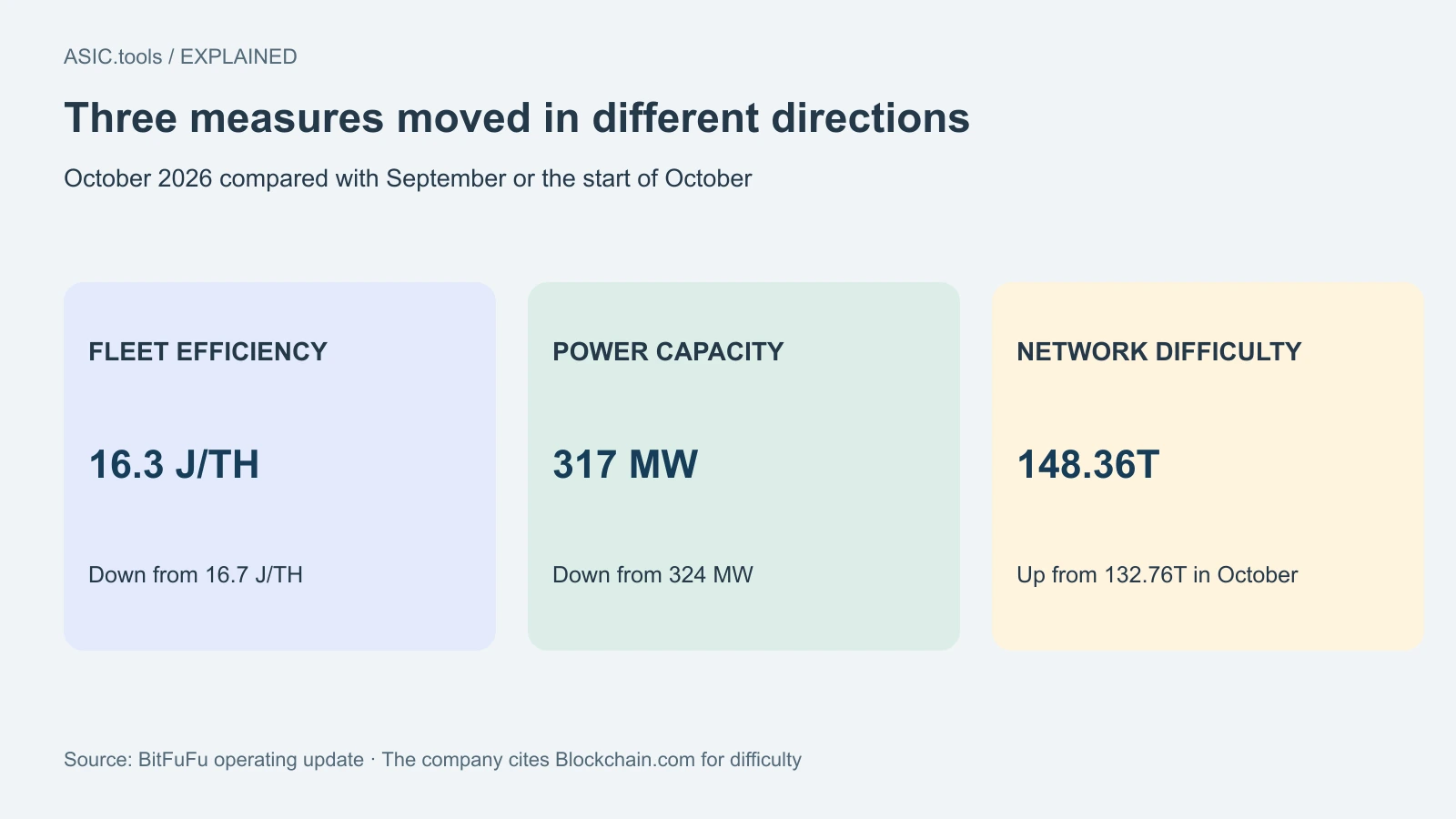
Better efficiency can coexist with lower output
The company reported average fleet efficiency of 16.3 joules per terahash in October, compared with 16.7 in September. A joule per terahash measures energy for a given amount of work. The lower figure means the fleet needs less energy for the same number of attempts on average. Difficulty changes the expected number of coins from those attempts, so the efficiency gain and production decline can happen in the same month.
Managed power capacity was 317 megawatts, down from 324 MW. Capacity is a measure of power available or managed at a point in time. A meter records energy used over an interval, such as megawatt-hours. The update gives capacity and efficiency figures. For an electricity bill you would also need the actual draw, run time and tariff.
That distinction matters when several machines share a meter. If a device spends part of the day idle, the amount of work credited by the pool and the energy billed will both depend on its operating hours. A fleet-average efficiency figure helps compare equipment. A site's meter and pool log show what those machines actually did in the same period.
The Bitcoin balance is a separate figure
BitFuFu reported 1,454 BTC held at the end of October, compared with 1,388 BTC at the end of September. The balance rose by 66 BTC while production was 137 BTC. The first number is the change between two snapshots of what the company held. The second is the total produced in the month. They answer different questions and should be kept on separate lines when comparing reports.
For a small miner following this update, the comparable records are the pool's accepted work and daily credits, the site's metered consumption, and the cost charged for that energy. Take them over the same dates and use the same time zone. A falling BTC credit with steady accepted work is a different situation from a falling credit when a machine was idle for several hours. The October report illustrates why equipment efficiency and coins earned deserve their own columns.
For monthly records, keep equipment efficiency, work accepted by the pool, coins credited and electricity costs in separate columns. Put the billing window alongside them. When one figure changes, the others give you somewhere to look for the cause.
Source: BitFuFu / SEC ↗ · SEC Form 6-K ↗
Mining calculator ↗