Nvidia crypto-mining disclosure lawsuit gets a proposed $290 million settlement
Source report: 2026-11-25 · Editorial analysis published: 2026-11-26
The proposed cash settlement requires court approval. The case centers on what Nvidia told investors about demand for graphics cards during a mining boom.
A proposed agreement after years in court
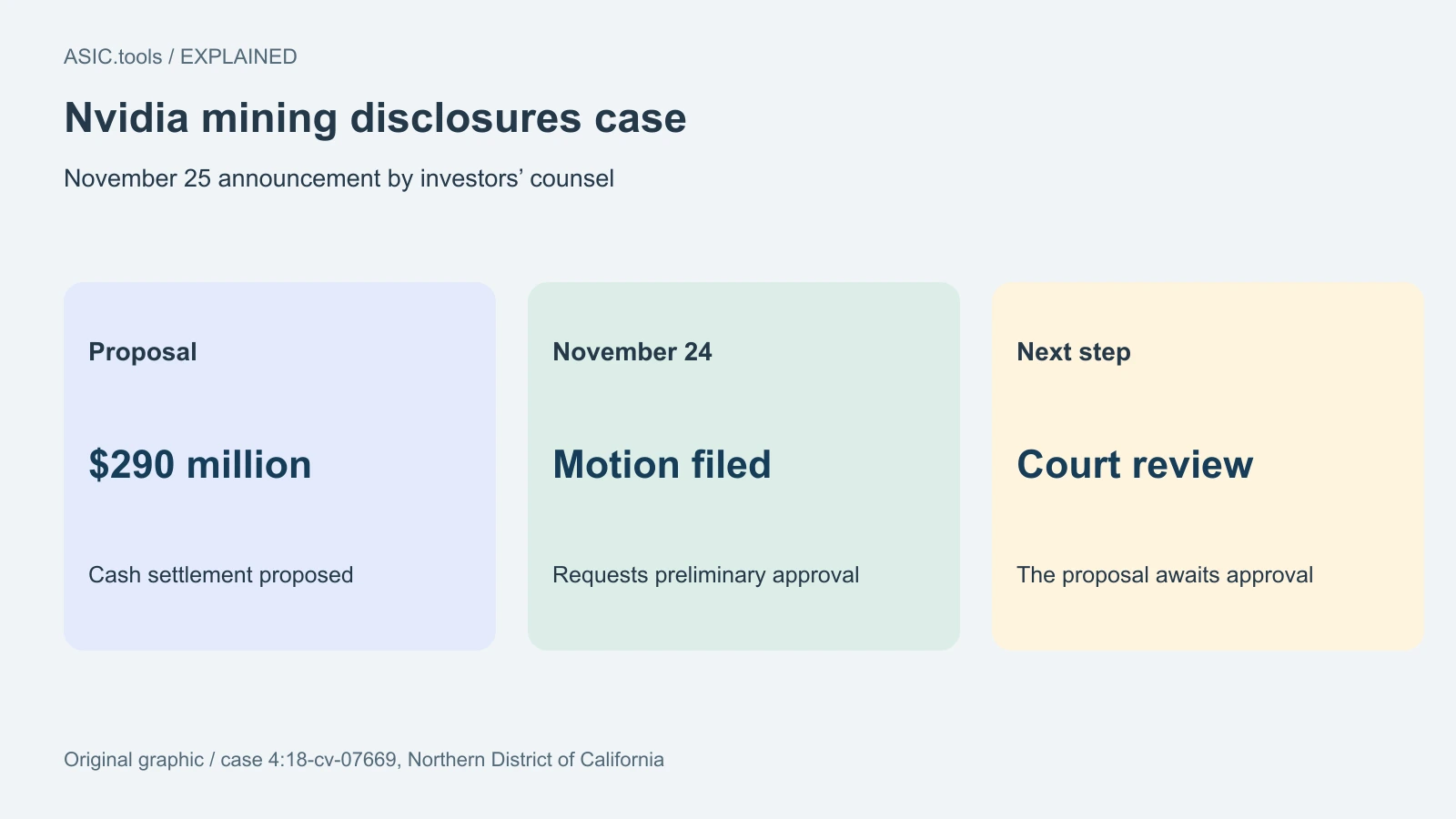
The lawyers representing investors in a long-running Nvidia case announced a proposed $290 million cash settlement on November 25. They said that a motion asking a federal court in California for preliminary approval was filed the previous day.
The lawsuit concerns statements to investors about how much cryptocurrency mining helped drive sales of graphics cards during the 2017–2018 boom. The dollar figure is the proposed settlement amount. The announcement does not mean the court has approved the deal or that money has already gone out.
The plaintiffs allege that Nvidia and Jensen Huang gave investors the impression that rising gaming revenue depended more on gamers than it actually did. In their account, miners bought a meaningful share of the cards, and demand proved vulnerable when the crypto market cooled in 2018. These are the investors’ allegations, as described by their counsel. The proposed agreement is a way to resolve the lawsuit, without a court finding the underlying allegations proven in the announcement.
Why graphics cards became the focus
GPUs are chips designed to carry out lots of calculations in parallel. They can draw game graphics and, for some digital currencies that use proof of work, they can also perform mining calculations. Those different uses may rely on the same retail product.
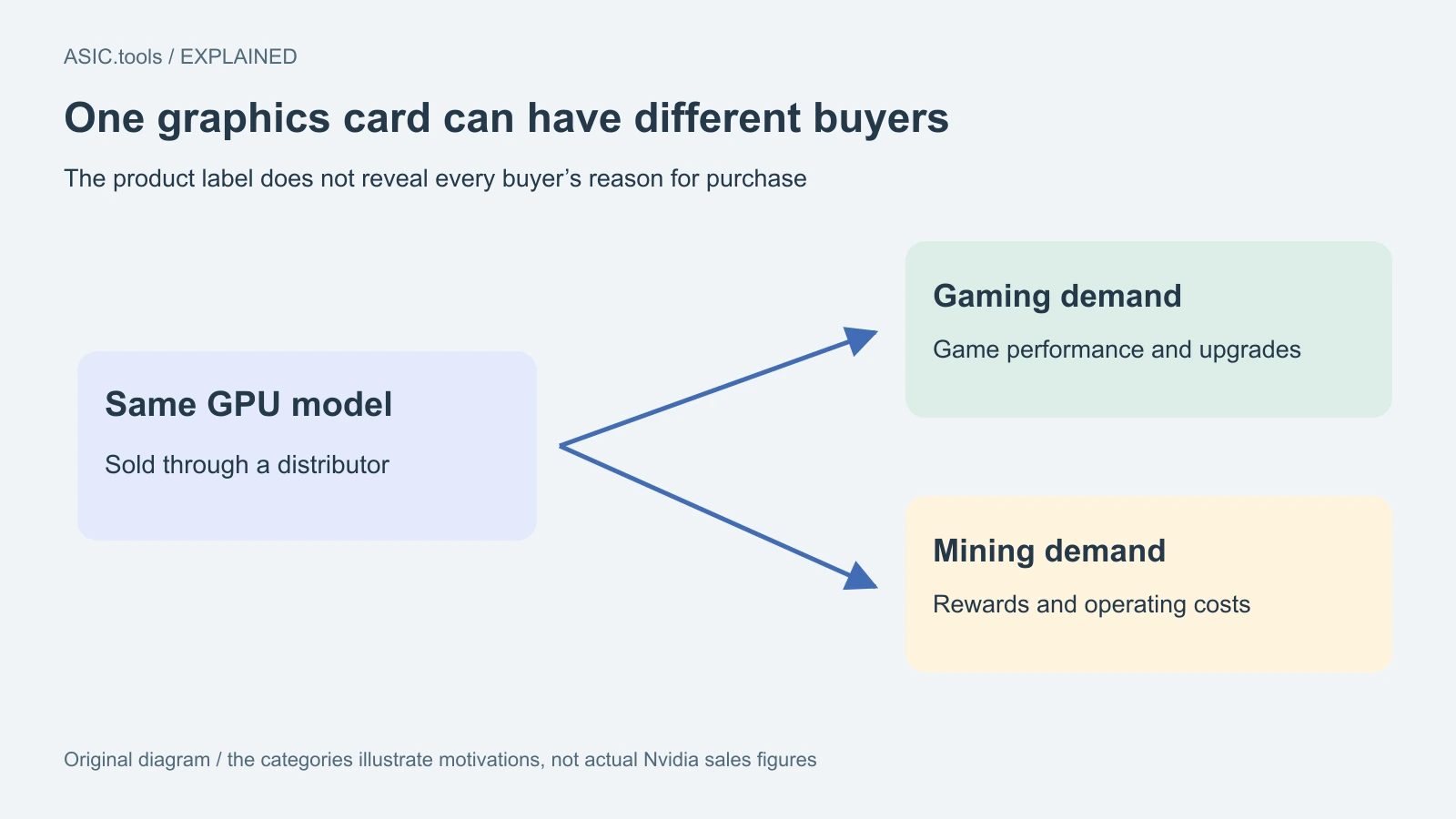
A gaming graphics card shipped to a distributor could later go to a player, a miner or another buyer. A product label tells you what the hardware can do. It may tell you little about what drove the purchase.
The difference becomes visible when one group changes its spending. A miner may decide whether to buy another card by comparing currency rewards with electricity and equipment costs.
A player is more likely to buy because a favorite game needs a faster card. Sales from both groups can grow in the same quarter.
They can also fall for different reasons. In a mining downturn, fewer new cards may be needed and some machines may be sold secondhand, which adds another supply channel. These are ways that mining affects hardware demand, and the proposed deal does not quantify that effect for today’s products.
What the filing changes now
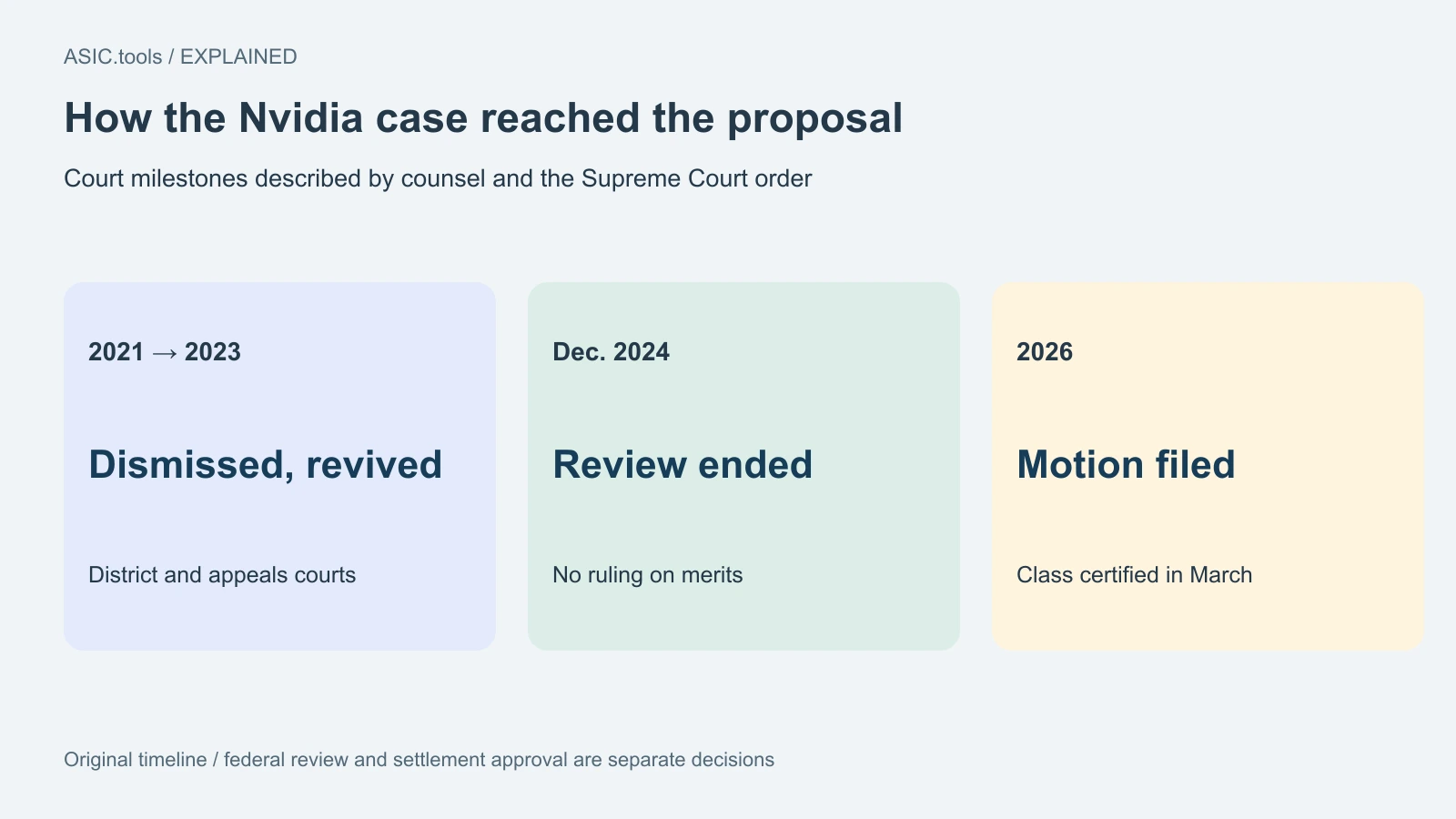
The federal district court dismissed the case in 2021, according to plaintiffs’ counsel. The Ninth Circuit revived the claims in 2023. In December 2024, the U.S. Supreme Court dismissed its review without deciding the underlying claims, as its order records.
The lawyers say the district court certified the class in March 2026. Those steps moved the lawsuit through the courts. The November motion asks the district court to take the next step on the settlement.
The proposed fund is for the investor case, rather than a payment to miners or buyers of used graphics cards. The court process determines whether the settlement can go ahead and how any eligible claims would be handled. For people evaluating mining gear, the case points to a practical question whenever the same hardware serves different buyers: who is buying, why are they buying, and how likely is that demand to last when mining margins change?
A similar demand shift can matter to someone comparing a GPU with a dedicated mining machine. A GPU can have buyers outside mining, while the market for a single-purpose device depends more directly on mining conditions for compatible coins. That difference is useful when considering resale. Neither type guarantees a resale price, and the proposed Nvidia deal provides no estimate of what used equipment is worth.
Source: Bernstein Litowitz Berger & Grossmann ↗ · U.S. Supreme Court order, December 11, 2024 ↗ · District court case schedule, case 4:18-cv-07669 ↗
Mining calculator ↗