Zeta’s filing estimates $98,000 per BTC to break even with 9,543 miners running
Source report: 2026-11-25 · Editorial analysis published: 2026-11-26
Its November 25 preliminary SEC filing shows why covering a hosting bill and recovering equipment costs are different tests. The model uses September inputs.
One mining operation, two break-even prices
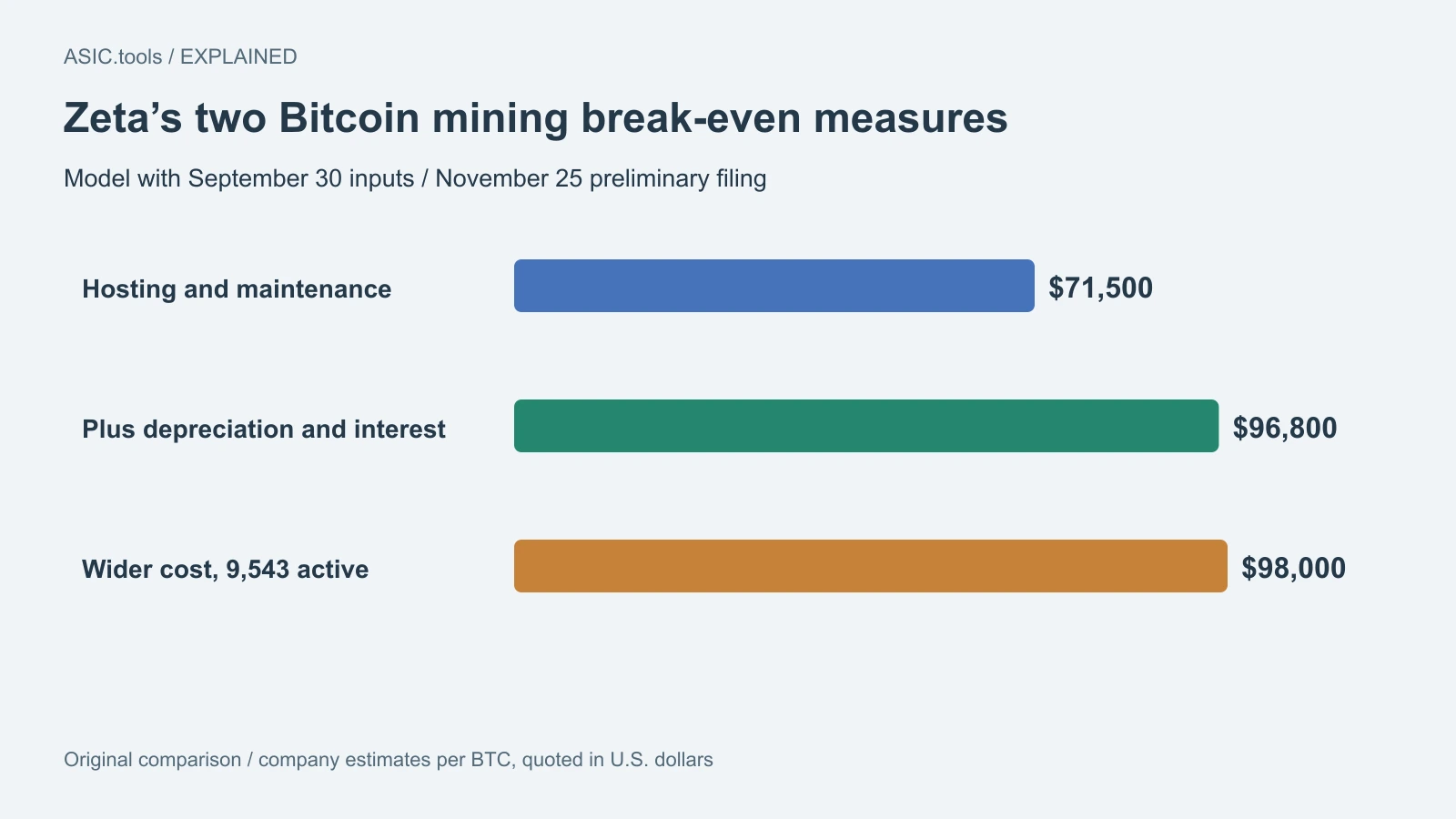
In its November 25 preliminary filing with the U.S. Securities and Exchange Commission, Zeta Network Group set out two break-even prices for its hosted Bitcoin mining operation in Kazakhstan. In its September 30 example, about $71,500 per BTC would cover hosting and maintenance. Including equipment depreciation and interest raises the estimated threshold to $96,800 with all 10,000 miners working. These are company estimates under specified assumptions. The document is a preliminary filing and the illustration is neither a November production result nor a forecast.
The October annual report already showed the full-fleet thresholds. The November filing puts them alongside a second calculation using the 9,543 machines that were then in operation. The wider break-even figure for that scenario is about $98,000.
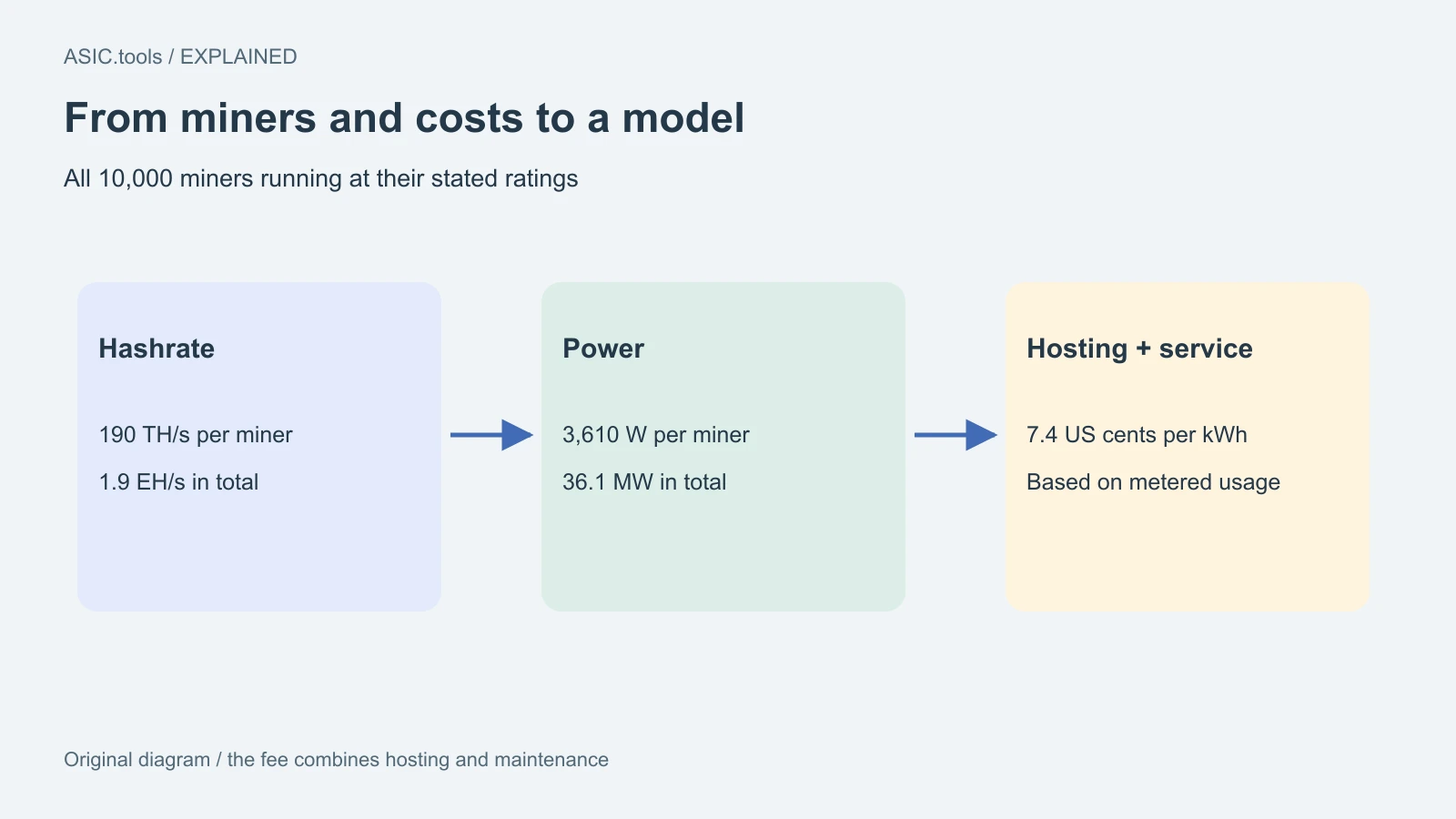
At the assumed 190 terahashes a second and 3,610 watts per machine, the fleet adds up to 1.9 exahashes a second and 36.1 megawatts. The company uses 7.4 U.S. cents per kilowatt-hour for hosting and maintenance combined. The 7.4 cents bundles two charges associated with metered miner consumption. A home miner comparing that rate with a household bill needs to know what each figure includes.
The company also assumes a share of the Bitcoin network’s work, a 1% mining pool fee and a daily reward for the whole network that includes new bitcoin and transaction fees. Under those assumptions it estimates about 0.8965 BTC a day for the 10,000-machine scenario. Dividing daily hosting and maintenance costs by that estimated production gives the lower dollar amount. Adding depreciation and interest produces the higher one.
The difference between the two full-fleet estimates is about $25,300 per BTC. That gap shows what changes when more expenses enter the same calculation. It follows from the costs specified in the filing and the assumed production. Cross-site comparisons need the underlying expense categories, so that one operator’s hosting bill is not lined up against another’s broader cost per coin.
Why taking machines offline changes the wider calculation
Zeta says 9,543 miners were in operation as of September 30. Its filing models that smaller operating fleet using the same other assumptions. Hosting charges linked to consumption and bitcoin production both shrink in proportion. The narrower break-even figure stays close to $71,500 per BTC. The wider one rises to approximately $98,000 because the model spreads unchanged depreciation and interest over fewer coins.
Depreciation allocates an equipment purchase over its useful life for accounting purposes. It is different from receiving a recurring invoice for electricity. But fewer hours of mining do not undo what was paid for the equipment, and debt interest can continue.
That distinction explains why one calculation can support running a miner for another day, while a wider calculation can still show that the overall purchase is hard to recover.
Compare like with like
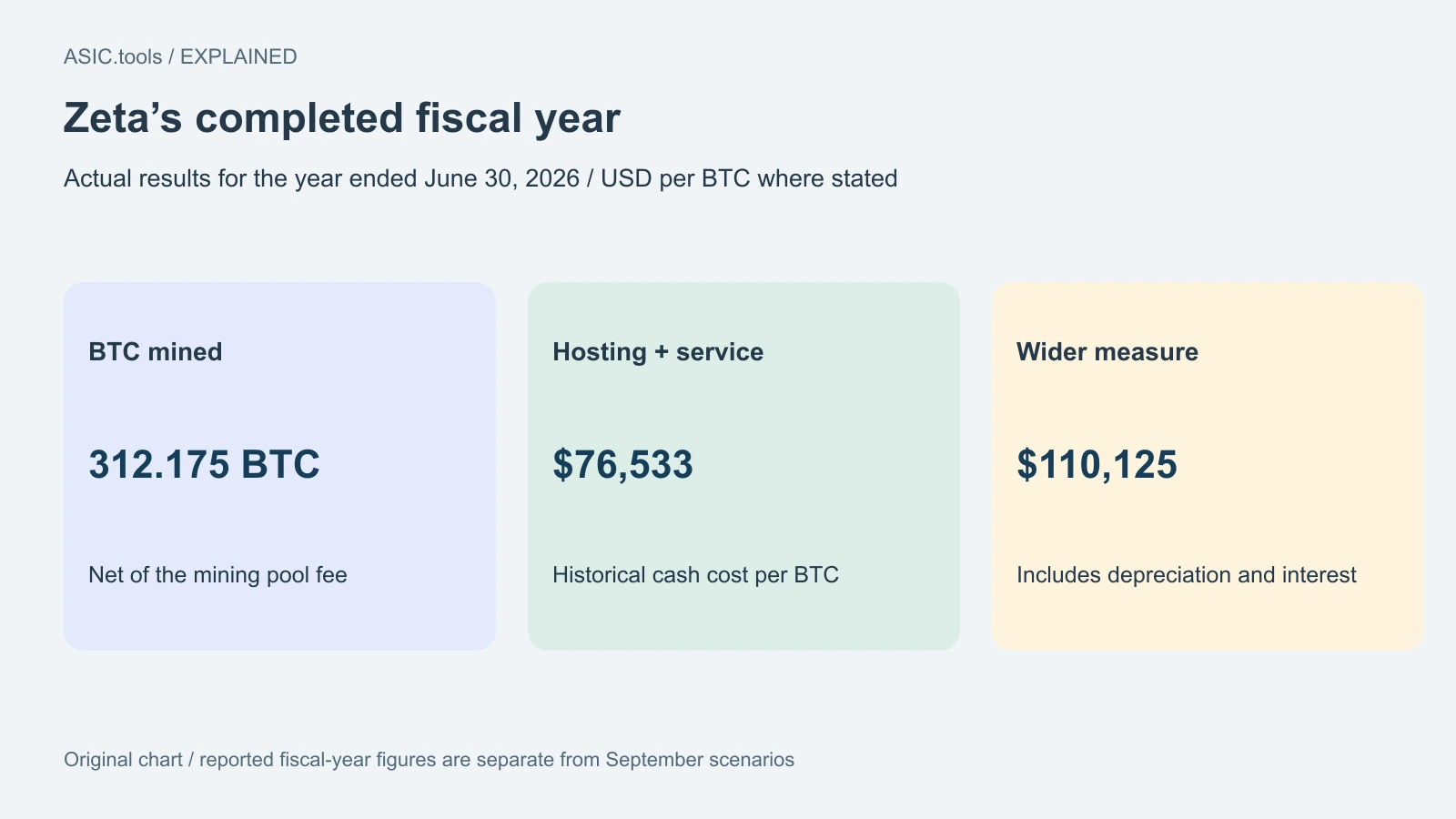
For its fiscal year ended June 30, Zeta reported 312.175 BTC earned after the pool fee. It reported about $76,533 per BTC in historical cash cost for hosting and maintenance and $110,125 per BTC in the wider measure that adds depreciation and financing interest. Those figures describe a completed year. The September 30 examples describe modeled operation under a different set of inputs.
For a miner looking at the figures, the useful comparison starts with separate lines for power, hosting services, hardware cost and loan expenses.
Check which costs change when a unit stops, match the billing period to the mining revenue and include the pool fee on the same basis. A break-even price calculated for one date and contract cannot be carried over to a different site without recalculating those inputs.
Keep the date at the top of a break-even worksheet. A newer market price cannot turn a September model into a current cost estimate if the electricity terms, network competition or fleet availability have changed. Updating the operating inputs is what makes the comparison current.
Source: Zeta Network Group / SEC ↗ · Zeta annual report with the original full-fleet model ↗
Mining calculator ↗