Bitcoin ABC 0.34.4 adds an eCash checkpoint for nodes catching up after the upgrade
Source report: 2026-11-16 · Editorial analysis published: 2026-11-18
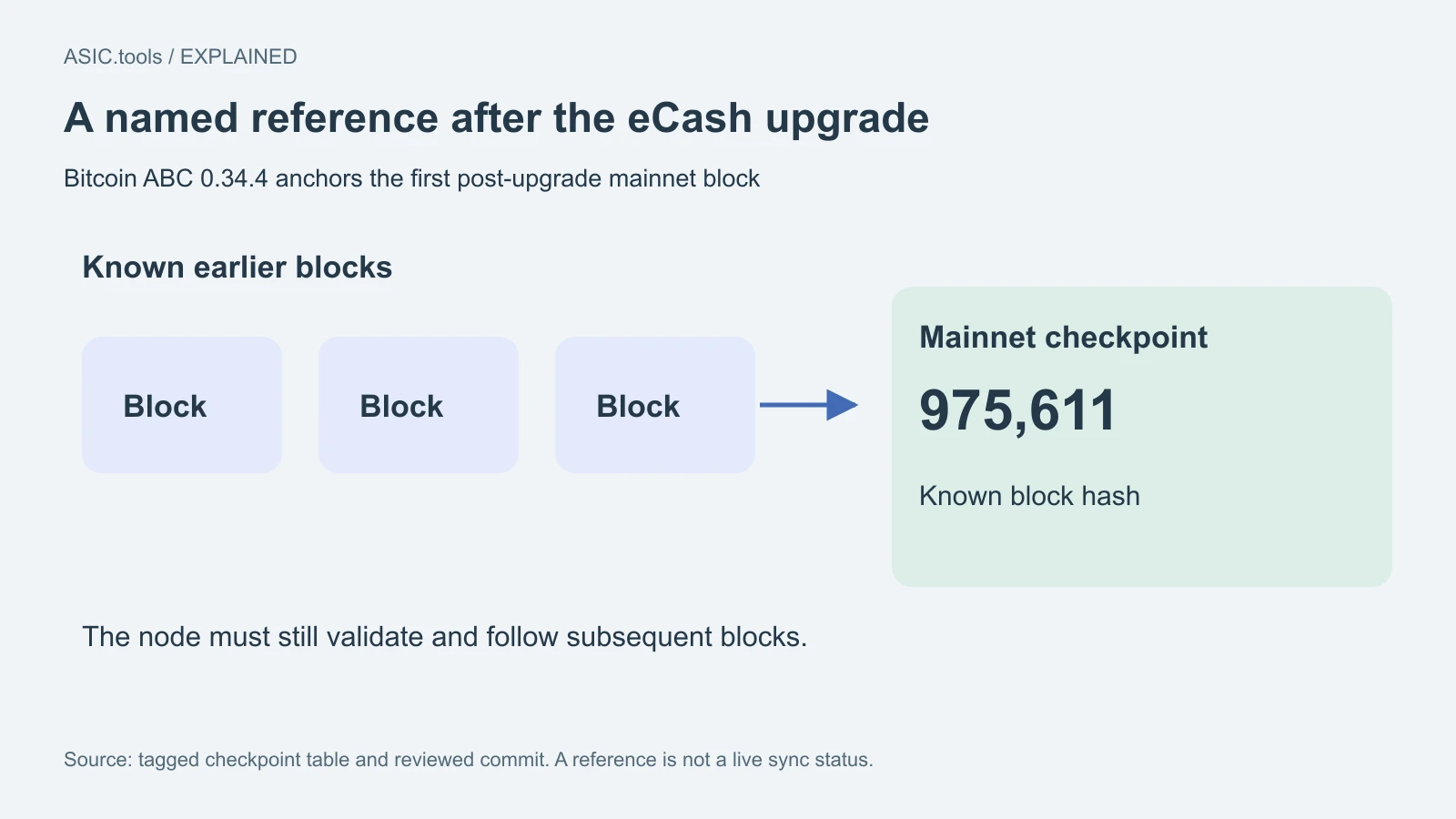
The stable release anchors mainnet at block 975,611 after the November 15 upgrade. Operators still on 0.33.x are directed to the new version to return to the correct chain.
A recovery update after November 15
Bitcoin ABC published stable version 0.34.4 on November 16, adding a checkpoint after the eCash network’s November 15 upgrade. The project’s current instructions direct operators still using 0.33.x to the new release to get back onto the correct chain. For a pool or solo-mining system that missed the change, this is a concrete recovery step: update the node that supplies mining work, then verify that it follows the live eCash chain.
The compatible major branch for the upgrade was already 0.34. The new maintenance release adds a reference block after activation, rather than scheduling another network upgrade. That distinction helps an operator who has already moved to 0.34.0 or later understand the announcement. The event being reported is the new checkpoint-bearing version and recovery guidance, not a second November 15 activation.
What a checkpoint actually identifies
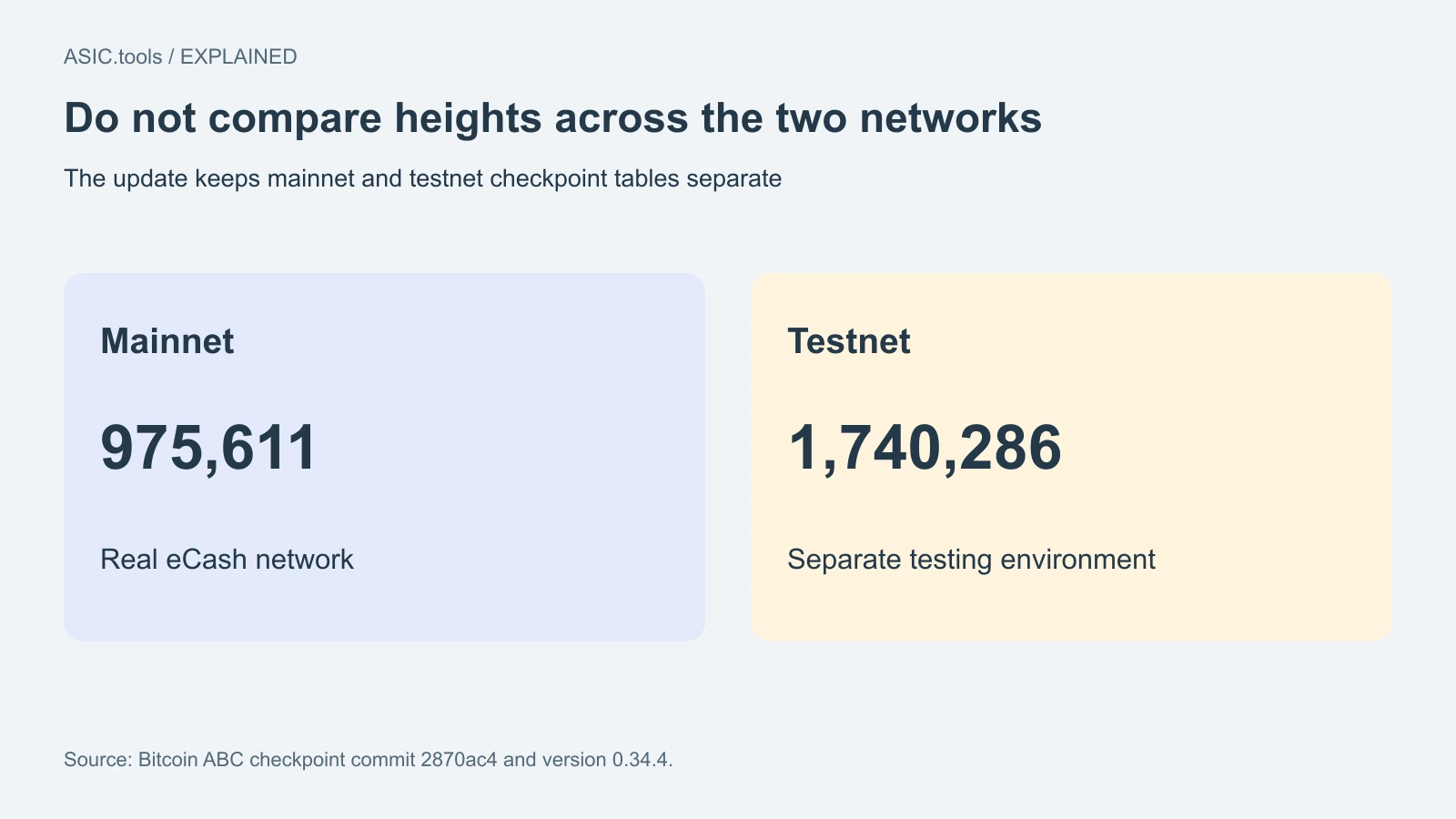
A checkpoint pairs a block height with a specific block hash. Height is the block’s position in the chain; the hash identifies the particular block at that position. It acts as a known reference for the software’s chain checks. A height alone is not enough, because different branches can have different blocks with the same number. The new mainnet entry is at height 975,611, identified in the project’s upgrade page as the first post-upgrade block.
The reviewed code adds that entry in the mainnet checkpoint table. A checkpoint is not a forecast of the next block and does not certify that every server is currently synchronized. A node still has to process and validate the chain beyond the reference. For an operator, the useful outcome is the ability to check a named block and then confirm continued progress, rather than relying only on a service icon saying online.
Mainnet and testnet use different anchors
The same change also adds a testnet checkpoint at 1,740,286. Testnet is the separate environment used for testing, and that block number should not be compared with a real-money eCash mainnet node. The code keeps the two network tables separate. When reading a log or explorer, confirm the selected network before treating a mismatch in height as a fault.
The developer’s commit identifies the anchors as activation blocks whose parent’s Median Time Past passed the November 15 12:00 UTC threshold. Median Time Past is the middle timestamp among a recent group of eleven blocks. It is a chain-derived time rule, not the time displayed by the computer running a miner. The block references connect the new software to the activated rules without asking the operator to infer the change from a wall clock.
Returning an older node to service
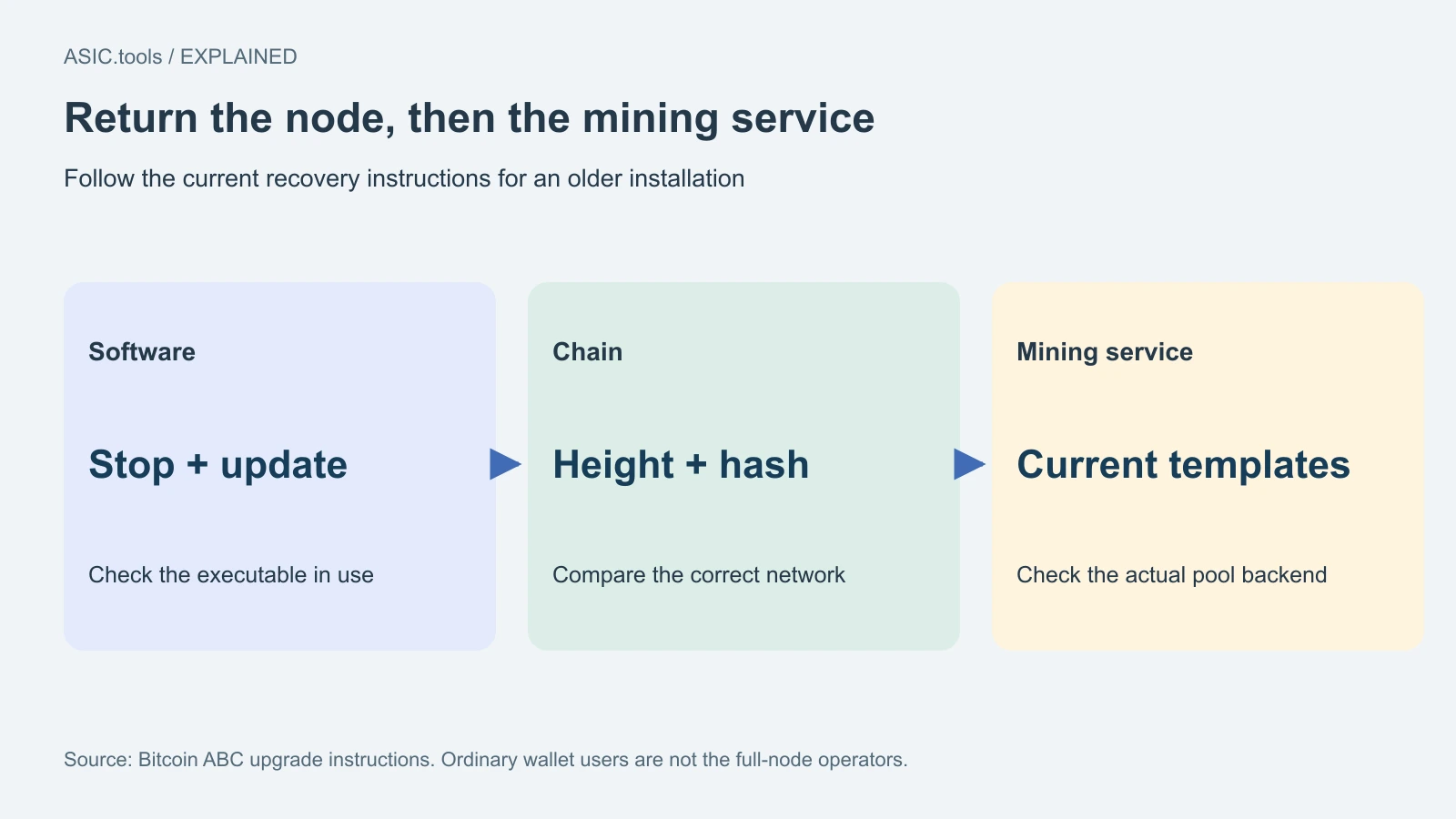
The official upgrade page describes stopping the running node, downloading the current version and starting the new program. For a service installation, confirm which executable the service actually launches and which data directory it uses. An archive sitting in a download folder does not update the process that a pool is already calling. Preserve the current configuration and wallet backups according to the installation’s normal procedure before maintenance.
The release does not give a universal catch-up duration or instruct every operator to delete the database. A node’s starting state matters. Follow the current recovery instructions and inspect its logs if it does not return to the correct chain, rather than assuming the most disruptive reset is necessary. Once it starts, compare a block hash at the same mainnet height with a current reference and watch the node advance through subsequent blocks.
The project’s example still uses executable names such as bitcoind and bitcoin-cli. Those familiar filenames do not establish that the running program is Bitcoin Core or connected to the Bitcoin network. Match the package, reported software version and selected eCash network before following a similarly named service. Checking the correct service is especially useful on a host that runs more than one coin node.
Check the source of the pool’s jobs
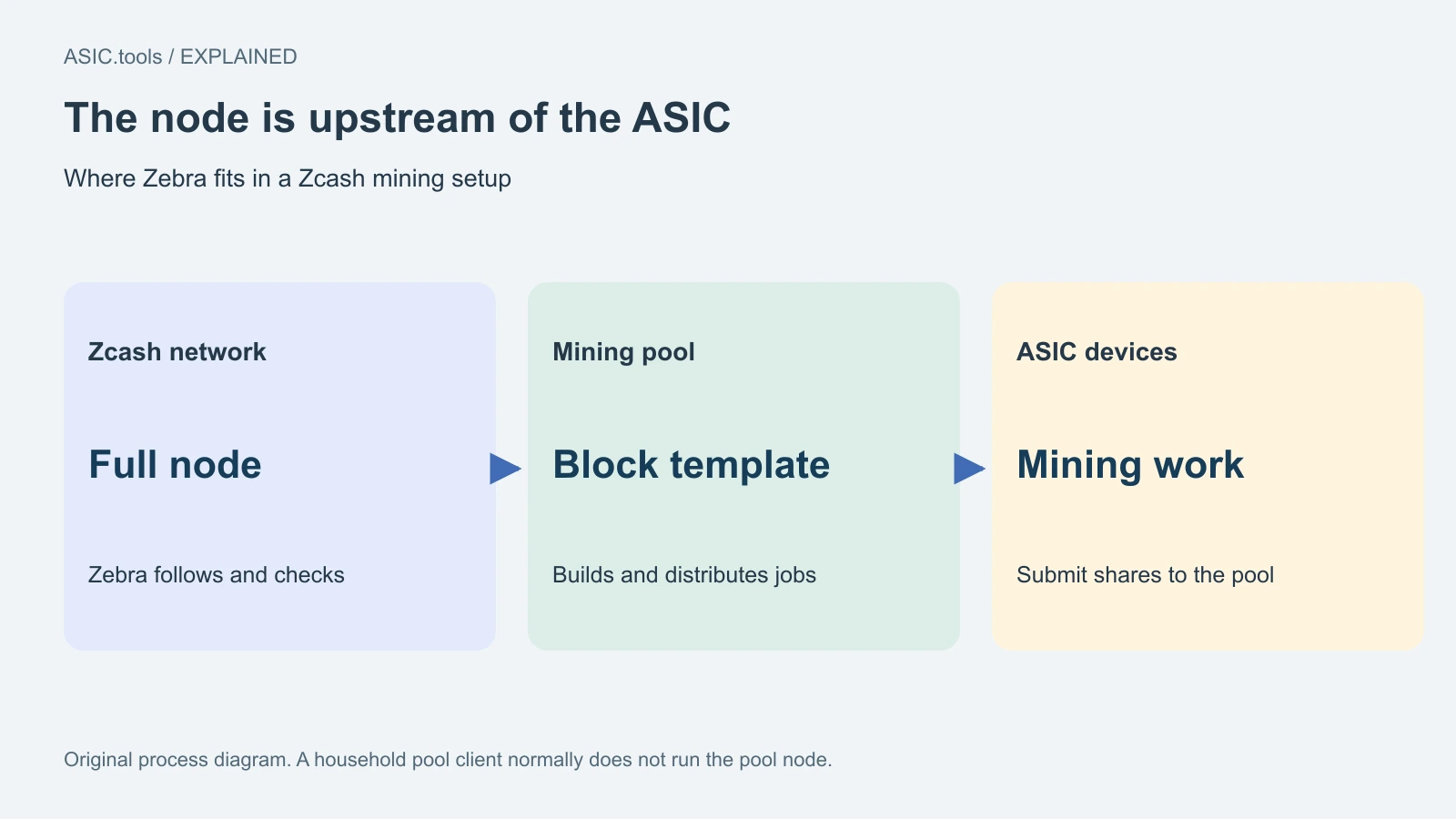
A pool uses its node to prepare a block template, the proposed contents on which miners work. If the pool takes templates from an outdated or wrong-chain backend, working ASICs alone do not solve the upstream problem. After the node update, verify the template service and the actual backend selected by the pool. If a fallback node is configured, it deserves the same version and chain check as the primary.
A miner connected to somebody else’s pool usually does not administer that node. The appropriate operational check is then the pool’s update notice and whether work is being accepted as expected. Shares are partial results used to count a miner’s contribution. Accepted shares show that a pool is receiving work, while the operator’s chain check establishes what chain the jobs are built on. These are complementary checks, not interchangeable proofs.
Recovery is complete when the service follows the chain
After maintenance, record the installed version, checked block height and hash, and the time work resumed. This provides a reference if a later payout or dashboard graph looks unusual. A transaction identifier and the pool’s payout record help check a payment separately from the health of the node. Keeping those records together makes it easier to locate a problem without treating every delayed balance as a failed network upgrade.
The network upgrade page says ordinary wallet software such as Electrum ABC is not affected by the full-node upgrade requirement. The immediate audience for 0.34.4 is therefore the operator maintaining the chain service behind mining or other infrastructure. The new checkpoint is a specific post-upgrade reference and a way back for missed nodes; it does not change a Bitcoin ASIC into a different device or announce a new mining reward. Confirm the software, the correct chain and the path back to current work.
Source: Bitcoin ABC ↗ · Current eCash upgrade and recovery instructions ↗ · Stable 0.34.4 release ↗ · Checkpoint change and reviewed code ↗ · Checkpoint table at the release tag ↗
Mining calculator ↗