Zcash opens a poll on 50,000 ZEC for future mining rewards and 20-second blocks
Source report: 2026-11-16 · Editorial analysis published: 2026-11-17
One draft would credit 50,000 ZEC to the network’s future rewards reserve. A separate question asks about shorter blocks. The advisory vote does not change the rules by itself.
A vote opened, with two questions miners should read
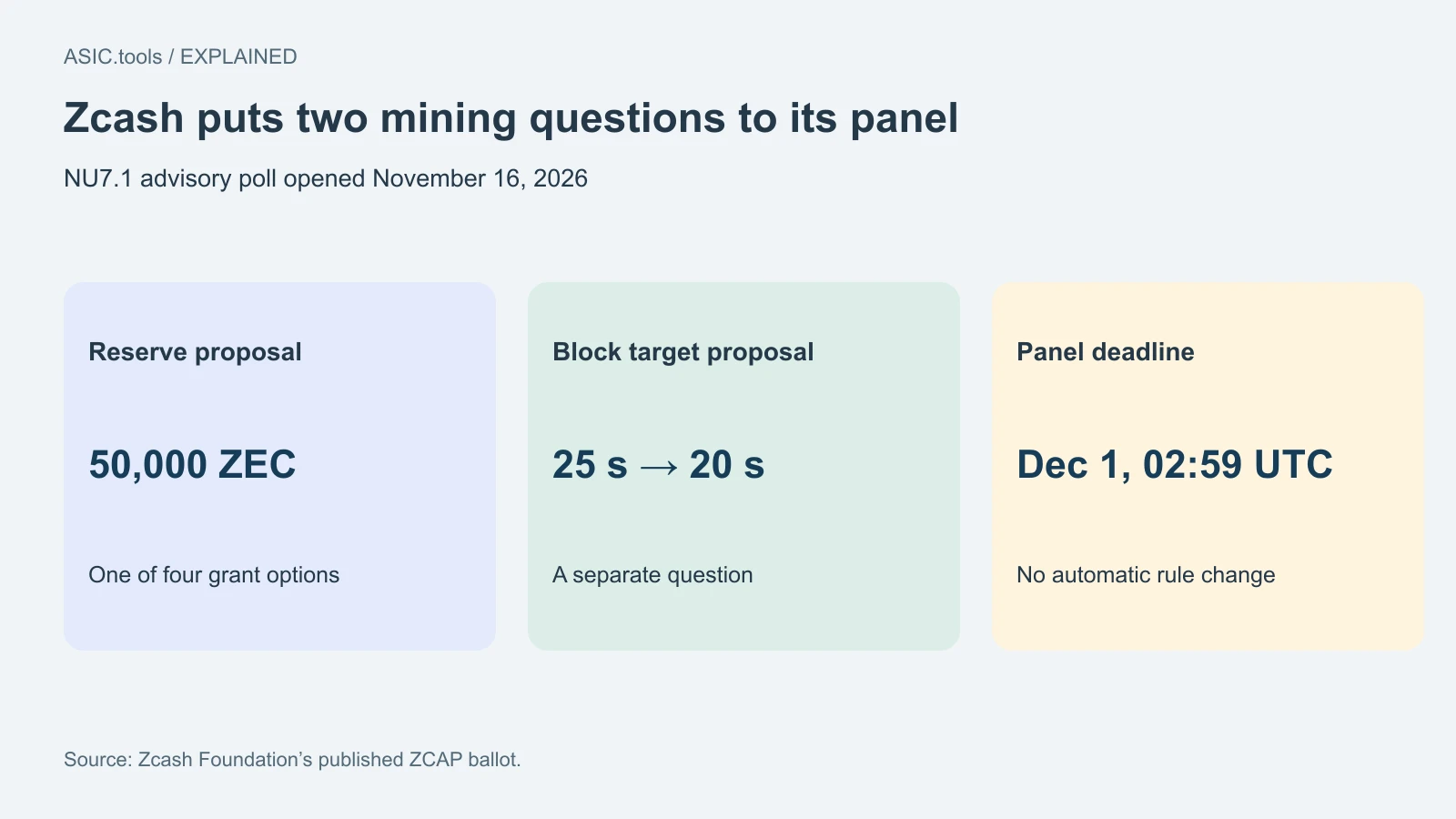
The Zcash Foundation opened polling for its community advisory panel on November 16. One of the proposals before the panel would remove 50,000 ZEC from circulation and credit that amount to a reserve for future mining rewards. A separate question asks whether to shorten the target interval between blocks from 25 seconds to 20, if it can be done safely. Neither change took effect when the poll opened.
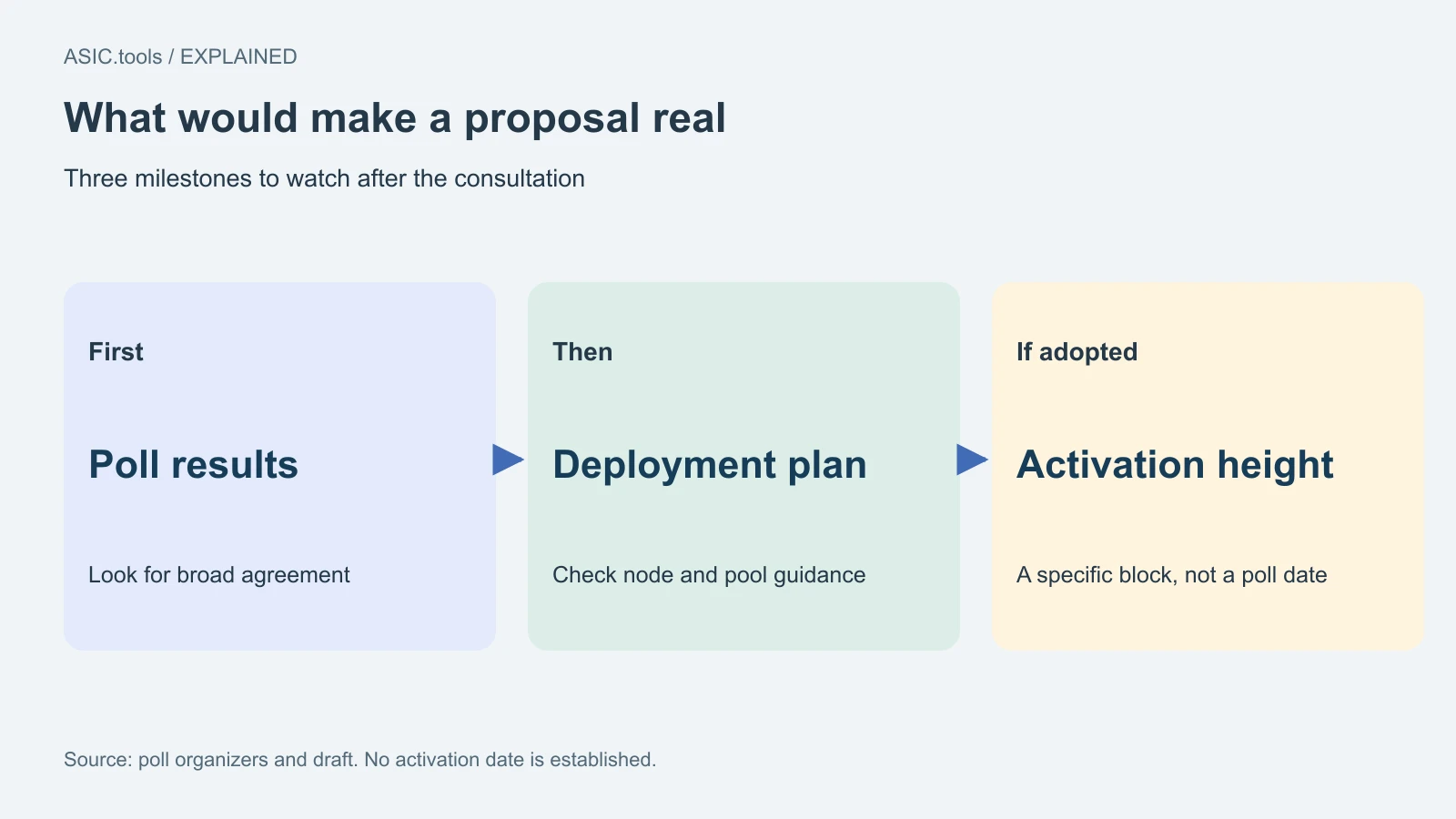
The panel’s poll closes December 1 at 02:59 UTC. The Foundation says other groups are considering the same questions in parallel and their results will be compared. The five questions are advisory. Organizers say they will look for broad agreement before engineering teams and miners work on the proposed upgrade, called NU7.1, and agree on a target date. The poll closing date is a deadline for responses, not for a software change.
Where the 50,000 ZEC would go
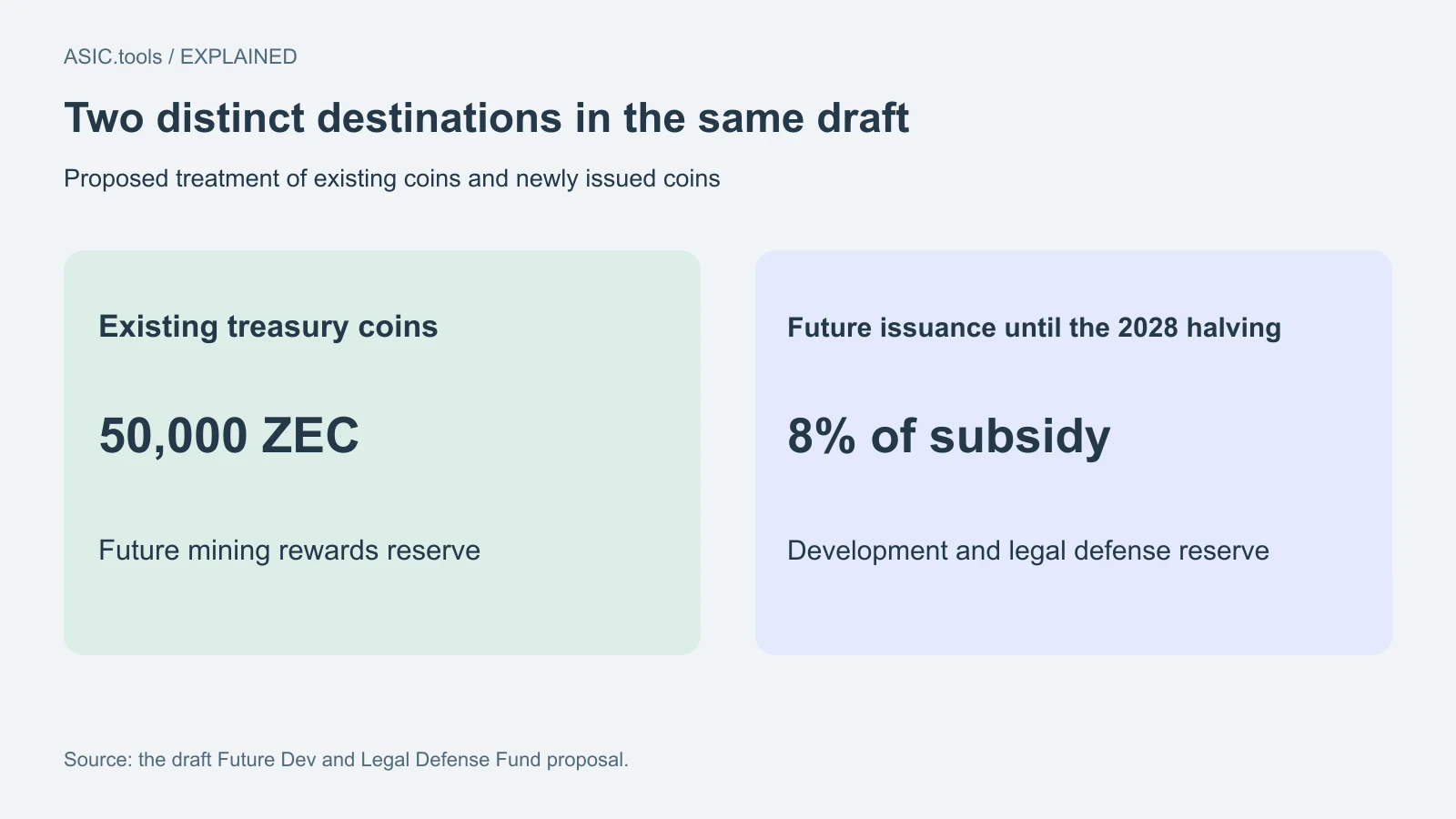
The draft applies to funds administered by Zcash Community Grants, or ZCG, which pays for projects in the ecosystem. It calls for taking 50,000 ZEC out of circulation and crediting the amount to the Network Sustainability Mechanism. This is a reserve tracked by protocol rules, designed to return value over time through mining rewards. The draft is about future issuance, so miners would not find an extra 50,000 ZEC waiting to be paid when voting ends.
The same proposal would send the existing 8% share of the block subsidy that goes to ZCG to a new reserve for future development and legal defense, until the November 2028 halving. The subsidy is the new-coin portion of a block reward. The two amounts have separate destinations: 50,000 already existing coins are one action, while the 8% flow is a share of future issuance. The remainder of the grants treasury and the grant program would stay with ZCG.
Four views on grants, plus a mining question
The questionnaire also asks about winding down ZCG while honoring grants already awarded, keeping the funding while renaming the program to the Zcash Adoption Pool, or leaving funding and operations as they are. The proposals give different answers to who should manage development money. An affirmative answer to one is not a transfer, and the draft that moves 50,000 ZEC is only one of the outcomes under discussion.
The block question stands separately. A target of 20 seconds would mean more opportunities to produce blocks in a given time than a target of 25 seconds, if the network runs close to those targets. Block frequency alone does not tell a miner how many coins it will earn. For that, the rules for the reward per block and the share of work their pool gets accepted both matter.
Watch what your pool actually accepts
When blocks are closer together, a miner and pool have less time to hear about the last block and switch to fresh work. Work based on an old block can arrive too late to count. Pool operators should watch the age of jobs and the rate of stale or rejected shares, the pieces of submitted work the pool cannot credit. The headline interval tells them what to test, while actual measurements show how their setup copes.
For somebody running one rig, it makes sense to remember the current levels of accepted and rejected work now. If a future upgrade is announced, that gives you a baseline to compare against. Today the poll is no reason to move your ASIC to a new pool, change its clock, or recalculate income as though a new reward were in force.
What would confirm the next step
Look for published results, a deployment decision and an official activation height before treating any of these ideas as a rule. A height is simply the number of a block in the chain. If the reserve contribution is eventually adopted, the draft calls for the transaction identifiers recording it to be shared publicly. Those records would offer a way to check that the contribution took place.
Miners have two separate things to follow: whether the portion set aside for future rewards grows, and whether the network decides to shorten blocks again. One changes the path of coins through time; the other changes how fast new jobs may come. Until there is an implementation, the actual pool and node behavior is the right basis for decisions. In particular, a note about the new reserve’s balance and a node release would answer different questions. The balance records the amount set aside; a release and its instructions tell operators which software is ready and when to put it into service.
Source: Zcash Foundation ↗ · Draft proposal: future development and legal defense ↗ · ZIP 237: Network Sustainability Mechanism ↗ · Organizers’ polling timetable ↗
Mining calculator ↗