Bitcoin mining difficulty drops 9.13% at block 975,744
Source report: 2026-11-14 · Editorial analysis published: 2026-11-14
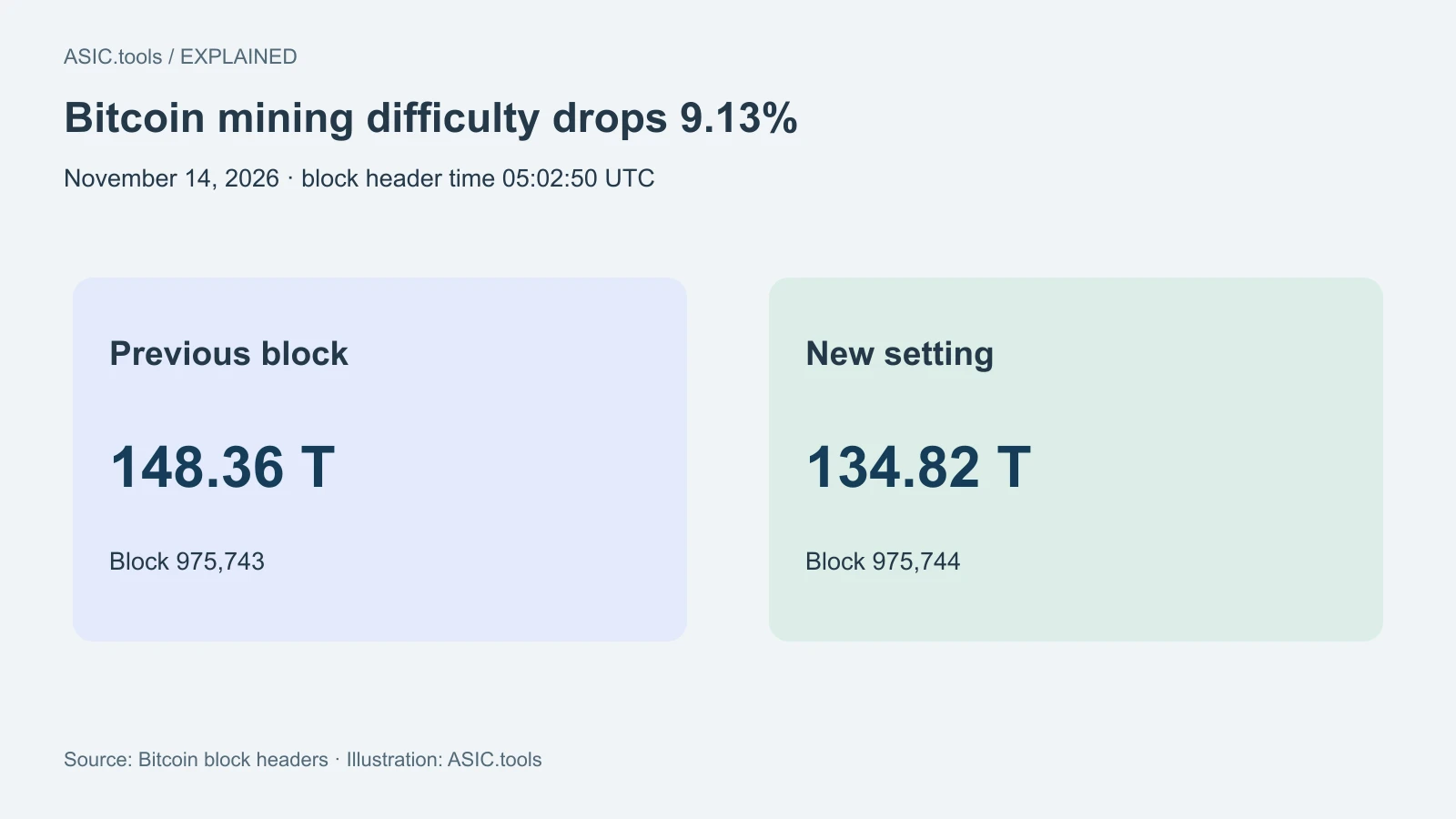
The November 14 adjustment lowers difficulty from 148.36 to 134.82 trillion. At a fixed hashrate, expected subsidy earnings rise about 10.04% before costs.
The adjustment is on chain
Bitcoin’s mining difficulty dropped 9.13% at block 975,744 on November 14. The block header records 05:02:50 UTC. The new setting is about 134.82 trillion, down from 148.36 trillion at the immediately preceding block. Miners now have a wider range of valid solutions. At the same number of attempts per second, each machine has a better chance of finding a valid block.
Difficulty is a network setting. It says how hard it is to find a block with the right kind of hash, the digital fingerprint miners keep recomputing. Hashrate measures how many attempts a machine makes in a second. When the network lowers difficulty, a miner can gain a better chance from those same attempts without changing its hardware or power mode.
The date is based on the block header, and the adjustment applies starting at that height. The same parameter applies to industrial and home Bitcoin miners. There is no firmware update or special setting to activate it; a pool or a solo mining node uses the new target when it builds fresh work.
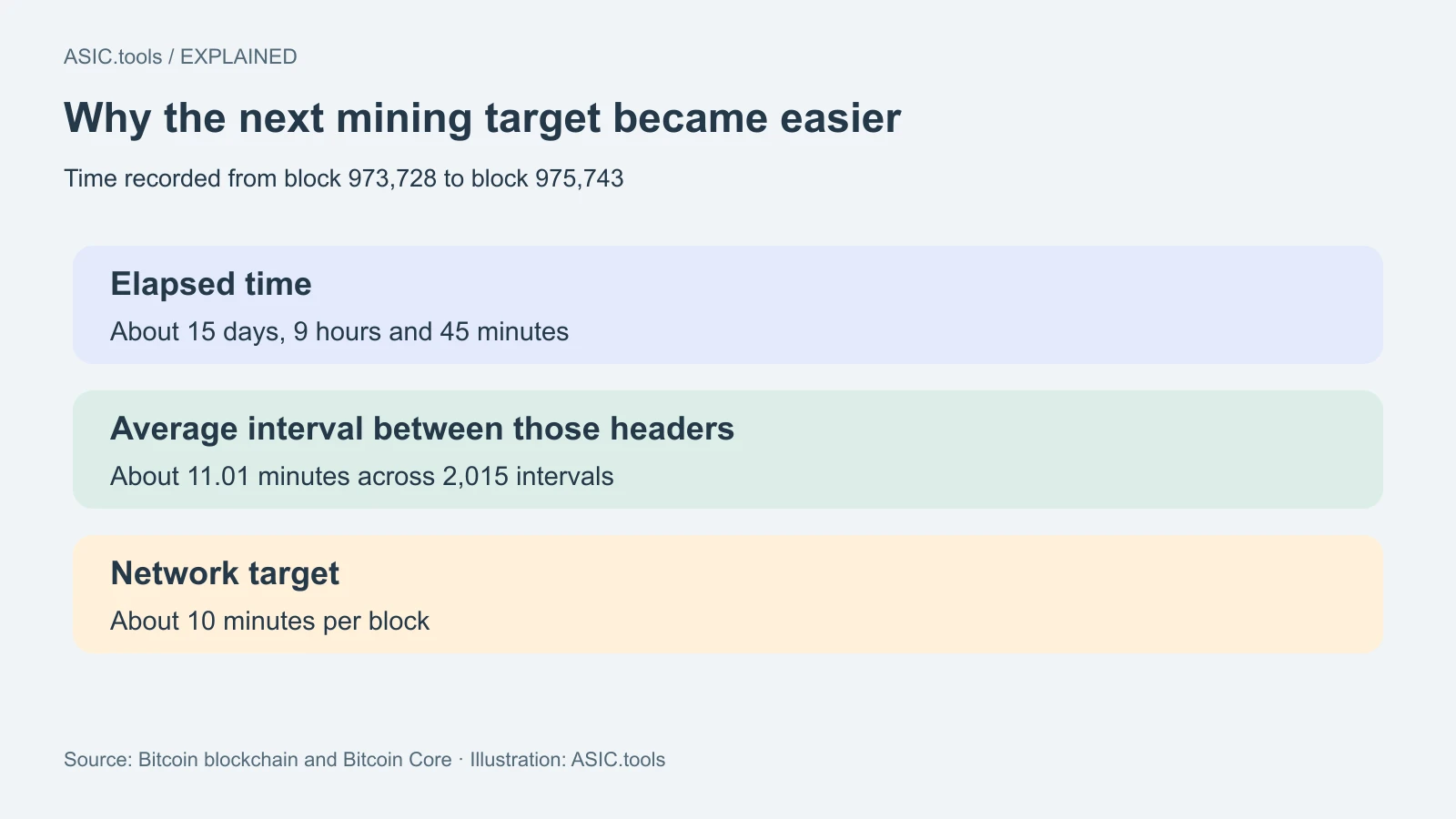
Why the network made the change
Bitcoin Core’s calculation looks back over a 2,016-block period. For this adjustment, the timestamps of the first and last blocks of the old period, 973,728 and 975,743, are about 15 days, 9 hours and 45 minutes apart. Across the 2,015 gaps between those timestamps, that is about 11.01 minutes per gap. The target is roughly ten minutes a block. The new target is easier because the previous period took longer than intended.
The block headers supply the evidence. They encode the mining target in a field called bits. The previous block uses 0x1701e5ac; block 975,744 uses 0x17021673. This is useful when following an adjustment on a dashboard: forecasts can change right up to the boundary. Once the new block is accepted, its encoded target is the result to compare against the previous one. Block intervals can still swing after the change.
The timestamps show when blocks were recorded, rather than identifying which miners powered down. Hashrate is estimated from the rate of block discovery. A slow stretch can reflect less computing power, luck, or both. The adjustment responds to the elapsed time; it does not require identifying the reason for each gap.
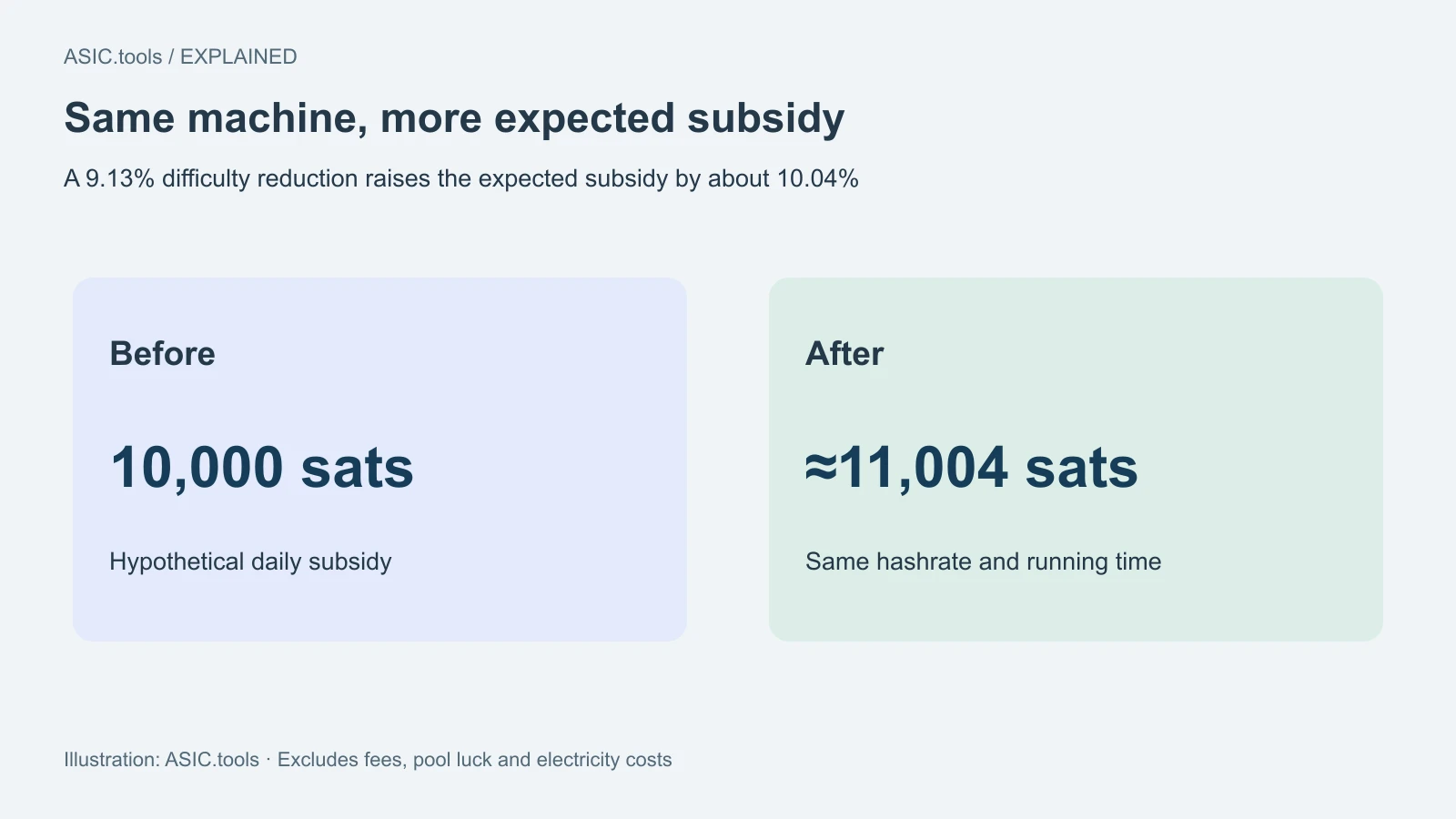
What 9.13% means for a single miner
At a fixed hashrate and uptime, expected newly issued BTC per day moves roughly in inverse proportion to difficulty. Divide the old difficulty by the new one and the answer is about 1.1004. With these specific targets, the expected subsidy is about 10.04% higher on the same machine. A hypothetical baseline of 10,000 satoshis per day from subsidy alone becomes about 11,004 satoshis. A satoshi is one hundred-millionth of one bitcoin.
The block subsidy remains 3.125 BTC. Transaction fees can change from one block to the next, and a pool’s payout method may smooth luck or distribute it differently. A solo miner still gets no block reward until it finds a block. Use the percentage to update an expectation, not as the amount due in the next payout.
The calculation also assumes the machine keeps submitting valid work. For pool miners, a disconnected machine or a burst of rejected work can erase the benefit for that period. Check accepted work alongside the estimated payout, and compare windows of the same length. A short solo run may still show no reward at all.
What to check before spending more on power
The electricity bill does not automatically fall with network difficulty. A machine drawing 3 kW still uses 72 kWh in a full day. Compare the gross revenue shown by the pool with actual power draw and the tariff charged for that period. If you pay in ordinary currency, the Bitcoin exchange rate also matters. A drop in price or fees could offset the improvement in expected subsidy.
For a useful before-and-after check, pick the same running hours, operating mode and pool. Compare accepted work and coin payouts over a period long enough for your payment method. Keep the BTC estimate separate from the local-currency bill. The adjustment improves the odds per attempt now; measuring the whole setup tells you whether the machine has more room above its operating cost.
If you are deciding whether to bring an idle miner back, estimate the cost of the hours you would actually add. The price of one extra hour may differ from your monthly average. Recalculate with the pool’s current terms and a rate you can verify from the bill, then compare the result again after you have measured those hours.
If the machine runs part time, compare actual active hours instead of full calendar days. Set outages and restarts aside when asking what the network change alone did. Keep the electricity price and running assumptions alongside the old and new estimates.
Source: Bitcoin blockchain ↗ · Bitcoin — previous block ↗ · Bitcoin — previous period start ↗ · Bitcoin Core — proof of work and adjustment code ↗
Mining calculator ↗