Z Squared expects no mining restart as it seeks to recover its Scrypt machines
Source report: 2026-11-24 · Editorial analysis published: 2026-11-28
The company says it still owns about 9,800 machines. Its filings describe a dispute with hosting provider Minting Dome over access, equipment recovery and about US$6 million in contested invoices.
Own the machine, then check who can reach it
In a November 24 letter, Z Squared told shareholders it does not expect to resume mining and still owns about 9,800 machines. Its November 23 quarterly filing described a dispute that had limited access to and recovery of its equipment. The case concerns a basic risk for anyone who keeps mining hardware at a third-party site: ownership, day-to-day control and the ability to collect a machine depend on different things.
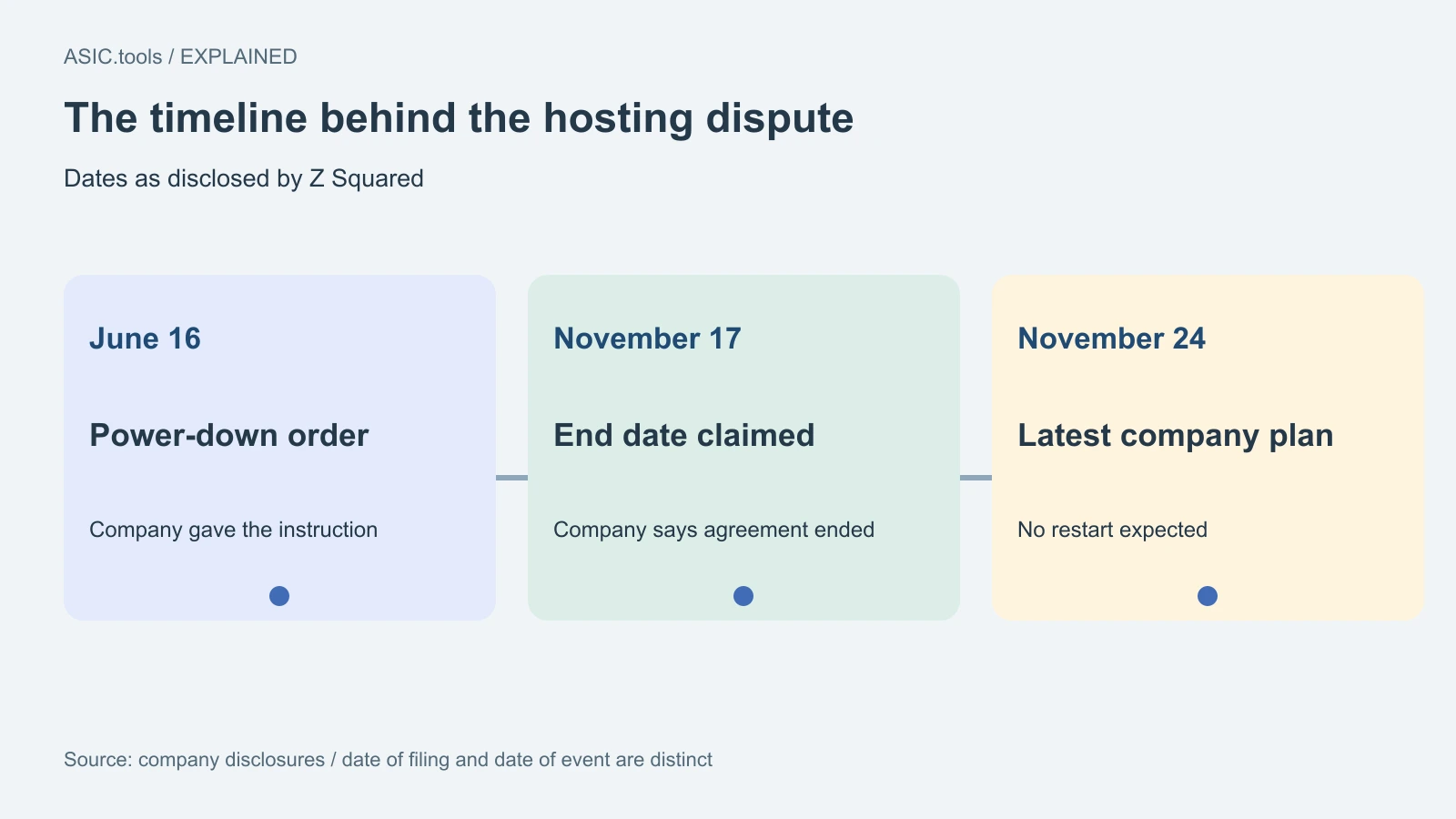
Z Squared used specialized Scrypt mining machines to mine Dogecoin and Litecoin together at sites in North Carolina and Iowa. This is merged mining, where compatible chains can accept the same computational work. The company owned the equipment while Minting Dome provided power, connectivity, maintenance and day-to-day operations under the hosting agreement. Z Squared says it instructed the provider to power down the fleet on June 16 because of unfavourable market conditions.
The filing describes the hardware as owned by the company, but maintenance and on-site operations sat with the host. That division is typical of the kind of agreement readers can encounter in this market. It makes the equipment list and the withdrawal process relevant before an argument starts.
What the two disclosures describe
Z Squared says it terminated the agreement effective November 17. It said the provider may contest the termination and reported that no legal proceeding over the dispute had begun as of the filing. The statements about what happened and what the provider said come from Z Squared’s filings. The outcome remains open.
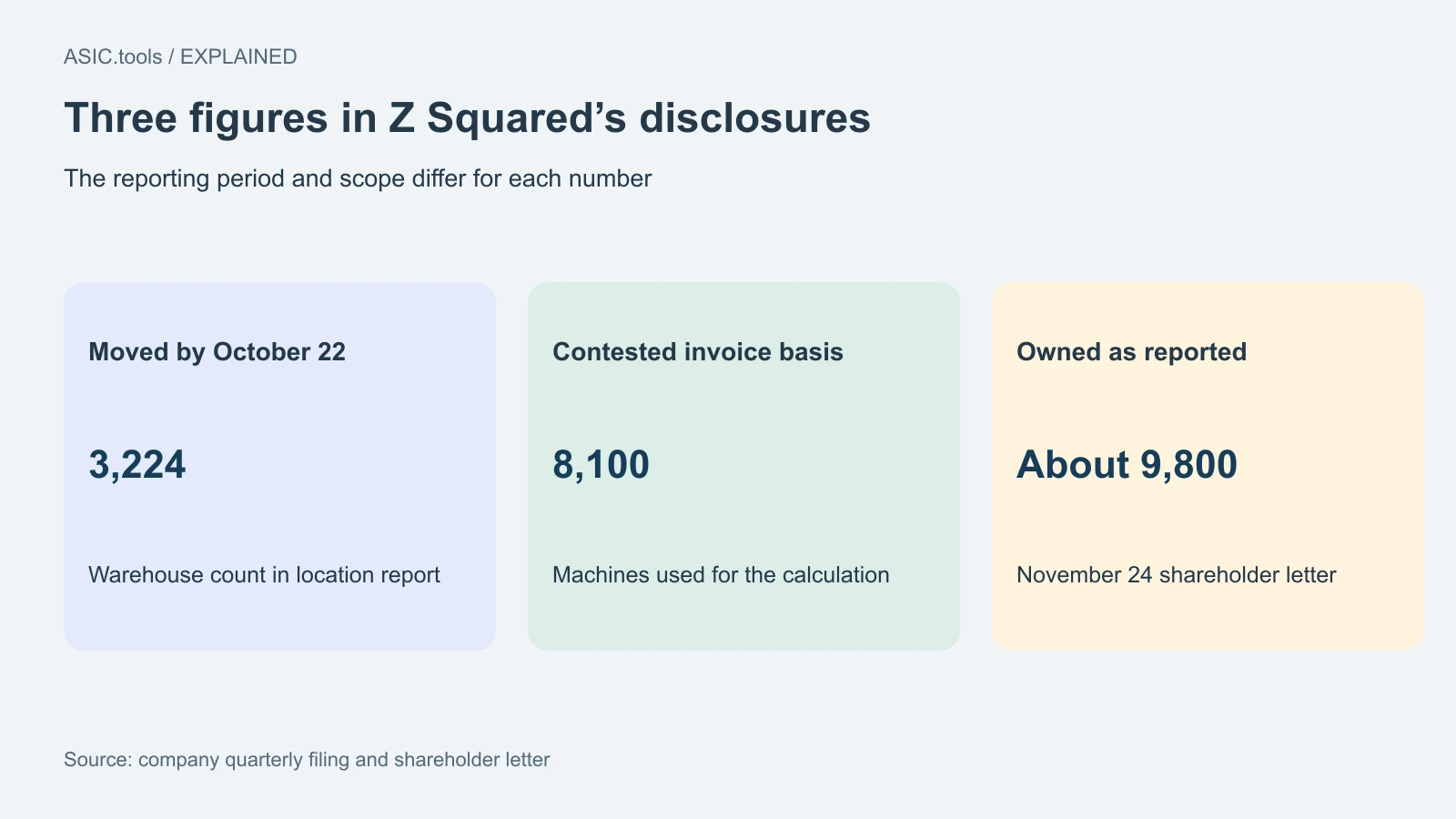
According to a location report the host supplied, which Z Squared described in its filing, 3,224 machines had been relocated to a warehouse in North Carolina by October 22. The filing says the host invoiced about US$6 million for hosting, storage and other fees, calculated using 8,100 machines and covering periods when the fleet had been directed to remain off. Z Squared disputes the invoices. The 3,224, 8,100 and roughly 9,800 figures each refer to a different group or accounting basis.
The filing lists US$0.088 per kWh for power under the former agreement. That amount describes the electricity line. It does not set a price for holding or moving a powered-down miner. Ask which metered period and contractual item a charge belongs to when checking an invoice.
A powered-down machine can still generate a bill
When a facility stops mining, it can still hold equipment, retain space and handle storage or transport. A hosting agreement can give those items their own prices. In this filing, the amount was a contested invoice. It cannot establish an actual debt or a normal rate for other miners. For a smaller owner, it is useful to know how charges change once a miner stops drawing power.
The company said it was considering how to recover value from its machines. That leaves open whether, when and on what terms particular units might be retrieved or sold. A count of equipment owned is different from the count that is operating, ready to ship or offered second-hand. Neither the fleet figure nor the accounting disclosures alone establish how much Scrypt hashrate left the network.
Management also reported US$106.9 million of goodwill impairment and US$3.4 million of equipment impairment in the quarter. These charges reduce carrying values in the accounts. They do not identify a selling price for any individual miner, and the company describes them separately from the contested invoices.
What a hosting owner can document
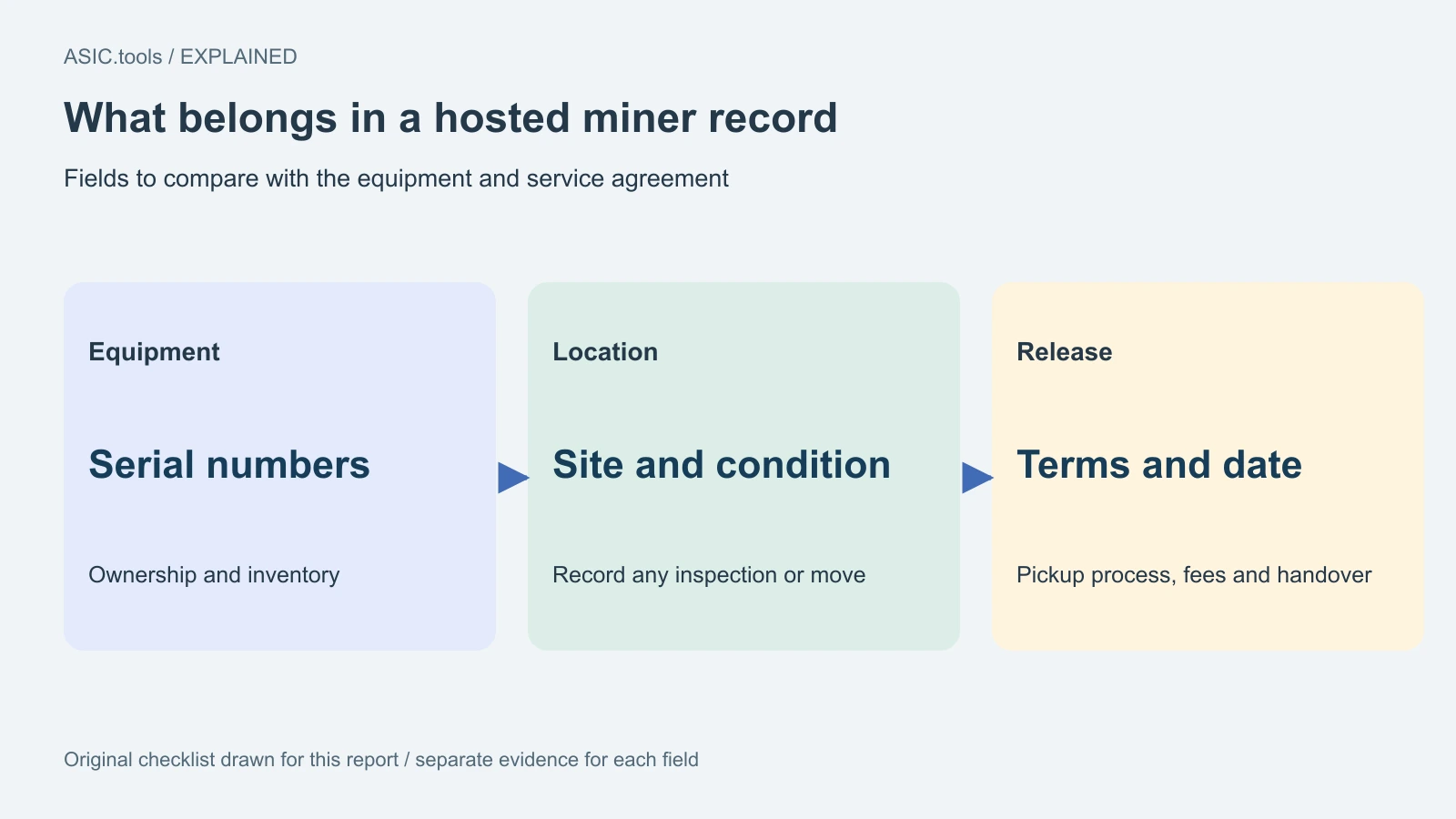
For hosted equipment, keep a serial-number inventory, the agreed site, and records of move or inspection requests. A tariff tells you what power costs while the rig is running. The agreement should also give clear answers on who can move the equipment, who can inspect or test it, when it can be collected and what fees apply during a pause.
The new disclosure made Z Squared’s position about restarting clear. The equipment dispute made another point concrete: a move to a different host is easier to plan when the owner knows the release process, expected timing and charges before a shutdown takes place.
If a host moves equipment, a dated record of the location and condition makes later comparisons easier. A proposed pickup date is separate from actual handover. Keep the service messages, shipment confirmation and serial numbers adjacent in the record so you can match them.
Source: Z Squared / shareholder letter ↗ · Z Squared quarterly filing, Note 20 and risk factors ↗
Mining calculator ↗