SATO starts hosting its first AI customer at a Québec Bitcoin mining site
Source report: 2026-11-25 · Editorial analysis published: 2026-11-28
The November 25 report says the initial service is small relative to Center One’s roughly 20 MW of power access. The company disclosed no customer load in megawatts.
An operating contract at an existing mining site
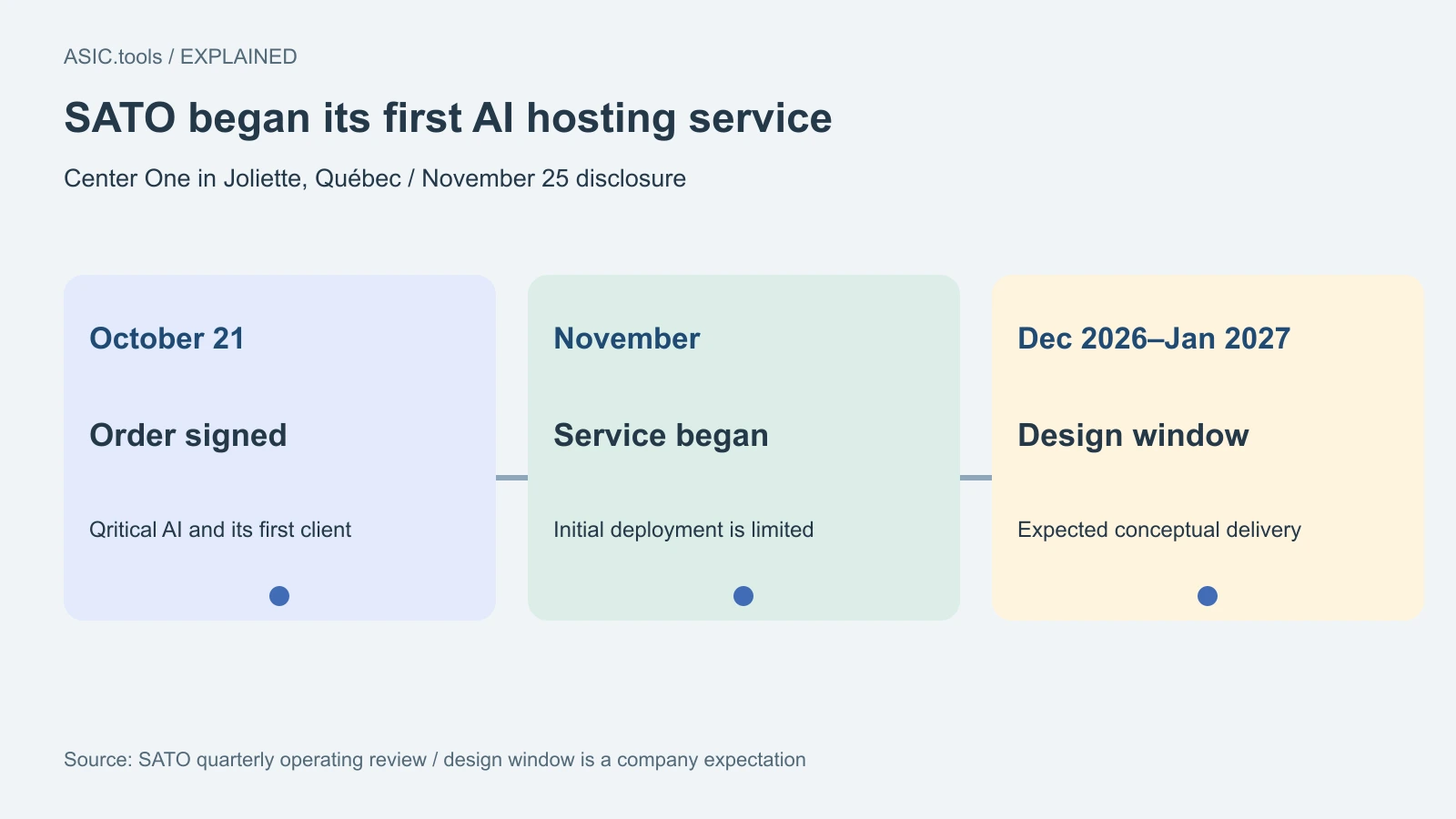
In its November 25 quarterly review, SATO said service had begun that month for its first artificial intelligence hosting customer at Center One, an existing Bitcoin mining site in Joliette, Québec. The company called the initial service limited in scale relative to the facility’s power capacity. The step adds a new use to the site. The company did not disclose the customer’s power draw or how much Bitcoin mining capacity changed because of the contract.
SATO’s subsidiary Qritical AI signed a master agreement and the first service order on October 21. The arrangement is for co-location, meaning the customer’s computing equipment is hosted at the facility. SATO says its agreement passes electricity costs through to the customer. The start of service and the eventual financial effect are different pieces of information. The financial statements say they cannot yet estimate the latter.
The company’s Q3 financial statements report the first agreement in the subsequent events section. That section records developments after September 30. Reading it together with the operating review distinguishes the November service from the mining activity measured in the third quarter.
What the 20 MW covers
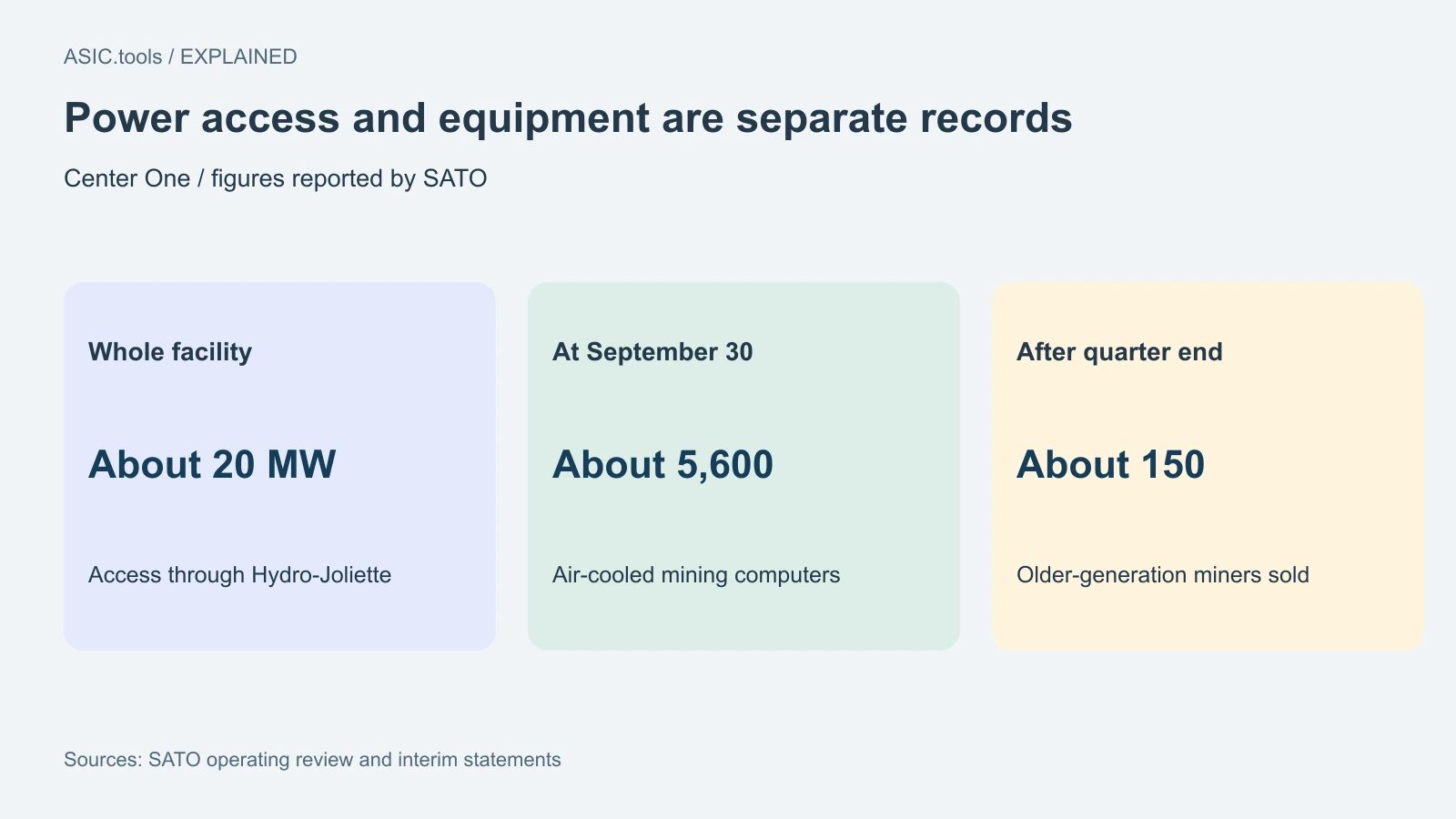
Center One has access to about 20 megawatts of hydroelectric power through the municipal distributor Hydro-Joliette. That is the site’s power access. It describes the size of the connection more closely than it describes the equipment a new customer is running. SATO also commissioned a concept design for using the site’s power for artificial intelligence and high-performance computing. It expected delivery of the design between December 2026 and January 2027.
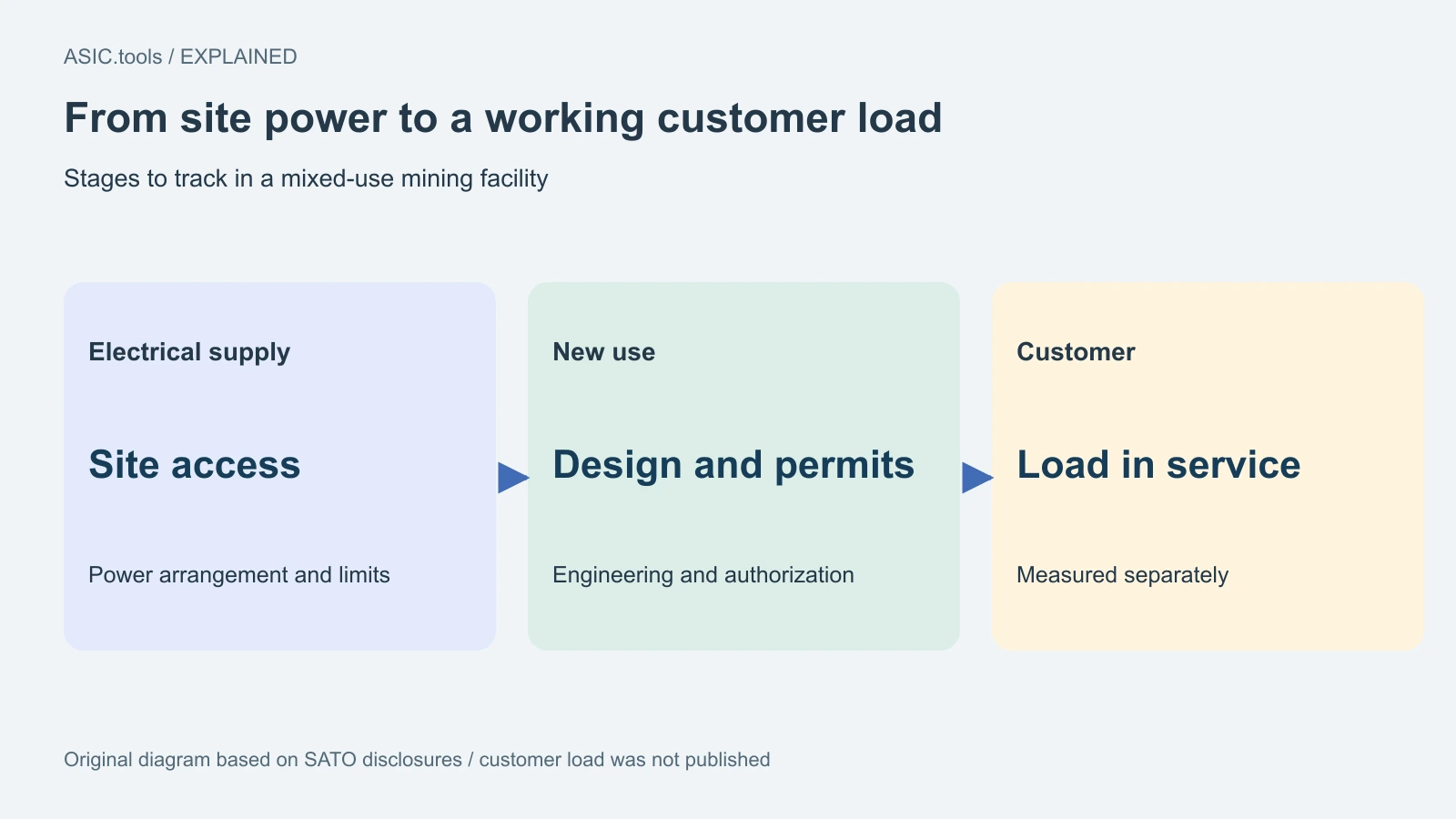
According to the quarterly review, Hydro-Joliette said in June that it had no objection to use of the existing reservation for AI workloads when no additional power or energy was needed. SATO also says the use of mining power for those workloads remains subject to applicable authorizations. A distributor’s position, regulatory authorization, detailed engineering and the amount of working customer equipment are separate milestones.
SATO identified Québec’s August regulation 1241-2026 when discussing a conversion of electricity previously used for mining. The report describes ministerial authorization for specified changes of use. Site power already in place can shorten some work, but the company still presents the new use as subject to applicable requirements.
The filings date the mining fleet and the sale separately
Center One housed about 5,600 air-cooled Bitcoin mining computers on September 30. The company said mining was its only operating activity at that date and produced substantially all of its revenue. After the quarter ended, SATO sold about 150 older-generation miners. The report does not give a new operating fleet count for November or a live hashrate following the sale.
The report says the company adjusts how much of the fleet runs based on electricity costs, Bitcoin prices, network difficulty, and efficiency. It also curtails during periods of high grid demand when required, currently up to about 550 hours per winter. That is the potential scope reported by the company, rather than a count of curtailment hours already recorded this winter.
SATO says it sometimes lowers miners’ clock speeds or returns units to service as conditions change. Doing so can change work output while the headcount at the site stays the same. Measure a period’s contribution by actual work and runtime rather than relying on the inventory alone.
What to watch when a mining site adds a tenant
For a reader tracking ASIC supply, an actual sale of older machines matters in a different way than a plan to build more customer capacity. The report confirms a small hosting service and separately reports a completed sale, but it does not give used-model names, prices or the amount of hashrate removed. Those figures would help establish whether the deal means equipment will move to other miners or stop working.
The report dates several stages: signed order, service start, and expected concept design. The easiest way to follow the site is to keep the dates and kinds of figures in view. The 20 MW describes the overall power arrangement, the mining counts describe devices, and customer load will need its own measurement or disclosure.
The review also says heat from the facility is used inside the building. Future technical work can address how electrical load, cooling and heat are handled as the mix changes. Evidence of an operating customer service is a milestone of its own even before a larger design is delivered.
Source: SATO Technologies ↗ · SATO interim financial statements, subsequent events ↗
Mining calculator ↗