CBI is moving 180 Bitcoin miners, and October shows the cost of downtime
Source report: 2026-11-16 · Editorial analysis published: 2026-11-16
The company’s November update separates 180 idle rigs from its working fleet. That changes the reported annualized yield because the equipment still represents an investment.
A move underway after a September outage
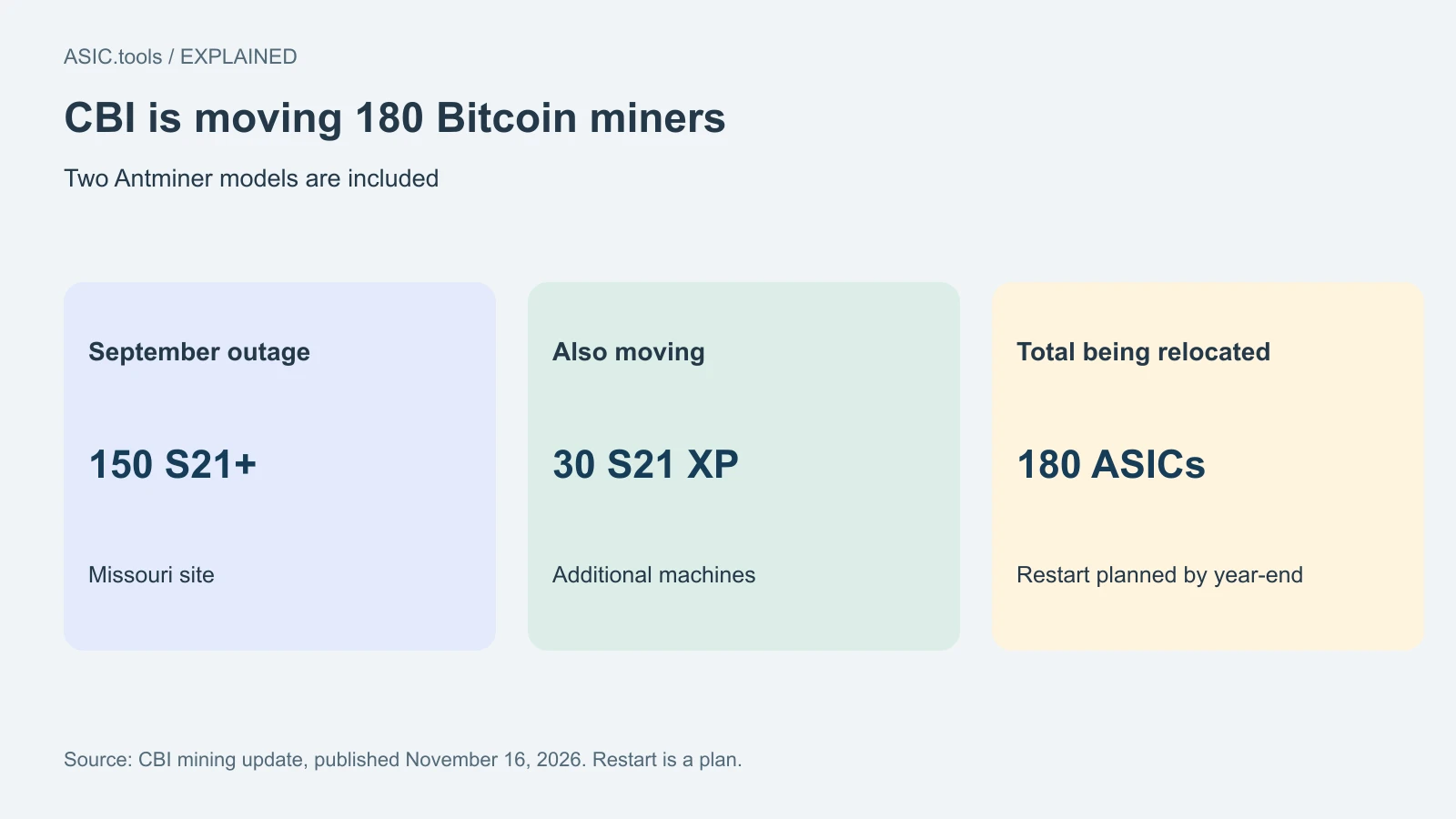
Crypto Blockchain Industries (CBI) said on November 16 that it is moving 180 Bitcoin miners to a new facility. The group includes 150 Antminer S21+ units that stopped after a technical problem at a Missouri site in September, plus 30 S21 XP units. The machines earn no bitcoin and incur no electricity expense while stopped, the company says. It expects them back by the end of 2026. The update confirms the move is underway; the return date is still a plan.
CBI also said grid restrictions reduced its October yield measured in BTC compared with September. Its statement describes periodic limits on power access separately from the relocation. They help explain why a fleet’s result can slip even when the equipment is unchanged on paper. A machine unable to get power and a machine in transit both lose hours that might have produced coins, but the work needed to bring them back is different.
Why the reported return changes
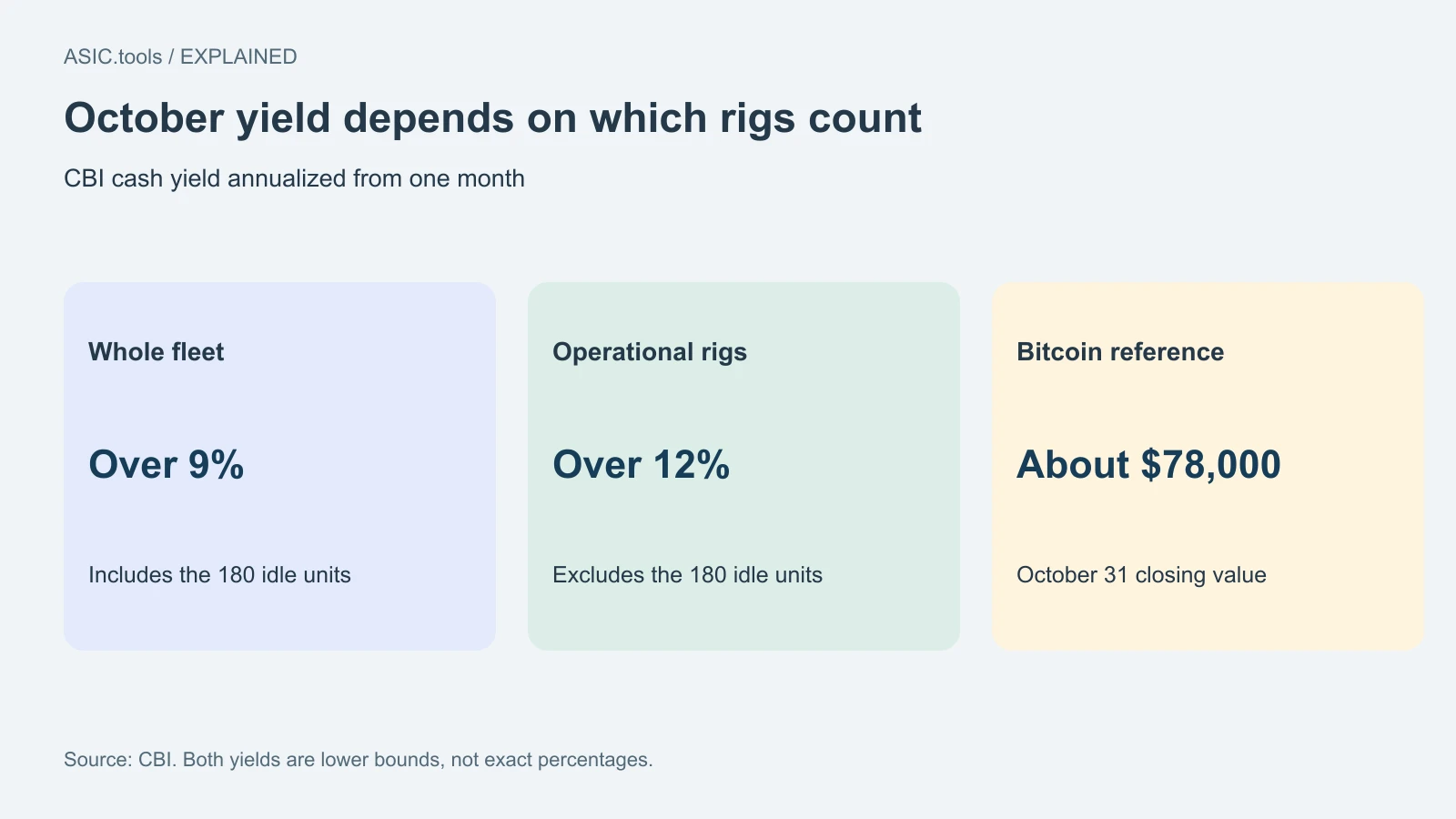
CBI put the full fleet’s October annualized cash yield in dollars at more than 9%, using a Bitcoin price of around $78,000 at the close of October 31. When it excluded the machines being moved from the amount invested, the reported yield for the remaining units was more than 12%. Those figures are two views of the same October, with different equipment included. The numbers are thresholds, so the announcement does not give an exact percentage-point gap.
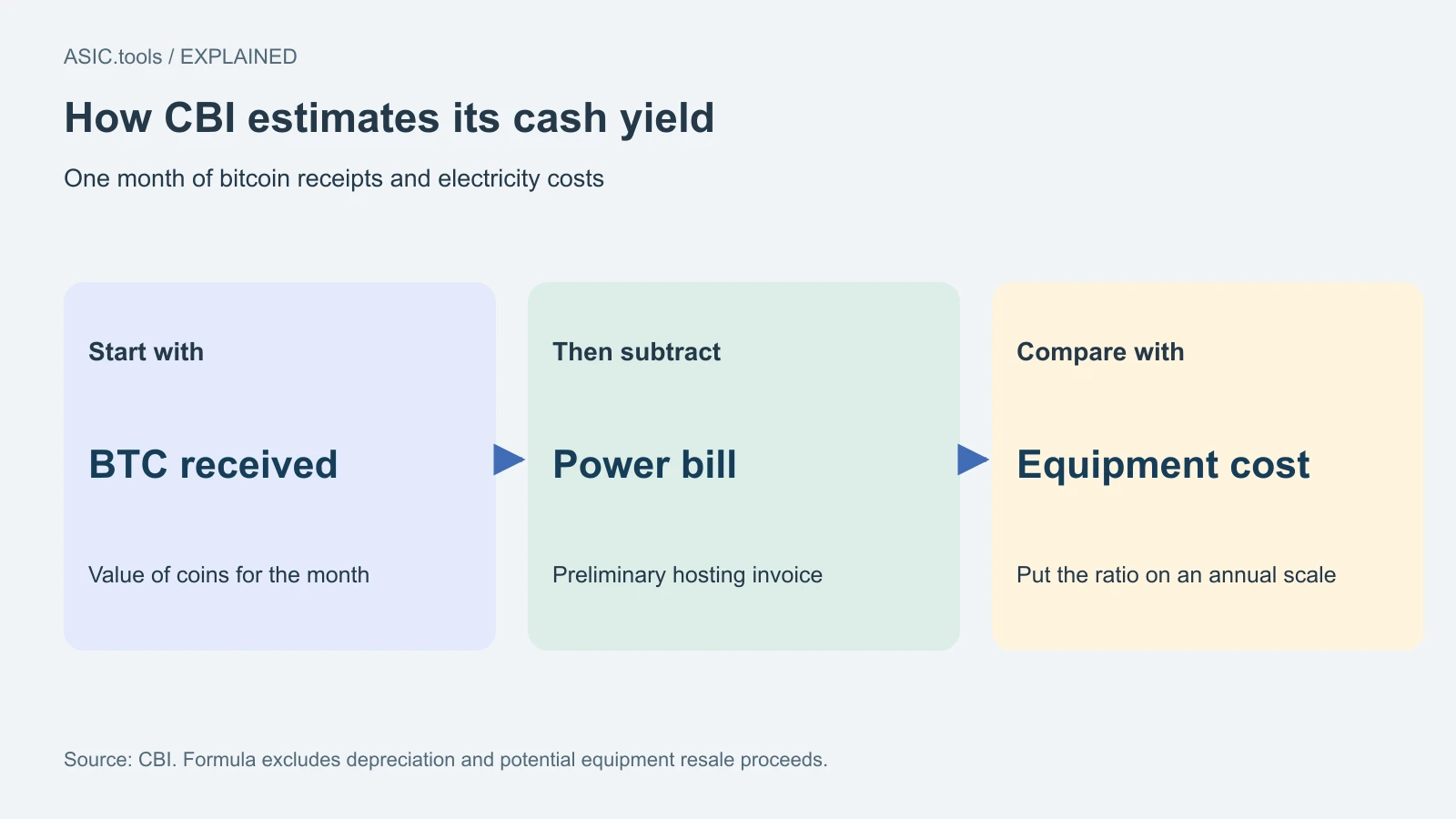
The company takes the reported value of the bitcoin received in a month, subtracts that month’s electricity bill and compares what is left with the capital spent on the equipment. It then puts that month’s ratio on an annual scale. The calculation excludes depreciation and the resale price of a miner. It also uses a preliminary bill from hosting provider Blockware Solutions, so a later correction to consumption can revise the October result.
The lights can be off and the capital still tied up
Stopping an ASIC avoids its current electricity cost. It does not give back what the operator spent on the ASIC, and it takes away the revenue the rig might have earned. That is why the active fleet’s return tells you something useful about the machines producing coins, while the full fleet’s return measures October against a broader investment. Comparing one with somebody else’s all-fleet number can give the wrong impression.
Operators can track the gap with two columns: actual working time and the value of all the hardware they paid for. Record delivery, repairs and power cuts as separate kinds of idle time. A host that promises a lower rate may still cost more per coin if the site starts later or operates fewer hours. The best number for that decision comes from an actual meter and pool history once service starts, backed up by a clear understanding of the bill.
What counts as back online
CBI’s next useful milestone is seeing the 180 units produce again. A statement that the transfer is complete would tell readers where the machines are. A monthly report showing work credited by a pool would tell them whether the move restored production. That difference is worth watching when you ship a rig yourself or sign up with a new host.
Ask when the new site can supply power, when billing starts and how you can verify the machine has begun sending work. When weighing the move, keep the days without mining on your calendar even if they carry no electricity charge. An annualized snapshot based on one month can compare scenarios, but you still have to see several months of actual payouts and power bills to know how the equipment is doing.
Put the same month on both sides
If you compare your own host with a replacement, use the same period and the same assumption for the bitcoin price in both columns. For each option, subtract the electricity and any other cost you will pay. Include both the rigs already producing and the ones awaiting power when you assess how much capital is tied up. You can then look at a narrower set to see how the working rigs perform.
Keep a separate estimate for the moving period. Put the planned start date in it, then try a later start to see what an extension of the downtime would cost. On the real start date, replace the guess with pool records and the first actual bill. This avoids treating the best possible running month as if it covered the entire move.
Source: Crypto Blockchain Industries ↗ · CBI announcement in English ↗
Mining calculator ↗