XMRig 6.27 improves ARM RandomX mining and checks direct-node TLS fingerprints
Source report: 2026-11-23 · Editorial analysis published: 2026-11-23
The November 23 release brings Apple Silicon optimizations, a faster RISC-V startup path and fixes for direct-node connections. The quoted M4 gain comes from a specific developer test.
A new release for CPU miners
XMRig 6.27.0 was published on November 23 at 03:38 UTC. Its most useful changes for home miners concern ARM processors, including Apple Silicon, and direct connections to a mining node. Owners of existing computers get a software update to assess, rather than a reason to assume they need a new ASIC.
RandomX, used by Monero, is a proof-of-work algorithm designed around general-purpose processors. ARM64 and RISC-V are processor architectures; they are not coins or pools. An optimization for one architecture does not establish a speed increase for a different CPU, a Bitcoin SHA-256 machine or every algorithm supported by XMRig.
What the Apple figures really compare
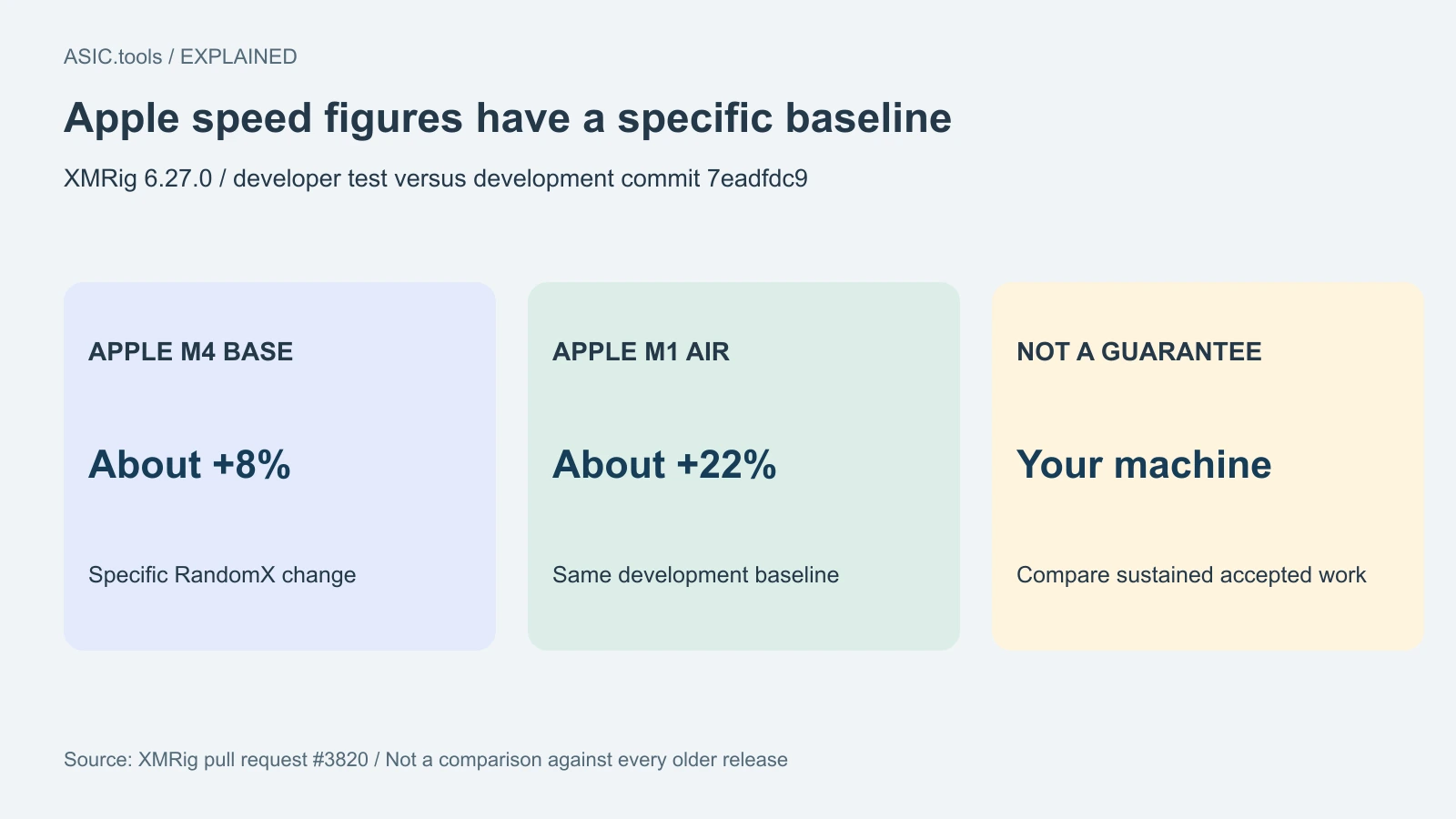
The release lists an approximately 8% Apple M4 improvement from an ARM64 RandomX change. The linked developer test specifies the base M4 and a development-code baseline, commit 7eadfdc9. It also reports about 22% on an Apple M1 Air against that same baseline. These are measurements of that change, not a promise that upgrading any installed XMRig version yields those percentages.
The change fetches the next dataset line earlier and uses a type of memory load that avoids pushing useful scratchpad data out of cache. In everyday terms, it brings the next piece of work closer before the processor needs it, while keeping frequently used notes on its desk. The benefit depends on how the processor and memory system handle those requests.
Version 6.27 includes further ARM64 optimizations, reduced invalidation of the just-in-time compiler's cache and ARMv9 detection. A just-in-time compiler translates the mining program into machine instructions while running. The release also fixes an ISUB_R instruction issue in ARM and RISC-V compilers. The notes do not assign one combined percentage to all these changes.
Startup speed is different from mining speed
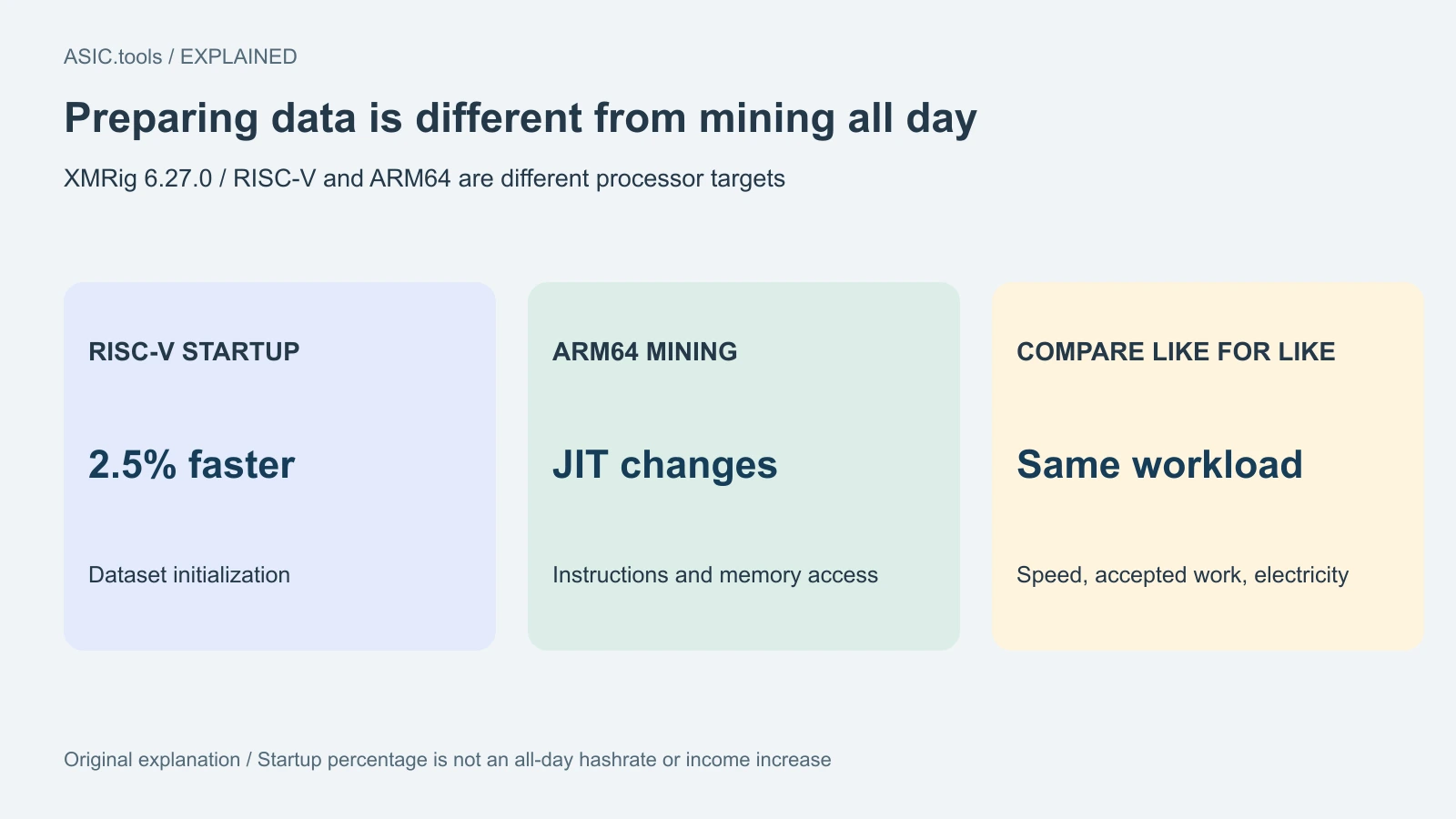
A separate RISC-V item reports 2.5% faster dataset initialization. Initialization prepares the data before steady mining, so this figure should not be presented as 2.5% more hashrate all day. The release also changes how RISC-V vector AES code accesses memory. Those are different tasks and different evidence from the Apple M4 measurement.
For a useful comparison on your own machine, retain the same algorithm, workload and operating settings and look beyond the first startup interval. Check sustained speed and accepted pool work alongside measured electricity use. ASIC.tools reviewed the release and linked code descriptions; it did not run the miner, measure these processors or obtain an independent profitability result.
Direct-node connections receive a practical fix
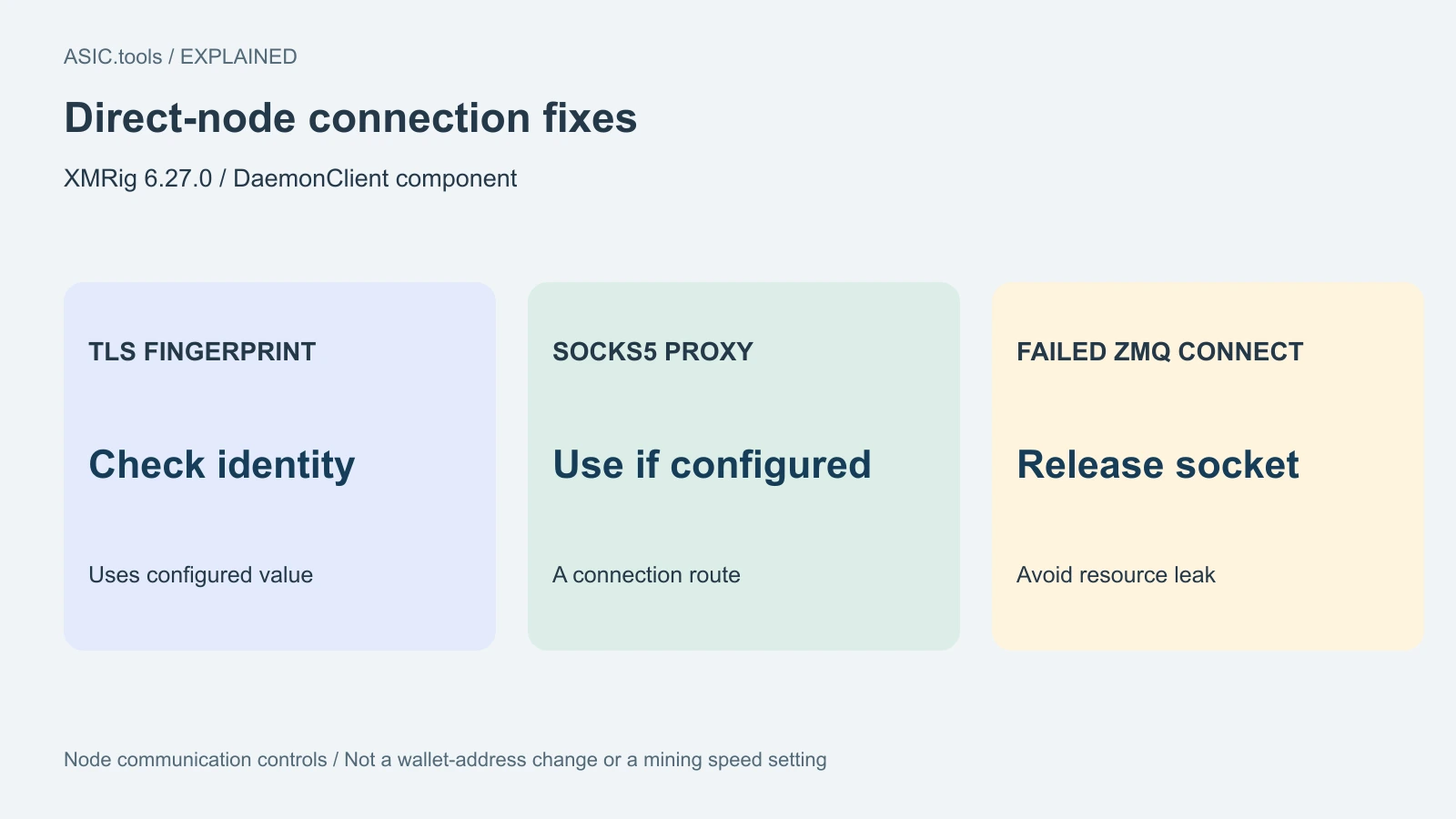
The DaemonClient component, which communicates directly with a node rather than using an ordinary pool connection, now checks the configured TLS fingerprint and uses SOCKS5 when configured. TLS protects the connection; a fingerprint is a value used to check the certificate's identity. SOCKS5 is a configured proxy route. These are connection controls, not wallet addresses or mining speed settings.
The same item fixes a socket leak when connecting to ZeroMQ fails. ZeroMQ can carry node notifications; a socket is a connection resource. Repeated failed connections should not keep leaving those resources open. The release does not say that every pool user must activate a proxy or change certificates, and it does not announce a breach of users' wallets.
Choose the build that matches the computer
The release supplies separate macOS ARM64 and x64 archives and a Windows ARM64 archive, as well as Linux and other x64 packages. Native architecture matters: the macOS build notes explicitly distinguish building x64 on an Apple Silicon host from producing an ARM64 binary. Match the package to the intended processor rather than choosing by operating-system name alone.
For people compiling the program, the notes cover OpenSSL 4.0, OpenSSL 3 builds without deprecated APIs, libuv 1.53.0 on Windows and Clang on Windows ARM64. MSVC builds now require hwloc from the updated xmrig-deps package. These build fixes can make an otherwise correct source tree compile; they are not separate measured hashrate gains.
FCMP++ template and solo-mining changes in the notes refer to beta stressnet v3, a testing network. They should not be read as confirmation that this release activates new Monero mainnet rules. Likewise, the general notes about GhostRider and the NVIDIA CUDA plugin are not evidence that those features first appeared today.
The official release provides SHA256 checksums, a signature and links to the project's public key. Use the intended official package and preserve your actual pool, wallet and connection settings when comparing versions. A faster calculation path improves only one input: accepted work, pool terms, electricity, temperature behavior and coin value still determine the practical result.
Source: XMRig ↗ · ARM optimization test and baseline ↗ · Direct-node connection fix ↗ · Pool and direct-node configuration ↗ · Tagged changelog ↗
Mining calculator ↗