UNECE roadmap puts crypto mining inside large-load grid planning
Source report: 2026-09-23 · Editorial analysis published: 2026-09-24
UNECE calls for strategic integration of data centres, AI facilities, electrolyzers and cryptocurrency mines through conditional connections, fair tariffs, flexibility and transparent data.
Analysis and practical implications
This section is our analysis and illustrative calculations, separate from the source report.
UNECE names cryptocurrency mining as a grid-shaping load
UNECE published Aligning Data Centres and Large Loads Growth With Grid Resilience on 23 September. Its scope includes conventional data centres, AI facilities, hydrogen electrolyzers, cryptocurrency mining operations and other large electricity users. Grouping them does not mean their workloads are identical. It means their scale, geographic concentration and operating characteristics can change resource adequacy, network planning, reliability and affordability. For ASIC operators, this is a direct policy signal: a project may be evaluated not only as a private electricity customer but also by the system costs and controllable capabilities it brings to a region.
Connection agreements can be conditional
The document recommends moving from passive accommodation toward strategic integration. One tool is a conditional connection agreement that links access to measurable operating requirements. Conditions can include staged energization, non-firm capacity, ramp limits, curtailment during contingencies or delivery of telemetry. Such a contract can connect a flexible mine earlier than a fully firm request, but the commercial effect must be modeled honestly. A quoted megawatt figure is incomplete without firmness, expected interruption hours, notice, restoration priority, penalties and the method used to verify the facility’s response.
Tariffs should reflect costs and avoid hidden transfers
Large loads can trigger substations, lines, generation reserves and other upgrades. UNECE points to cost-reflective tariffs and transparent cost allocation so that risks are not silently shifted to households or existing businesses. That principle also protects a developer from arbitrary negotiation when the rules are published in advance. Mining models should separate energy price, demand charges, connection contribution, network fees, imbalance exposure and taxes. A cheap energy contract can still be uncompetitive if grid reinforcement or peak demand costs are omitted. Sensitivity analysis should include delays as well as higher prices.
Flexibility has to be specified and tested
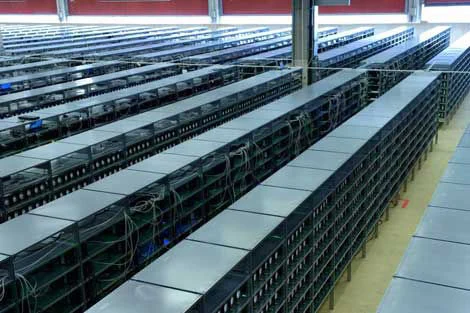
UNECE identifies demand response and flexibility requirements as ways for large loads to strengthen rather than only consume grid capacity. An ASIC fleet can reduce power quickly by disabling groups, changing power targets or participating in an aggregator programme. Recovery is the harder half: thousands of devices restarting together can create a new peak, network traffic and thermal stress. A credible flexibility plan therefore defines baseline, telemetry interval, minimum stable load, ramp-down time, duration, ramp-up sequence and exceptions for safety. Commissioning tests should prove these values before they appear in public sustainability claims.
Storage, renewables and waste heat are site-specific options
The roadmap includes energy storage, co-location with renewable generation and waste-heat recovery. Each can add public value, but none is automatic. Batteries have power and energy limits and must be scheduled between resilience, price arbitrage and grid services. Co-location does not remove transmission needs when production and mining demand diverge. Low-temperature ASIC exhaust may be useful for greenhouses, drying or district heat only where a nearby customer, suitable temperatures and year-round economics exist. Project documents should quantify delivered energy and avoided cost instead of presenting installed equipment as proof of impact.
Better data supports planning and operations
Limited visibility of large-load behaviour is a recurring problem in UNECE’s analysis. Planners need credible forecasts, while system operators need timely measurements and notice of changes. A mine can provide a load-duration curve, ramp characteristics, planned expansion, firmware power modes, maintenance patterns and curtailment history without exposing wallet credentials or unrelated commercial secrets. Agreements should define ownership, retention, cybersecurity and access. Standardized reporting also makes competing projects easier to assess. Transparency is most useful when the values come from calibrated meters and the methodology is published.
Siting decisions extend beyond the electricity price
The publication connects energy policy with digitalization, industry, environment and spatial planning. Grid capacity is only one constraint: water, land, noise, heat, telecommunications, workforce and local economic value can determine whether a site remains acceptable. Concentrating several large loads can create cumulative impacts even if each project passes an individual study. Before acquiring land, a miner should review the transmission development plan, queue, substation contingency limits, environmental permits, water availability, fibre routes and community requirements. Cheap power without a durable connection and operating licence is not a bankable advantage.
A phased roadmap for miners and authorities
UNECE proposes immediate risk management followed by longer-term planning reform. A practical project sequence is to submit realistic load profiles early; compare firm and flexible connection options; agree who funds upgrades; design telemetry and controls; test curtailment and restart; report energy, water and lifecycle impacts; and revisit the contract as the fleet changes. The publication is policy guidance across UNECE member states, not a binding universal tariff or technical code. National law, the network operator’s rules and the signed agreement still govern each facility. Its durable message is that controllability must be demonstrated, priced and coordinated.
Source: United Nations Economic Commission for Europe ↗
Mining calculator ↗