DOE emergency order lets PJM call backup generation through October 16
Source report: 2026-10-12 · Editorial analysis published: 2026-10-14
Order 202-26-50, issued October 12 and effective October 13–16, provides conditional emergency dispatch authority. Backup resources are a last resort before or during EEA 3; forecasts are not confirmed outages.

Analysis and practical implications
This section is our analysis and illustrative calculations, separate from the source report.
A short operating window, with a separate issue date
The U.S. Department of Energy issued Order 202-26-50 on October 12 following PJM’s October 11 application. The operative window is October 13 through October 16. It directs dispatch of specified resources when PJM determines they are needed and authorizes backup resources as a last resort before an Energy Emergency Alert level 3, or during that alert. Publication of an emergency order does not itself establish that an EEA 3 or a blackout has occurred.
The distinction matters for miners and other large electricity users: an emergency preparedness document, a dispatch instruction and a measured loss of service are three separate events. The order concerns the PJM region, which includes all or parts of 13 states and Washington, D.C.; it is not a declaration that all electricity supplies across those entire states have been interrupted. Our report follows the document’s dates rather than calling the October 12 signature a new event on October 14.
The forecasts describe system stress, not metered results
PJM’s application anticipated demand around 111,500 MW or higher on October 13 and conditions within 900 MW of its reserve margin on October 14. It also cited anticipated generation outages near 61,591 MW, autumn maintenance and transmission constraints. These are dated planning figures. The 900 MW statement should not be relabelled as the total available reserve, a confirmed deficit or the amount of load already disconnected.
Our analytical reading is to preserve the time and category for each number. Peak demand, unavailable generation, a reserve-margin comparison and a local transfer constraint cannot simply be added into one emergency shortfall. A network can have enough gross capacity on paper while a particular transfer path limits delivery to the zone that needs it. Actual demand and dispatch records would be required to describe what happened during a specific operating hour.
Backup generation is conditional dispatch support
The document addresses auxiliary, standby, directly connected, battery-storage and other backup resources, whether synchronized to the bulk system or not. Its authority is tied to the emergency conditions and PJM’s operating decisions. Transmission owners and electric distribution companies can be called on to implement it. This is not evidence that every data center has already been ordered to operate every generator continuously throughout the window.
For an infrastructure inventory, name the physical resource separately from the authority to call it. A nameplate generator, a charged battery and an available fuel supply have different duration limits. The order can change the dispatch boundary without changing those physical constraints. It also does not publish a universal tariff or guarantee that each participating site will receive the same payment, so no common revenue premium is inserted into the mining calculator.
Critical backup needs and capacity-market status remain distinct
The order excludes backup resources serving critical reliability or backup needs, including hospitals, first responders and other specified or similar facilities. It also says backup resources subject to this order are not to be considered capacity resources. Those limits are part of the operative text, not a claim that every standby system is freely available for a new commercial workload.
That distinction prevents counting emergency backup twice: once as protection for an essential service and again as unconditional new data-center supply. A mining operator comparing a power proposal needs to know what resource is actually committed to its load and under what conditions. The existence of a temporary emergency dispatch mechanism does not establish a multi-year firm connection, a permanent change of grid capacity or access to someone else’s safety reserve.
Power, stored energy and runtime answer different questions
An illustrative 2 MW load sustained for four hours requires 8 MWh before losses. A battery labelled 8 MWh would not automatically deliver that entire amount to a 2 MW mining load: usable state of charge, output limits, conversion losses and retained reserve affect the actual duration. This is an arithmetic explanation, not a specification for any resource called by PJM under the order.
For a fuelled generator, power output and available fuel are likewise separate. A short dispatch period and a continuous daily operation can have different fuel needs, maintenance exposure and operating costs. The emergency document does not provide those site-specific quantities. The practical calculation should therefore use the site’s actual delivery boundary and interval instead of treating a megawatt nameplate as an unlimited source of megawatt-hours.
Lost mining time should be reflected explicitly
If a hypothetical miner normally runs for 24 hours but accepts a three-hour interruption at the same power and revenue rate, its remaining time fraction is 21 divided by 24, or 87.5%. Electricity consumed by the mining load also falls for the interrupted period. That comparison is an illustrative availability scenario, not a report that PJM disconnected Bitcoin miners for three hours.
The full operating outcome can differ because restart time, cooling, generator fuel, pool settlement and any contracted demand response payment have separate boundaries. Avoid treating unavailable time as lost gross revenue alone while keeping a full-day energy bill unchanged. Conversely, a generation instruction to a site’s standby system does not necessarily mean its compute load stopped. Evidence about the actual operating mode is needed before changing a farm’s measured uptime.
The permission is limited and includes reporting
The signed order limits resource operation to the times and parameters PJM determines necessary for reliability. It includes daily reporting of resources operated under its allowances and retains applicable monitoring, recordkeeping and environmental obligations to the extent specified. It does not describe a blanket permanent cancellation of environmental rules. Renewal, if needed, must be requested before the order expires.
This article reports the published order and its scope; it does not decide whether a particular generator or customer contract qualifies. Follow-up evidence should distinguish a requested extension, an issued extension and the resource dispatch actually recorded. When the temporary window ends, a site should not continue projecting the same emergency authority into later months merely because the original headline remains searchable.
Relevance to mining and data-center planning
The event illustrates how available generation, transmission delivery and backup operations interact during a stressed maintenance period. It is relevant to mining economics because uptime and energy availability are inputs, but it does not revise Bitcoin consensus, network difficulty or ASIC efficiency. The order’s forecasts also cannot establish a specific amount of global hashrate that has left the network.
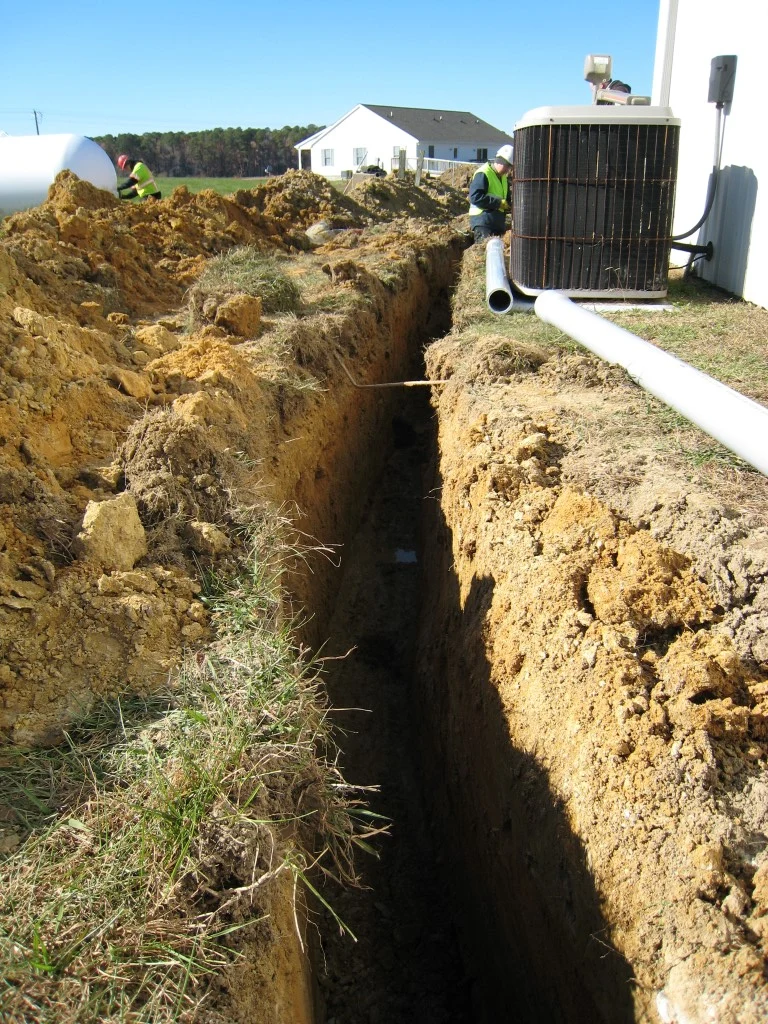
The photographs show historical electricity infrastructure and a standby-power installation, rather than a verified dispatch under this order. Our examples identify the information an operator would need to compare grid-only and backup-assisted operation. The next useful evidence is the actual dispatch and resource reporting, plus any new dated DOE decision. Until then, the confirmed news is the bounded emergency authority and its operating conditions.
Source: U.S. Department of Energy / PJM ↗ · Signed DOE Order 202-26-50 ↗ · PJM October 11 emergency application ↗
Mining calculator ↗