Sterling says its West Texas gas-powered Bitcoin mine is fully operational
Source report: 2026-11-17 · Editorial analysis published: 2026-11-17
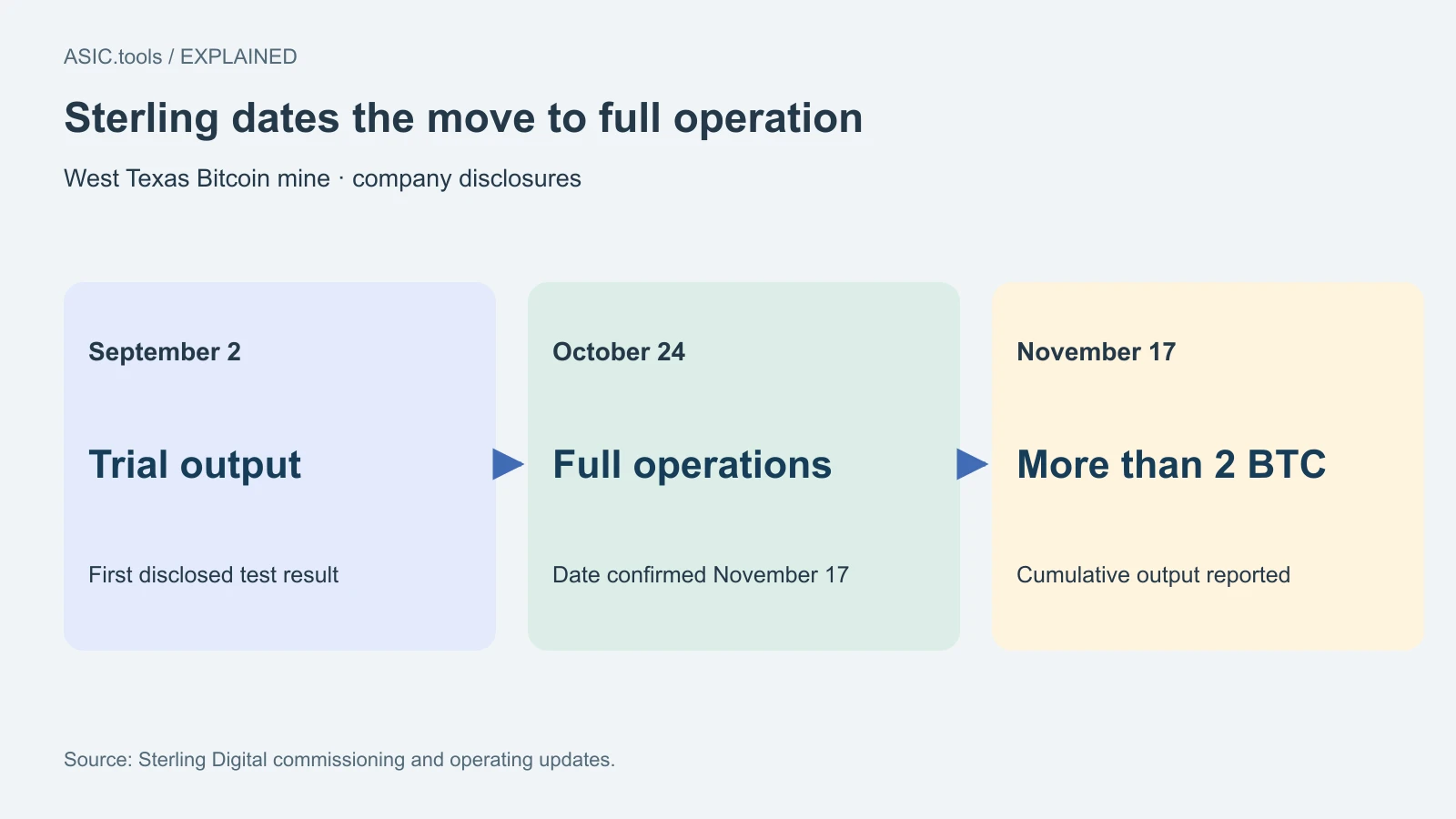
The company says full operations began October 24. It reports more than 2 BTC mined to date and puts initial energy costs at about $19,400 per BTC.
The trial site is now mining in full operation
Sterling Digital said on November 17 that its West Texas Bitcoin mine had moved to full operations on October 24. The company says the site has mined consistently since then and puts its total production to date at more than two bitcoin. A September announcement had confirmed mining during a controlled trial. The new disclosure establishes the start date for full operations and gives readers a first look at the company’s initial energy cost.
The announcement gives a cumulative total. It does not break out what was mined before October 24, report the exact quantity above two bitcoin, or specify a monthly output. There is little to gain by dividing the rounded total by the days since the start date and calling the result a production rate. A dated monthly figure would give a better comparison with the next month.
From gas to the miner
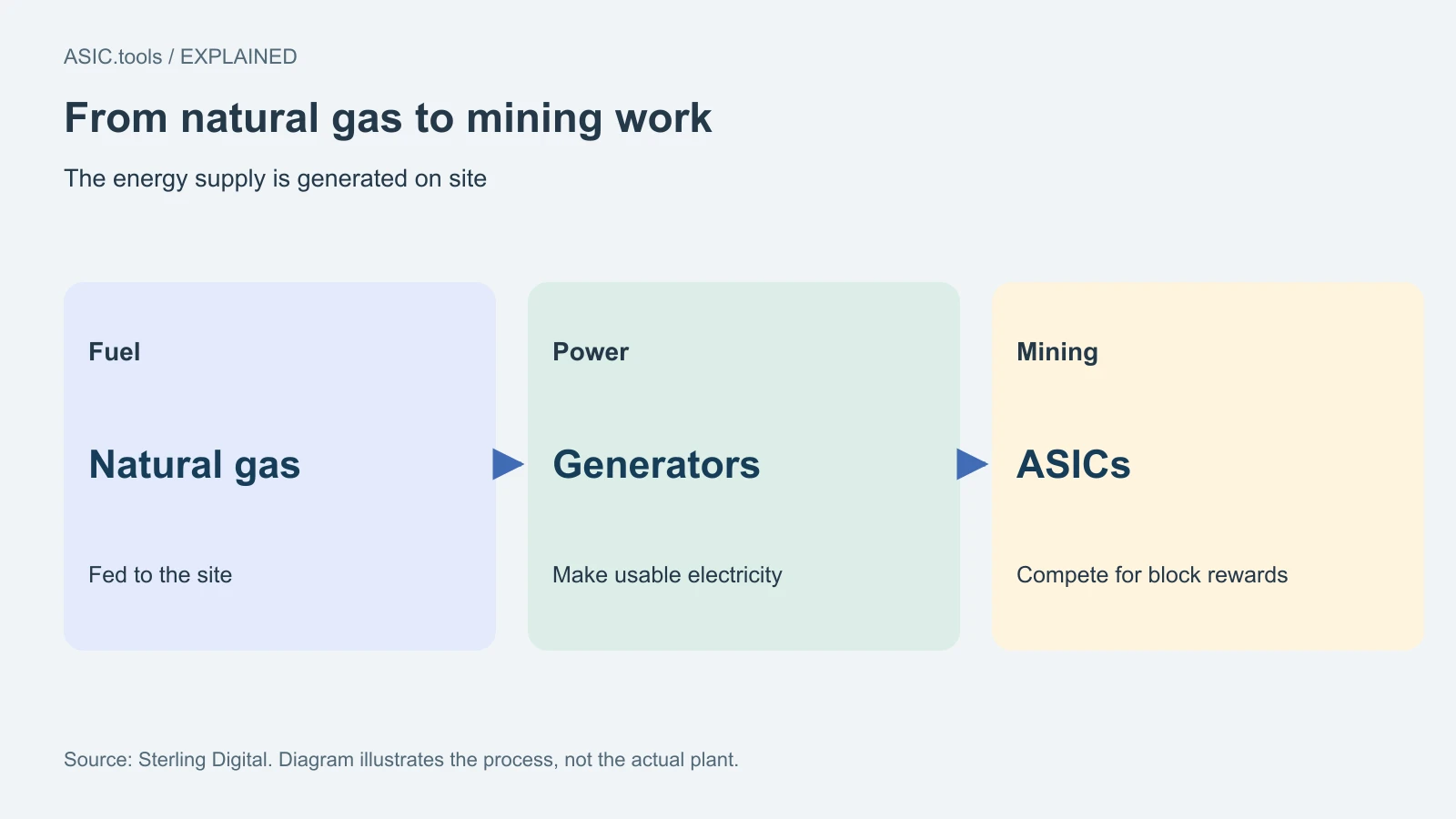
Sterling says the mine’s generation, electrical equipment and mining fleet now run as one system. Gas goes to the site’s generators, which produce the electricity the miners use. An ASIC, a chip built for a specific task, then does the calculations that compete for Bitcoin’s block rewards. The hardware works on the same network as a machine connected to an electric utility: what changes is how the operator obtains power.
Generating the electricity at the site can make some costs easier to connect to mining. Gas still has to be delivered, generators serviced and machines cooled. An hour of generator downtime can leave the machines idle even if the miners themselves are ready. A mine using gas at the source therefore has to manage electricity output and equipment availability together.
What the $19,400 covers
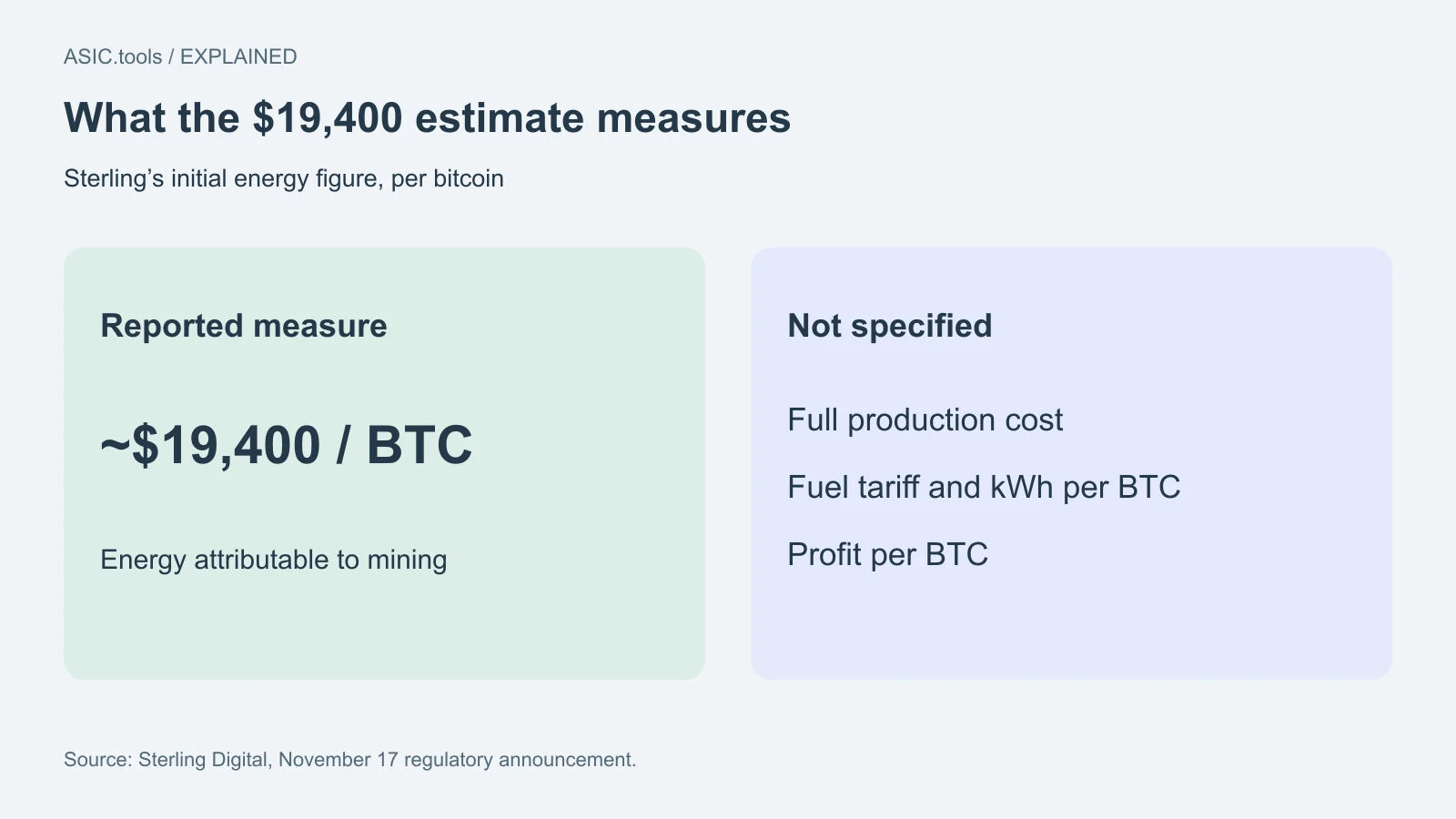
Sterling estimates that energy attributable to mining cost about $19,400 for each bitcoin in the initial operating period. It describes this as an energy figure. The announcement does not supply the plant’s total costs, a realized profit per coin, the fuel price or the number of kilowatt-hours it took to make one bitcoin. A reader cannot infer a gas tariff or a full cost of production from that number alone.
Per-coin cost can change even when the energy bill barely moves. If the same amount of electricity yields fewer coins because the network becomes more competitive, that spending is spread over fewer bitcoin. To track a machine over time, keep both the energy used and the mining output. A single dollar figure per coin is easier to read when you can see what changed on both sides.
The same test works at home
You can use that approach without owning a gas generator. Pick a fixed period, compare the coin amount your pool actually credited with the electricity used and then add costs that sit outside your power bill. A household can read its meter and a hosted miner can use the bill and the pool’s worker history. If the periods differ, neither figure explains what happened to the other.
Separate the checks for power and hardware. Energy is a running expense, while equipment and repairs are separate. If an offer gives a price per kilowatt-hour, ask what else has to be paid to keep the ASIC running and whether the quoted rate applies during the hours that matter to you. Those answers help you compare unlike setups before you put their costs in the same column.
What to watch in the next update
The commissioning story was about whether Sterling could run the system from end to end. This update answers when normal operation began. To judge whether the costs hold, look for output over a stated period, actual uptime and a clearer breakdown of energy and other expenses. More than two bitcoin and an early energy estimate are a starting point for that comparison.
The opportunity of an on-site generator is that the operator can turn local fuel into useful electricity. Its task after launch is to keep the path from fuel to accepted mining work reliable. Future reports with consistent periods and operating measures will show whether the initial result carries over as the site keeps running.
An energy estimate needs a measurement window
When a site starts, some days can include tuning or interruptions. Ask which dates the estimate covers and whether it reflects fuel alone or also costs of making electricity usable. Without that breakdown, the energy estimate is useful for tracking this project but has limited value as a comparison with someone else’s site.
There are also two different ways to talk about an hour. An hour with a generator online is not necessarily an hour with every miner working, and a miner that is powered up may take time to report work to its pool. Keep the generator log, meter and pool record together if you want to know where any gap arose.
Source: Sterling Digital ↗ · November 17 regulatory announcement, mirrored by Investegate ↗ · September commissioning disclosure ↗
Mining calculator ↗