Australia sets new grid connection standards for large loads from 30 MW
Source report: 2026-11-12 · Editorial analysis published: 2026-11-13
The November 12 rule sets technical standards for large loads that use power electronics. It changes what some mining and data center projects must show before connection.
A new threshold for major connections
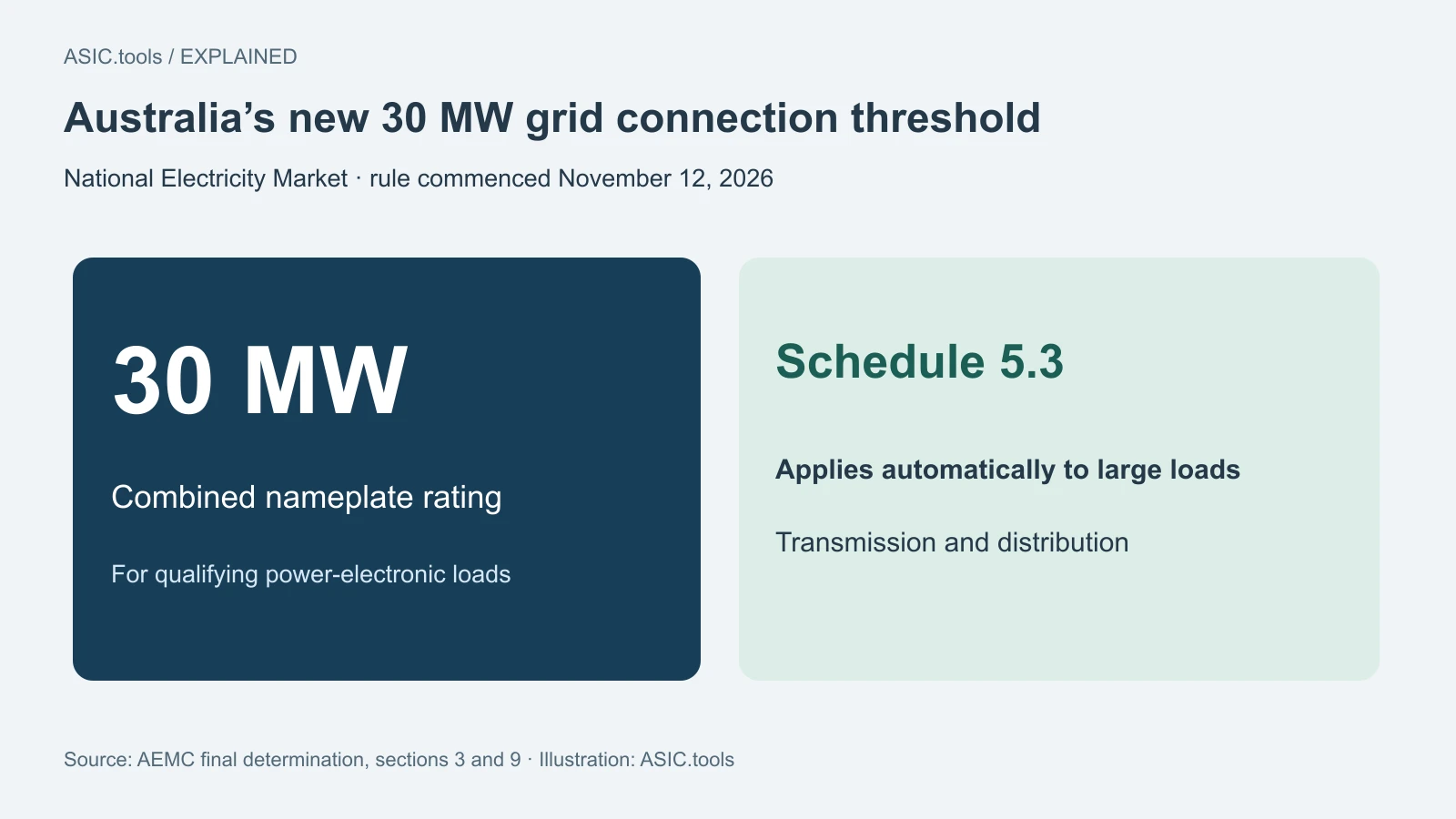
On November 12 the Australian Energy Market Commission put new connection standards into effect for the National Electricity Market. It defines a large inverter-based load as a qualifying load with a combined nameplate rating of at least 30 megawatts. The new classification determines when the grid access standards in Schedule 5.3 apply automatically.
A nameplate rating is the rated capacity of the equipment. It differs from a meter reading taken at a given time. The rule looks at whether the load uses power electronics, such as converters or rectifiers, and can be susceptible to instability in their controls. For mining farms and data centers, the relevant question is how the site is built and connected.
What the network needs to know
At 30 MW or more, a qualifying load falls under the access standards automatically on both the high-voltage transmission network and the local distribution network. Below the threshold, a distribution network operator can still apply requirements where needed to protect the quality and security of the supply. The commission also addresses the combined effect of loads that are electrically close to one another.
The decision cites past Texas grid disturbances involving large power-electronic loads, mainly cryptocurrency mining facilities, as part of the background. A large load that cuts or restores its demand suddenly can change the balance between supply and demand in the surrounding network. The connection process gives the network operator a way to examine the site’s response in advance.
The determination also addresses projects that connect in phases or use multiple connection points. In evaluating a project, a network operator can look at the electrical relationships and the combined effect on the system. Splitting an equipment order into several deliveries tells the operator little about the way the completed site will behave.
For an idea of scale, 30 MW is 30,000 kW. Ten thousand machines drawing 3 kW each would reach that figure before separate cooling or other site loads. This is a scale illustration. The rule uses the combined nameplate rating of qualifying equipment as defined in the decision.
A voltage dip puts the design to the test
One requirement is disturbance ride-through. It describes how equipment behaves while grid voltage or frequency is outside its usual range and how it recovers afterward. At an industrial mine, power supplies, controls and auxiliary equipment can all shape the site’s response at the connection point. A list of ASIC models by itself gives only part of that picture.
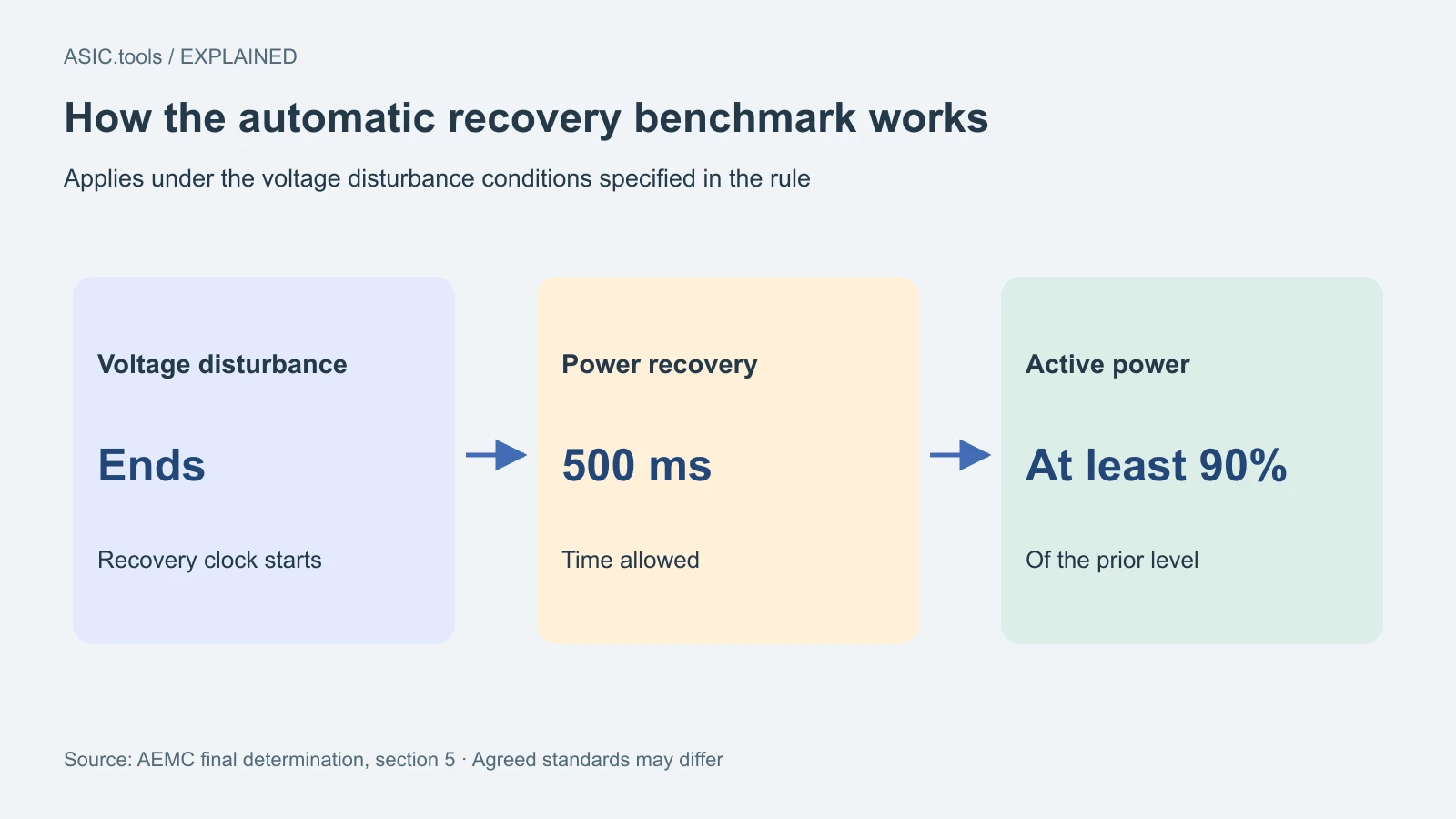
For certain voltage disturbances the automatic standard calls for returning to at least 90% of the previous active power within 500 milliseconds after the disturbance ends. The rule also allows an agreed recovery profile, subject to the grid operator and the Australian Energy Market Operator accepting it under the applicable framework. The exact response expected at a site belongs in its performance standard.
The final rule also sets an instability standard for relevant large loads. When the operator or AEMO considers that a load could contribute to instability, its response and information sharing matter as well. The documents on the grid side describe what happens at the connection point and can include more than the voltage behaviour of the individual machines.
Where the transition period applies
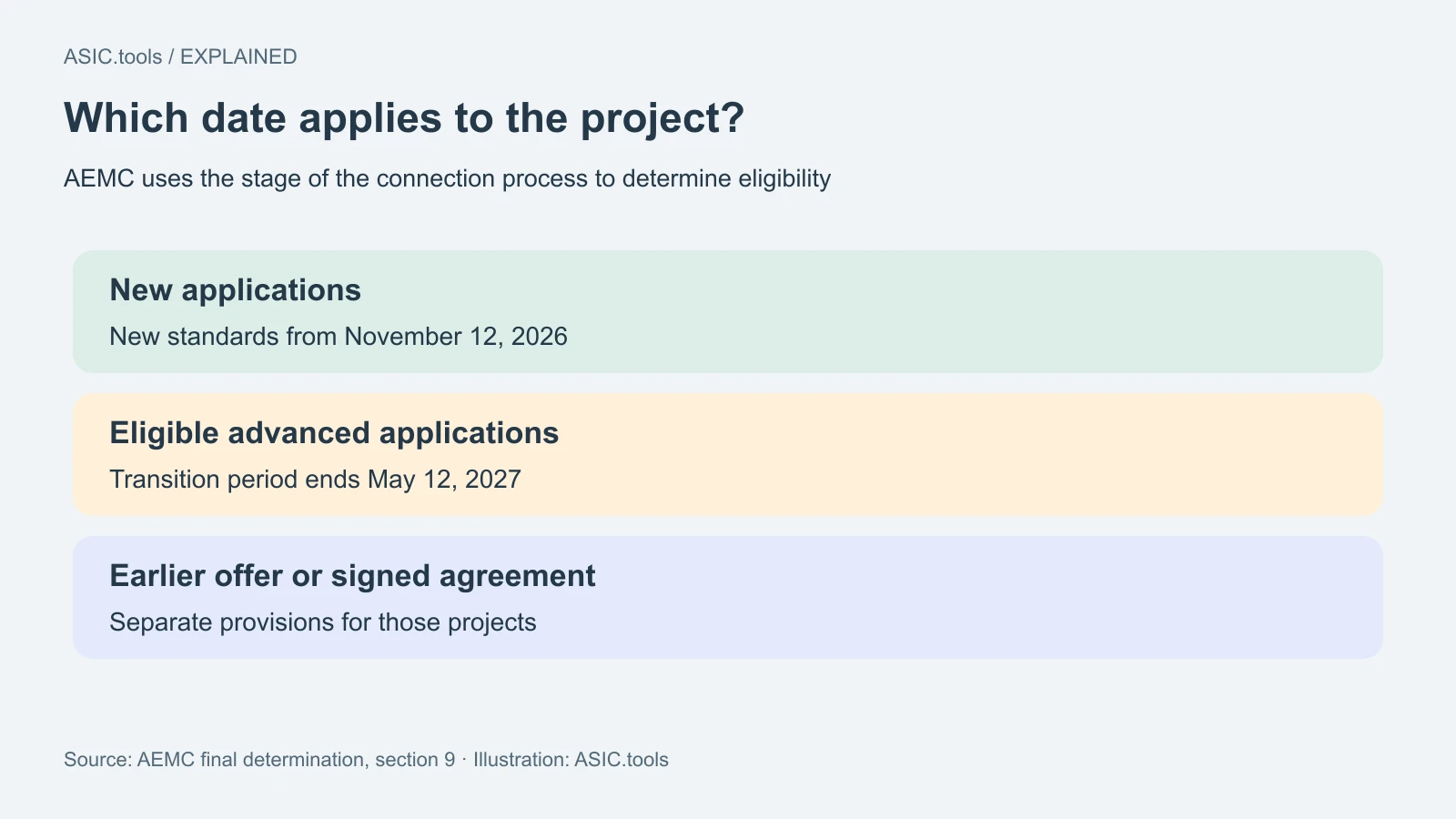
The rule took effect on publication. An advanced applicant that already received acceptance of its negotiated standards and was still waiting for an offer may qualify for a transition period until May 12, 2027. If an offer fails to arrive before the period ends, the new standards apply. Earlier connection offers or executed agreements have separate provisions, as do certain proposals to modify equipment.
For someone considering a large mine or a place in a new hosting facility, ask which connection stage the project has reached and what the operator must still demonstrate. A signed offer, the installation of equipment and power delivered to the racks are separate milestones. This rule addresses technical grid access in the National Electricity Market. Retail electricity prices and small home miners sit outside the 30 MW classification.
For a hosting customer, a useful follow-up is the planned energization date and the step it depends on. Rack delivery can happen before the site can take its full electrical load. Ask when your machines can begin hashing, because that is when operating time and mining revenue start.
Source: Australian Energy Market Commission ↗
Mining calculator ↗