Shell announces NVIDIA DSX Ready qualification for its direct liquid cooling fluid
Source report: 2026-10-08 · Editorial analysis published: 2026-10-10
The October 8 supplier announcement concerns direct liquid cooling. It does not certify the fluid for every hydro ASIC or establish measured energy savings at a mining farm.
Analysis and practical implications
This section is our analysis and illustrative calculations, separate from the source report.
The qualification announced this week
A Shell supplier release published on October 8, 2026 reports NVIDIA DSX Ready Coolant qualification for its direct liquid cooling fluid. The publication is explicitly marked sponsored and is treated here as an attributed company announcement. It describes an AI and high-performance-computing application, not the launch of an ASIC miner. The article adds our operating analysis of what a coolant qualification means when comparing different cooling systems.
The news is distinct from the older launch of the fluid itself. Shell’s product page, last updated September 26, supplies background on DLC Fluid S3 and its propylene-glycol formulation. Neither that earlier page date nor this week’s announcement should be relabelled as a newly released mining device. The useful question for a farm is whether its installed equipment and loop documentation specify compatibility, rather than whether another computing platform has qualified a product.
Direct liquid cooling and immersion use different boundaries
A direct liquid cooling arrangement carries fluid through heat-transfer components such as cold plates and associated plumbing. An immersion system places suitable equipment in a bath of compatible dielectric liquid. The architectures have different contact boundaries and material requirements. A fluid selected for one must not be presumed suitable for the other merely because both methods use liquid to remove heat. The announcement does not make the two categories interchangeable.
This distinction is especially important when browsing ASIC specifications. The labels “hydro,” “immersion” and “liquid cooled” should be connected to a model’s actual installation requirements. A product photograph cannot establish which fluid is permitted, and a supplier’s generic description cannot replace an equipment-specific manual. Check the wetted materials, permitted coolant, flow range and temperature requirements together before making a selection. The new qualification is relevant context, not a universal substitution rule for existing farm systems.
Compatibility is a system property
A cooling loop can include pipes, fittings, seals, pumps, heat exchangers and metals with different material properties. A fluid’s suitability depends on its interaction with those components and on operating conditions. Compatibility with a particular platform therefore does not establish compatibility with every installation. It also does not prove that any mixture an operator prepares locally will match the qualified formulation. Product identity and preparation procedure need to remain traceable.
For maintenance planning, keep the exact coolant name, concentration, fill date and relevant technical data alongside the installed components. If a service contractor changes the fluid, record what was removed and what was added. Do not rely only on colour: colour can aid inspection but cannot establish chemistry, concentration or cleanliness. This documentation helps later staff interpret a reading and avoids an undocumented mix becoming the assumed baseline for future maintenance or warranty discussions.
Fluid selection does not set a mining power profile
A coolant announcement cannot establish a higher supported hashrate for an ASIC. Changing the thermal environment and changing firmware power settings are separate actions. Hardware limitations, electrical service and the permitted operating range remain relevant even where a cooling system can remove more heat. Keep the device’s validated profile separate from a supplier’s claims about the fluid; any new performance setting requires its own evidence and monitoring.
An ASIC.tools farm entry should therefore retain the confirmed model specification and the actual current setting. Do not raise nominal hashrate or reduce device watts merely because a fluid has received a qualification for AI infrastructure. If an operator later performs a controlled comparison, record accepted hashrate, electrical input, inlet temperature and the observation interval before and after the change. A repeatable result needs comparable conditions rather than a single favourable dashboard screenshot.
PUE and device efficiency measure different things
Power usage effectiveness compares total facility power with IT equipment power over a consistent measurement boundary. ASIC efficiency in J/TH describes electrical energy per computational work at a stated profile. A change in auxiliary cooling can alter the facility overhead without changing the miner’s electrical efficiency. Confusing the two can turn a credible cooling observation into an incorrect claim that the ASIC chip itself became more efficient.
For an independent arithmetic example, suppose IT power is 1 MW and total facility power is 1.2 MW. The ratio is 1.2. If the same IT load remains 1 MW while total power falls to 1.1 MW, the ratio becomes 1.1. That hypothetical example explains the measurement boundary; it is not a Shell test or a promised saving. The October qualification announcement supplies no mining-site measurement that would justify assigning either value to a particular farm.
A useful commissioning record
Before comparing ongoing performance, establish a documented commissioning baseline. Record the approved fluid, the prepared system, the meter locations and the relevant operating ranges supplied by the equipment documentation. Log alarms and interventions against that baseline. An installation with missing or differently timed measurements can make a normal load change look like a cooling improvement. Comparable observations are necessary to attribute a change to the intended intervention.
For a farm with multiple cooling zones, keep records at the zone level before calculating a site total. A pump shared across zones and a meter that includes other equipment need explicit allocation rules. Otherwise one zone can appear to improve simply because its auxiliary consumption was charged elsewhere. This is a practical accounting and instrumentation issue, not a finding about Shell’s qualified product. A supplier qualification and an operating baseline answer different questions and both should retain their scope.
Safety data and service procedures remain necessary
The product’s current technical and safety documentation is the appropriate reference for handling, storage and service requirements. A news announcement does not provide every instruction needed to fill or maintain a system. Do not infer that a cooling fluid is harmless, electrically nonconductive or suitable for direct contact with electronics from its marketing category alone. The intended contact boundary matters, and the relevant equipment documentation should be read together with the fluid documentation.
Operators can keep a controlled service record with the product identifier, supplier documentation revision and responsible technician. That provides a concrete reference when a later inspection finds a concentration or contamination issue. It also prevents maintenance decisions from depending on an old article after the manufacturer has revised its guidance. Our news link preserves the dated qualification claim, while the supplemental product link helps readers locate the supplier’s current technical context without presenting a substitute installation manual.
How to use this news in a farm decision
The qualification is a new supplier milestone in the direct liquid cooling ecosystem. It supports following the relevant product and platform documentation more closely; it does not settle the economics or compatibility of a proposed mining installation. A purchasing or retrofit comparison should use the actual system design, permitted fluids, auxiliary consumption and service costs. Any predicted saving remains a scenario until it is established by measurements at the appropriate boundary.
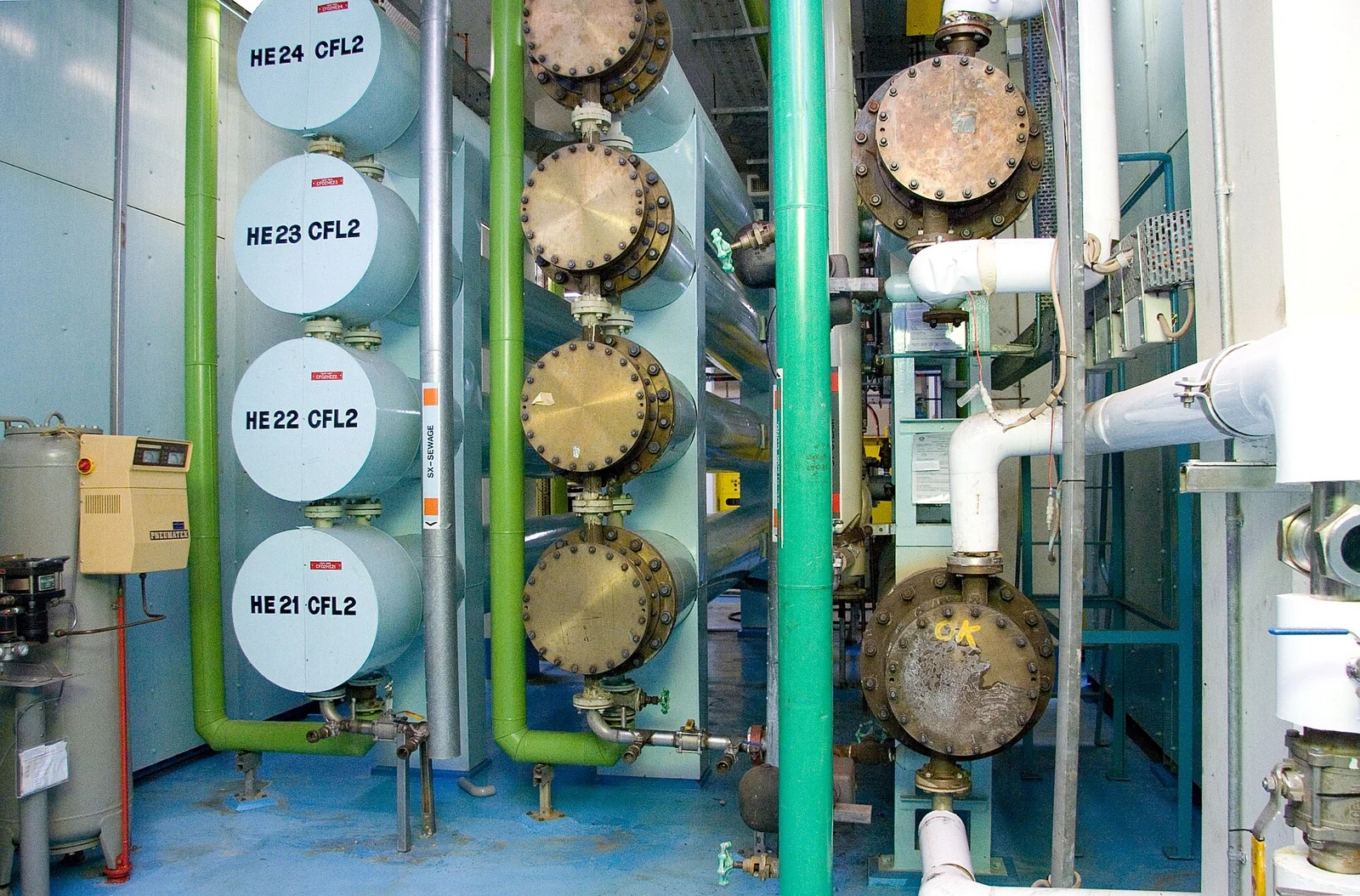
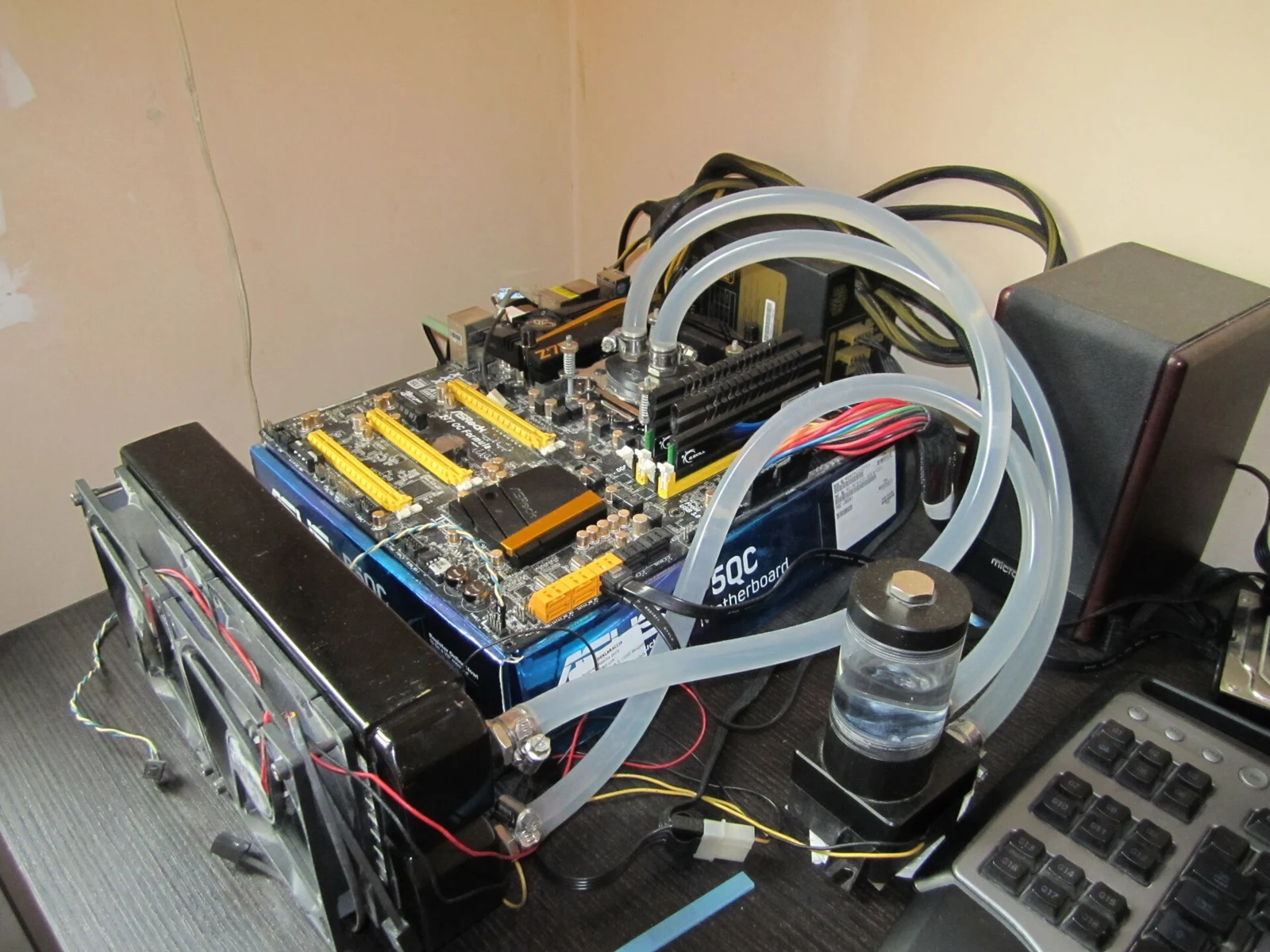
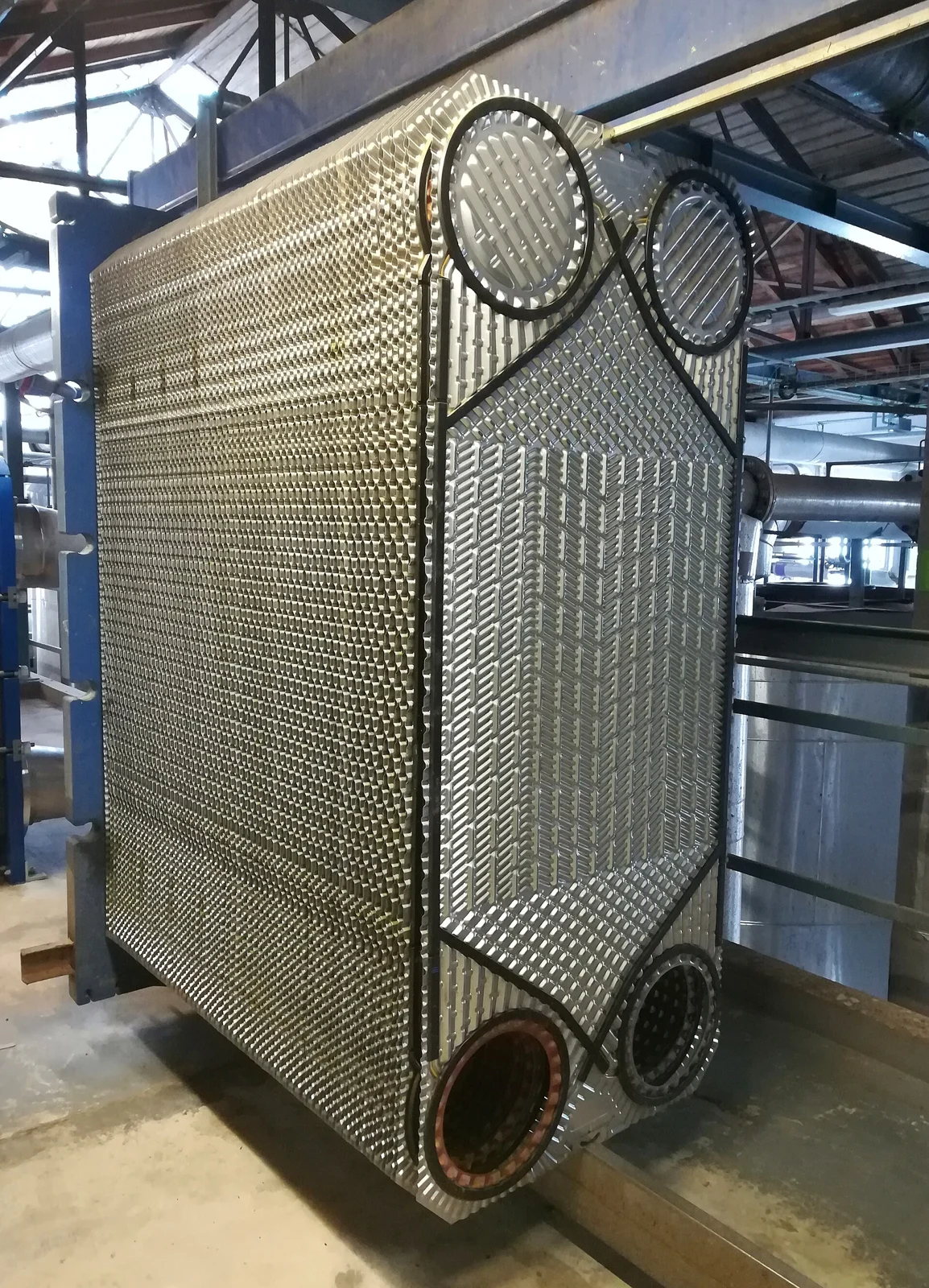
The two licensed archival photographs illustrate cooling equipment and heat-transfer hardware, rather than the newly qualified formulation or an NVIDIA validation test. Keep that visual context distinct from the announcement’s factual claim. For an ASIC owner, the practical next step is a compatibility review tied to the exact device and loop. A qualification for one platform is useful evidence within that scope; a farm-wide performance claim requires additional device-specific and site-specific confirmation.
Source: Shell ↗ · Shell DLC Fluid S3: product and technical context ↗
Mining calculator ↗