Orcadian updates offshore compute concept with a £124/MWh estimate
Source report: 2026-10-07 · Editorial analysis published: 2026-10-08
The October 7 update outlines a proposed 200 MW IT facility and an internally calculated private-wire power price. The company expressly says the platform comparison is not an engineering study or proven feasible design.
Analysis and practical implications
This section is our analysis and illustrative calculations, separate from the source report.
A concept update with explicit limits
Orcadian Energy published an Earlham Gigagrid update on October 7. Its initial offshore compute concept targets 200 MW of IT power; an internal private-wire electricity estimate is about £124/MWh, compared with a cited £218/MWh industrial-grid benchmark. Neither figure establishes a contracted customer tariff. The company states that its platform comparison is a desktop illustration, that no offshore platform design has been undertaken and that feasibility, financing and permissions remain unproven.
This makes the news a proposal and cost-model story rather than an announcement of an operating offshore data center. Our interpretation is to keep the target load, illustrative physical arrangement and economic assumptions separate. A site can be attractive on a preliminary comparison without having passed engineering validation. For miners considering unusual power locations, that boundary is essential: a concept’s estimated electricity price does not prove that suitable equipment can be installed, maintained and supplied at the advertised scale.
Converting the price into calculator units
The conversion itself is straightforward: £124 per megawatt-hour equals £0.124 per kilowatt-hour, while £218/MWh equals £0.218/kWh. Dividing 124 by 218 gives about 56.9%; the difference is £94/MWh, or about 43.1% of the comparison figure. These are our arithmetic conversions of the company’s stated numbers. They do not validate the underlying estimates, establish a universal market discount or convert British pounds into another currency.
An independent illustrative device drawing 3 kW continuously for 24 hours uses 72 kWh. At £0.124/kWh its energy component would be £8.928 per day; at £0.218/kWh it would be £15.696. That comparison excludes every other charge and is not a revenue calculation or an actual Earlham hosting offer. In the mining calculator, match the currency of income and electricity costs and include your actual operating hours before treating the difference as a net profitability change.
A modeled price depends on the assumptions underneath it
The company’s price calculation assumes twenty-year operation, target returns of 20% for gas development and 15% for the power station, carbon charges applying only to the uncaptured 5%, and no Climate Change Levy. Orcadian describes its estimates as internal and unverified. These assumptions are part of the model, not independently established outcomes or a published utility rate available to an ASIC buyer.
Our analysis is to test such a model across utilization, capital spending and fuel-price cases instead of copying its headline number into a long-term budget. A fixed investment divided over fewer useful operating hours raises the unit-cost burden even if its equipment works as intended. Changes in tax treatment or capture performance can alter the comparison. The useful next evidence would be a validated engineering and commercial case with clearly defined customer charges, operating boundaries and sensitivity ranges.
IT power and total site power serve different comparisons
A target stated as IT power refers to the computing load boundary, whereas total supply also has to support whatever auxiliary equipment the installation requires. Our interpretation is that an offshore concept should retain this distinction through design and cost estimates. The release does not establish a complete operating electrical balance. It would therefore be unsupported to treat the proposed IT load as an equal quantity of power exported to customers or as a measured generation output.
For a mining comparison, define where electricity is metered and which supporting loads are included in the invoice. Pumps, heat rejection, distribution and service equipment may sit outside the device’s own specification. This is why multiplying an ASIC nameplate wattage by a quantity does not constitute a complete facility design. The same boundary discipline applies when comparing an AI-oriented concept with a mining site, even when both depend on the availability of high-density electrical infrastructure.
Density is a design target rather than an offshore demonstration
Orcadian targets rack density above 300 kW, but says equivalent offshore density remains to be established. The company’s onshore comparison is based on third-party reports it has not independently verified. We do not present those reports as confirmation that an offshore rack or platform has already achieved the target. Density can reduce the space required for a given compute load without resolving every thermal, structural or operational constraint.
Our analysis separates floor-area arithmetic from load-bearing design, access and maintainability. Concentrating more equipment in a smaller space changes where heat, electrical demand and physical weight are concentrated. A project must still provide workable maintenance paths and interfaces. For an ASIC operator, a dense equipment arrangement is useful only if required service and safe operating conditions remain achievable; the number of kilowatts per rack alone cannot establish those conditions.
Offshore operating conditions need their own validation
The company identifies marinisation, weight, seawater cooling and a different consenting regime as issues that still require work. These constraints are distinct from simply copying an onshore building layout. Our interpretation is that offshore deployment needs evidence specific to its operating environment and service model. A successful onshore computing installation can provide a reference point, but it cannot independently prove that a similar arrangement works at sea or can obtain the necessary permissions.
For an operator reviewing a remote site, consider how replacements arrive, how maintenance is performed and which dependencies can stop production even when computing devices are healthy. Identify how operating records distinguish a local equipment fault from a cooling, power or access interruption. These are proposed evaluation questions; the update does not disclose a completed offshore service plan. Avoid turning a visually compelling platform concept into a guaranteed availability figure without a tested operational basis.
A project update does not automatically restore an ended agreement
ASIC.tools previously covered Orcadian’s October 5 announcement terminating a joint development agreement connected with offshore compute. The October 7 update is a distinct concept disclosure and does not state that the terminated agreement has been restored. The company says it continues discussions with potential partners. Discussions should remain discussions in a project timeline until a new binding arrangement and its terms are disclosed.
Our interpretation is that commercial status and engineering progress need separate records. A revised technical or cost presentation can inform potential partners without establishing financing, an executed customer contract or a final investment decision. For a mining infrastructure project, the same distinction prevents an announcement of interest from being counted as secured production capacity. This update changes the information available about the concept; it does not, by itself, remove the unresolved contracting and validation steps.
What would turn the concept into an operating proposition
The relevant next milestones are engineering validation, a permitted arrangement, credible financing and commercial terms that identify the actual delivered-power boundary. Our analysis would also ask for a demonstrated maintenance and cooling basis before comparing the proposal with existing hosting capacity. The October 7 statement is useful because it makes important limitations explicit; reproducing only the attractive price would conceal those limitations and make the comparison less useful to equipment owners.
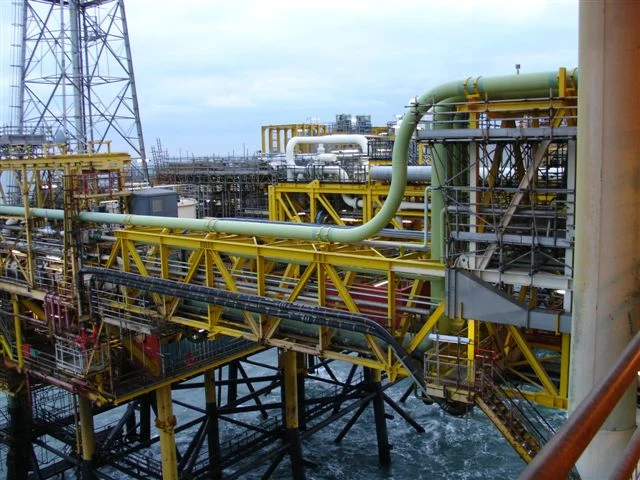
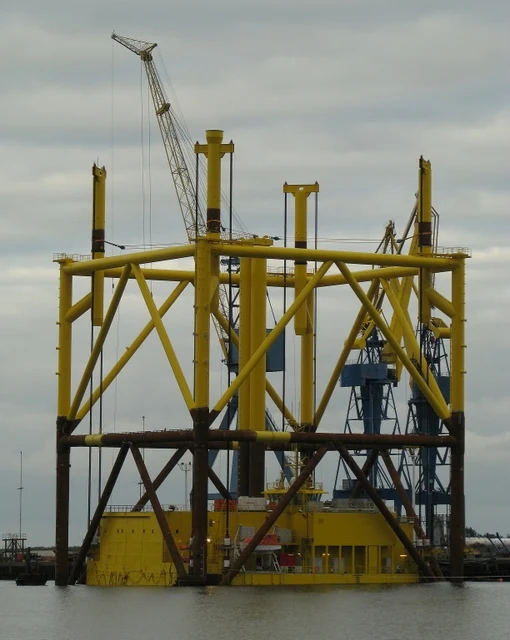
Until those milestones are confirmed, the proposed price belongs in a clearly labeled scenario rather than a live tariff list. Our article date follows the primary announcement and does not claim results from the company’s scheduled October 8 presentation. The two licensed archival photographs illustrate offshore infrastructure and power equipment; they do not depict a completed Earlham compute facility. The catalogue and farm calculator retain their existing measured device specifications.
Source: Orcadian Energy ↗
Mining calculator ↗