Ofgem plans energy-debt relief for spring 2027: what home miners should check now
Source report: 2026-10-29 · Editorial analysis published: 2026-10-30
The October 29 announcement targets hardship and crisis-era debt in Great Britain, alongside billing and payment reforms. It changes the outlook for household bills, not the current electricity price of a mining rig.
A new plan addresses an old burden on electricity bills
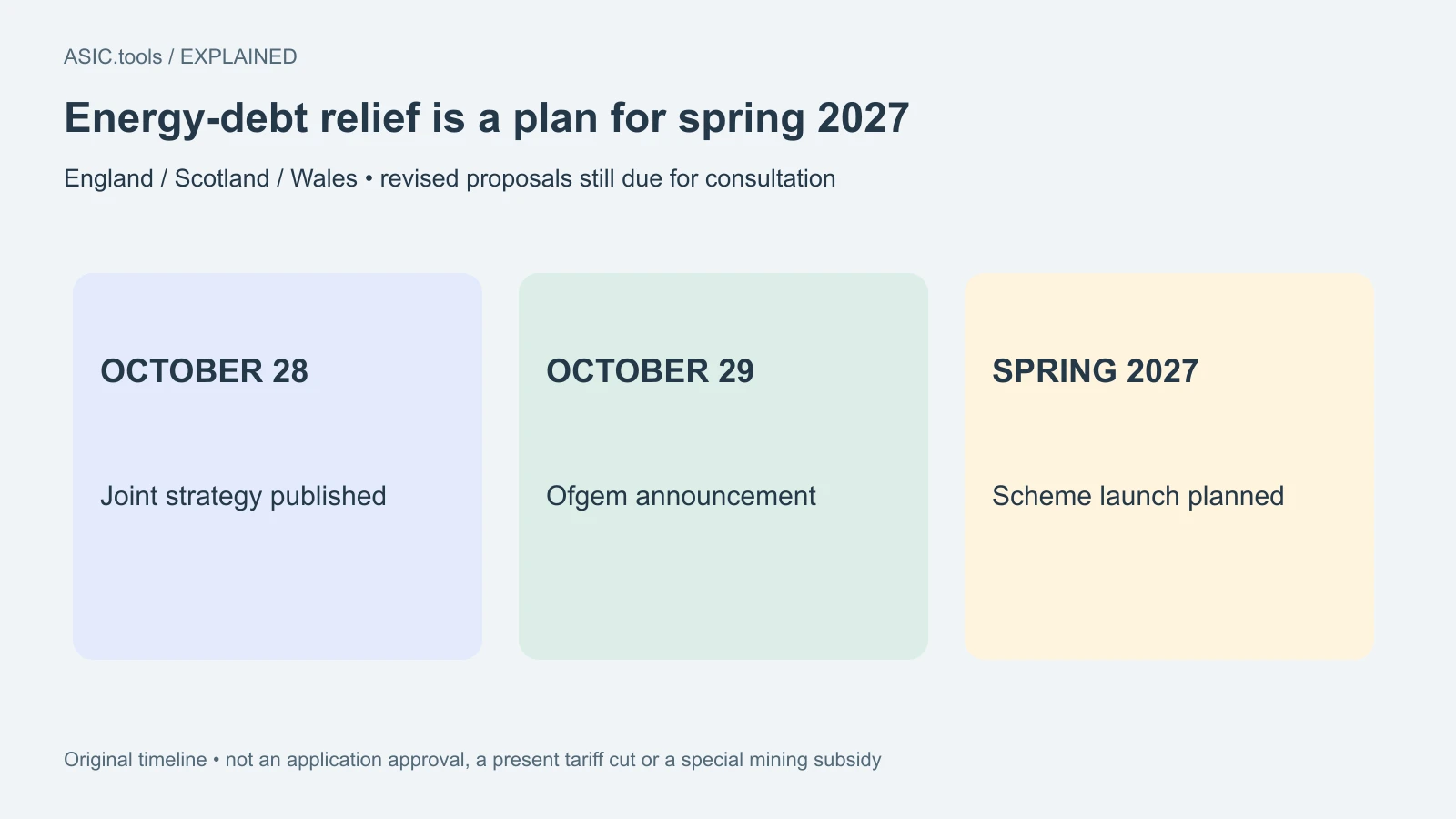
Ofgem and the British government have set out an energy-debt strategy built around relief, repayment and reform. The regulator’s October 29 announcement says a targeted Debt Relief Scheme is scheduled for spring 2027. For a household running a miner, the immediate significance is the electricity account and its repayment obligations: the announcement does not replace the price in the current supply contract.
The government published the joint strategy on October 28; the press announcement followed on October 29. Its stated territorial scope is England, Scotland and Wales. That matters when reading a headline about Britain: a household elsewhere, or a mining site on a business contract, should not assume the same consumer scheme automatically applies. The programme concerns domestic energy debt, not a special mining subsidy.
Which debts and households the proposal addresses
Ofgem says the scheme will target debts accumulated during the 2022–2024 energy crisis for households in genuine financial difficulty with little realistic prospect of repayment. It now plans a single phase, including support for pensioners, people receiving disability benefits and people receiving means-tested benefits. Revised proposals are due for consultation; the spring launch remains a plan, not an already open application window established by this announcement.
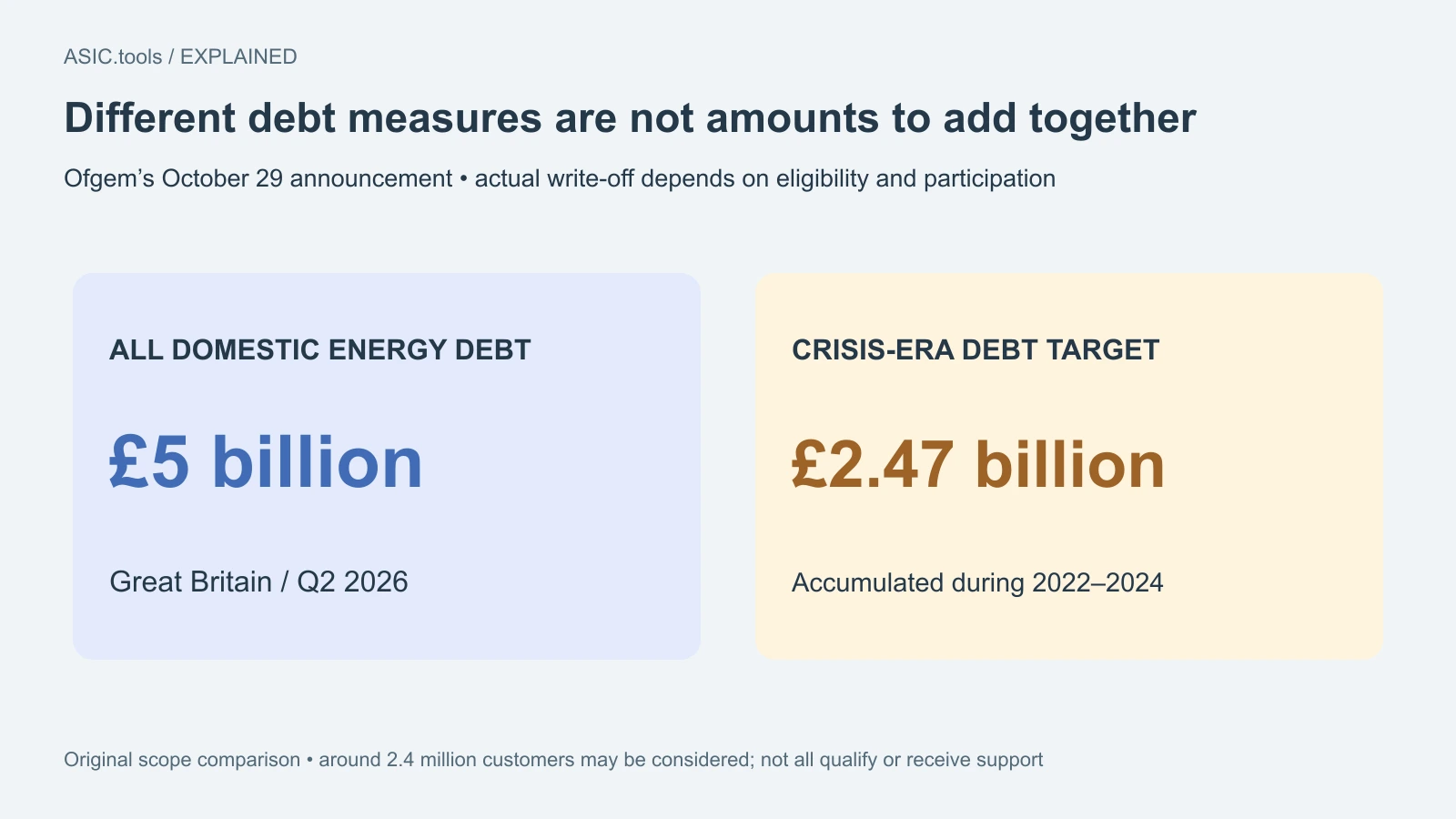
Around 2.4 million customers have historical debt that may be considered, but Ofgem explicitly says not all will qualify or receive support. It identifies £2.47 billion of crisis-era debt and arrears, compared with £5 billion of total electricity and gas debt and arrears in Great Britain in the second quarter of 2026. These are different populations and periods, not two amounts to add together as the size of an immediate write-off.
Relief also depends on engagement and repayment
The eventual amount written off will depend on participation, including work with suppliers or debt advisers on affordable repayment arrangements. Customers receiving support will be expected to engage and take steps to avoid new arrears. The strategy combines help for people facing the greatest difficulty with a responsibility to pay where repayment is affordable.
For a home operator, separate the balance already owed from the cost of new electricity consumption. A reduction in old debt would not make the next kilowatt-hour free. Before expanding a rig’s running hours, check the current unit rate, standing charge and any debt-repayment deductions with the supplier. Those inputs determine the actual household cash outflow; an anticipated future policy benefit should not be entered as present mining income.
Billing and payment methods are also under review
The package includes changes to the home-move process, a review of involuntary prepayment rules, work on standard credit and greater use of smart pay-as-you-go. A prepayment meter deducts energy costs from credit paid in advance; smart versions can give more frequent information about spending. Ofgem is considering reforms, not announcing that every household must switch payment method immediately.
The government estimates the broader strategy could save a typical household around £130 over ten years by reducing debt costs passed through bills. Payment and moving-home reforms have their own projected savings over time. These are forecasts under policy assumptions, not a £130 annual credit for each miner, and the figures should not be stacked as independent guaranteed discounts. The practical comparison still begins with the customer’s actual tariff and account terms.
Match the mining decision to the whole electricity account
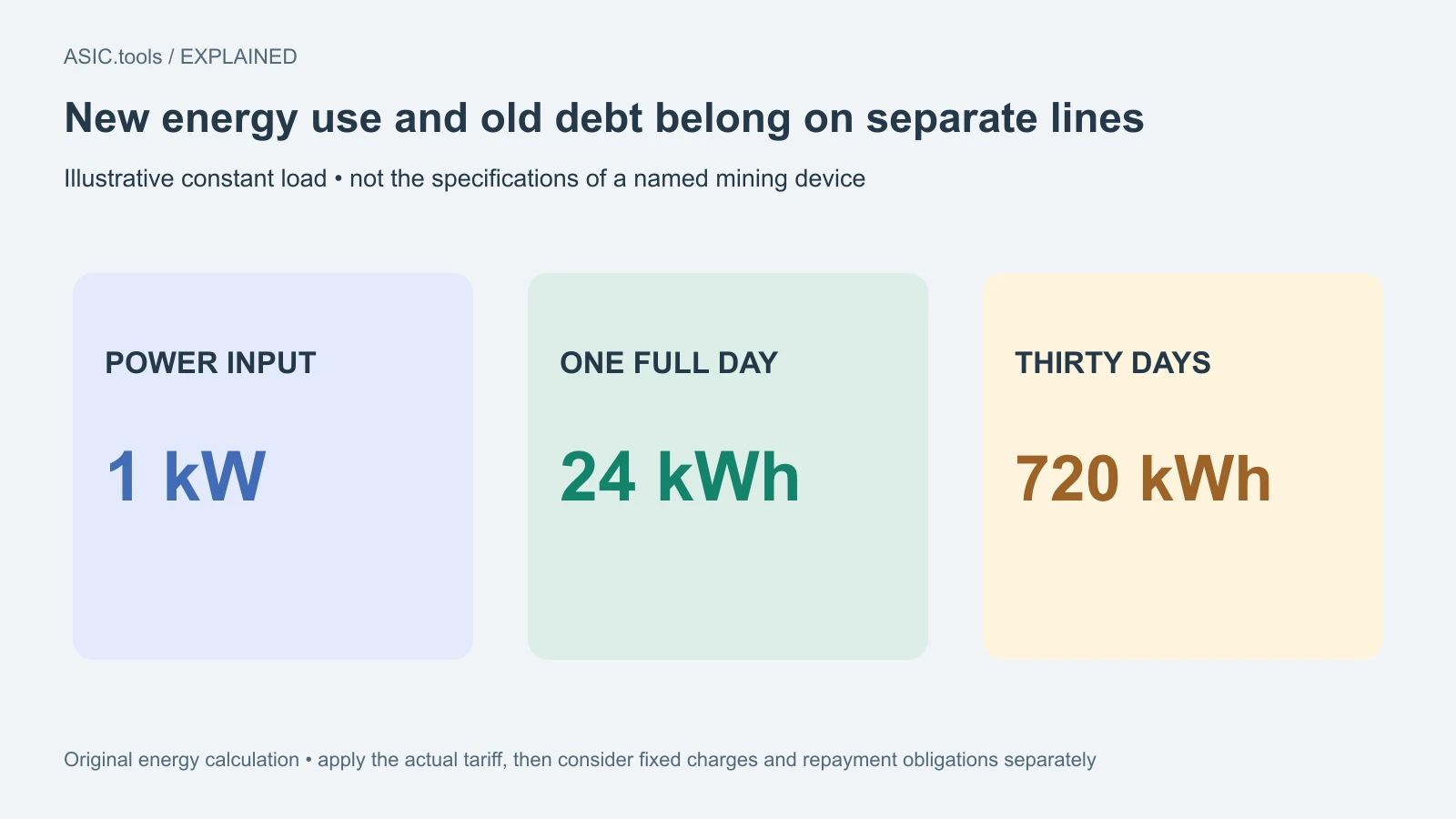
A simple consumption example helps separate power from money: a device continuously drawing 1 kW uses 24 kWh in a day and 720 kWh in thirty days. Those are illustrative quantities, not the specifications of a named miner. Multiply by the applicable unit price, then consider other relevant bill components separately. Neither a future debt-relief announcement nor a different payment interface reduces those energy quantities by itself.
A machine that also supplies useful room heat may replace some other heating, but the value depends on what heating it displaces and when the home needs it. Do not count the same electricity saving twice or assume all miner heat is useful all year. The new policy is a reason to understand the household account, not to assume an uneconomic rig has become profitable before any scheme starts.
When moving home, keep dated meter readings, verify the handover and open or close the correct account. This is directly relevant to a continuously running load: a wrong starting reading can distort both the bill and a mining-cost comparison. Contact the supplier through its established channels for account-specific support. Ofgem has announced a route toward reform; eligibility and implementation need the revised official details rather than assumptions based on a headline.
Use an electricity-only mining comparison and an account-affordability check for different purposes. The first asks what one more hour of the rig costs; the second asks whether the household can meet the whole bill and agreed repayments. A repayment deduction may not be a cost caused by that extra hour, yet it still matters to the cash available for keeping the account funded.
Likewise, keep a dated record of the unit price used in the calculation. A policy article about support can remain relevant while a supplier changes a contract or a household changes payment arrangements. Update the actual input when those terms change. A forecast saving spread over years should remain a separate scenario until the household knows whether and how the programme affects its own account.
Source: Ofgem / DESNZ ↗ · Government strategy published October 28 ↗ · Joint strategy document, Open Government Licence v3.0 ↗ · Ofgem Crown copyright and reuse terms ↗
Mining calculator ↗