NERC asks to register large mining loads: the proposal has two size tests
Source report: 2026-10-21 · Editorial analysis published: 2026-10-26
The October 21 filing seeks approval for owner and operator registration at computational sites with at least 50 MW and a qualifying 100 kV connection. It is a proposal, not a new home-mining rule.
A filing about who answers for a large load
NERC filed a petition with the US Federal Energy Regulatory Commission on October 21 to add owners and operators of certain large computing sites to its reliability registry. Cryptocurrency mining is explicitly included alongside artificial intelligence and other data-center computing. The proposal aims to bring large electricity customers into a framework that already addresses reliable grid operation.
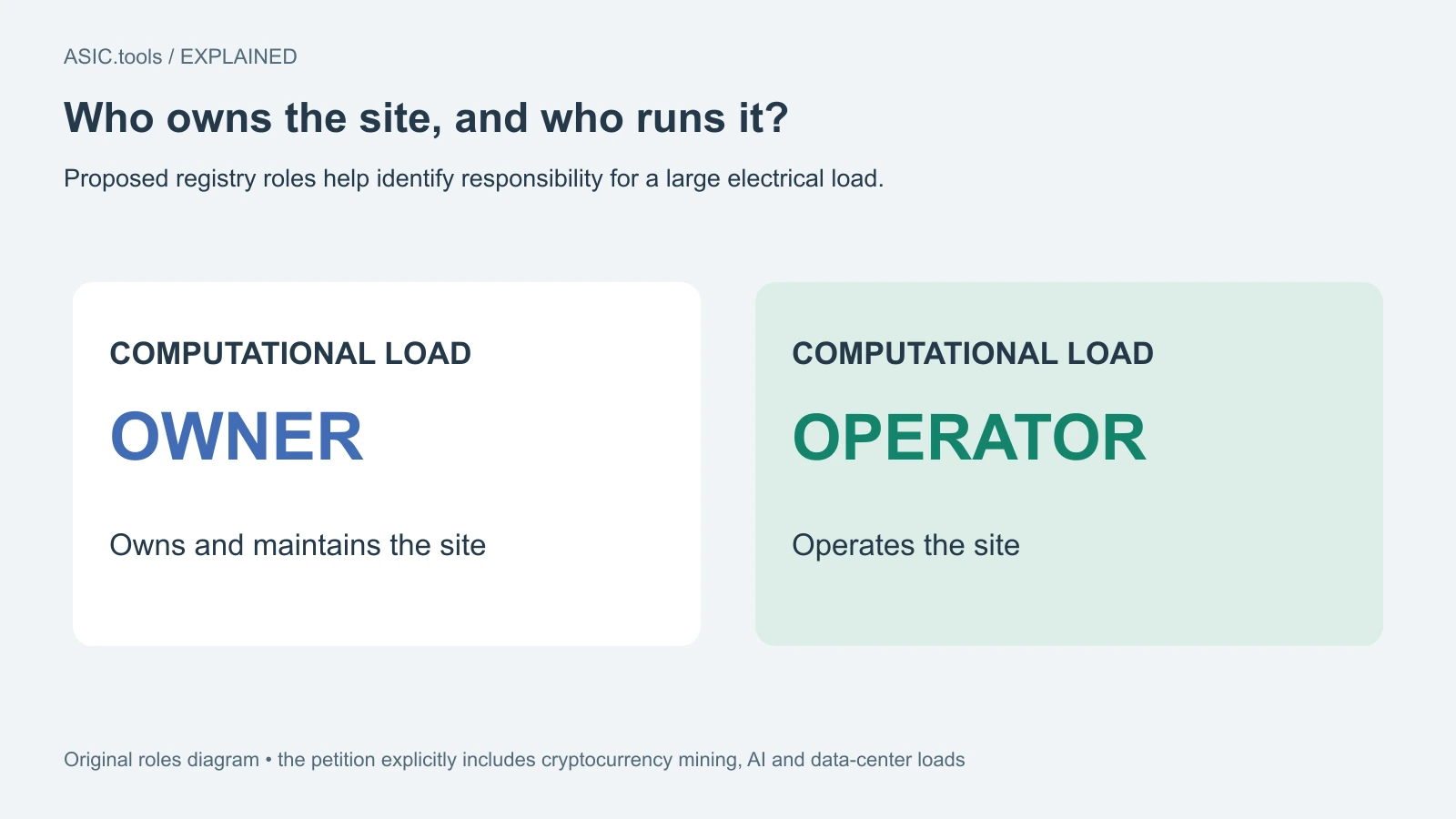
The filing creates two proposed roles: Computational Load Owner, for the entity that owns and maintains a site, and Computational Load Operator, for the entity operating it. In ordinary language, the question is who is responsible for the facility and who runs it when the grid needs information or a response.
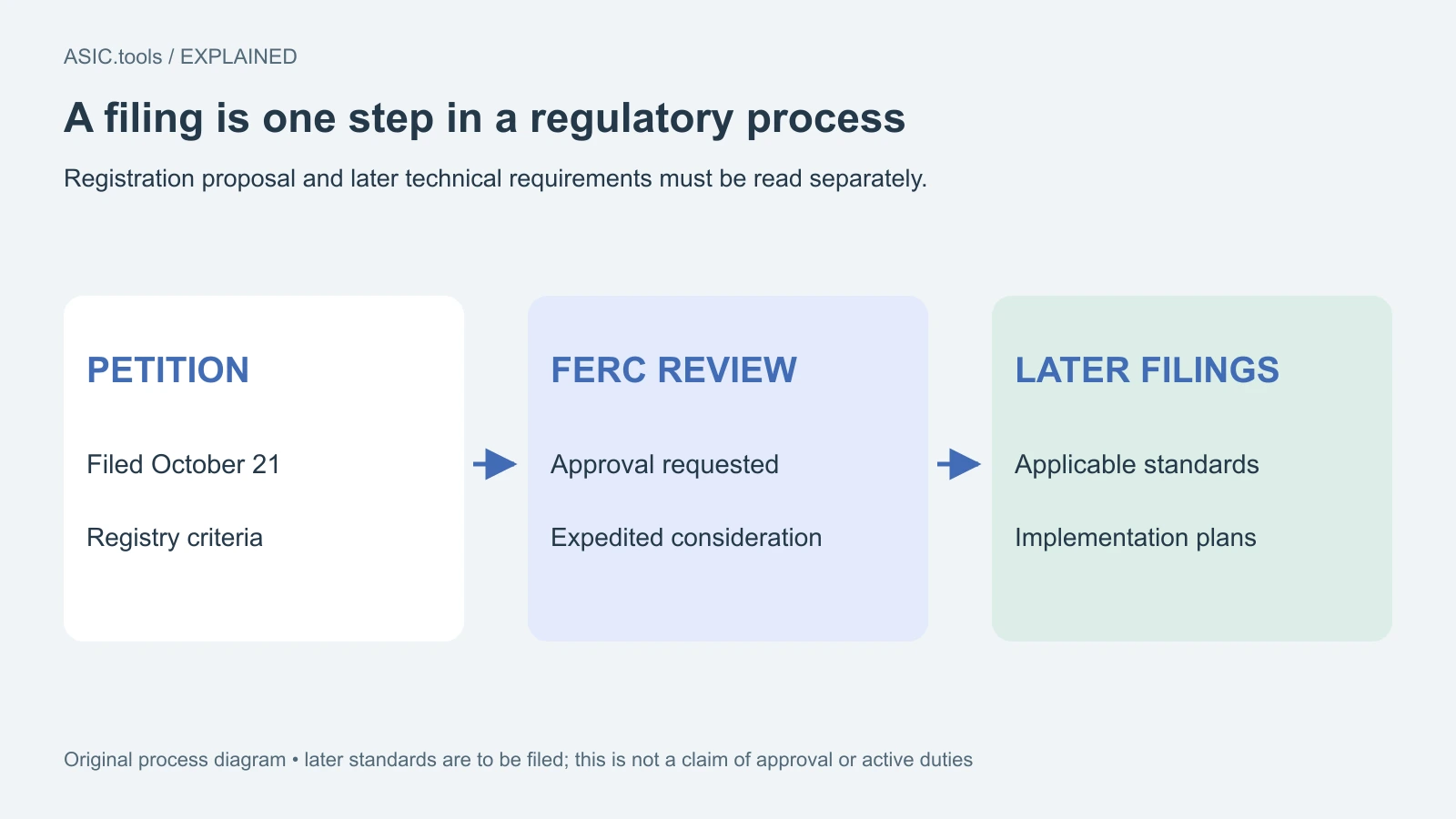
This is a new registration filing, distinct from an earlier ballot on technical standards. NERC asks for expedited FERC consideration. Submission of a petition and approval by NERC’s own board are not the same as federal approval, and the document does not by itself establish that the proposed rules are already effective.
Both 50 MW and 100 kV matter
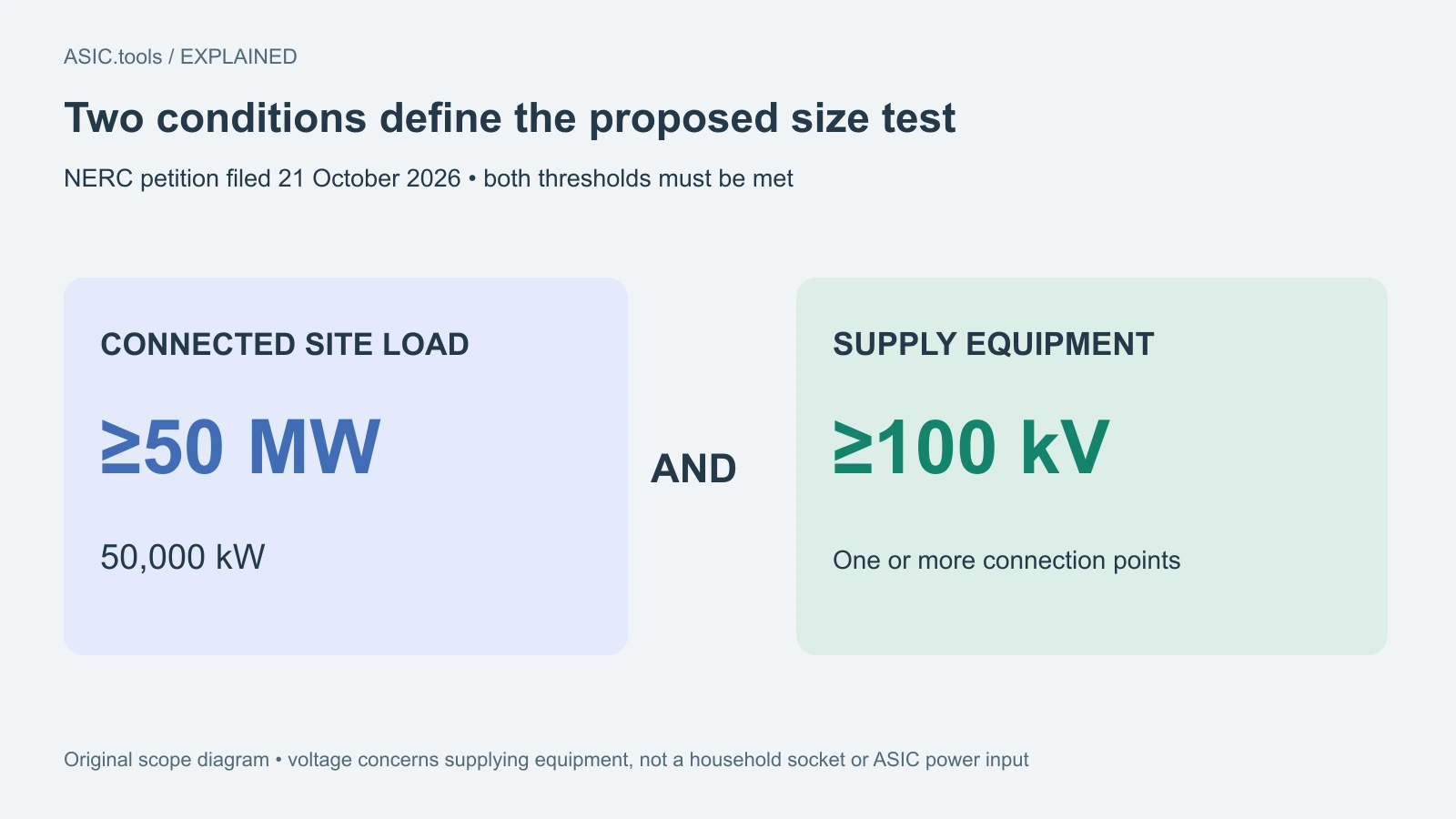
The proposed criterion covers a computational site with total connected load of at least 50 megawatts supplied through electrical equipment connected at a voltage of at least 100 kilovolts, from one or more connection points. These are two conditions together, not a choice between a power threshold and a voltage threshold.
A megawatt is 1,000 kilowatts, so the power threshold is 50,000 kW of connected site load. The voltage condition concerns the electrical equipment supplying the site. It should not be confused with the input-voltage label on an individual mining machine or a normal household socket.
The proposed site definition can include several buildings or installations at one location, and the supply can have more than one connection point. Dividing a campus into named rooms or buildings is therefore not enough information to decide its status. A substantial operator needs the actual electrical layout and the precise applicability text, not a machine count from a sales brochure.
For a simple hypothetical comparison, a 49 MW site supplied at 110 kV fails the power condition even though its voltage is high enough. A 55 MW site supplied through qualifying 110 kV equipment clears both numerical thresholds, but its full applicability still depends on the proposed definitions. These examples explain the two tests; they are not descriptions of actual facilities. “At least” includes equality with the stated threshold.
Why this is a reliability question
NERC says the rapid growth and distinctive electrical behavior of computing loads can create risks for the bulk power system—the high-capacity grid linking generation and transmission. The concern is not only the amount of electricity consumed. How a large facility changes demand or responds to a disturbance can also matter to the rest of the system.
Think of a large load starting, stopping or changing quickly, rather than a single home appliance switching on. Grid planners and operators need to understand that behavior before assuming their models describe the real network. A site’s installed equipment list alone does not explain how its controls, protection and operating decisions interact.
For a mining operator, that puts reliable site data and clear responsibilities alongside electricity price in infrastructure planning. A low quoted energy price does not answer whether a facility can connect on the intended terms or what information its grid counterpart needs. Registration is a way to identify responsible entities, not a new source of cheap power.
Registration and technical duties are separate steps
The petition says the relevant foundational Reliability Standards and implementation plans will be filed for FERC approval later. Its immediate request is approval of the registry criteria. It argues that earlier clarity would allow NERC and regional entities to identify potential registrants and provide education before applicable standards become effective.
Once registered, the new entity types would have to comply with the mandatory standards applicable to them. That does not make every draft technical requirement effective on the day of this filing. Approval, applicability and implementation dates need to be checked separately as the process advances.
A large-site owner reviewing the proposal can already identify who owns and maintains the infrastructure, who operates it and which electrical records describe its connections. Where ownership, hosting and day-to-day operation are split between businesses, those relationships matter. The filing discusses mechanisms and further guidance for registration; this article does not decide a particular facility’s legal status.
What households and smaller miners should understand
The two proposed thresholds show why this is not a registration notice for an ordinary home ASIC. The petition deliberately targets larger sites with a material grid impact. At the same time, being outside this particular proposal does not describe every other local electricity, building or business requirement that may apply to a small installation.
The wider relevance is shared-grid reliability as large industrial computing expands. Better visibility of large loads can help planners understand the network they serve, but the filing does not award compensation, approve a household tariff or promise a reduction in anyone’s bill. It should not be presented as either a blanket mining ban or a newly active consumer discount.
At our October 26 check, the primary evidence is the October 21 petition, read on NERC’s official production domain. The criteria and the pending approval stage are the important facts to carry forward. Operators should follow the actual regulatory decisions rather than assume a headline about registration means that all new technical duties have already begun.
Source: NERC ↗ · Official PDF available on NERC production domain ↗ · NERC large-load action plan ↗
Mining calculator ↗