Larch and Dorado plan a ten-switch SONiC AI fabric demonstration
Source report: 2026-10-09 · Editorial analysis published: 2026-10-12
The October 9 announcement describes ten Ethernet switches, Hardened SONiC and Cruz orchestration. The OCP demonstration is planned for October 13–15; quantified efficiency results are not supplied.
Analysis and practical implications
This section is our analysis and illustrative calculations, separate from the source report.
The announced demonstration
Larch Networks and Dorado announced a joint OCP Global Summit demonstration on October 9. Their described system uses ten switches, Larch Hardened SONiC and Dorado Cruz for orchestration and monitoring. The live exhibit is scheduled for October 13–15 at booth B31. At this article’s October 12 check, that demonstration is still a forthcoming event, not a test whose public results have already been independently reviewed.
The companies position the design around commercially available Ethernet components. That is a supplier statement about the proposed solution, rather than a verified inventory of parts available for every buyer. The announcement matters to operators considering AI infrastructure alongside existing mining facilities because it combines a network fabric with an operations layer. It does not announce a new Bitcoin ASIC or extend the capabilities of an existing SHA-256 miner.
What the hardware and software description establishes
The release identifies Marvell TeraLynx 10 switches in a spine–leaf topology and GPU servers with ConnectX-7 network adapters. Hardened SONiC supplies the network operating-system layer, while Cruz handles centralized management. These names describe the announced demonstration stack. The release does not give a complete bill of materials, port allocation, optical-module list or an independently measured end-to-end benchmark for this installation.
For a buyer, those missing implementation details matter more than an isolated component family name. A workable fabric must match adapter interfaces, switch ports, transceivers, cables and software versions. Compatibility at one layer does not automatically establish compatibility at every other layer. The ten-switch count should consequently be read as the size of the described demonstration, not as a universal prescription for a cluster with a given number of accelerators.
Why the topology matters operationally
In a spine–leaf arrangement, access-layer switches connect to an upper switching layer so traffic can traverse the fabric through a structured set of paths. The practical design question is how much traffic those paths must carry and where contention can develop. A topology diagram alone cannot establish the usable throughput seen by an application; link speeds, traffic distribution and endpoint behavior must be considered together.
This is particularly relevant when an operator compares ordinary management traffic with accelerator-to-accelerator communication. A mining fleet’s monitoring network and an AI training cluster can impose very different demands. Reusing a building, racks or an upstream connection does not remove that difference. Network planning should therefore start with the intended workloads and failure behavior, not assume that an existing ASIC monitoring network is automatically suitable for an AI fabric.
The management layer is part of the proposal
The companies describe Cruz as providing discovery, configuration, provisioning, health monitoring, telemetry and workload-aware tuning from a centralized interface. These are stated functions of the proposed management system. Separately, Dorado describes natural-language interaction with infrastructure and actions taken with human approval. That approval boundary should not be rewritten as unrestricted autonomous access to production equipment.
Operationally, a central console is useful only if its inventory, permissions and observations remain trustworthy. Discovery can identify devices, while provisioning changes their configuration; these are different levels of authority. A production evaluation should show who can change what, how a change is recorded and how it is reversed after an error. Those are evaluation criteria for an operator, not additional capabilities that this release has demonstrated to ASIC.tools.
Availability claims need procurement evidence
The announcement argues that an Ethernet approach can make AI networking more accessible. It also makes claims about constraints affecting proprietary alternatives. The release does not provide an independently audited comparison of delivery times or a buyer-specific shipping commitment. A claim of commercial availability should therefore be tested against a dated quotation, supported software build and actual delivery terms before it becomes a deployment assumption.
An operator can separate this procurement check into hardware supply and ongoing support. A switch may be obtainable while the desired optics or supported configuration require a different lead time. A software image may run while a particular feature still needs qualification. The cost of spares, support and integration also belongs in the comparison. This analysis explains how to evaluate the proposal; it is not a finding that one technology is always cheaper or quicker to obtain.
No quantified efficiency result has been supplied
The companies describe lower power consumption, low latency and a reduced total cost of ownership, but the release does not attach a measurement table with a baseline, load or test method. We therefore do not assign a percentage saving, a latency figure or a return-on-investment period to the system. Vendor positioning and independent test results are different evidence categories, even when the underlying hardware is already commercially offered.
A meaningful efficiency comparison would include the complete network power draw under a defined workload, the useful application work completed and the required redundancy. Idle power alone can mislead if one design takes longer to finish a job. Conversely, peak throughput alone can obscure high power use or a bottleneck elsewhere. Procurement decisions should rely on tests that keep those boundaries consistent rather than compare unrelated headline values.
How an operator could evaluate the demonstration
A practical review can ask to see the configuration used, traffic patterns, telemetry and behavior during a controlled failure. The goal is to connect the claimed operational functions to observable outcomes: whether a device is discovered correctly, whether an intended configuration reaches it, and whether loss of a link is identified and handled. A demonstration can provide useful evidence, but it is not a substitute for acceptance testing in the buyer’s own environment.
The same review should record the software versions and the limits of the tested combination. Open networking can create more choices, yet it does not mean every component is interchangeable without validation. Operators moving toward AI hosting should plan network qualification as its own workstream, alongside power, cooling and compute procurement. None of those adjacent requirements is satisfied simply by counting the announced switches.
What is new and what remains to be checked
The new development is the joint ten-switch fabric and orchestration demonstration announced for the upcoming exhibit. Its relationship to existing mining sites is infrastructure planning, not a new mining algorithm or an ASIC firmware release. After the event, useful follow-up evidence would include demonstrated behavior, documented configurations and any published measurements with a clear comparison baseline.
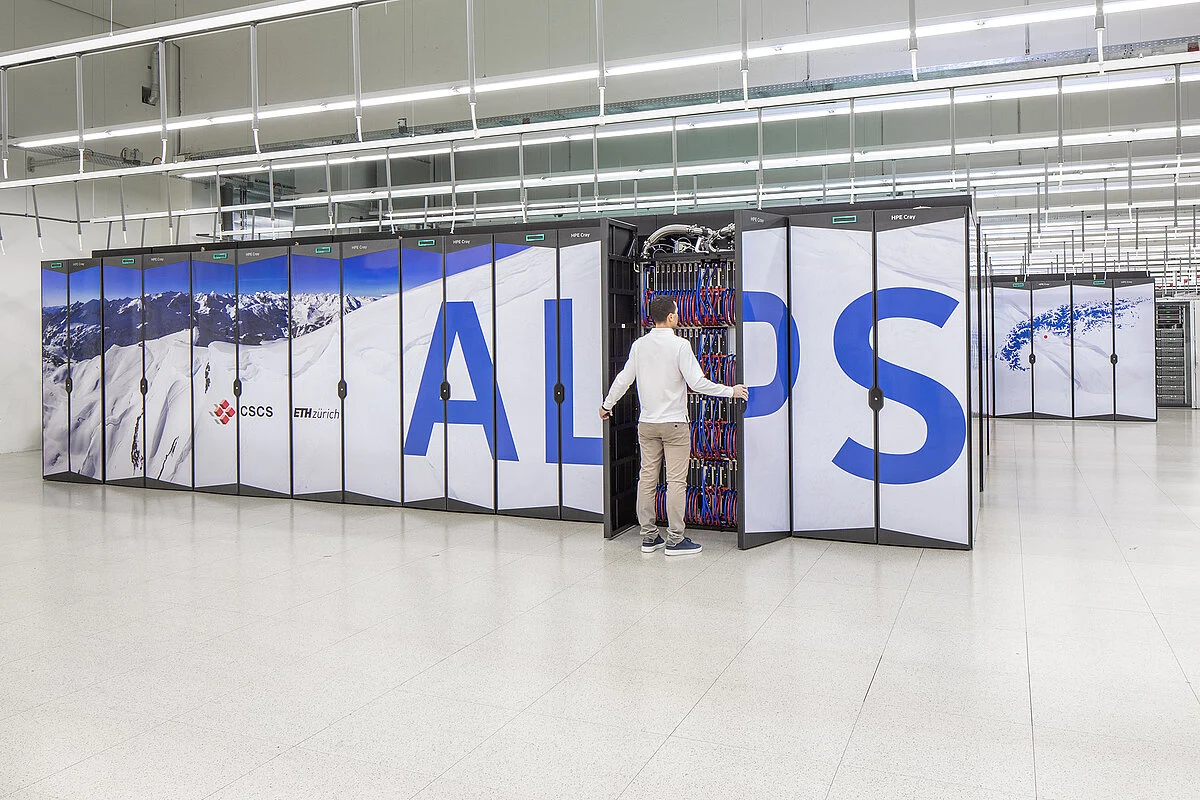
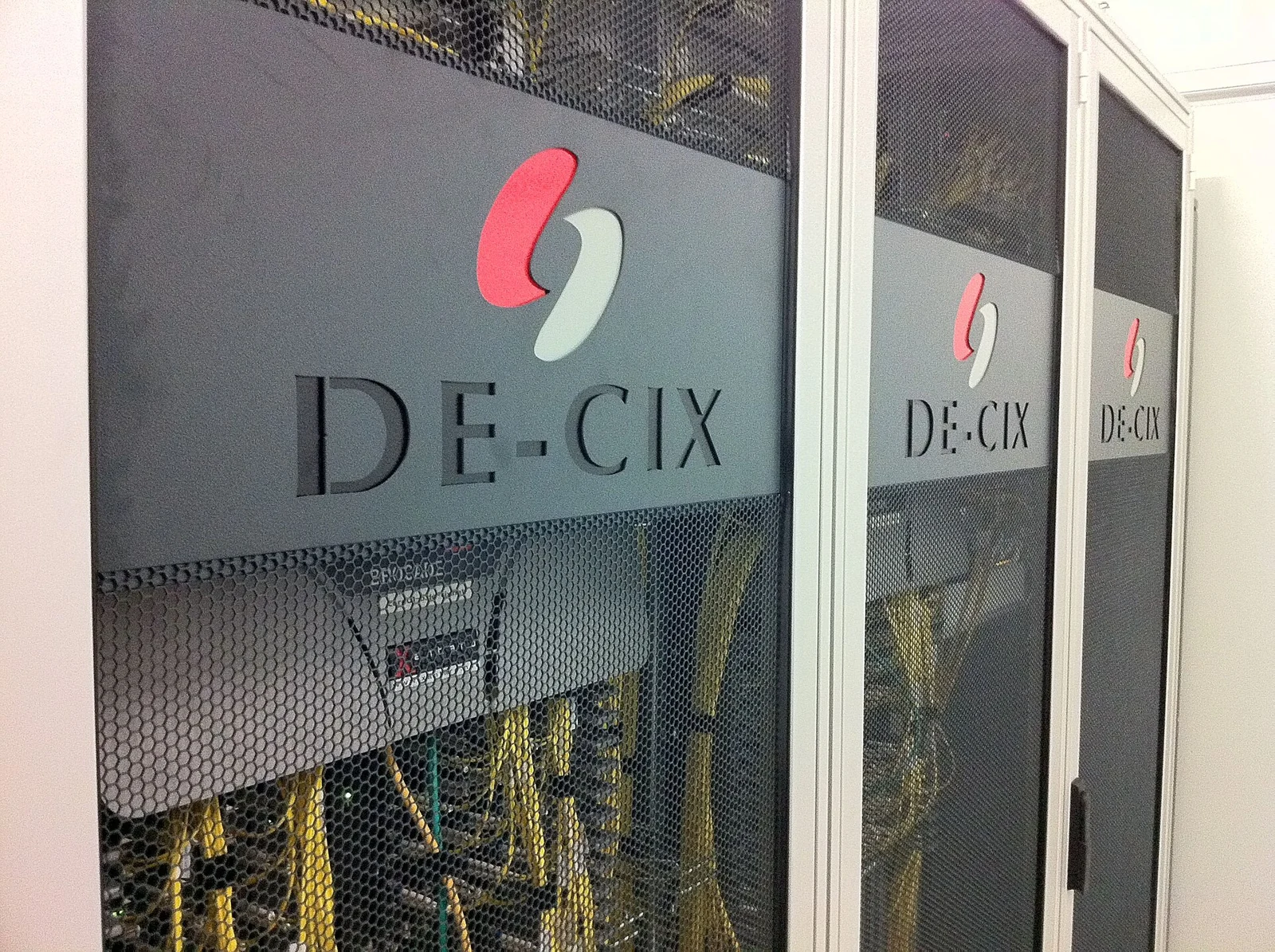
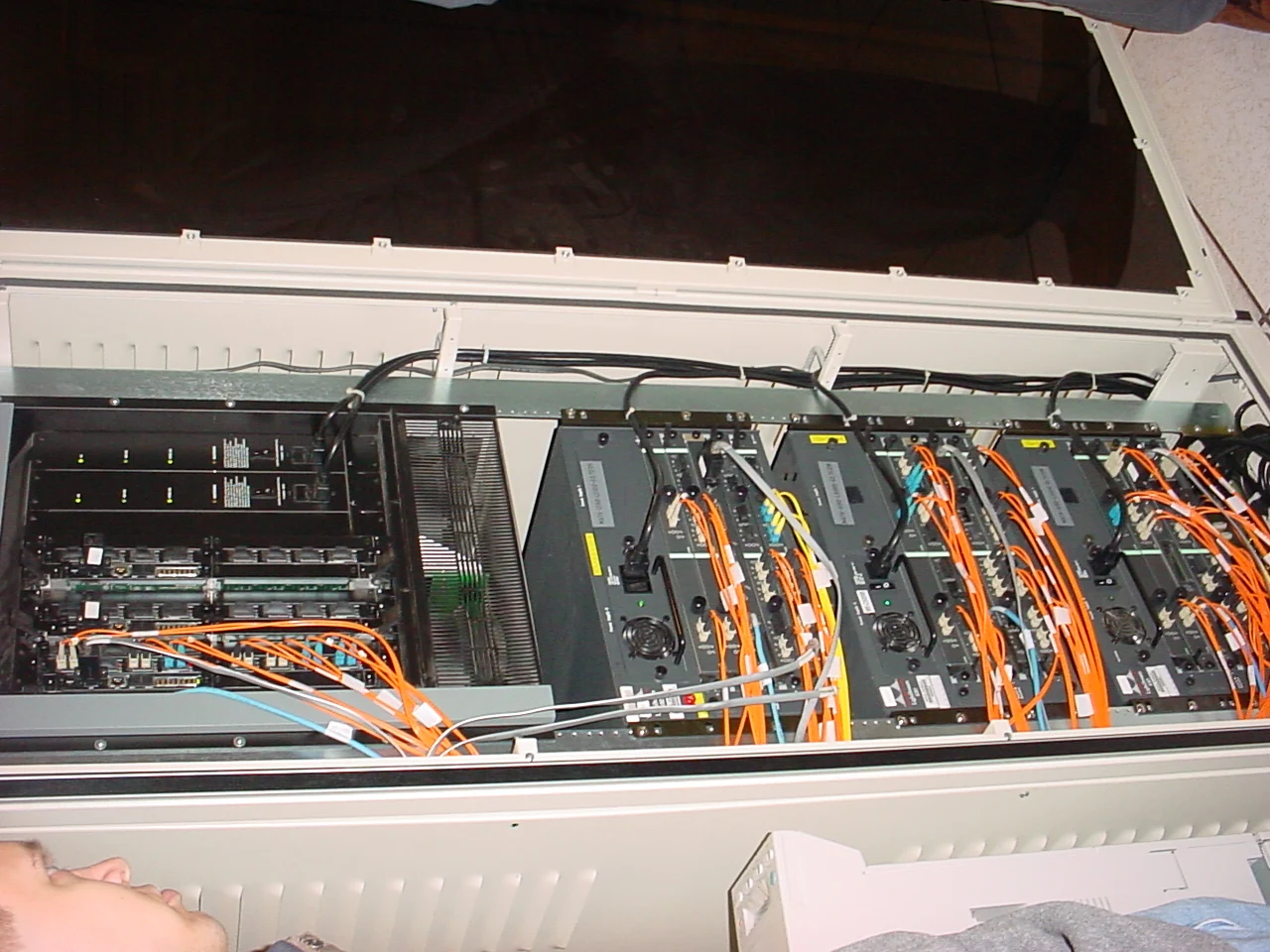
The two licensed archival photographs illustrate network racks and switching equipment. They do not depict the announced Larch–Dorado installation and should not be used to infer its wiring, dimensions or component models. The original company release remains the source for the event dates and described stack; the operational evaluation in this article is ASIC.tools analysis. Keeping those boundaries explicit lets readers assess the announcement without mistaking a planned exhibit for a completed deployment.
Source: Larch Networks ↗
Mining calculator ↗