Keystone says buyers’ details leaked: why a convincing delivery message can be a trap
Source report: 2026-10-24 · Editorial analysis published: 2026-10-25
Keystone’s October 24 notice separates exposed shop records from wallet secrets. Names, contacts, addresses and orders can still help scammers impersonate support or send an unsolicited device.
The shop was breached, according to Keystone
Keystone said in an October 24 notice that an unauthorized party obtained customer shipping and order information from its website. For a miner who bought a hardware wallet to hold earnings, the immediate concern is a convincing message that knows the real order, not just a random spam email.
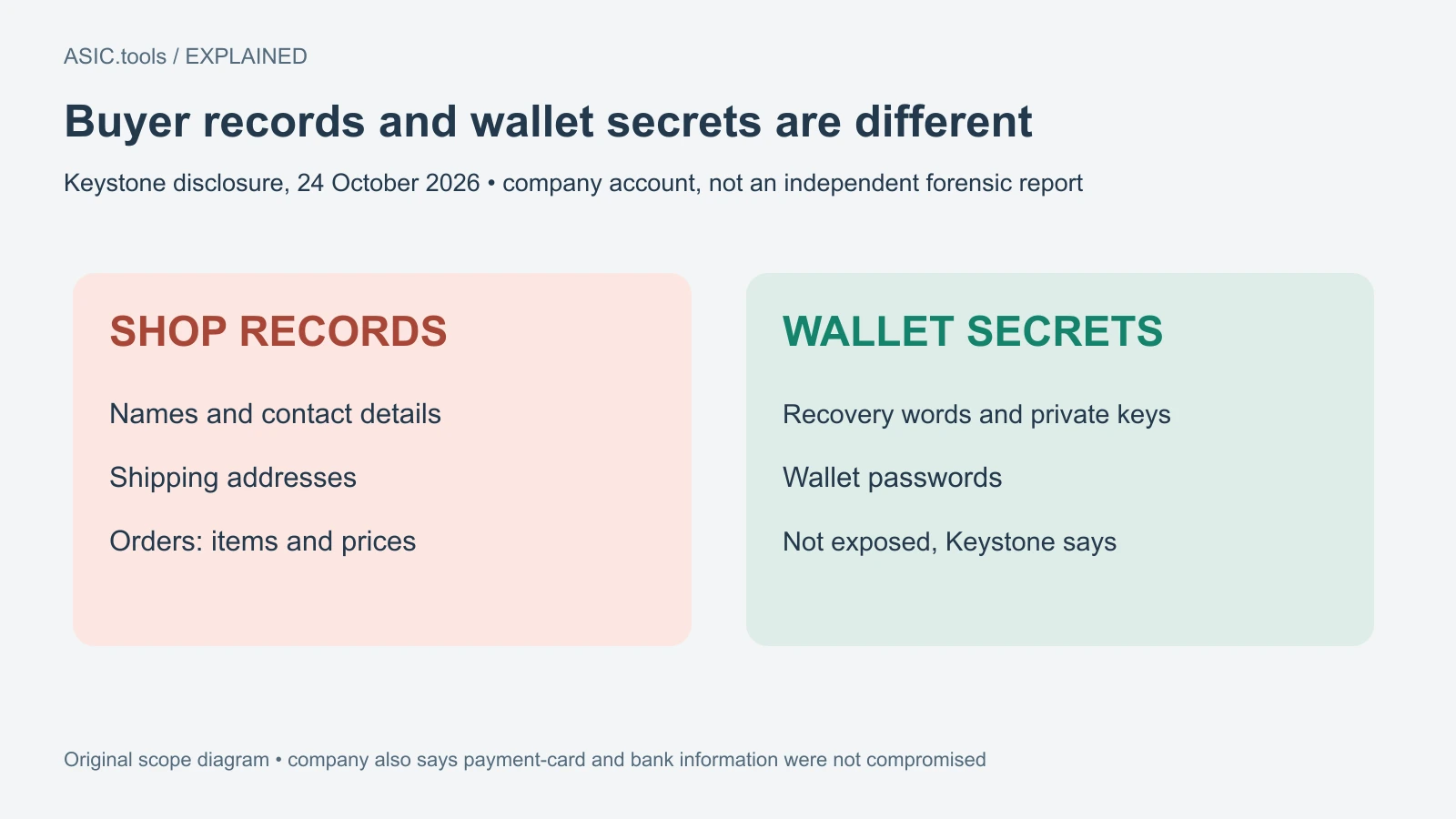
The company says it detected unauthorized access on October 20 and confirmed the data exposure on October 23 after checking API activity with Shopify. An API is a software interface through which systems exchange information. Checking those records does not itself establish that Shopify’s whole platform was hacked.
The notice was posted at 17:59 UTC on October 24. Keystone says it blocked access, fixed the vulnerability, opened an investigation and is emailing affected customers. A detailed report is still promised, rather than already available in this initial disclosure.
The detection date is not necessarily the date access began. Nor does confirmation on October 23 identify the exact period of orders affected. A customer should not infer that only people who bought on October 20 are involved. Until the company defines the scope, use its own notifications and published findings to check your situation, rather than constructing an eligibility window from those three dates.
What the company says was exposed
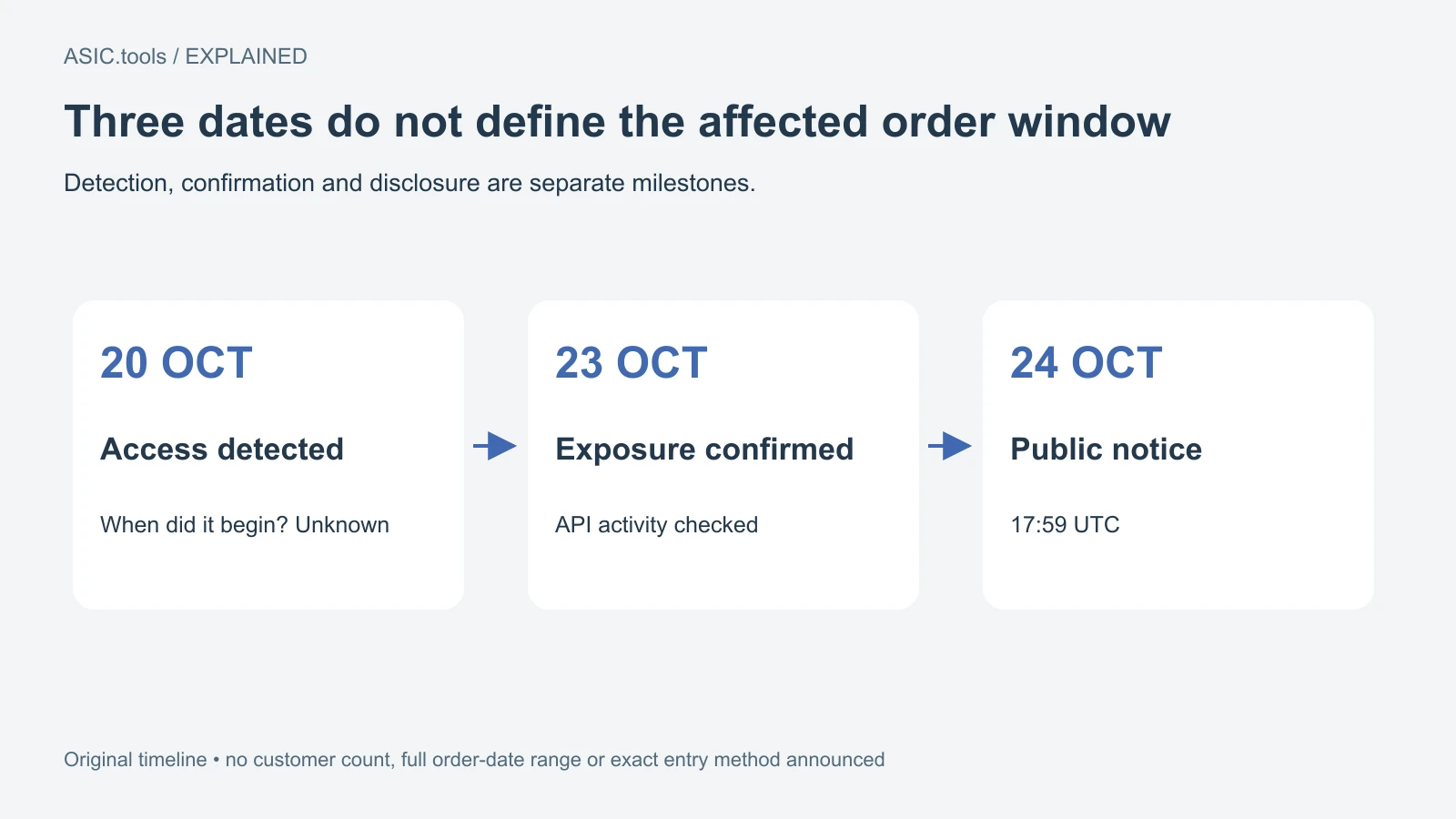
Keystone lists names, contact details, shipping addresses and order information, including purchased items and prices. These records can connect a real person and address with the purchase of a crypto-storage device. They do not reveal how many coins that person holds.
The company says payment-card and bank information, recovery phrases, private keys and wallet passwords were not compromised. Those are its findings at this stage. The announcement does not give a customer count, an affected order-date range or an independently verified total for the breach.
A recovery phrase is the backup set of words that can restore control of wallet funds. A private key authorizes spending. Keeping these secrets separate from an online shop is a different task from protecting the personal data collected when somebody buys the device.
Why an accurate order number is not proof of support
Keystone warns of impersonators contacting people by phone, text, email or post. Their stories may involve a refund, a replacement wallet or a correction to an order or shipping address. Real details from a stolen order can make that invented request sound unusually credible.
This is social engineering: persuading someone to perform the harmful action themselves. An attacker does not have to break a wallet’s cryptography if they can persuade its owner to hand over a recovery phrase or enter it into an untrusted replacement device.
The practical question is therefore not only whether a message spells your name correctly. Ask whether you initiated the contact and can verify the request through a channel you opened yourself. A message knowing your purchase history no longer proves that it comes from the seller.
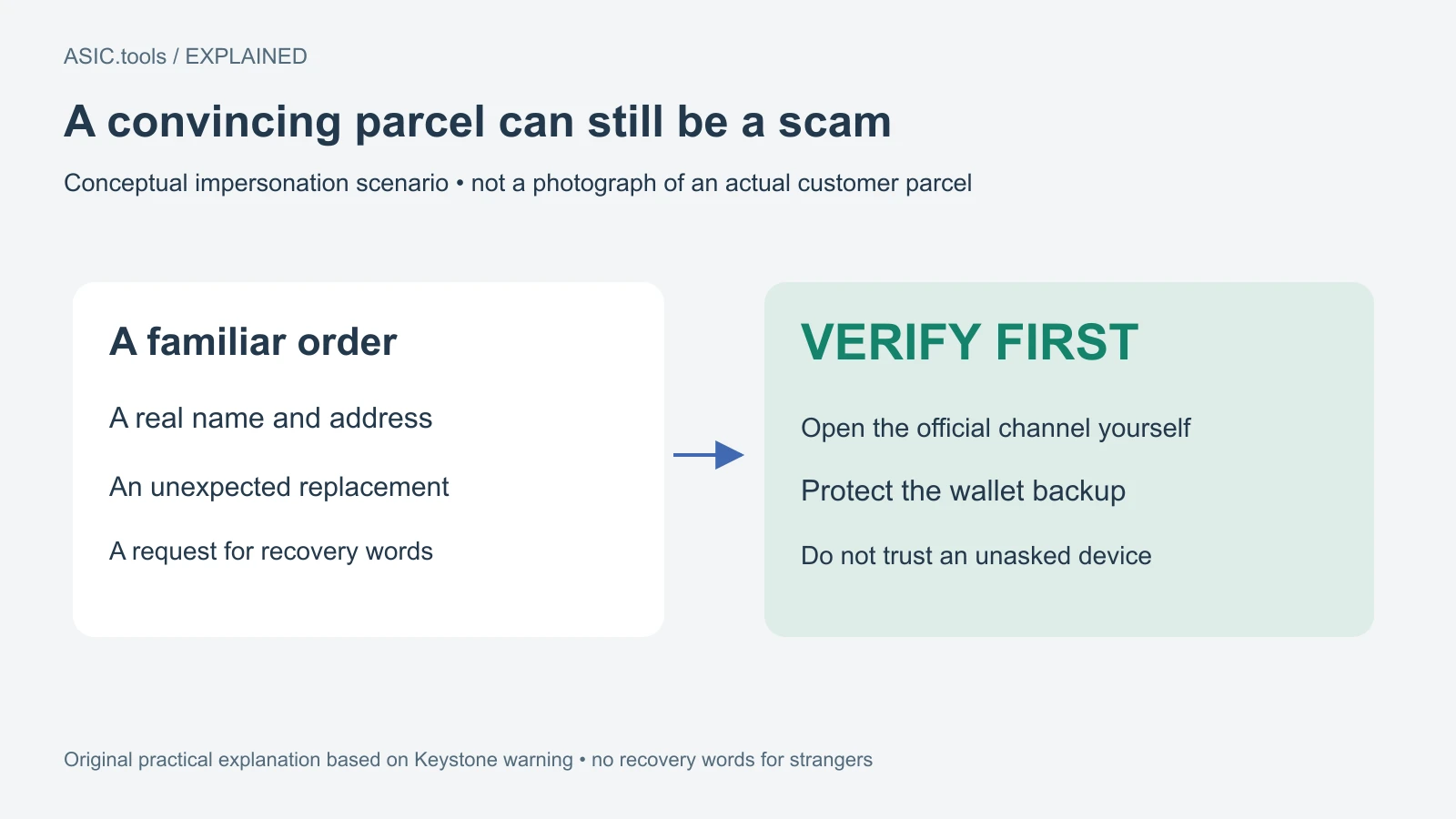
Treat an unsolicited replacement as a warning
The company explicitly tells customers never to enter their recovery phrase into a device they did not order, and never to share it or a private key. A parcel presented as a free security replacement should not be treated as a trusted upgrade simply because it mentions this incident.
For a suspicious message, type keyst.one yourself and use the official support route. Avoid unexpected links and QR codes supplied by a stranger. There is no need to disclose wallet secrets to establish whether the shop recognizes a customer-service request.
Keep the distinction between a genuine incident notification and a demand for action. Keystone says it is notifying affected customers; scammers can imitate those notices. What matters is independently checking the request, especially if it asks you to restore a wallet, send money or accept a replacement.
What changes for a person storing mining income
A pool payout can be correctly delivered while its owner remains vulnerable to a later impersonation scam. The pool, blockchain, wallet-signing device and online store protect different parts of the process. Success at one stage does not verify every later message about the funds.
This notice does not announce a Bitcoin mining-rule change or a compromise of every Keystone signing device. Its concrete warning concerns exposed buyer records and the ways criminals may use them. Claims about customer numbers, attacker identity or an exact technical entry point should wait for evidence.
For now, the useful response is to check official communications, protect recovery words and be skeptical of unsolicited refunds or replacements. A familiar-looking delivery story is precisely what leaked order data can make easier to tell.
Source: Keystone ↗ · Keystone official website ↗ · Full statement reproduced by ETHNews ↗
Mining calculator ↗