Keysight announces 1.6T Ethernet and AI fabric validation demos for OCP
Source report: 2026-10-09 · Editorial analysis published: 2026-10-12
Keysight’s October 9 release previews 1.6T Ethernet test platforms and 64×800GE workload emulation at OCP, October 12–15. These are planned validation demonstrations, not published deployment results or an increase in a mining ASIC’s hashrate.
Analysis and practical implications
This section is our analysis and illustrative calculations, separate from the source report.
A new announcement about testing infrastructure before deployment
Keysight’s October 9 release sets out a programme of AI network validation demonstrations for the OCP Global Summit in San Jose on October 12–15. The company names SERT 1600GE and AresONE-Plus 1600GE among its new test platforms. The announcement is about reproducing network workloads and studying system behaviour before an operator deploys a larger installation. At the time of this Kyiv morning check, the planned demonstrations are not being reported as completed performance tests.
For mining and data-center readers, the relevant issue is whether an infrastructure design behaves as expected under traffic and failures. A nominal port rate can be visible on a specification sheet while an application encounters a different bottleneck. Testing provides a way to investigate that gap, but a vendor’s exhibition announcement does not certify every network using similar equipment. The article distinguishes what Keysight plans to show from results a buyer would still need for its own workload.
Eight 1.6T ports do not establish achieved application throughput
The manufacturer describes AresONE-Plus as having eight 1.6T Ethernet ports in a 2U appliance. The independent arithmetic sum is 12.8 terabits per second of nominal port rates in one direction; it is not a reported benchmark of useful application traffic. Doubling the sum for two directions would describe a different accounting convention. A performance comparison should state its direction, packet characteristics and workload boundary before presenting an aggregate bandwidth headline.
The physical size and number of interfaces concern test-system density, not Bitcoin production. Even a network device with a much larger port budget does not increase the SHA-256 computing capacity of an attached ASIC. A farm can improve connectivity and monitoring without changing the chips’ hashrate. This separation is essential when reading the word ASIC in a discussion of switching hardware: a networking application-specific chip is not automatically a cryptocurrency miner.
Collective-workload emulation is more specific than a cable-speed check
The release also describes an emulation with 64 endpoints at 800GE across a 2×2 CLOS fabric, using a mix of AI collective workloads. Our simple sum of endpoint rates is 51.2 terabits per second of nominal interfaces. That is not evidence that a completed fabric achieved 51.2 Tb/s for an application. Endpoint count, traffic pattern and internal paths describe different parts of the test; they cannot be substituted for a workload completion result.
A useful test report should retain the offered workload, duration, topology and observations under congestion alongside the interface numbers. A single traffic pattern may miss behaviour that appears when several groups communicate at once. Conversely, a stress case may differ from normal production demand. Neither an especially good nor an especially poor isolated result should be treated as the performance of every site. The point of realistic emulation is to make the tested scenario explicit.
Interoperability demonstrations still need a defined scope
Keysight plans to demonstrate emerging open Ethernet scale-up interoperability, including Link Layer Retry, and to test RoCEv2 workloads across data centers. The announcement’s language concerns particular technologies and demonstrations, not unlimited interchangeability among all vendors and software versions. A purchasing decision should identify which hardware, firmware, software and configuration were actually included. The term open does not eliminate the need to check supported combinations.
For an operator, a configuration that works during initial setup is only one part of the compatibility record. The record should also cover the expected workload and the behaviour after a component or route changes. Reproducible evidence needs the tested revisions and settings, not only a brand list. This is an editorial evaluation principle, not a claim that the source has published qualification documents for every network product or every miner available today.
Scale across buildings introduces a separate testing boundary
The vendor’s programme includes latency, congestion, buffering, packet-loss and resiliency evaluation for AI workloads spanning data centers. Those dimensions are relevant when compute is distributed across sites rather than treated as one local rack. A network architecture can present sufficient nominal bandwidth while delays or recovery behaviour still affect the workload. The release does not give a universally acceptable distance, loss rate or latency limit, and we do not invent one.
For a project using multiple sites, preserve the network path and site boundary alongside the test interval. A component specification at one rack cannot describe every external link. A measured improvement also needs a consistent comparison workload: changing the compute demand and network conditions together makes it hard to attribute the result. This is especially important when a powered mining site is evaluated for an AI role, because the external-network requirement is part of a different operating model.
Inference validation is a system exercise
Keysight says its AI Inference Builder will drive workloads against a live inference stack and correlate results with compute, GPU, memory and network telemetry. Correlation can help locate a constraint, but it does not by itself establish causation or a promised production service level. A complete evaluation should keep the application’s result and each supporting resource measurement in the same interval. The announcement provides no completed benchmark for a named mining site converting to AI.
For budgeting, distinguish the test appliance from the eventual production equipment and its power demand. The release does not supply a whole-site electrical saving or a verified reduction in energy per useful inference. A traffic bottleneck may be resolved without lowering the building meter, while an additional workload can increase total consumption. Buyers need measured power and the corresponding delivered service before translating a network demonstration into an operating-cost claim.
What an operator should request after the demonstration
The next useful material would be the configuration, methodology and reproducible results for the demonstrated scenarios. An exhibition plan is not a substitute for those records. For a procurement trial, define the expected traffic, relevant failure conditions and acceptance measures before running the test. Doing so makes a later comparison more informative than choosing a single headline port rate as the only criterion for an infrastructure decision.
Keep the distinction between a planned OCP session and an observed result in later coverage. The October 9 release and the October 12–15 event window establish chronology, while any subsequent results need their own publication date and scope. A separate Keysight event landing page displays an inconsistent legacy date; this report relies on the dated corporate release rather than treating that field as evidence of a completed 2026 event.
Why the news matters without creating a miner specification
The confirmed development is a new manufacturer programme for testing increasingly dense and distributed AI networks. The figures in the announcement describe planned test interfaces and emulation scale. Our sums clarify their units and limits rather than claim demonstrated throughput. No new mining algorithm, miner energy-efficiency figure or downloadable ASIC firmware is established by this source. Any catalogue change would need a separate, supported mining product.
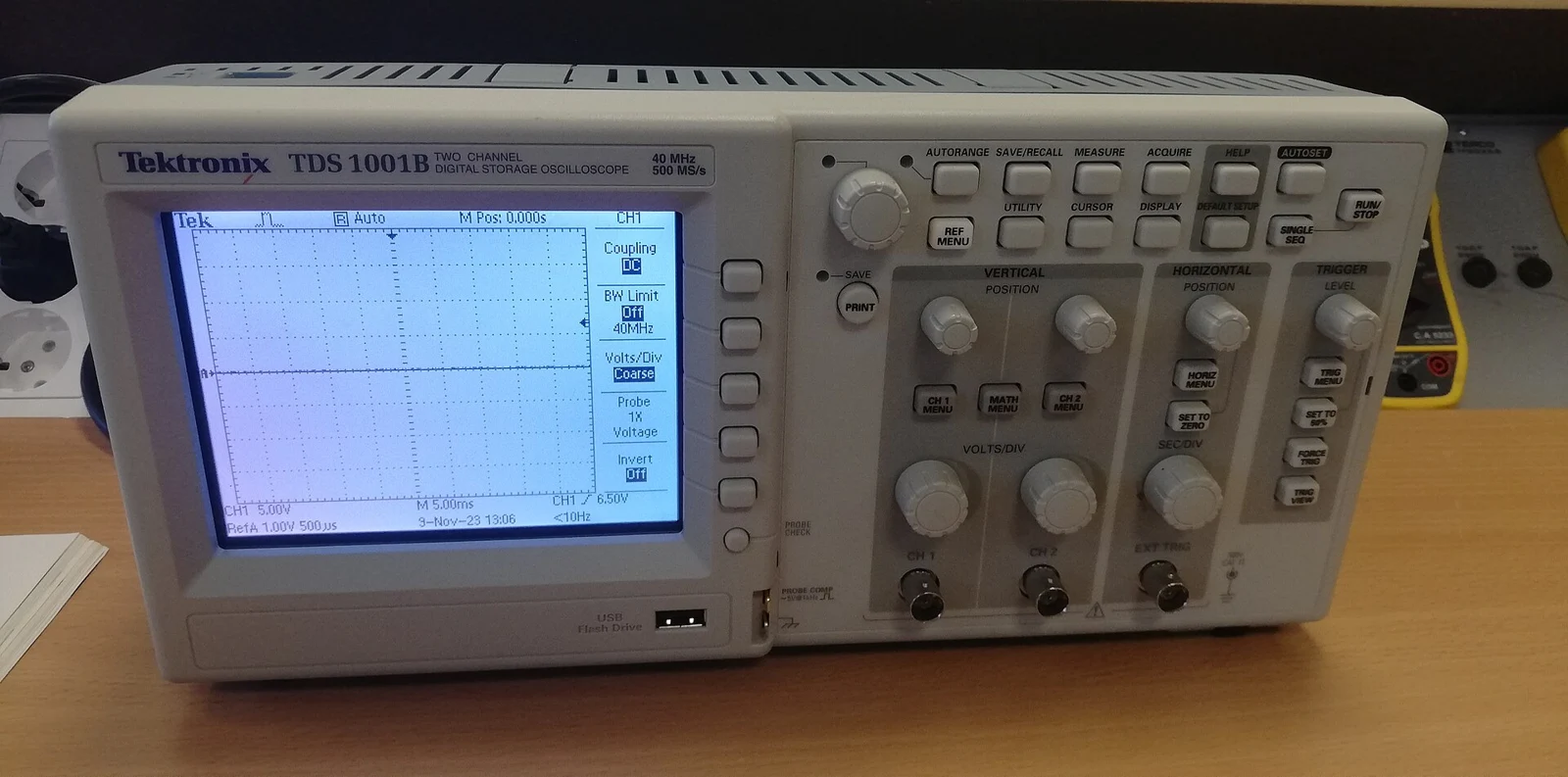
Two licensed archive photographs illustrate network switching and test instrumentation. They do not depict the newly announced Keysight platforms or prove an OCP test result. The original company release is linked below through our source page. Readers comparing infrastructure options can use the announcement to identify questions for the test record while keeping deployment readiness, compatibility and operating economics dependent on evidence for their actual system.
Source: Keysight Technologies ↗
Mining calculator ↗