Ledger finds tampered wallets in Berlin and investigates two Dubai devices
Source report: 2026-11-18 · Editorial analysis published: 2026-11-19
The November 18 update widens the existing distribution investigation. For miners saving pool payouts, the key question is how the wallet’s recovery phrase was created.
The investigation now reaches Berlin
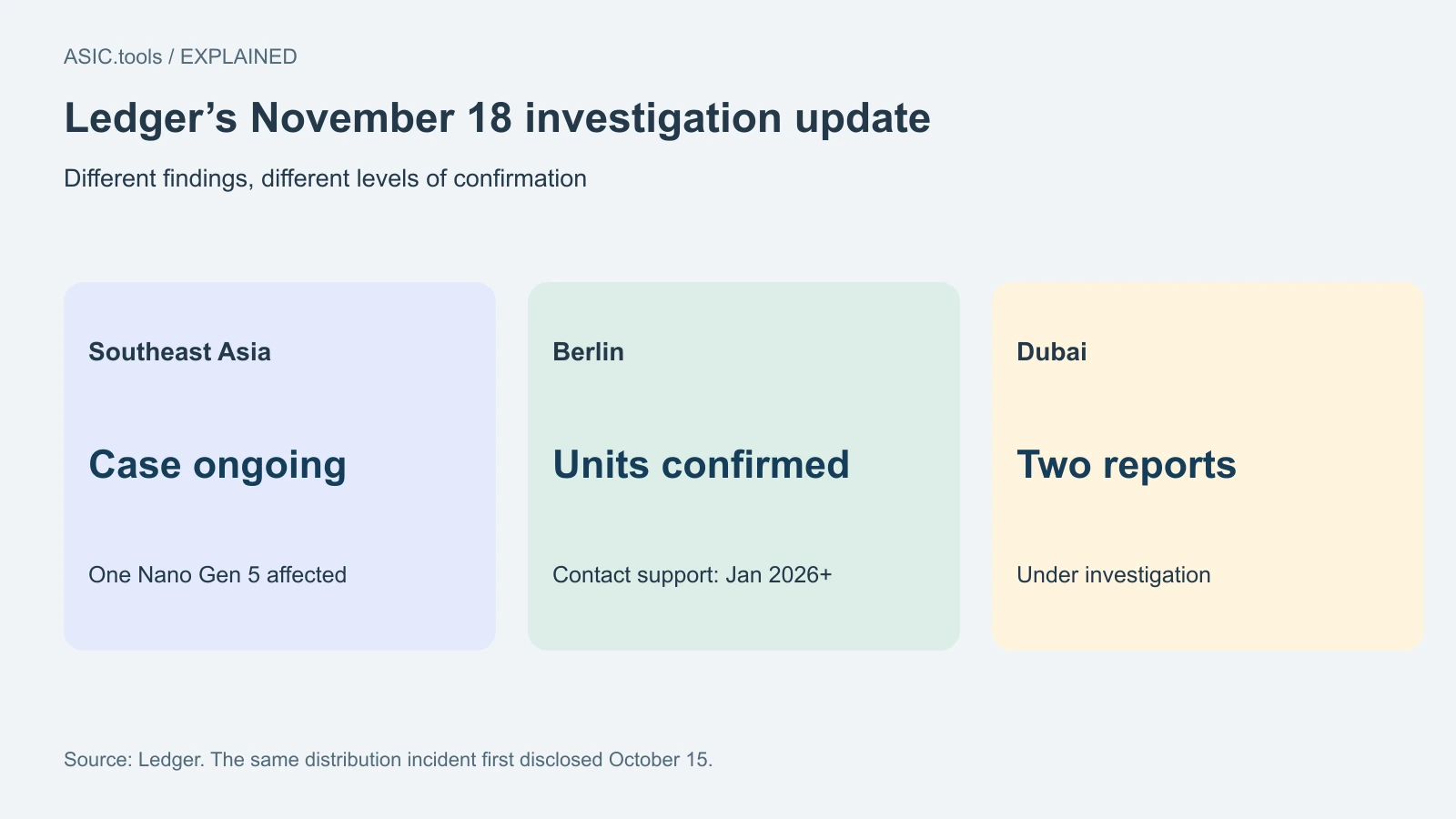
Ledger’s November 18 update confirms that its hardware-wallet tampering investigation extends beyond Southeast Asia. The company has identified altered units localized to Berlin and is investigating reports concerning two devices in Dubai. For miners who move pool payouts into long-term savings, the practical issue is the wallet receiving those coins: a normal payout does not protect funds if the secret controlling the destination has already been exposed.
Ledger describes this as the same distribution incident disclosed on October 15, with physical additions designed to capture the recovery phrase during setup. It says there is no flaw in its secure chip or operating system and no confirmed case involving a purchase from ledger.com. These are the company’s current findings, not an independent guarantee covering every device. The update does not publish a complete affected-device count or a final investigation result.
Confirmed findings and open reports
The regional distinctions matter. Ledger says its investigation in Southeast Asia continues and that one Nano Gen 5 was affected. In Germany, its confirmed findings concern a few units localized to Berlin; it asks people who purchased a signer there from January 2026 to contact support as a precaution. For Dubai, the wording remains an investigation into two reported tampered units. Reporting all three regions as an identical, fully resolved finding would overstate the source.
A hardware wallet, also called a signer, holds the secrets used to authorize transactions. Its recovery phrase is the backup that can recreate control of the wallet. A hidden component capturing that phrase attacks a different part of the system from the chip’s normal transaction protection. That explains why a buyer should follow the incident-specific guidance rather than assuming that a working screen or successful transfer settles the question of physical tampering.
A new address and a new secret are different
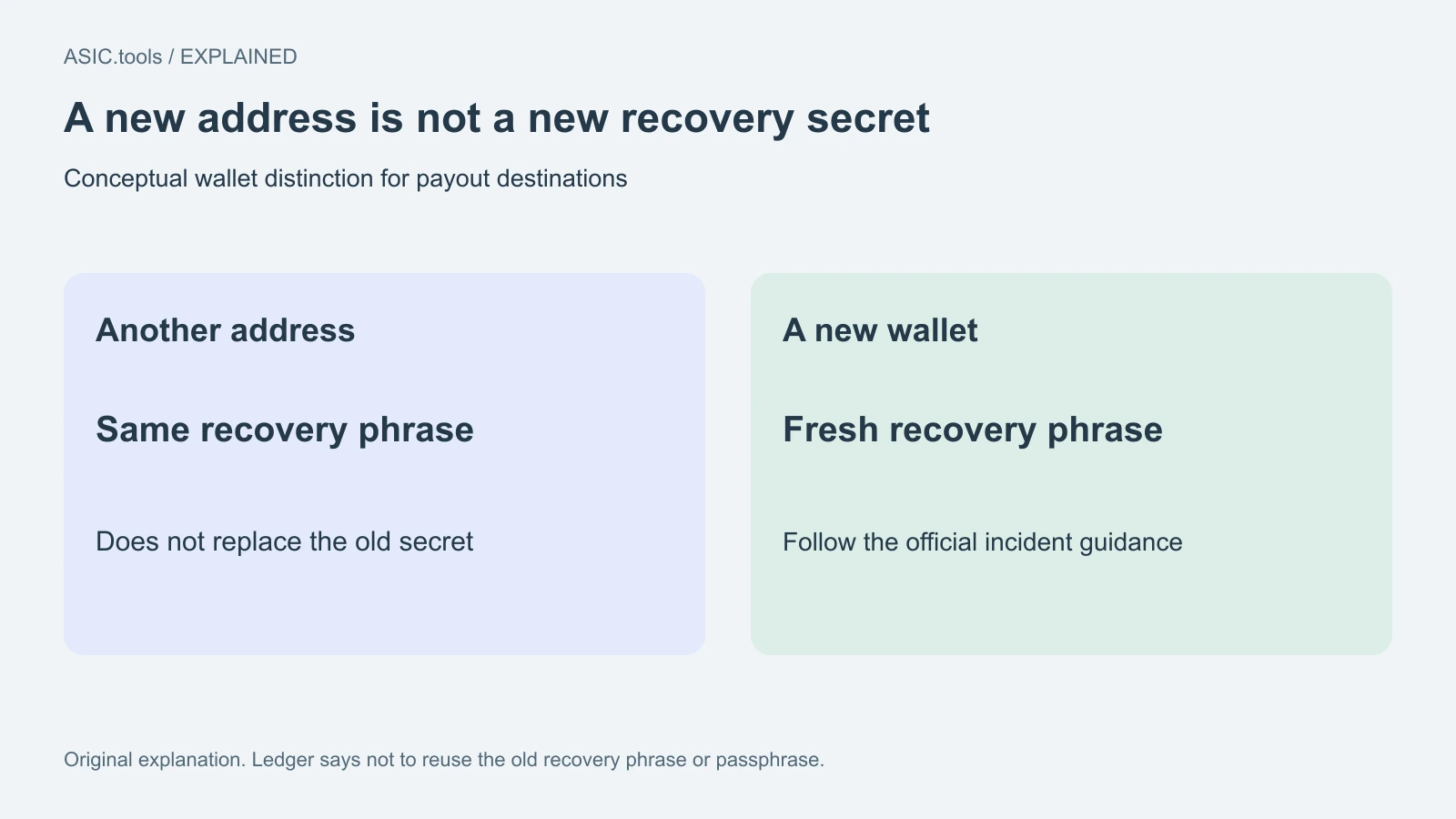
Ledger tells concerned users not to set up or restore a wallet on a suspected device. Its guidance is to move funds to a new wallet whose recovery phrase was generated on a device purchased directly from ledger.com, and not reuse either the old recovery phrase or passphrase. A passphrase is an additional secret used with the recovery words. According to the update, a modified device can capture both, so carrying the old secrets into another device does not remove the exposure.
Creating another receiving address under the same recovery phrase is also different from creating a wallet with fresh secrets. This distinction matters when a miner changes the address saved in a pool dashboard: that change controls future payouts, while coins already sent remain at their existing addresses until separately moved. Before changing anything, identify which wallet controls the current balance and follow official guidance from a trusted environment. Never type recovery words into a pool account, web form or support conversation.
Check the payout path separately
After establishing a safe destination, review the receiving address configured at the pool and any other service that sends mining income. Compare the full address using the wallet’s normal verification process, not just its first and last characters. Ledger’s transaction guidance also calls for checking the recipient, amount and fee on the signer’s screen. A copied address in a browser and an address actually confirmed on a device are separate steps in the payment path.
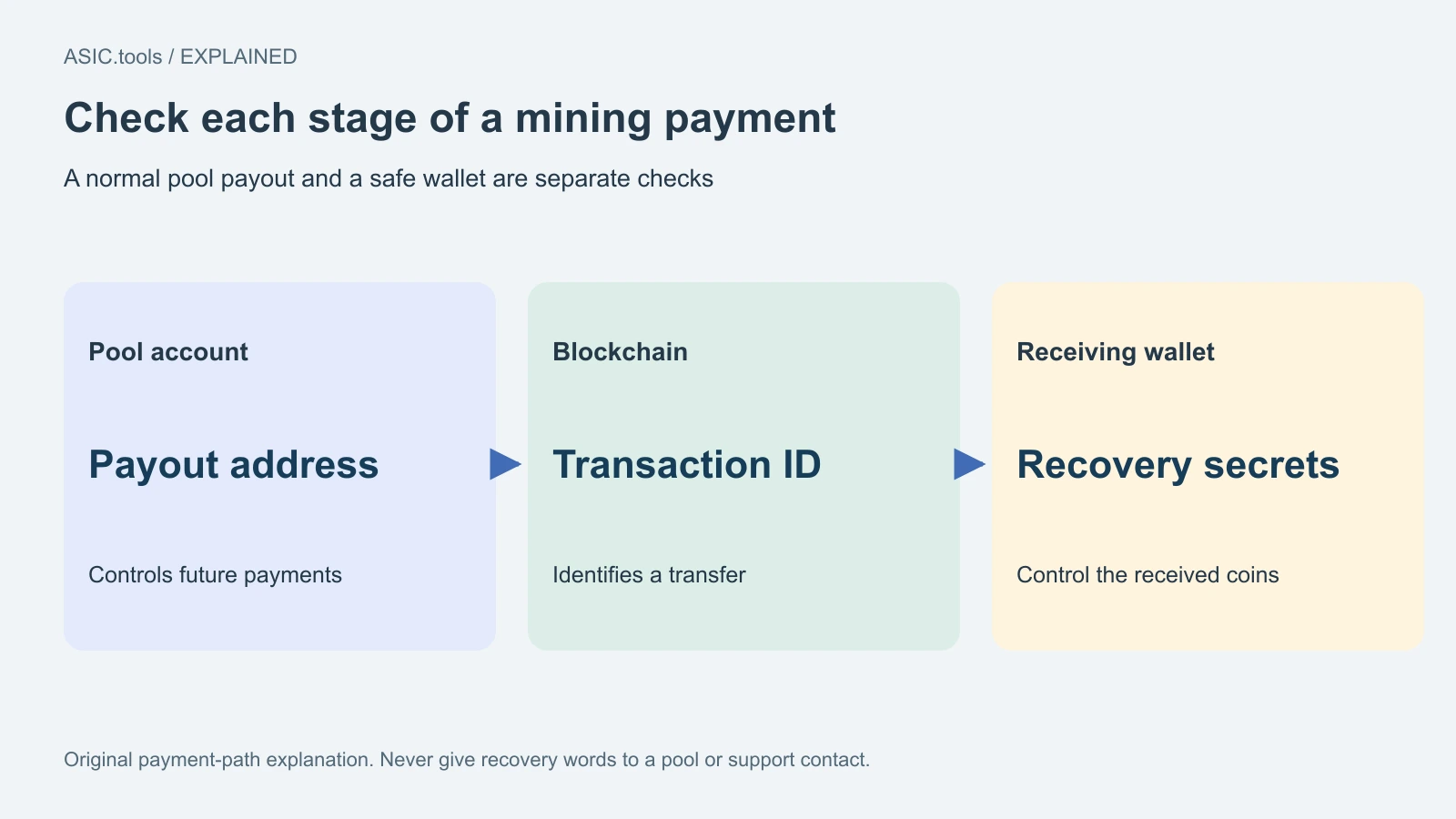
Keep a record of the old payout address, the replacement and the time a pool change takes effect. Some pools apply their own security delays or payout rules; this Ledger notice does not define them. A balance on the pool, an on-chain transaction and the wallet holding the received coins are three different places to check. This makes it possible to understand a delayed payment without confusing a pool setting with a completed transfer or a secure destination.
Inspection goes through an official ticket
Ledger specifically asks concerned customers not to open or modify the device themselves. Support can arrange a physical inspection, including X-ray analysis, for a limited time, with secure shipment to the company’s factory in Vierzon, France. The company also advises stopping use of a suspected device and contacting local authorities. This is a controlled inspection route, not a request for readers to dismantle wallets or mail them to an address found in a social-media reply.
Open the support channel yourself through ledger.com. Ledger says it never asks for the 24 recovery words and never requests a device outside an official support ticket. Preserve purchase details and the device’s history for the investigation, without publishing private recovery material. A person offering urgent recovery help in a direct message does not become part of the manufacturer’s investigation simply by using its name, logo or the wording of this update.
What changes for a mining wallet
The new development is the wider geographic finding and the updated response, not a new flaw in Bitcoin mining or an announcement that every Ledger is compromised. An ASIC can keep submitting valid work while the wallet used for payouts has a separate security problem. Equally, the notice does not establish that a particular miner’s funds were stolen. Check the purchase channel and the exact guidance before drawing a conclusion about an individual device.
For affected or concerned users, the useful sequence is to establish a wallet with fresh secrets using the manufacturer’s recommended route, deal with existing funds, and then review future payout settings. Keep the investigation page as the reference for changes in scope. The report is still open, and Ledger says further devices may be found. Its November 18 advice makes the origin of the device and the creation of recovery secrets more consequential than a reassuring balance displayed on a dashboard.
Source: Ledger ↗ · Recovery phrase and PIN guidance ↗ · Verifying transaction details ↗ · Earlier ASIC.tools report on the Singapore investigation ↗
Mining calculator ↗