FutureBit brings the Apollo III home miner to four Micro Center stores
Source report: 2026-11-12 · Editorial analysis published: 2026-11-13
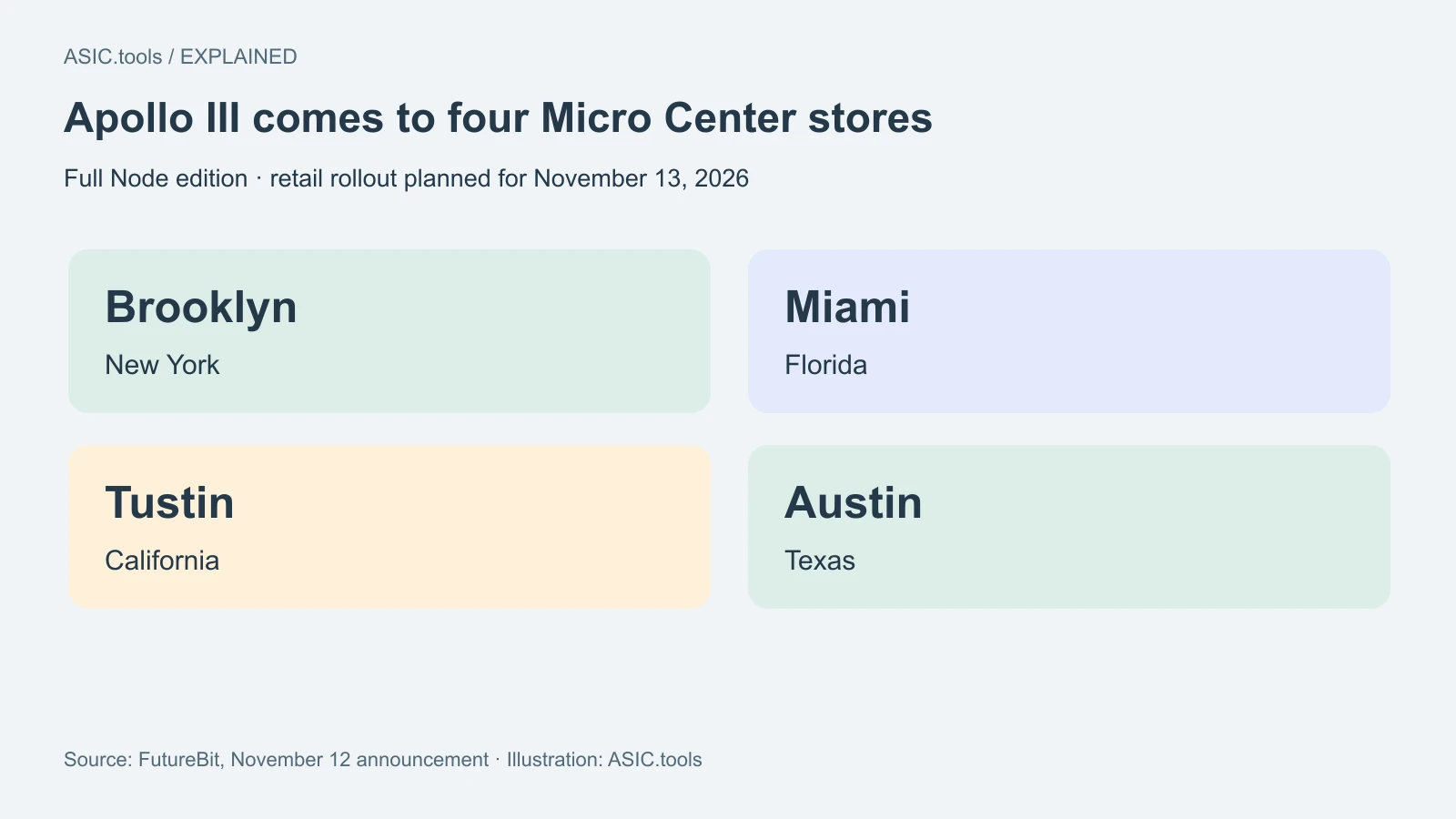
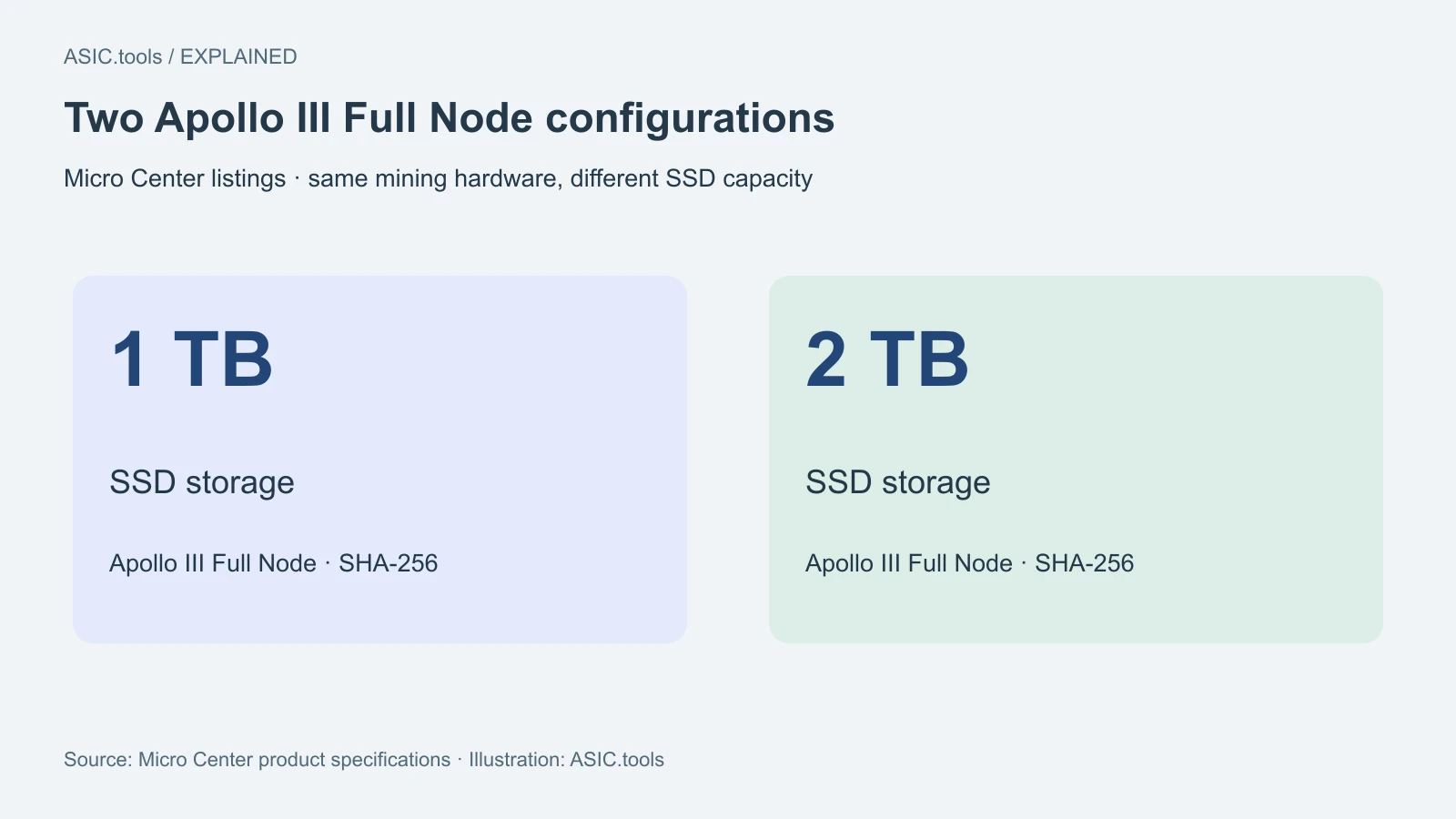
The Full Node edition is scheduled to go on sale November 13 in Brooklyn, Miami, Tustin and Austin. The two listings differ in storage.
Four stores for the first retail rollout
FutureBit says its Apollo III Full Node will go on sale when four Micro Center stores open on November 13. The company named Brooklyn in New York, Miami in Florida, Tustin in California and Austin in Texas. The Austin launch coincides with that store’s opening. FutureBit says buyers will be able to reserve the miner online for pickup.
The company announced the rollout on November 12. At the time of writing, Micro Center lists November 13 as the availability date. Check the location when reserving a unit: a listing for a product tells you which configuration is on offer, while the store’s pickup page tells you whether you can collect it there.
What the two listings give you
Micro Center lists the Full Node edition with a 1 TB or 2 TB solid-state drive. Both use the Apollo III mining hardware. The drive stores data for the Bitcoin node, a program that checks transactions and blocks against Bitcoin’s rules. A bigger drive gives the node more room for data. The ASIC chips determine how fast the machine mines.
FutureBit introduced the Apollo III family in February. The physical retail rollout concerns the model with a node and miner together. FutureBit also offers a Standard version for people who want the miner and can point it at another pool or node. When comparing offers, check the edition and the size of the drive as well as the price.
When comparing pickup and delivery, use the product page for the SSD capacity you want. The availability shown for one configuration may differ from the other. Drive capacity matters most if you want to retain more blockchain data. Both are versions of the same SHA-256 miner, so the drive upgrade has no hashrate advantage.
How the power modes change the bill
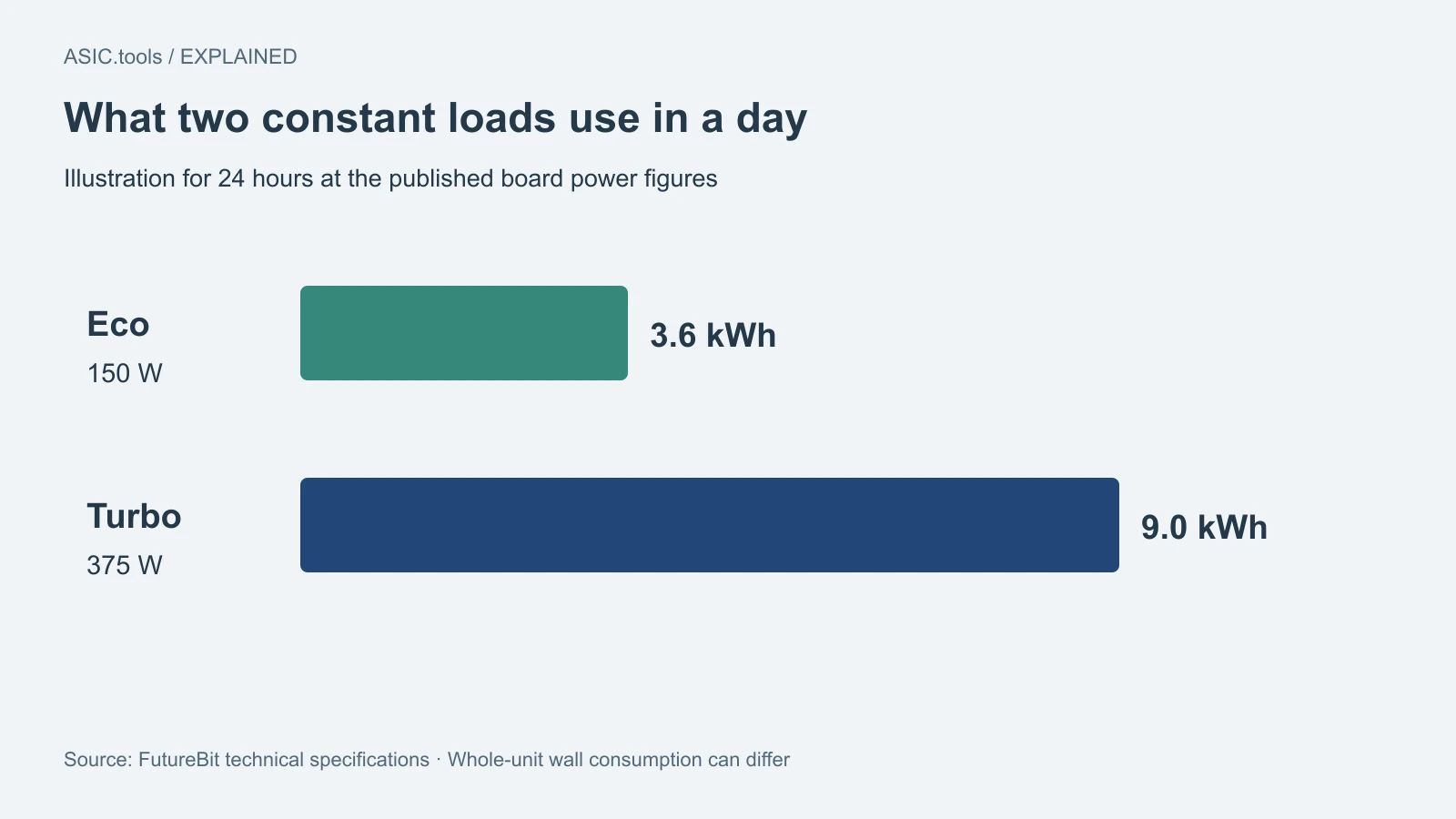
FutureBit lists about 10–12 terahashes per second in Eco mode and about 16–18 in Turbo. A terahash is a trillion hashing attempts. The company rates the board at 150 watts in Eco and 375 in Turbo, with a stated tolerance of 10%. Total electricity at the wall can differ because the power supply and other parts also use energy.
For scale, a steady 150-watt load uses 3.6 kilowatt-hours in a day. A 375-watt load uses 9.0. That difference helps explain why it pays to measure the complete setup before choosing a mode for continuous use. The maker also reports more fan noise in Turbo. Check how the machine sounds in the room where you would run it.
The retailer lists a 450 W power supply. That is the capacity of the supply. For a running-cost estimate, use what the whole unit actually draws in its chosen mode, including the times you expect it to idle or be off.
What to ask before taking one home
The Full Node edition can validate the chain and support solo mining from home. Solo mining pays a block reward only when the miner finds a qualifying block. A shared pool usually distributes smaller amounts under its own rules. Decide which kind of mining you want before choosing how to configure the machine.
The node and the miner also give you different status signals. Check whether the node has reached the latest block and whether your chosen pool or local service is receiving work. If one indicator moves and the other stays still, you can narrow down which part of the setup needs attention.
At pickup, confirm the drive size, warranty and return terms for your exact listing. At home, allow time for the node to synchronize and check that the mining endpoint receives the machine’s work. With the in-store rollout, buyers near those four stores have another way to see the device and ask about setup before taking it home.
Source: FutureBit ↗ · FutureBit — Apollo III specifications ↗ · Micro Center — 1 TB edition ↗ · Micro Center — 2 TB edition ↗
Mining calculator ↗