Glassnode says listed miners are selling Bitcoin reserves to fund AI data centers
Source report: 2026-11-18 · Editorial analysis published: 2026-11-18
The November 18 finding concerns a tracked group’s reserves. It is a change in how mined coins are used, not a claim that every miner has stopped producing Bitcoin.
From holding coins to spending them
Glassnode said on November 18 that listed Bitcoin miners in the group it follows have sold nearly half their Bitcoin since January, linking the sales to investment in artificial-intelligence data centers. The finding describes a change in the use of mining reserves: coins once kept for later are becoming a source of cash for another business. For readers following the mining market, a company’s Bitcoin balance now needs to be read alongside its production and its capital spending.
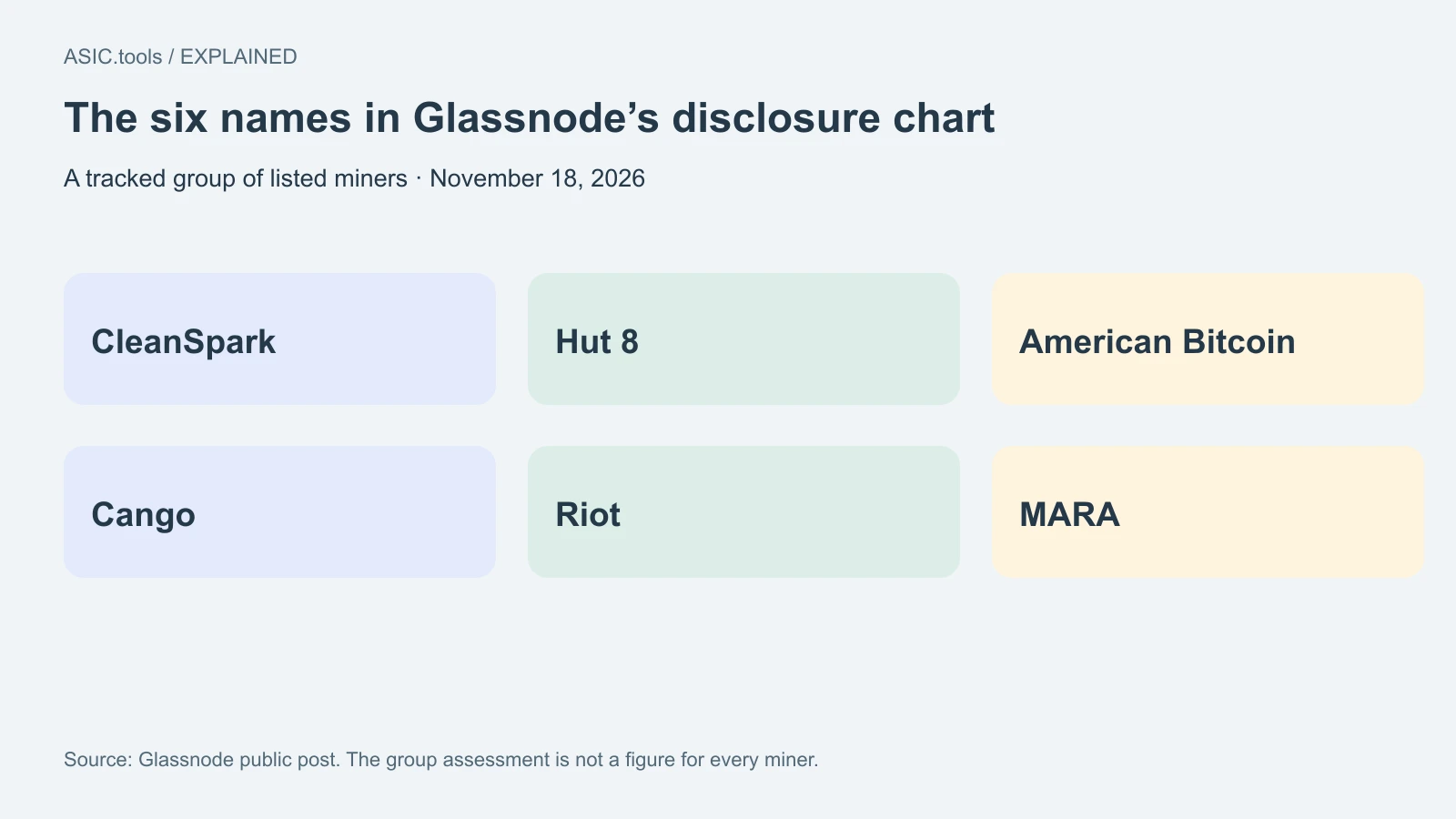
The accompanying chart labels six companies: CleanSpark, Hut 8, American Bitcoin, Cango, Riot and MARA. It plots disclosed holdings and the monthly net change in their combined position. The near-half description is Glassnode’s assessment of its tracked group, not a statement about all Bitcoin miners or every company individually. The post gives no new company-by-company sales reconciliation, so the group figure should not be turned into the same percentage for each name on the chart.
The combined position is a sum of holdings, not an average company. A large balance change at one constituent can dominate the group while smaller members move differently. Check company-level disclosures before treating the direction of the total as the policy of every participant.
A reserve is different from production
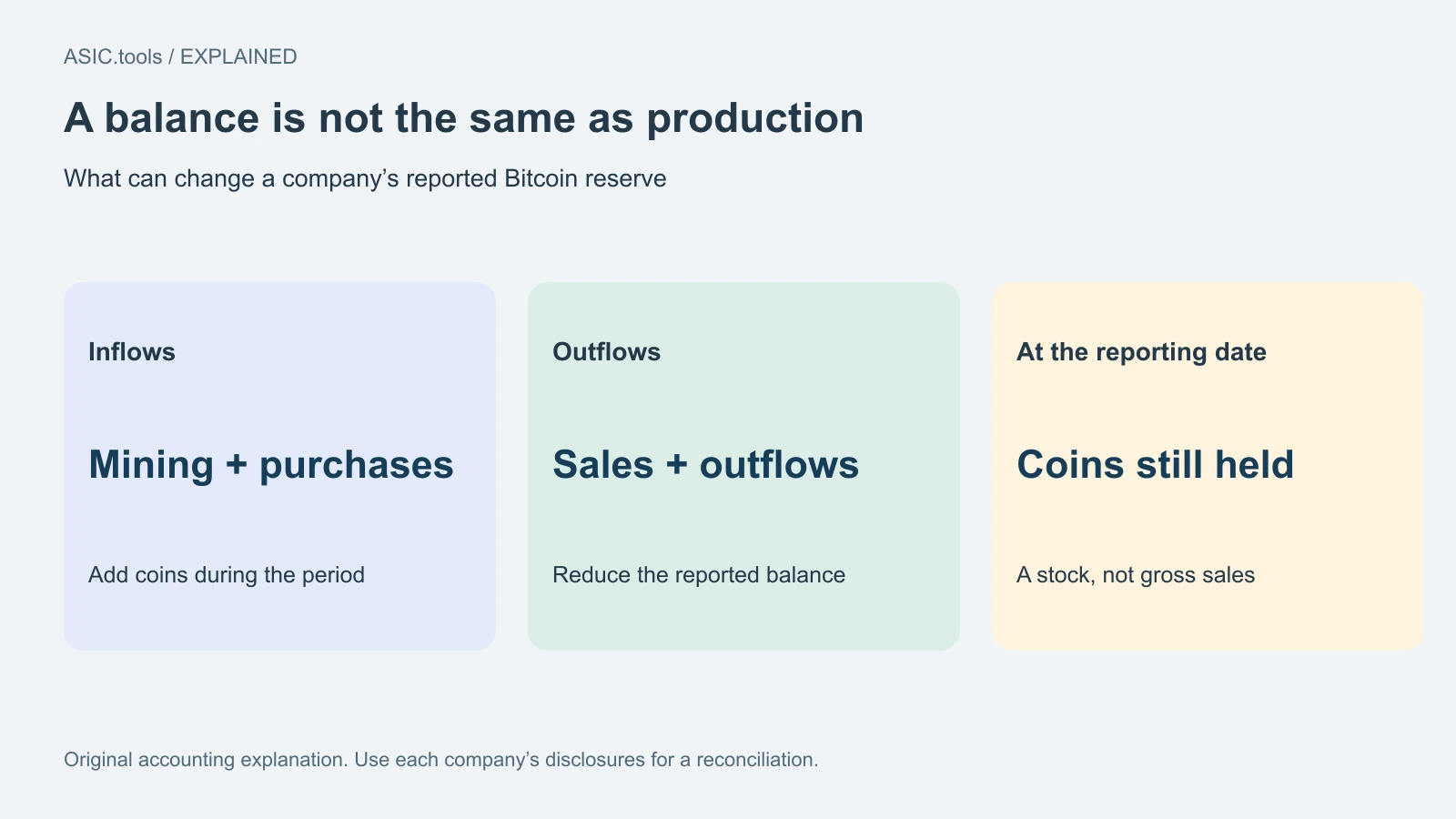
Production counts coins newly earned by mining. A reserve records coins a business still holds at a particular date. A company can produce more Bitcoin while its reserve falls if it sells more than it adds. It can also keep a reserve steady by selling part of current output. That is why a lower treasury balance, on its own, does not tell a reader how many machines ran, how much electricity they used or what their mining margin was.
The chart’s monthly net change is also different from gross sales. Over a period, production, purchases, sales and other reported changes all affect the final balance. A large negative bar is evidence of a lower reported position; a full accounting of disposals needs the companies’ disclosures. The useful comparison keeps the dates and measurement separate, rather than treating every reduction as a new batch of mined coins immediately sold on one exchange.
What the AI explanation means
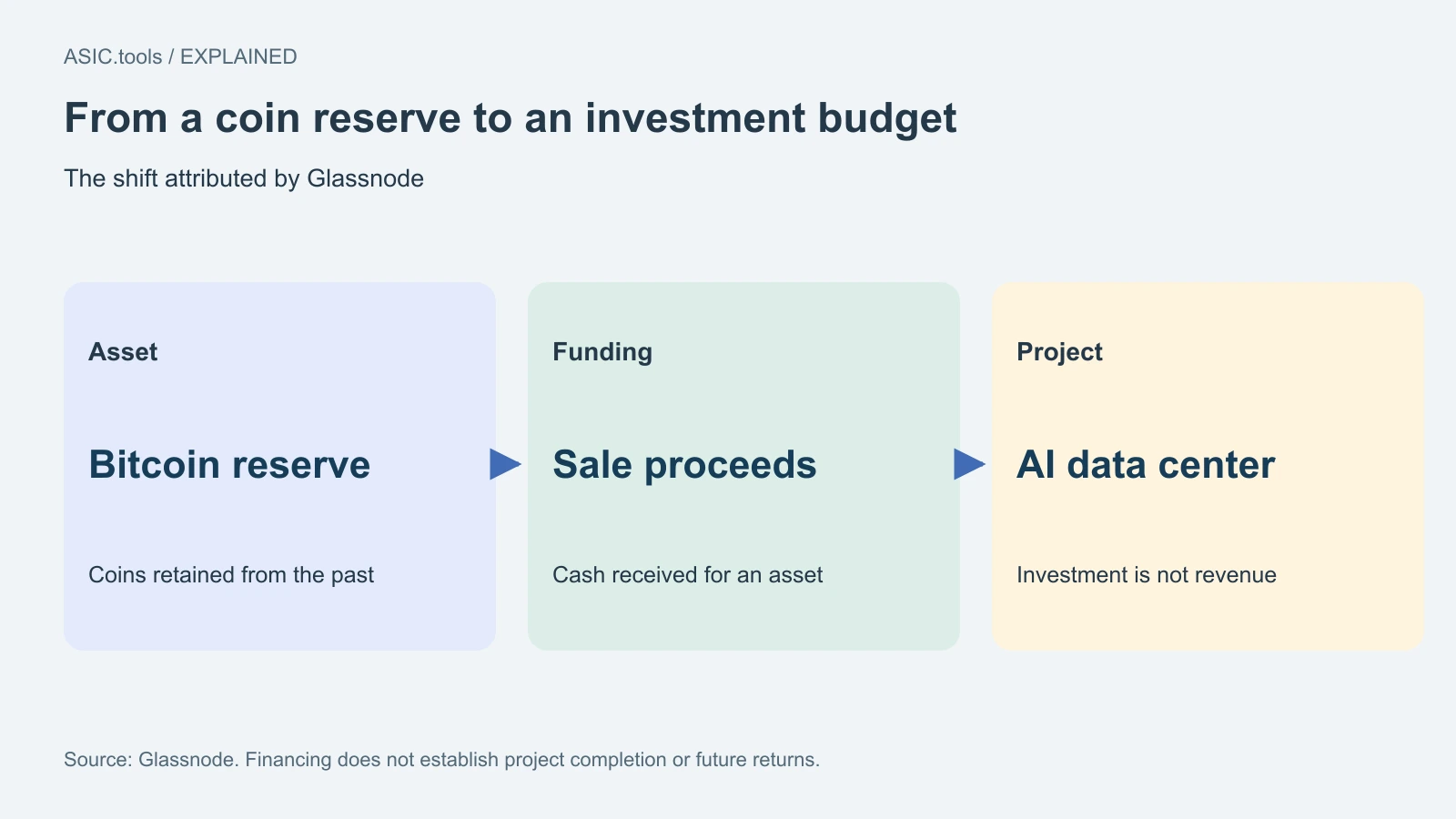
Glassnode attributes the shift to funding AI data centers, and its November 17 research had already discussed miners selling coins to support AI and high-performance computing projects. High-performance computing means demanding computing work beyond cryptocurrency hashing. These projects can require substantial spending before they earn revenue, so a Bitcoin reserve can become a funding source rather than a balance the company intends to keep untouched.
The equipment distinction matters. A Bitcoin ASIC is built for the SHA-256 hashing task; it does not become an AI accelerator by changing its pool address. A site shifting into AI therefore has to consider different computing equipment and the infrastructure that supports it. A treasury-sale announcement tells readers about financing. The progress of a particular site, the hardware installed and the customers paying for it still need their own evidence.
Selling coins does not describe every site
A company can sell reserves and continue mining at the same time. It may run different sites, invest in one activity while maintaining another, or spread construction over several reporting periods. The new Glassnode post does not provide a site-by-site closure list or a measurement of how much Bitcoin hashrate has moved to another use. Those operating questions cannot be answered from a holdings chart alone.
The same distinction applies to money. Proceeds from selling Bitcoin are cash received for an asset; they are not automatically operating profit, AI revenue or the return on the project being funded. To evaluate one business, put its reserve statement next to production, disposals, energy costs and investment commitments from the same period. This separates the decision to finance a project from the eventual result of running it.
A transfer is not a confirmed sale
Bitcoin movements on the public blockchain can attract attention when an address is labelled as a miner. But a move to another address can be internal custody management or another operation. The transaction does not itself identify a sale price or prove an exchange trade. Company-reported sales and a data provider’s stated reserve methodology are stronger references for that question than an unverified conclusion drawn from a transfer alert.
Glassnode’s six-name disclosure chart is a useful starting point for the group it identifies. When examining an individual company, check its own reporting date, the scope of the balance and what it says about disposals and investment. Where a business has subsidiaries, also check whether a figure is consolidated or belongs to a particular entity before adding balances from separate reports. That avoids creating a new total that the original disclosure never stated.
What a smaller miner can take from the change
For a household or small farm, the practical lesson is about cash planning rather than copying a listed company’s AI strategy. Track coins earned, coins retained and the cash needed for electricity separately. The same number of BTC kept in a wallet can cover a different amount of next month’s bills when the exchange value changes. A reserve is useful liquidity only to the extent that it can meet the actual commitments of the operation.
The November 18 update shows why holding Bitcoin is no longer enough to describe the strategy of the companies in this group. Their coin balances, production and use of capital can move in different directions. Read the nearly-half figure as Glassnode’s dated group assessment, then use the underlying company reports for decisions about a particular operator. It does not establish where Bitcoin’s price goes next or whether selling reserves will make an AI project successful.
Source: Glassnode ↗ · Glassnode research: mining sales and AI investment ↗ · Contemporaneous report and link to the original post ↗
Mining calculator ↗