
Temperature control before thermal shutdown
Source report: 2026-06-29 · Editorial analysis published: 2026-09-10
LuxOS thermal management adjusts voltage and frequency as conditions change, aiming to preserve operation within configured temperature limits.

Analysis and practical implications
This section is our analysis and illustrative calculations, separate from the source report.
Thermal control protects useful operating time
A miner's thermal behavior changes with room conditions, airflow, cleanliness and the health of its cooling components. A control system that adjusts operation as conditions change can help keep the device within an intended envelope. The result should be evaluated in terms of stable useful work rather than only the highest possible instantaneous output.
Start by identifying the actual temperature measurements available and what each represents. Different sensors may describe chips, boards or incoming conditions. A single dashboard number cannot always explain the thermal behavior of the complete machine.
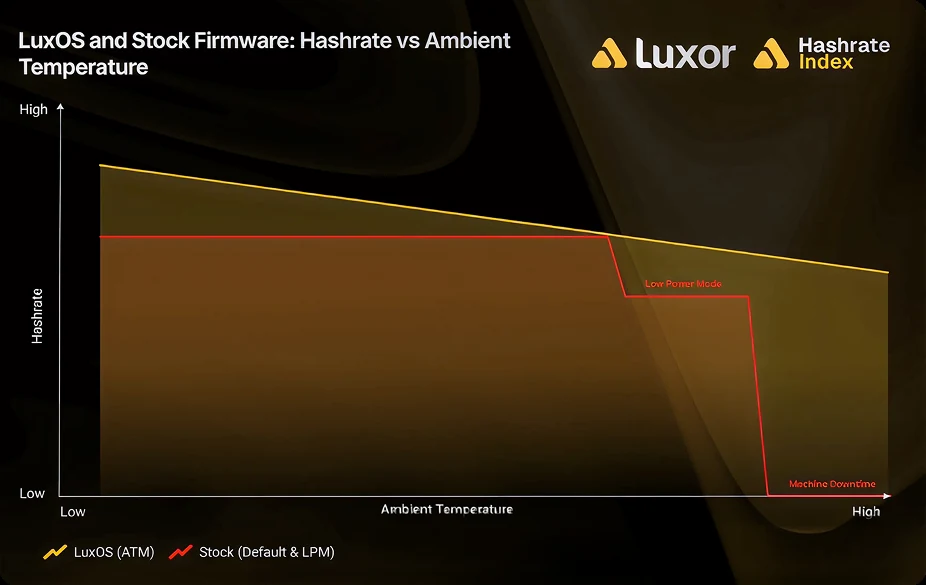
Compare controlled reduction with an uncontrolled stop
A temporary reduction in output may preserve more useful work than repeated shutdowns and restarts. That does not mean every reduction is automatically optimal. Record the duration, accepted work and energy use associated with the control action.
If the machine repeatedly reaches a thermal limit, investigate the installation as well as the settings. Blocked airflow, unsuitable recirculation or maintenance needs can create a persistent problem that software adjustment merely makes less visible. Control should support a sound cooling arrangement, not conceal a deteriorating one.
Keep the measurement interval consistent
A comparison between a cool morning and a hot afternoon may tell more about the environment than about the firmware. Use matched conditions or document the difference. Include the energy used by auxiliary cooling if the test changes that load.
For a fleet, examine the distribution of temperatures and behavior rather than only the average. A small group of hot machines can require attention even when the site-wide average looks acceptable. Mapping repeated exceptions to physical positions can help reveal an installation problem.
Define alerts around actionable conditions
An alert should tell the operator what needs investigation and which response is appropriate. Record persistent thermal reductions, repeated restarts and abnormal sensor behavior. Keep thresholds tied to the documented requirements of the actual hardware.
After maintenance or a configuration change, compare the new behavior with the earlier record. A successful result is stable operation within limits and a measurable contribution to useful uptime. The objective is a thermal process that technicians can understand, maintain and verify under changing conditions.
Source: Hashrate Index / Luxor ↗
Mining calculator ↗