Profiles balance hashrate and consumption
Source report: 2026-07-13 · Editorial analysis published: 2026-09-10
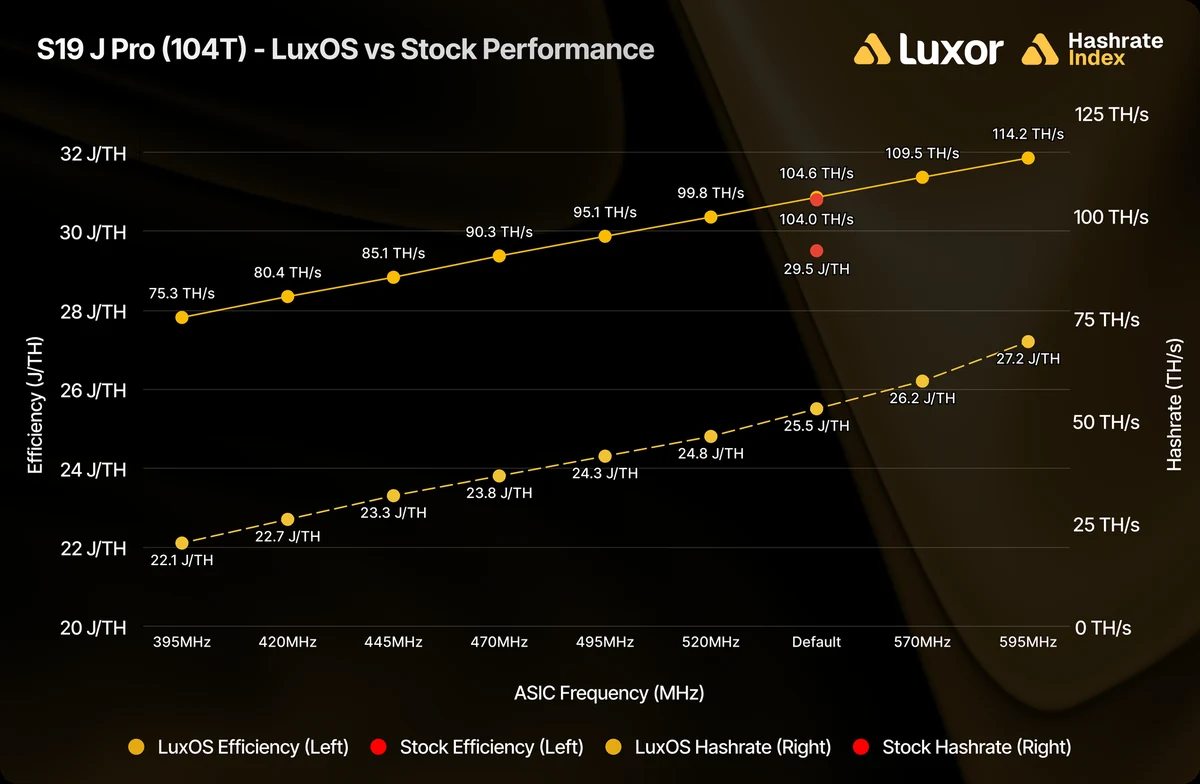
LuxOS profiles pair frequency with voltage. Higher hashrate and better energy efficiency are different targets, requiring different operating choices.
Analysis and practical implications
This section is our analysis and illustrative calculations, separate from the source report.
A profile is a trade-off between operating targets
Frequency and voltage settings influence the balance between useful output, electrical consumption and stability. A profile packages those choices into a repeatable operating point. It should be evaluated against a stated objective rather than described as universally better because one number increases.
A site constrained by electricity cost may favor a different setting from a site constrained by rack space. A third site may prioritize quiet or thermally stable operation. Naming the constraint first makes the profile comparison more meaningful and prevents an experiment from changing its definition of success halfway through.
Compare complete intervals rather than peaks
A brief local hashrate peak is not a useful basis for choosing a fleet profile. Record accepted pool work and measured energy over a representative interval, including any restart or stabilization period. The profile that produces the highest display value may also produce more rejected work or require additional cooling.
Change one operating factor at a time where practical. If firmware, pool settings and cooling conditions all change together, the result cannot easily be attributed to the profile. Preserve the baseline so that the comparison can be repeated and challenged.
Separate efficiency from total contribution
Consider two hypothetical settings. One produces more work but consumes proportionally more electricity; another produces less work at a better energy ratio. Which setting contributes more money depends on the revenue available for the work and the applicable electricity tariff.
A useful comparison sheet includes accepted output, wall power, electricity cost and operating contribution for each setting. If equipment financing or hosting fees are unchanged between profiles, state that separately. Do not hide those expenses, but avoid attributing a fixed cost to a software change that did not affect it.
Keep the stable setting reproducible
After choosing a profile, record the firmware version, ambient conditions and any exceptions. A setting that works on one machine may need additional testing on a different board revision or a device with a different repair history. The fleet rollout should preserve that distinction.
Review the profile when the site's constraint changes. A new electricity contract or a hotter operating period can justify a different balance. The point of configurable profiles is controlled adaptation, not permanent operation at the most aggressive available setting.
Source: Hashrate Index / Luxor ↗
Mining calculator ↗