Reusing the heat from mining
Source report: 2026-08-02 · Editorial analysis published: 2026-09-10
Nearly all miner electricity becomes heat. Recovering it can offset heating demand when a suitable nearby consumer exists.
Analysis and practical implications
This section is our analysis and illustrative calculations, separate from the source report.
Heat has value only when somebody can use it
A miner that consumes electricity also creates a thermal output. Capturing that heat can be useful, but the economic benefit depends on the receiving system. A building that needs heat at the same time the miner operates is a better match than a seasonal demand that disappears for much of the year.
Start with the demand profile rather than the machine. Record how much heat is needed, when it is needed and the temperature at which it must be delivered. Then compare that requirement with the miner's actual operating schedule. A theoretical annual heat quantity can be misleading if the useful demand occurs during different hours.
Separate recovered heat from avoided heating cost
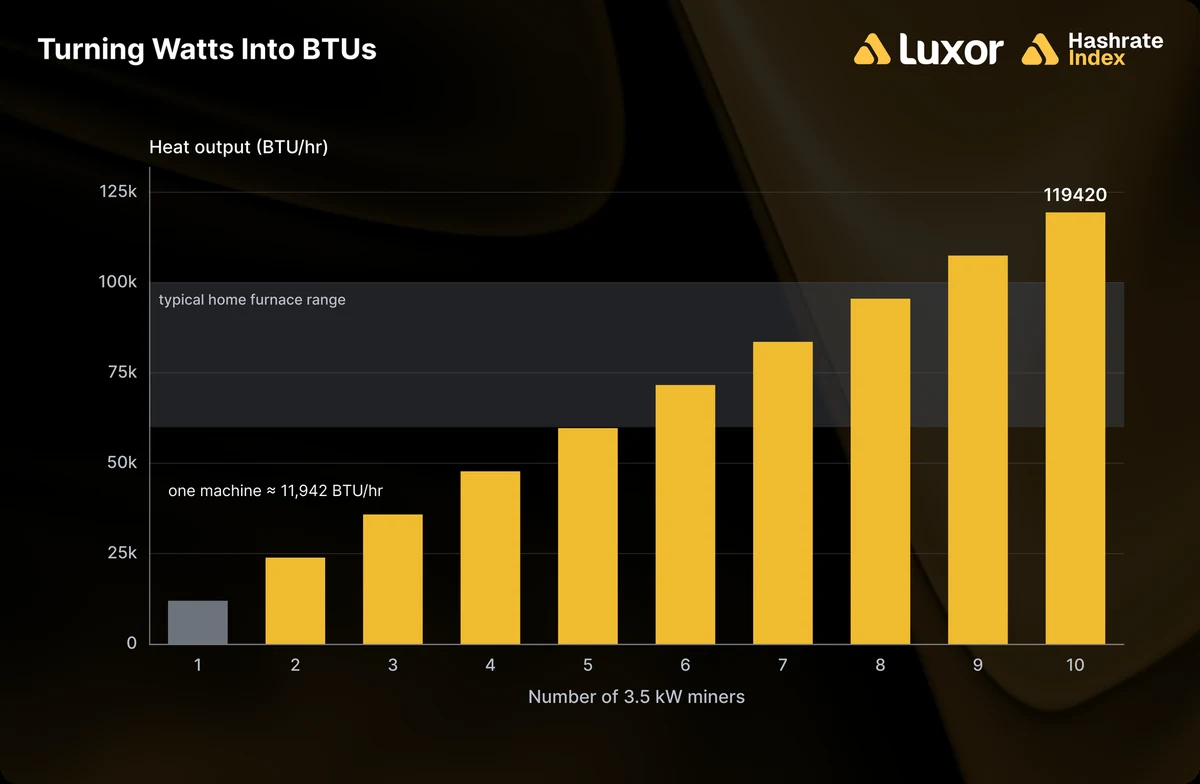
Consider an illustrative 3.5 kW electrical load operating for eight hours. It consumes 28 kWh of electricity and produces a comparable order of thermal energy, but not all of that output necessarily reaches the intended room or water circuit. Duct losses, heat-exchanger behavior and control decisions affect the usable result.
The avoided cost also depends on what the recovered heat replaces. Displacing an expensive direct-electric heater is a different comparison from displacing a more efficient heating system. Use the actual alternative and its operating cost. Do not value every recovered kilowatt-hour at the retail electricity tariff without examining the existing heating method.
Cooling and heating must cooperate
A heat-reuse design has to keep the miner within its specified operating limits while meeting the receiving system's needs. If the building stops accepting heat, the mining installation still needs a way to reject it. That requirement should be designed into the system rather than handled as an emergency improvisation.
Maintenance access, noise, air quality and separation of incompatible systems also matter. A mining device is not automatically a finished domestic heating appliance. Electrical and mechanical integration should be evaluated for the actual location, using suitable equipment and qualified installation where required.
Measure the useful result over a season
Install measurements that distinguish electricity consumed, operating time and useful heat delivered. Compare the heating bill against a realistic baseline that accounts for weather and occupancy. A warmer winter can reduce the bill even if the recovery system contributes little, while a colder winter can hide a useful improvement.
For a business case, keep mining receipts and heating savings in separate columns. This makes it possible to see whether the system works as a heating project, a mining project or only as a combination. The most credible heat-reuse proposal is one in which the useful demand, delivery temperature and operating schedule are all documented.
Source: Hashrate Index / Luxor ↗
Mining calculator ↗