DTEK reports about 353,000 homes without power in Dnipropetrovsk Oblast
Source report: 2026-11-23 · Editorial analysis published: 2026-11-24
The November 23 estimate follows strikes on four DTEK energy facilities over two days. Ukrenergo confirmed scheduled restrictions in parts of Ukraine on November 24.
The scale of the outages came into focus on Monday
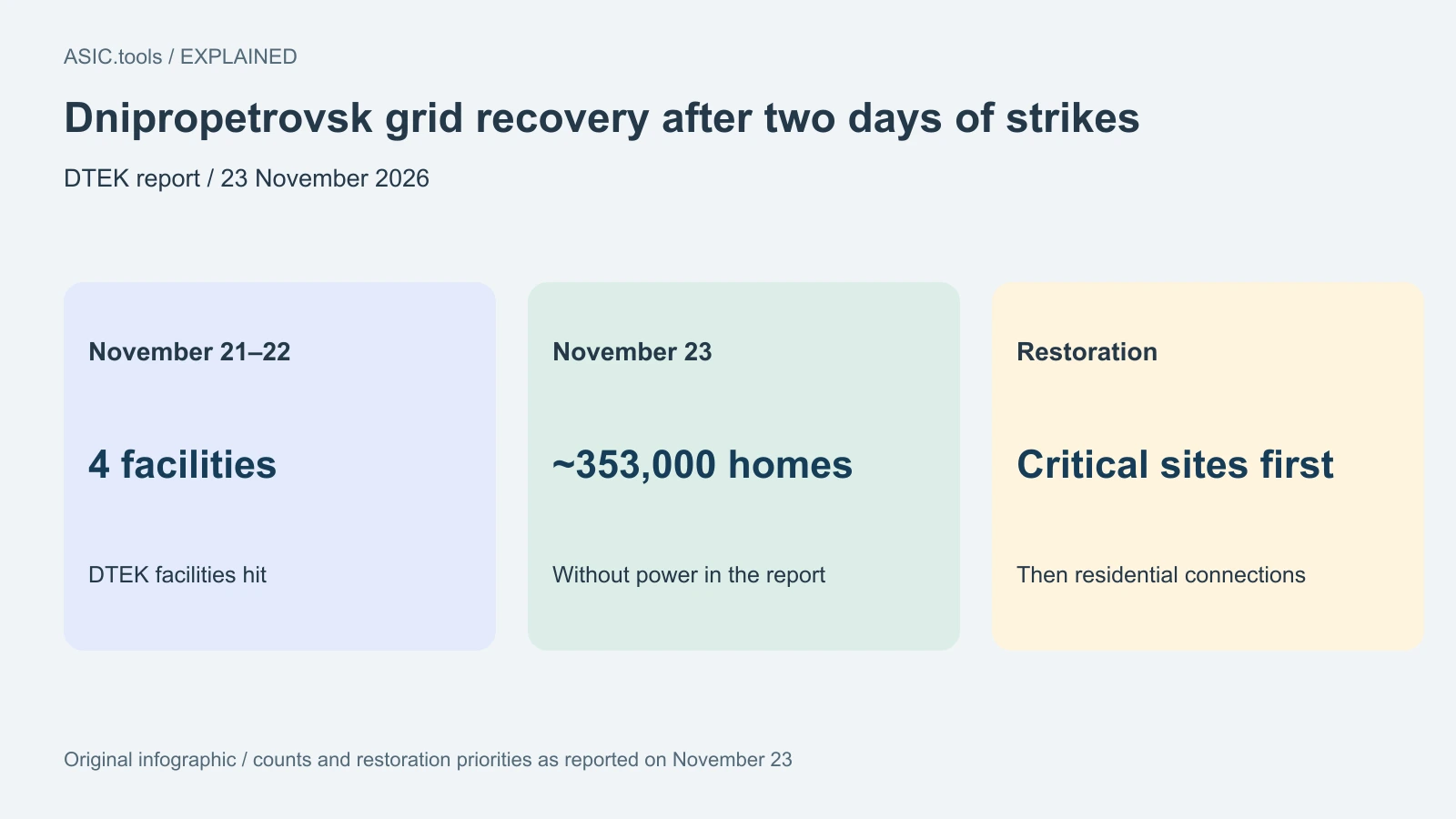
DTEK said on November 23 that about 353,000 homes in Dnipropetrovsk Oblast were without power after attacks on the region’s energy infrastructure. It reported four of its facilities hit over November 21 and 22. The statement adds a regional count and a restoration update to the earlier reports from Dnipro and Samar. The 353,000 estimate describes the moment of the November 23 report.
Repair crews worked overnight and continued restoration. The distributor told Suspilne that it was reconnecting critical infrastructure first, then homes. It said the damage to main grid lines and limited transfer capacity kept it from restoring everyone at once. Transfer capacity is how much electricity the remaining network can safely carry. Reconnecting one site can therefore leave other consumers waiting until crews have restored enough network capacity or found another supply path.
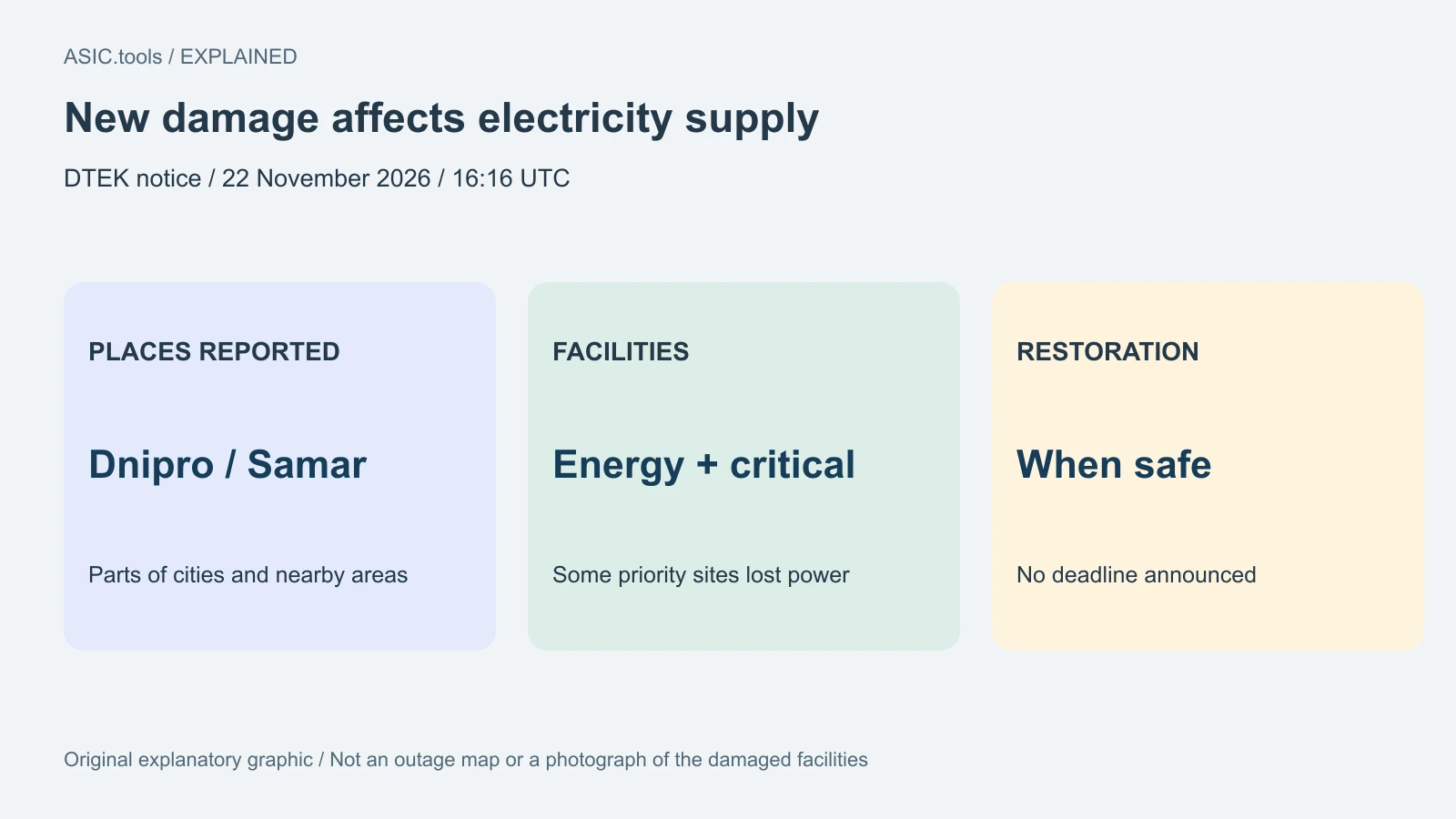
In the November 23 account, DTEK identified emergency cuts in Dnipro and the Dnipro, Samar, Kamianske and Pavlohrad districts. Other parts of the region were on scheduled stabilisation cuts. Those details describe the operator’s report for that day. If emergency instructions apply at a connection, the earlier schedule is no longer the basis for its hours.
Ukrenergo’s November 23 update said outages in Dnipropetrovsk Oblast remained difficult and hourly schedules were in use in the region. The same update reported partial stabilisation in Odesa Oblast and restoration of power to critical infrastructure in Odesa. Those are different regional updates. Conditions at an individual address can change while restoration proceeds.
What the national schedule says on November 24
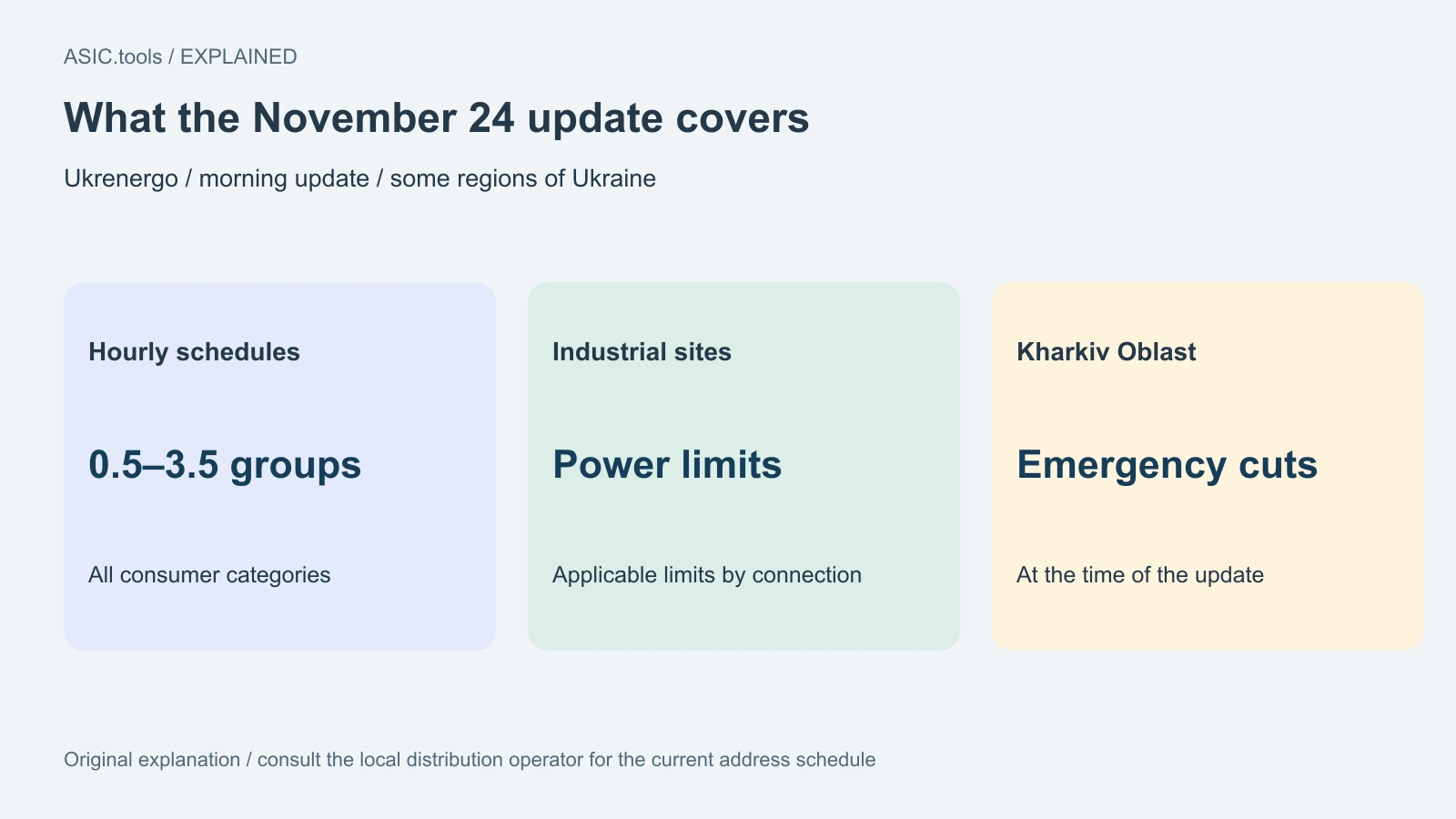
In its November 24 morning update, Ukrenergo confirmed that planned restrictions would operate throughout the day in parts of Ukraine. It listed power caps for industry and hourly outage schedules for all consumer categories, with 0.5 to 3.5 groups in use. It also reported emergency outages in Kharkiv Oblast at the time of the update. A group is a set of customers included in a schedule. The group count describes the scale of restrictions at a given time.
The same morning update listed consumers without power in Zhytomyr, Zaporizhzhia, Rivne, Kharkiv and Chernihiv oblasts following shelling. It was a national morning snapshot with a different scope from DTEK’s previous-day regional estimate. It gave no revised count for Dnipropetrovsk homes.
The hours for any one connection depend on its group and local network. For a household or a small mining site, the local distribution operator’s address schedule provides the relevant windows. An emergency outage or damage to a line can change the picture. Use the time of the update to decide what to put in a plan, and the actual meter and equipment records to see what happened.
For an industrial site, a power cap concerns how much load can run at once. The site’s available capacity needs to cover its other operations as well as the miners. A household’s timed interruption and an industrial capacity limit therefore affect an operator’s planning in different ways. Check the form of restriction that applies to the connection before estimating the day’s output.
How to count the hours an ASIC actually worked
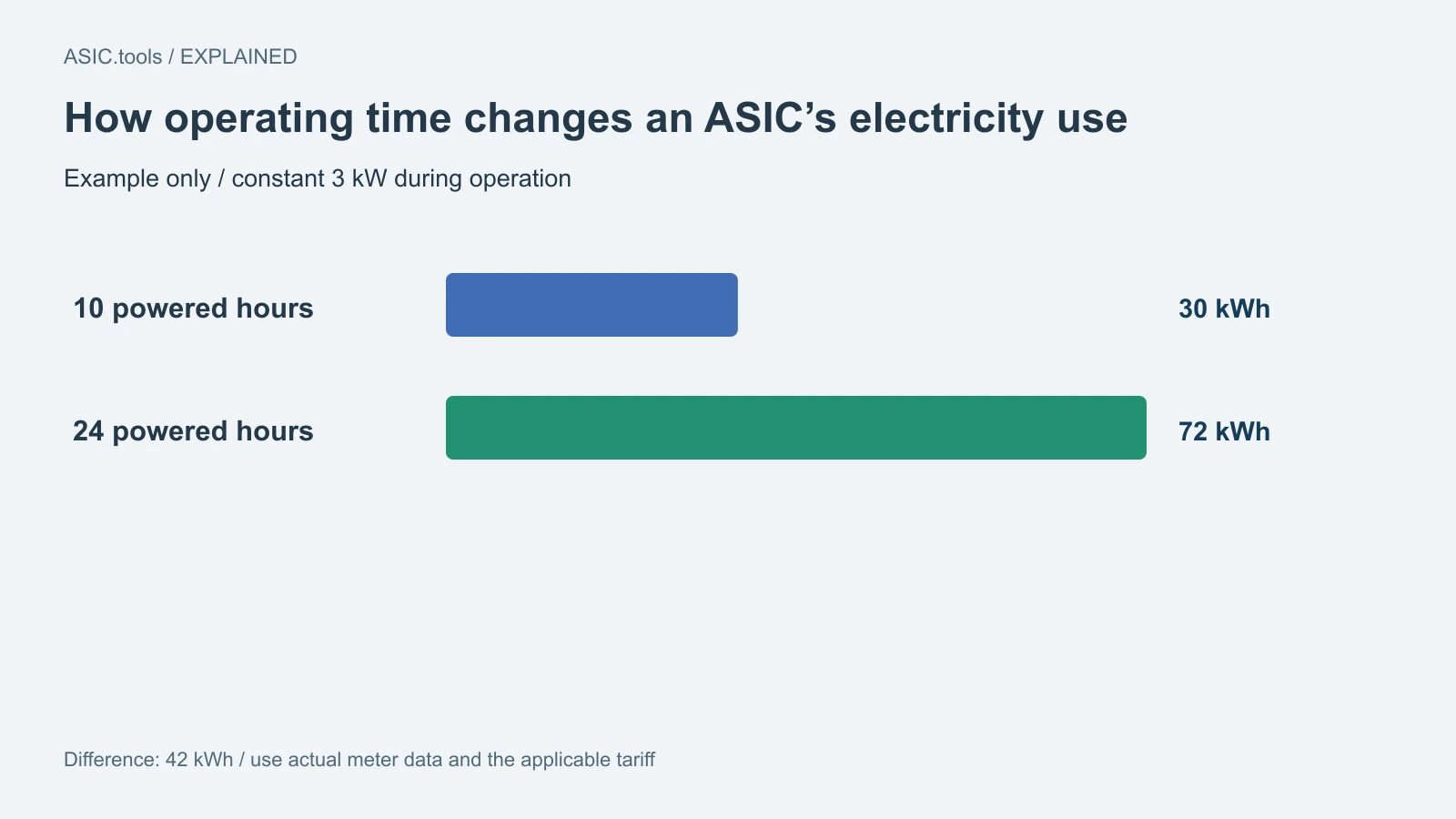
Consider an ASIC drawing 3 kW with 10 hours of powered operation in a day. It would use 30 kWh during those hours, compared with 72 kWh in a full 24 hours at that draw. The 10 hours is a budgeting example for one device. The group count provides no basis for using that number as a forecast at any address. Measured power and running hours determine the actual energy drawn.
Power returning and mining resuming are two points on the same timeline. A router, controller or machine may need time to come back and resume accepted work. The pool’s timestamps can show where a job stream recovered. For a fair comparison, pair the meter and accepted-share records from the same time window. A share is a result the pool counts as evidence of work.
The difference in the example is 42 kWh. Apply the billed rate to the energy used in each pricing period if the site has time-based billing. Stoppages can reshuffle those periods, so multiplying a nominal 24-hour draw by one price can obscure what happened.
Separate electricity used from expenses that continue through a stop, such as a fixed hosting fee if it applies to the site. Use observed uptime and the latest local schedule for the next estimate. The restoration update gives the scale of the outage and the order of work, while an address-level check supplies the input for a machine’s operating plan.
Source: DTEK Grids / Ukrenergo ↗ · Ukrenergo November 24 system update ↗ · Ukrenergo November 23 restoration update ↗ · DTEK distribution operator address schedules ↗ · Suspilne reporting the distributor’s statement ↗
Mining calculator ↗