DTEK switches to building-by-building outage schedules in Dnipro
Source report: 2026-11-28 · Editorial analysis published: 2026-11-28
The local distributor publishes the next day’s plan each evening and can revise it during the day. Even neighbouring buildings can have different time slots.
The address now matters more than the old group number
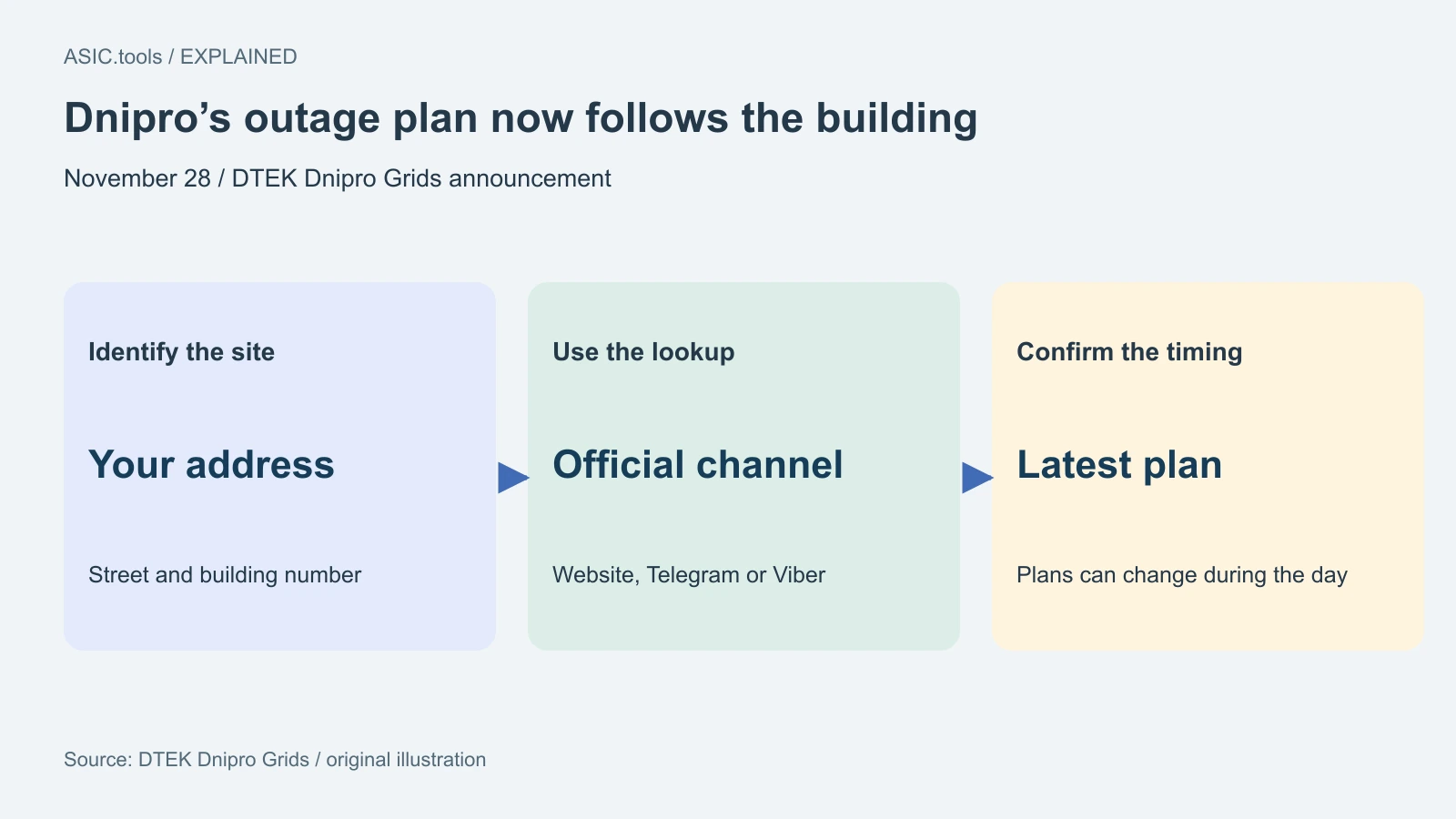
On November 28, DTEK Dnipro Grids said it was introducing outage schedules by building in Dnipro and the surrounding region. The distributor said damage to the grid from Russian attacks made the usual schedules by group and subgroup unworkable. Two neighbouring buildings can have different times because they may be supplied differently. The change matters to anyone planning a long electrical load at home or at a small site, including a miner.
The distributor tells customers to enter their street and building number on its own website or official Telegram or Viber bot. The next day’s plan is published each evening. Use the physical address where the hardware draws power. If a miner sits at another site, the schedule for an account owner’s home cannot tell them when the machine will have power.
The previous day’s DTEK notice said emergency cuts were still in effect in Dnipro and several districts and that the new format was being tested. The November 28 announcement changes how published schedules are looked up. Check whether a separate emergency notice supersedes a published plan for your address.
A schedule can change during the day
DTEK says the published times are a planning guide. If national system operator Ukrenergo changes its instructions, the distributor may update them during the day. That makes the date and the most recent update time as important as the street address. Look up the schedule again before a long run, especially if the last information came from a screenshot or a shared message.
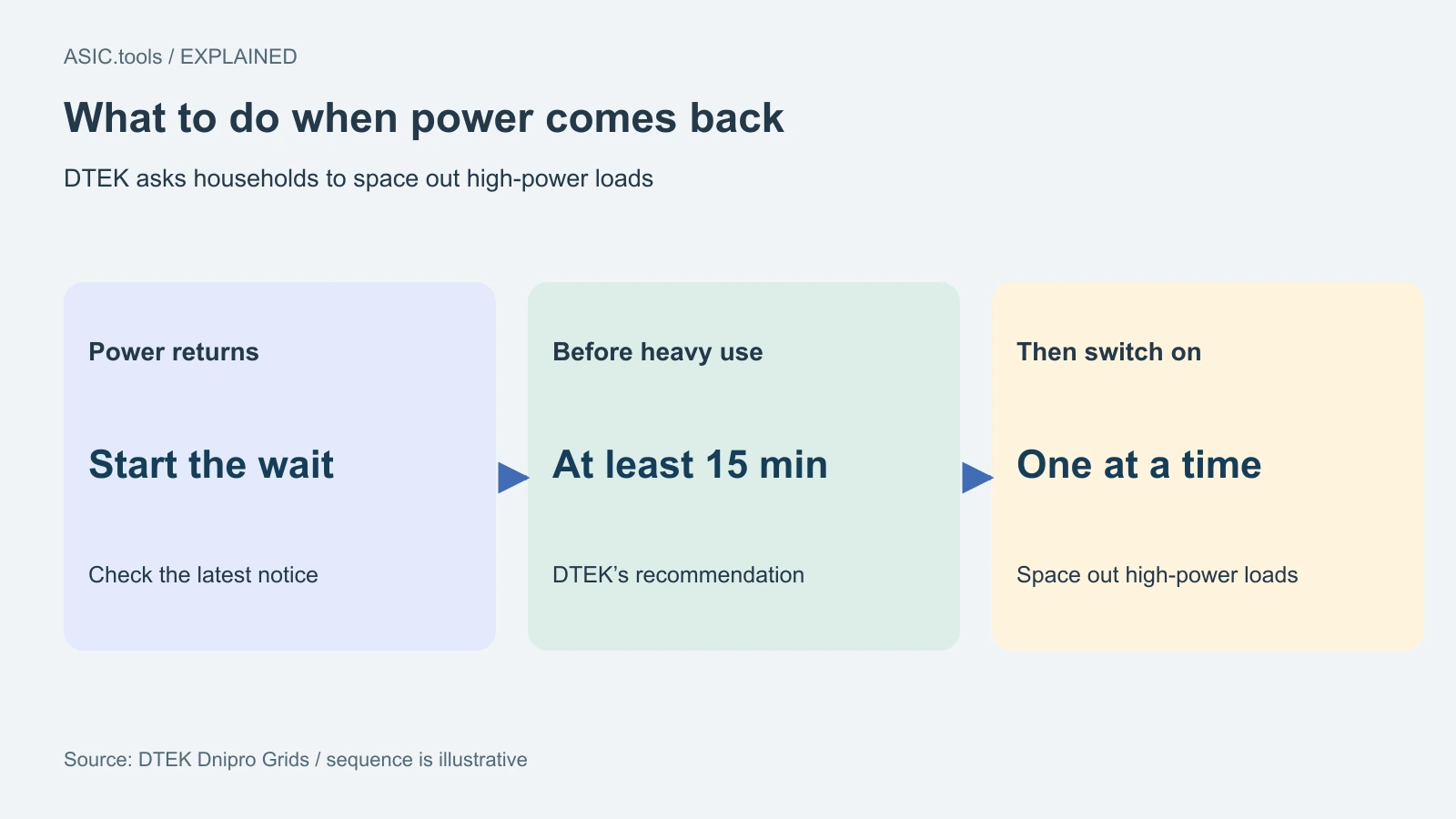
If power comes back, DTEK asks customers to wait at least 15 minutes before turning on energy-intensive appliances and to start them one at a time. Many households draw power at once when supply returns. Spacing out heavy loads helps reduce that surge. A home miner is another electrical load to account for alongside heating, water heating or other equipment the household needs.
DTEK says its website can respond slowly under high demand. The operator suggests waiting a few minutes or trying an official bot. A delayed page does not provide a new time slot. If the site and a copy show different times, use the latest announcement from the distributor.
Measure actual uptime at the miner
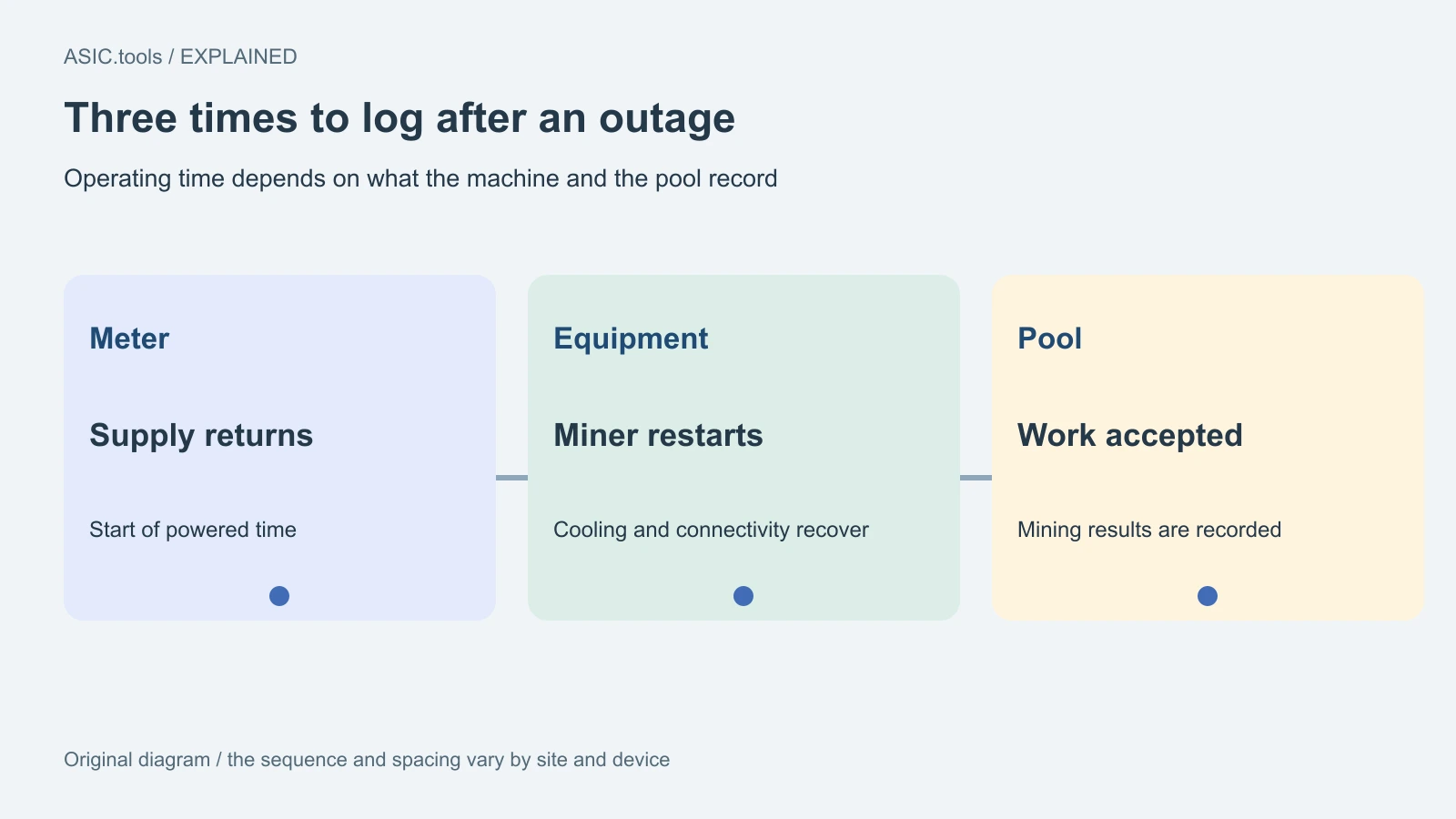
There are three times to log: when power returned, when the machine resumed work and when its pool began accepting results. The router, cooling system or miner may take time to restart. The pool combines the work of many miners, so it is the place to confirm that the machine’s calculations are reaching the service. A machine that shows as online may still be waiting for a stable connection.
If a region has several interruptions in a day, keep a record for each one. Pool charts often show averages. A brief interruption can be hard to see on a chart set to a whole day. Using the meter and pool history together can separate actual electricity consumption from time the rig was productive.
Automatic restart can make a miner and the rest of the household load return together. Check what each device does after a power loss before relying on an unattended restart. Keep a way to hold the miner until the distributor’s waiting period and any necessary checks have passed.
Use the schedule for planning and the meter for costs
A hypothetical miner drawing 3 kW for eight operating hours uses 24 kWh. At the same draw for a full 24 hours it would use 72 kWh. Neither figure is an estimate of when a particular address will have power. Base a cost estimate on real operating time and the price under the site’s electricity contract.
The new lookup helps put a local plan together. Use the latest building schedule as a guide, give the network time after reconnection, and record actual runtime before estimating production or electricity charges. A different address needs its own check, even if it is on the same street.
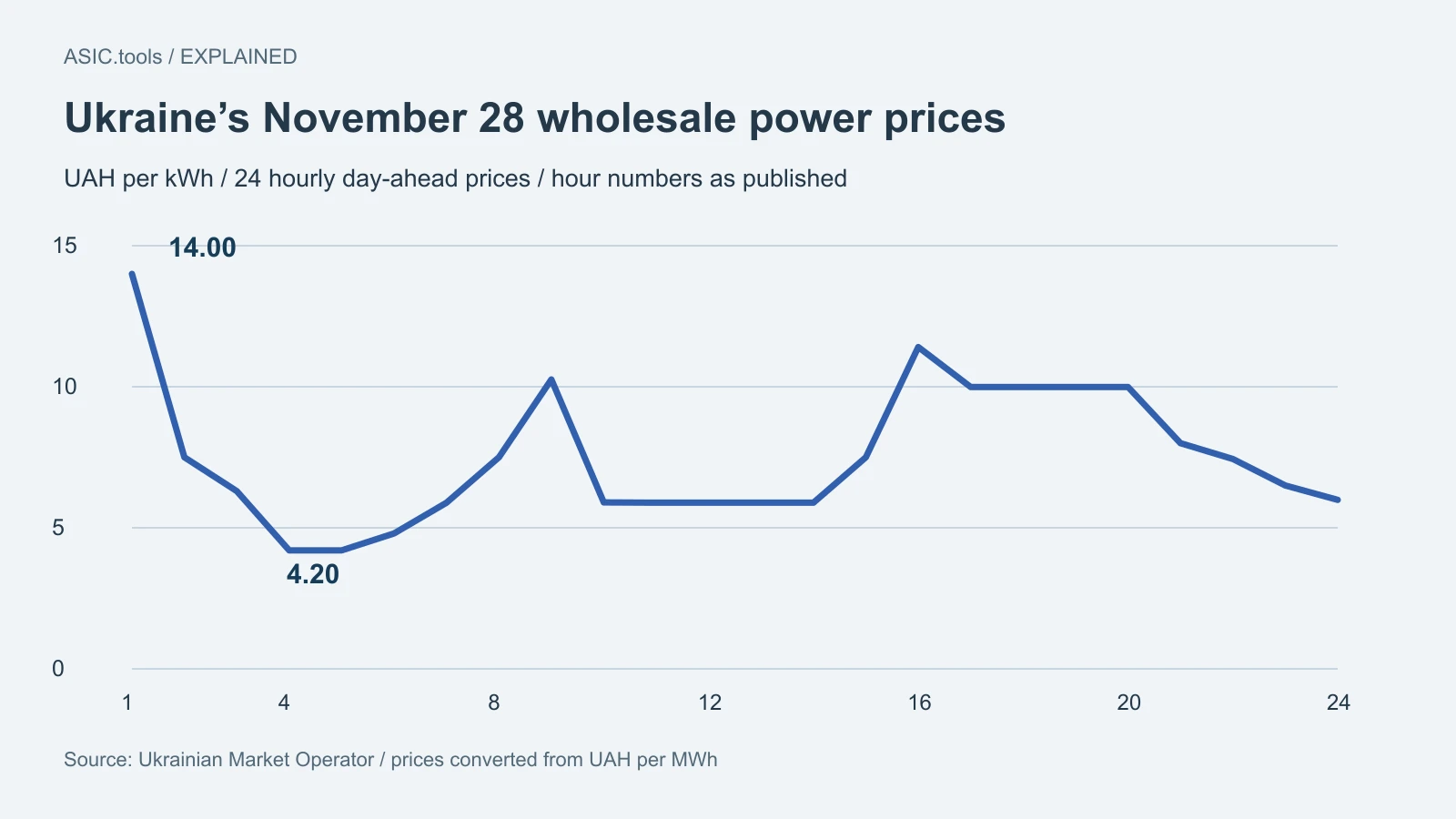
Day-ahead wholesale prices and outage schedules can both matter, but they answer different questions. The market publishes the price for delivery, and the distributor publishes an address-specific plan. Only the actual operating hours and the tariff in the electricity contract belong in a household’s cost estimate.
Source: DTEK Dnipro Grids ↗ · DTEK Dnipro Grids outage lookup ↗ · November 27 DTEK Dnipro Grids emergency update ↗
Mining calculator ↗