Canaan wins orders for 430 Bitcoin miners to heat Nordic buildings
Source report: 2026-11-25 · Editorial analysis published: 2026-11-26
Two orders bring Canaan’s combined Nordic district heating portfolio close to 12 MW. The company estimates it could help heat nearly 8,000 homes.
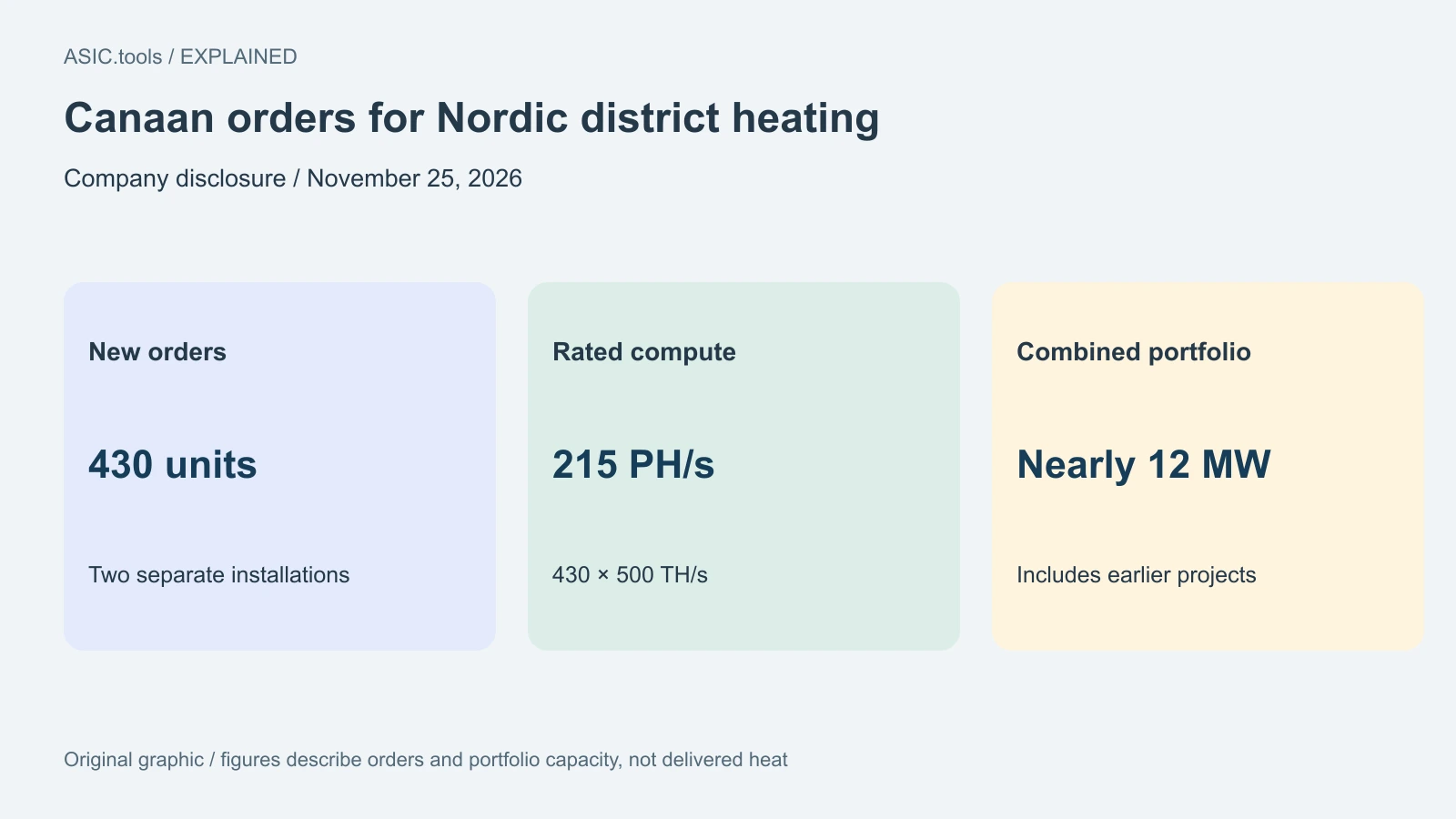
Two orders for separate heating networks
Canaan said on November 25 that two returning Nordic customers ordered 430 customized water-cooled Avalon A1566HA-500T miners for separate district heating sites. It brings the combined size of the company’s Nordic projects close to 12 megawatts. Canaan estimates that this portfolio could supply heat to almost 8,000 homes. Both figures cover the earlier projects as well as the new orders. The announcement describes purchases that still have to turn into installed, connected equipment.
Each unit is rated at 500 terahashes a second, a measure of how many mining calculations the equipment can perform. Together the 430 machines are rated at 215 petahashes a second. This is equipment capacity. The actual speed available to a Bitcoin mining pool depends on how many units are operating and how much of the day they run. Canaan did not publish a breakdown of the orders by site, commissioning dates or the rate at which customers will purchase the heat.
The two projects build on the 8 MW Nordic project announced in May. Canaan says one customer had equipment operating at its first site, while the other had bought equipment as part of the May initiatives. Those prior relationships help explain the repeat orders. The November announcement covers two additional installations, rather than recording two fully operational expansions.
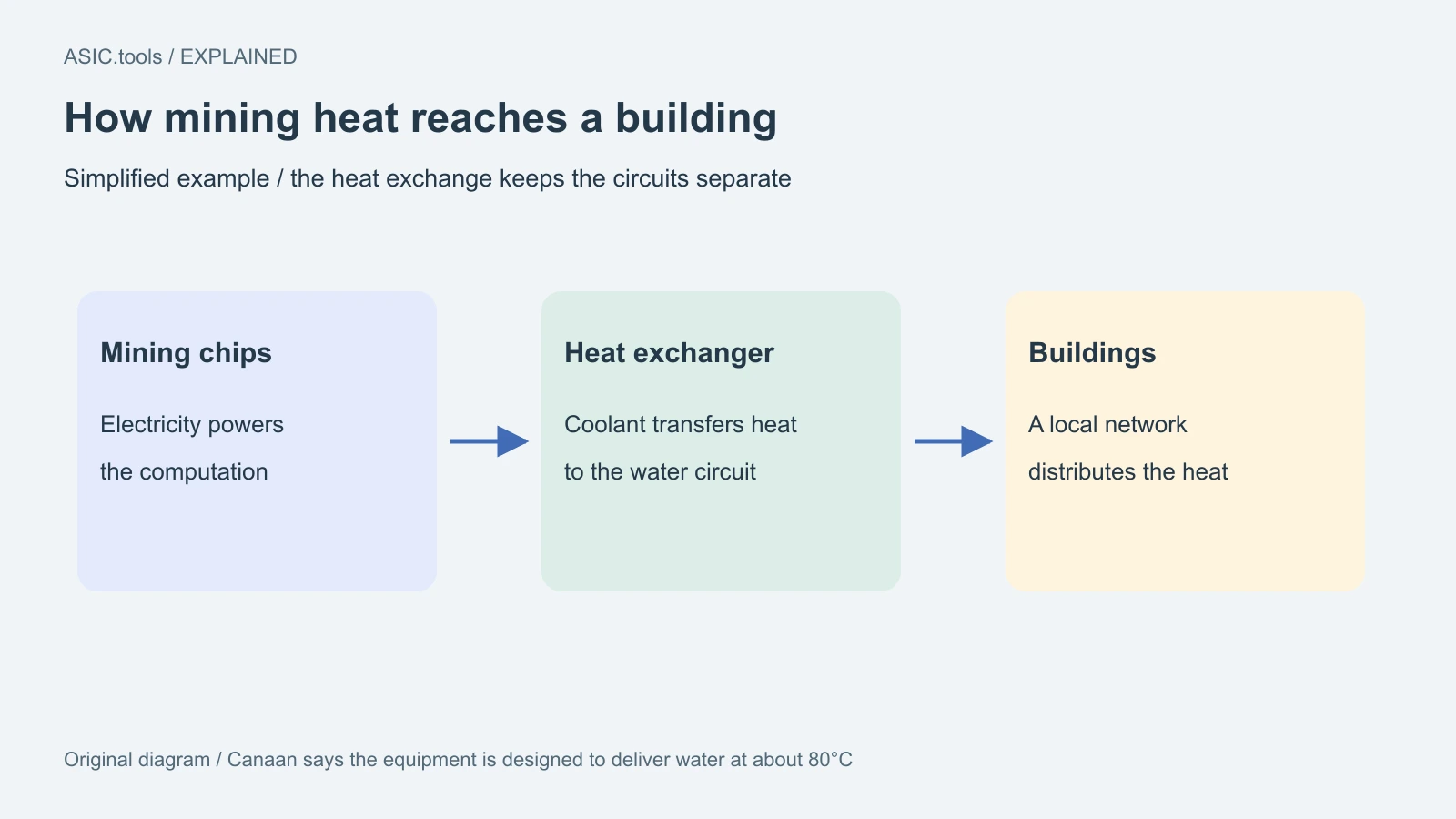
From cooling water to the heating network
The chips release heat while they work. In a liquid-cooled installation that heat can be transferred to water supplied to a nearby heating system. Canaan designed these units to deliver hot water at approximately 80°C for integration with local networks. District heating sends hot water from a heat source to several buildings. The buildings can use that heat while a separate circuit brings cooler water back to be warmed again.
The network has to be able to accept the heat when the machines are running. Temperature, flow and the distance between the installation and customers all matter. If buildings need less heating on a mild day, the operator needs a way to handle the difference.
If a site pauses mining, the network still has to cover its heating demand. These decisions belong in the design of the system and the terms agreed with the heating operator.
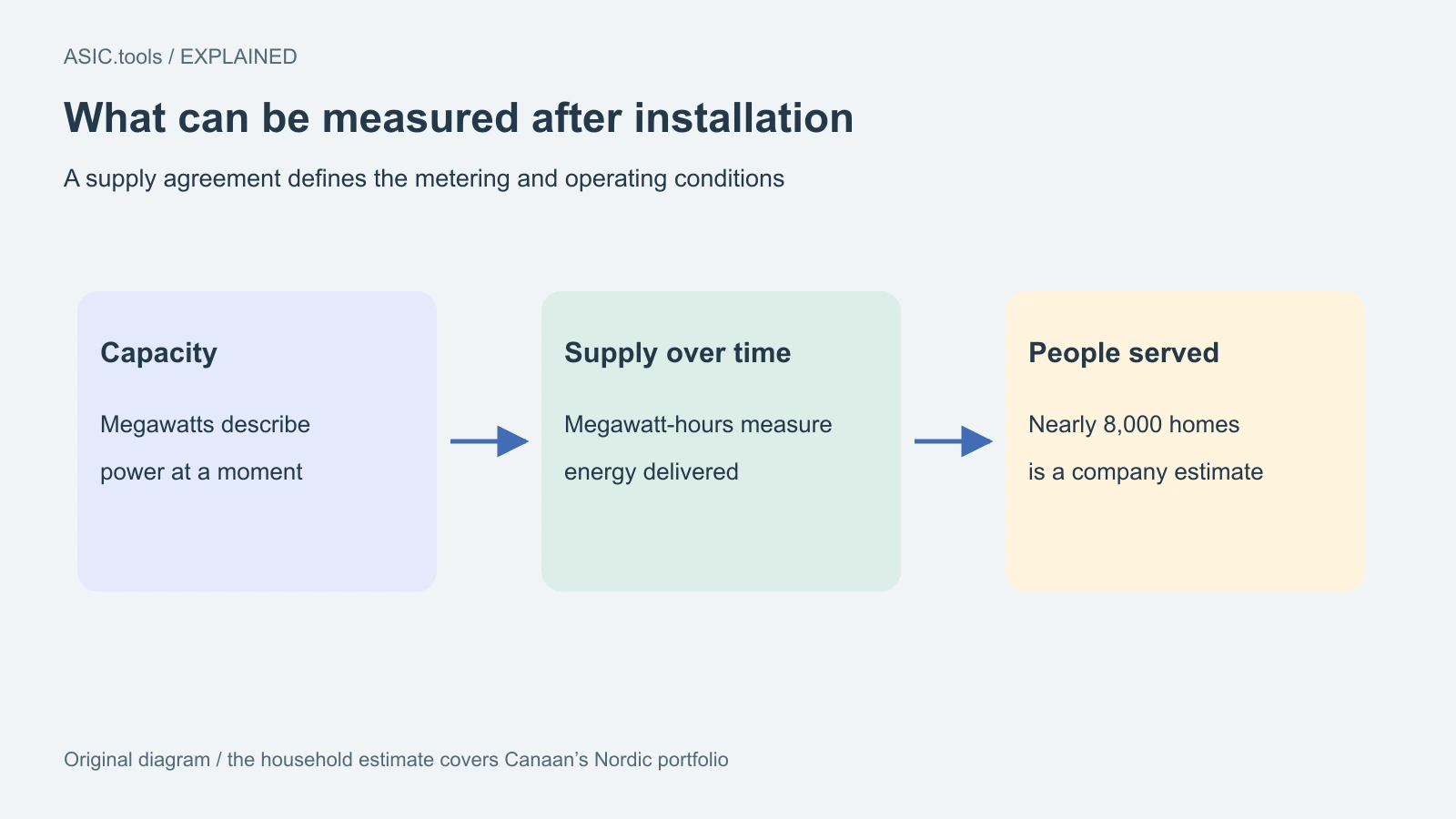
What the household figure tells us
Nearly 8,000 homes is Canaan’s estimate of potential reach across its Nordic portfolio. Actual heat delivered is measured over time, typically in megawatt-hours, while megawatts describe power at a given moment.
For a household, the important outcome is how much useful heat reaches the building during the heating season. A figure for hardware capacity does not determine the local heating tariff.
For a mining operator, useful heat can create an extra source of value if a nearby customer will take it. The electricity bill, pumps, connecting pipework, maintenance and a backup heat source still affect the overall economics.
Canaan expects its equipment to replace some heat otherwise produced by burning fuel. How much will depend on operation after commissioning, including which other sources the local network can use and when it runs the machines.
Before equipment is ordered for heat reuse, the two operators also need to agree who owns the meter and who is responsible for downtime.
Measuring heat before a long path of pipes can give a different result from measuring it where the network takes delivery. One clear measurement point helps both sides evaluate the heat that can actually be counted.
Source: Canaan ↗ · Canaan company announcement ↗
Mining calculator ↗