DOE emergency order expands Carolinas grid options during late heat
Source report: 2026-09-19 · Editorial analysis published: 2026-09-20
The September 18–21 order lets Duke Energy Carolinas dispatch specified and backup resources when reliability is threatened. We explain what it means—and does not mean—for flexible mining loads.
Analysis and practical implications
This section is our analysis and illustrative calculations, separate from the source report.
What the order authorizes
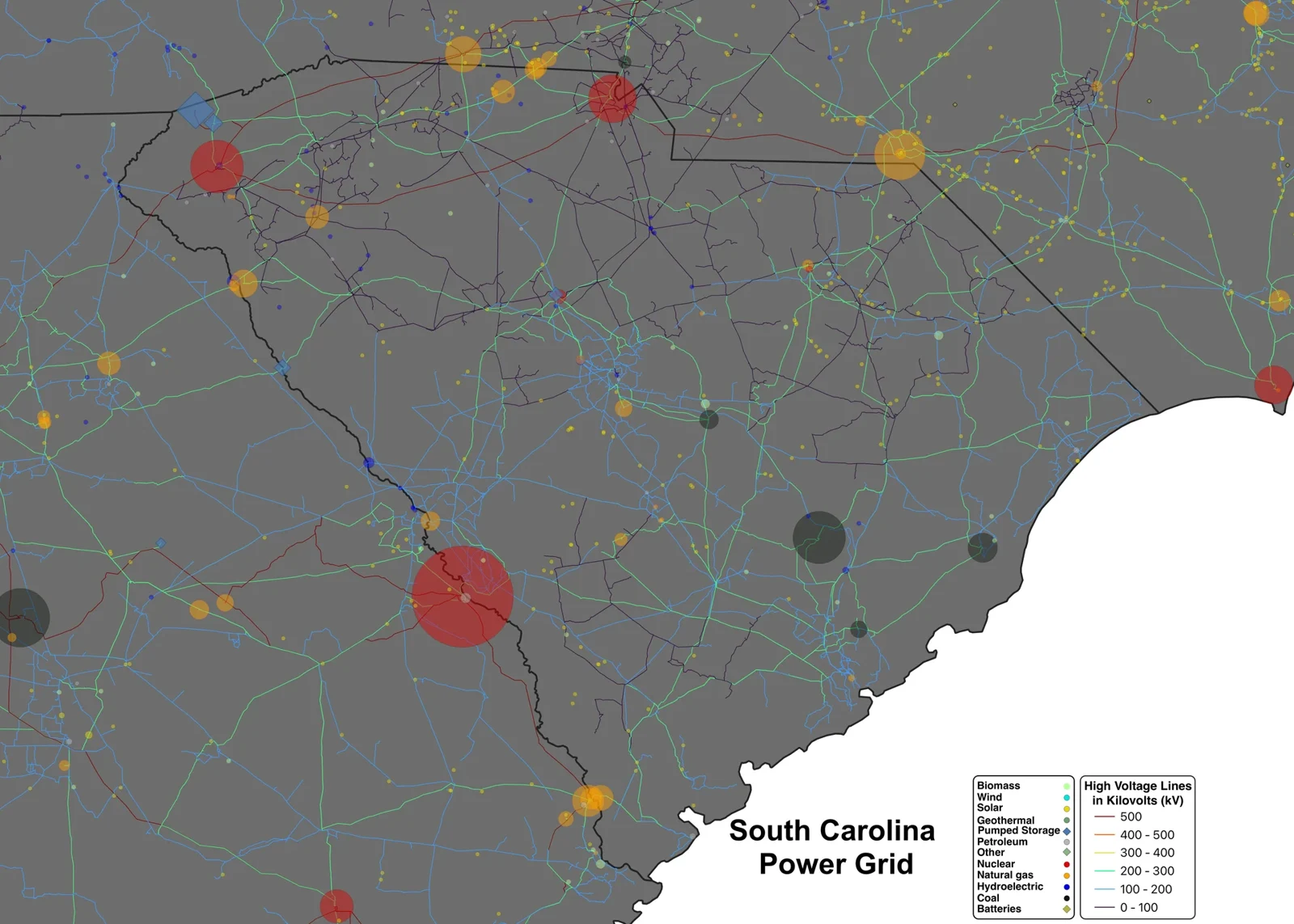
The U.S. Department of Energy announced on September 19 that an emergency order issued under section 202(c) of the Federal Power Act authorizes Duke Energy Carolinas to dispatch specified resources when needed for reliability. Duke may also coordinate with transmission owners and direct backup generation as a last resort before, or during, an Energy Emergency Alert level 3. The application was submitted September 18, and the order runs from its September 18 issuance through September 21. This is a short reliability measure, not a permanent redesign of the Carolinas electricity market.
Why the timing matters
DOE linked the action to late-season heat and blackout risk. The agency also pointed to the evening decline in solar output and estimated that more than 35 GW of unused backup generation exists nationwide. That national estimate is context, not a statement that 35 GW is available to Duke, and the release does not publish a guaranteed reserve margin or forecast a blackout. Operators should therefore read the order as permission to use additional tools under stressed conditions, while relying on utility notices for the actual condition of the local system.
What it does not say about mining
Neither the DOE release nor the stated authorization creates a special rule for Bitcoin miners. It does not order mining farms to shut down, set a miner tariff, promise compensation, identify a particular site, or claim that flexible loads caused the reliability concern. A mine connected in the Carolinas remains governed by its utility tariff, interconnection agreement, demand-response contract and local instructions. The mining relevance is operational: a controllable multi-megawatt load should be ready to interpret emergency signals correctly instead of treating a broad federal announcement as a direct curtailment command.
A practical response plan
A farm should confirm who is authorized to request a reduction, which channel carries the request, how many megawatts are committed, the required response time and the method used to measure performance. Map those obligations to miner groups rather than an all-or-nothing shutdown. Rank devices by contribution margin and thermal restart behavior, preserve networking and ventilation, and keep enough control infrastructure powered to restore service safely. Record the dispatch message, meter interval, accepted hashrate before and after the event, restart losses and any payment or penalty.
How to value a curtailment hour
Compare the contractual value of reducing load with the contribution margin that mining would have produced during the same interval. For a 1 MW block, the avoided energy at a tariff of $0.07/kWh is $70 per hour before demand charges, while the lost mining value depends on accepted hashrate, hashprice, pool fees and uptime. This is an illustrative calculation, not a Carolinas price. Include startup energy, rejected shares, cooling that must remain on and any performance incentive. A high wholesale price does not automatically appear on a fixed retail invoice.
Protect equipment during a fast stop
Curtailment should use a tested sequence. Stop or reduce hashing through supported controls, verify accepted hashrate falls, keep fans or pumps operating for the manufacturer’s cooldown period, and avoid cutting power to a hot hydro or immersion loop without a safe state. At restoration, stage the fleet so transformers, breakers and network services are not hit by one synchronized inrush. Check pool failover, time synchronization, board temperatures and rejected-share rates. An emergency grid window is a poor time to discover that a remote power unit cannot bring a rack back online.
Evidence to watch through September 21
Follow Duke Energy Carolinas operating notices, applicable transmission-owner messages and DOE documents for amendments, early termination or an extension. Separate an appeal for voluntary conservation from a contractual demand-response event and from an EEA 3 instruction. Store the original timestamp and document version, because a later news summary may collapse those categories. After the window closes, reconcile the meter and pool records with the utility settlement. That evidence shows whether flexibility improved margin and reliability rather than merely shifting downtime.
The useful lesson for miners
The order demonstrates why flexible-load capability has value only when it is measurable, controlled and tied to a contract. A dashboard button is not a response program. Farms need verified meter boundaries, named decision makers, tested shutdown and restart paths, and a ledger that links grid events to energy and accepted work. Operators outside the Carolinas can use this episode as a drill: can the site distinguish a federal authorization, a utility request and a binding dispatch, then calculate the result without claiming cheap power or guaranteed revenue?
Source: U.S. Department of Energy ↗
Mining calculator ↗