Bitcoin rises while miner stocks fall: the AI shift changes what investors are buying
Source report: 2026-10-19 · Editorial analysis published: 2026-10-19
An October 19 Binance Research report finds that miners moving into AI increasingly trade like technology infrastructure companies. A Bitcoin rally alone no longer explains their shares.
Bitcoin and mining shares take different paths
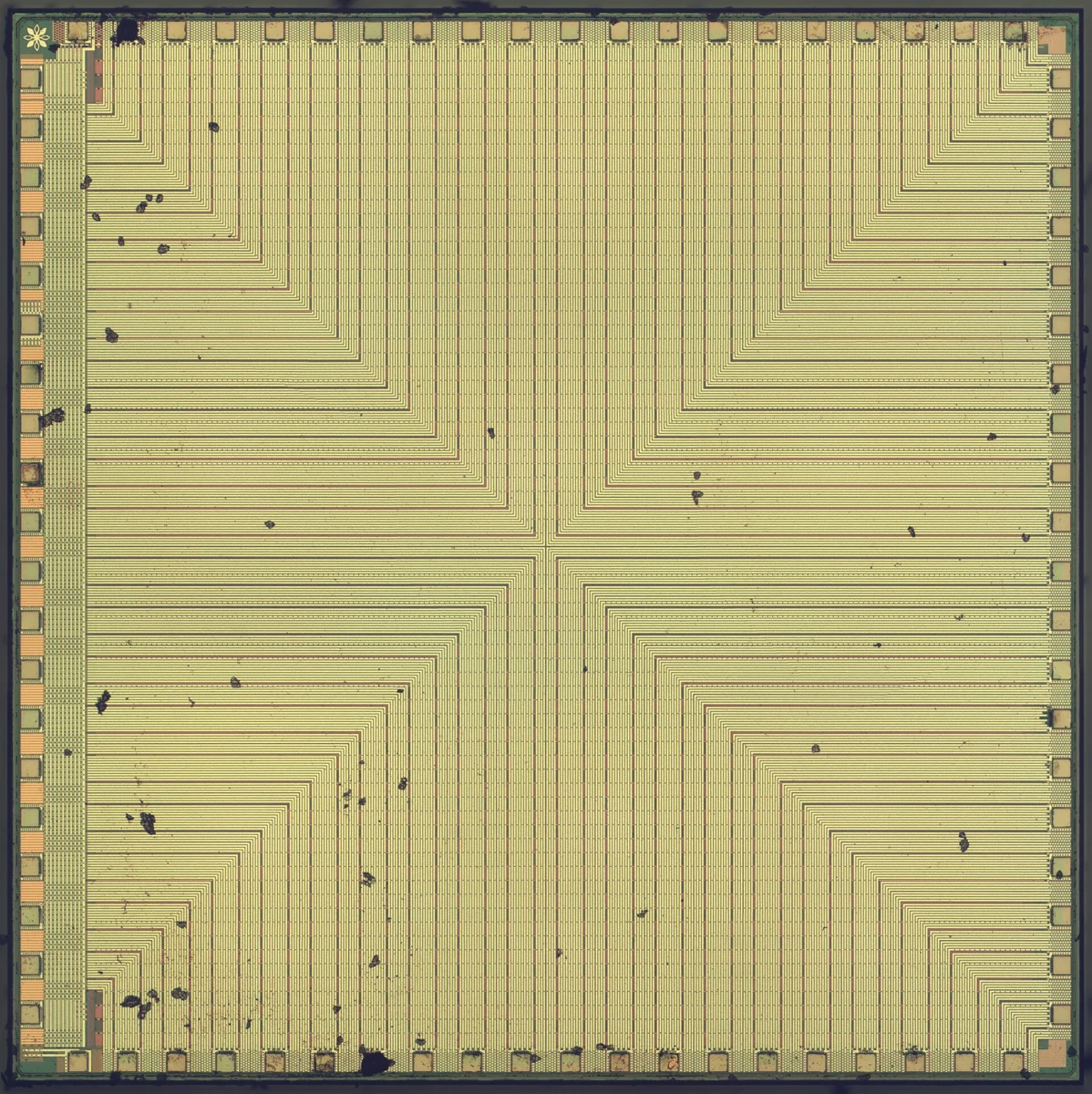
Bitcoin rising does not automatically mean that shares in Bitcoin miners rise too. Binance Research's October 19 report highlights a striking split: from June 18 to October 18, Bitcoin gained about 30%, while the WGMI miners ETF lost 57%. An ETF is a stock-market fund that holds a basket of assets; in this case it offers exposure to mining companies.
Those are changes over the same period, rather than today's trading result. To picture the gap, start each series at an imaginary 100: Bitcoin ends near 130 and the fund near 43. This simple comparison shows percentage performance, not the actual price of either asset. It also explains why a person can correctly spot a Bitcoin rebound and still see a miner-share investment fall.
Why artificial intelligence enters the story
AI means artificial intelligence: software systems used for tasks such as generating text or recognising patterns. Running those systems requires computing infrastructure and electricity. Some companies with mining sites have moved toward AI data centres, changing the businesses whose shares investors are pricing. A power connection can be valuable to more than one kind of computing operation.
That shift does not mean an ASIC miner can be turned into an AI server by installing an app. An ASIC is a chip built for a specialised task; a Bitcoin miner performs the calculations used by Bitcoin's mining algorithm. AI projects typically require different computing hardware, as well as suitable cooling, networking and customers. Reusing a site is different from reusing every machine inside it.
What the report measured
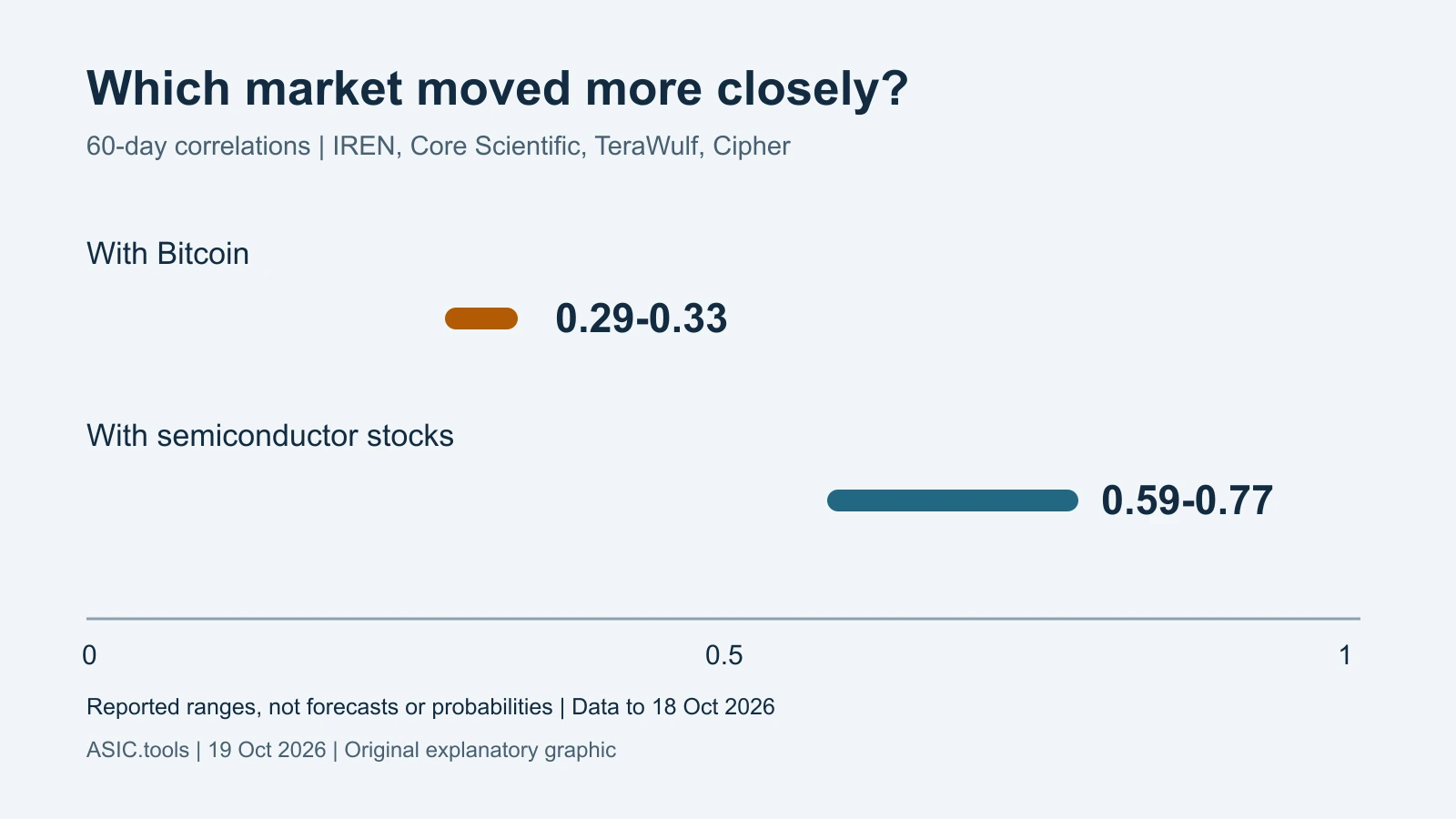
For IREN, Core Scientific, TeraWulf and Cipher, the report gives 60-day correlations of 0.29–0.33 with Bitcoin, compared with 0.59–0.77 with semiconductor stocks. Semiconductors are the chips at the heart of computers. The figures indicate that this group recently moved more closely with the chip sector than with the coin that originally defined its business.
Correlation is a measure of how two series move together over a chosen window. It is not the probability that a share will rise, and 0.7 does not mean a guaranteed 70% return. The window matters too: a relationship measured over the recent 60 days can change. Our chart displays the reported ranges, rather than inventing a single value for each company.
The company behind a ticker still matters
Buying a miner's shares means buying an interest in a business. Its electricity arrangements, financing needs and plans for new capacity all matter alongside Bitcoin. An AI expansion adds another set of questions: who will use the servers, when revenue can begin and how the construction will be paid for. A ticker associated with mining does not answer those questions on its own.
The report's broader point is that the label on a company can lag behind its changing economics. A familiar analogy is a bakery that starts building a large delivery business: bread sales still matter, but fuel, vehicles and borrowing begin to matter more. This is a way to understand a business transition, not a claim that every miner is following the same plan.
For a fund, it is also useful to check what is actually inside the basket and how much weight each company has. Several holdings do not necessarily mean several independent sources of risk if the businesses depend on similar electricity or financing conditions. A fund’s own charges and changing composition are further reasons why its result need not match either Bitcoin or any one miner. “A basket of miners” describes a structure, not a promise of tracking the coin.
What this means for someone running a miner
A fall in a listed company's share price does not directly reduce the number of hashes your own machine performs. A hash is one attempt in the mining calculation; hashrate counts how quickly the machine makes those attempts. Your electricity meter, the network conditions and the pool's payments remain more useful inputs for an operating-cost calculation than a stock ticker.
Likewise, a stock-market rally in AI is not proof that a home mining machine has become more profitable. To check a device, use its actual power draw and mining performance, an appropriate coin price and current reward assumptions. Keep the cost of running the equipment separate from the price people are willing to pay for shares in a large company.
Three things to separate when reading a mining headline
First, identify the asset: the coin, an individual company's shares or a fund containing several companies. Next, check the time period; a four-month change and a daily move can point in different directions. Finally, ask whether a statement describes measured performance, an analyst's explanation or a future business plan. They are useful pieces of information, but they are not interchangeable.
Binance's comparison is a dated research snapshot using data through October 18, not a forecast of the next market move. Its value for a broad audience is straightforward: “Bitcoin exposure” can hide very different businesses and risks. Before explaining a miner's share price with Bitcoin alone, check what that company is now building and how it expects to earn money.
Source: Binance Research ↗
Mining calculator ↗