Bitcoin mining difficulty rises 7.61% at block 977,760
Source report: 2026-11-27 · Editorial analysis published: 2026-11-27
The November 27 block put difficulty at about 145.09 trillion. At the same hashrate, the expected block finds per hour decline by about 7.08%.
The new difficulty is already on the chain
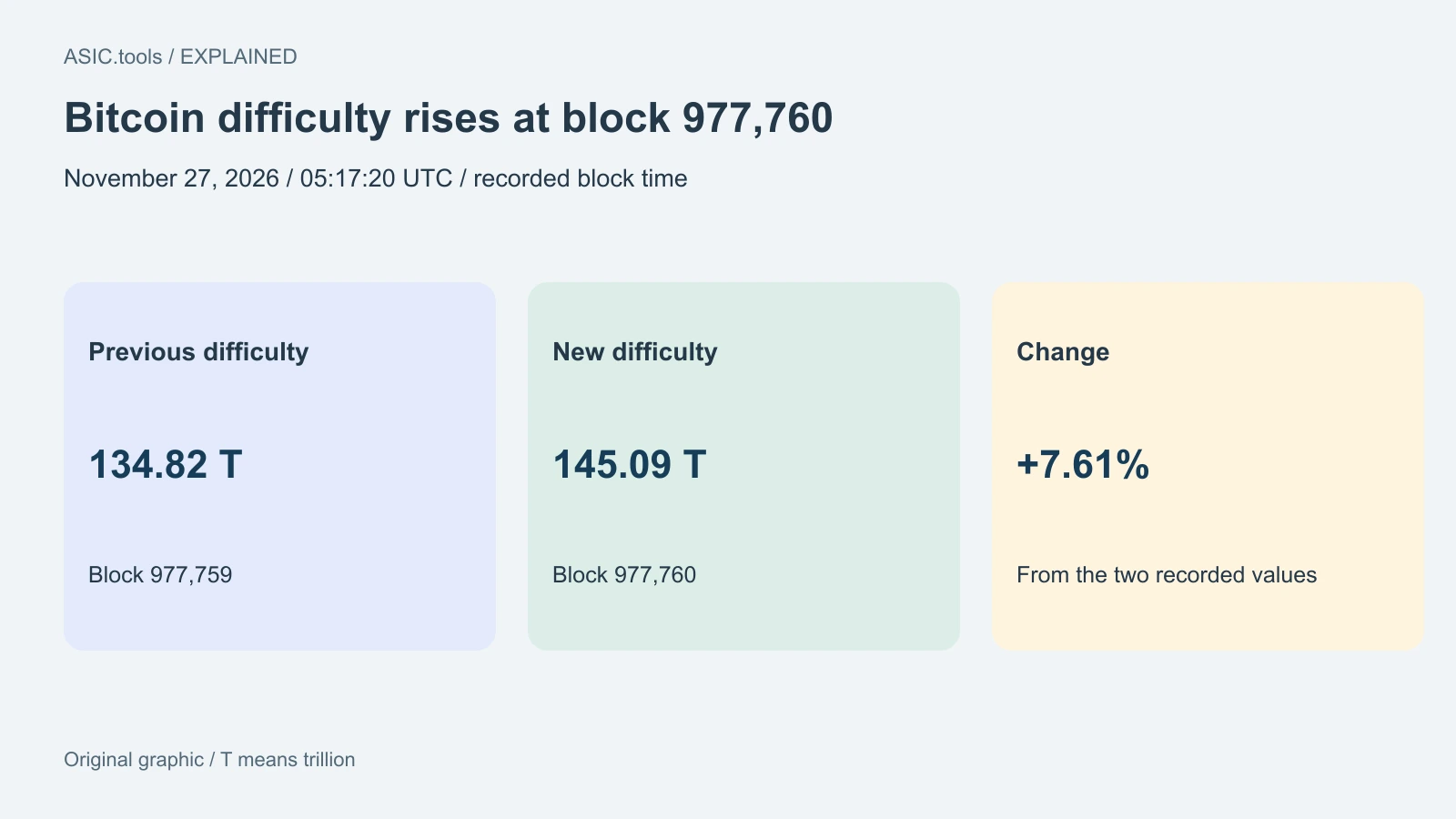
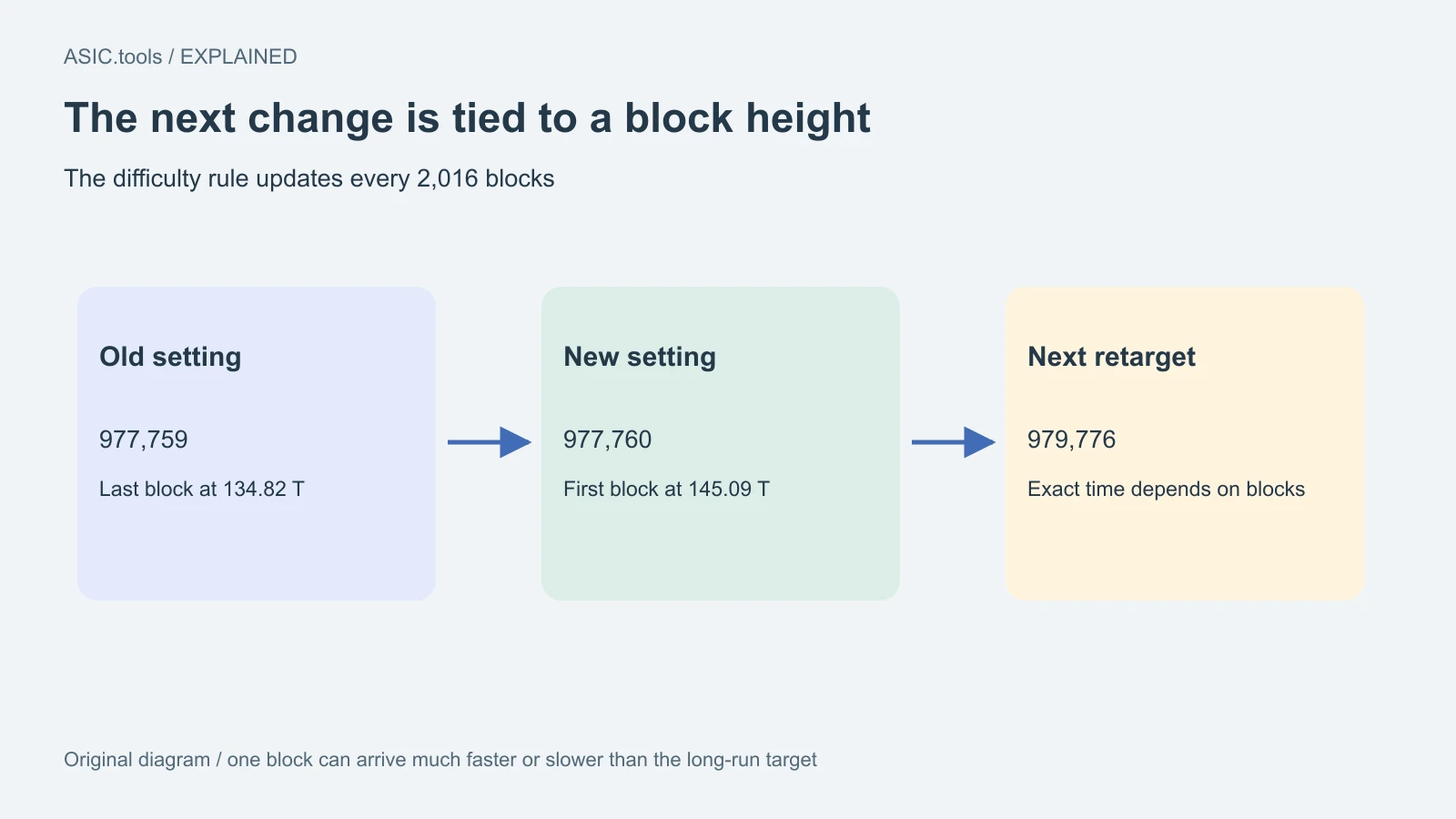
Bitcoin mining difficulty rose 7.61% with block 977,760 on November 27. Its recorded timestamp is 05:17:20 UTC. The previous block carried a difficulty of about 134.82 trillion, while the new one records 145.09 trillion. Estimates published before the adjustment varied as blocks arrived. The two neighboring block records now provide the value that actually took effect.
Difficulty measures how hard it is for a miner’s calculations to find a candidate that Bitcoin accepts. A miner testing the same number of guesses per second is less likely to find a block in a given hour at the higher difficulty. The setting does not change how much electricity the machine draws when operated on the same settings, and it does not reduce the 3.125 BTC per-block subsidy. It changes the chance of finding blocks against the same clock.
Bitcoin recalculates the target every 2,016 blocks to keep the long-run pace near ten minutes per block. November’s adjustment took effect at a block height rather than an hour announced in advance. The new difficulty remains in force for the epoch starting at 977,760, with the next recalculation at 979,776. Individual blocks can still arrive much faster or slower than ten minutes.
The difference for a fixed machine
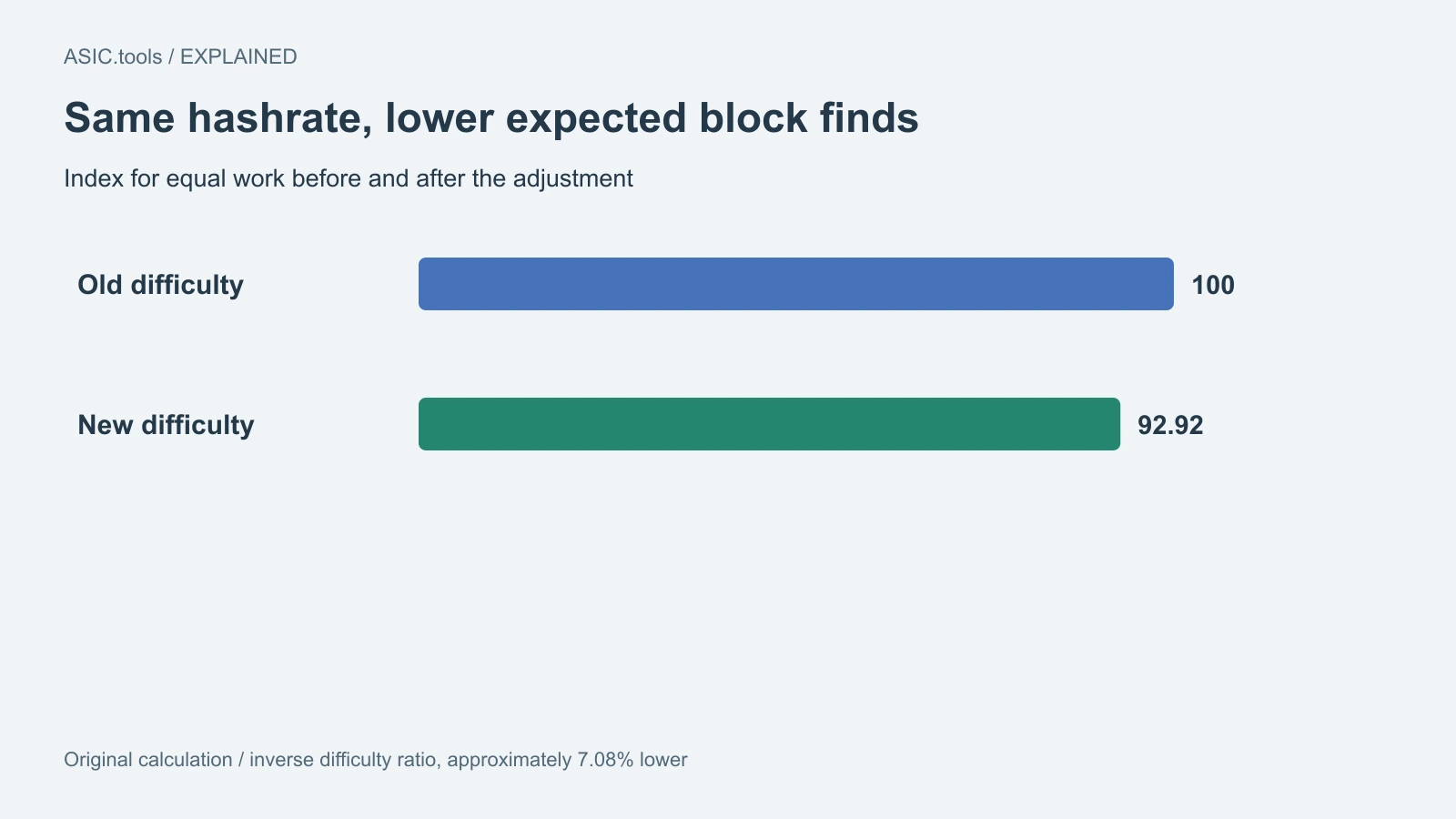
At the old difficulty, imagine indexing expected block finds for a given amount of work at 100. The new comparison is 100 multiplied by 134.82 divided by 145.09, or about 92.92.
That is a reduction of about 7.08%, while the difficulty rose by 7.61%. The two percentages differ because one compares how much the requirement increased and the other compares how the expected result per unit of work changed.
A similar ratio applies to the expected subsidy earned per unit of work, all else equal. A pool may spread the outcome across participants, according to its payout rules. Transaction fees, pool rules, downtime and the bitcoin exchange rate can each change what finally reaches an account or what it is worth. One strong fee day or one lucky solo find does not rewrite the new difficulty.
The 7.08% ratio isolates the protocol change. A miner comparing two statements should also account for any hours lost and for whether a pool shows gross earnings or a payout after its fee. Seen separately, difficulty tells you about the network, while the accepted-work record shows what your equipment delivered.
What to update in a mining estimate
Start with the machine’s measured power, its observed hashrate and its actual operating hours. If a calculator uses a live mining-revenue input that already reflects the new difficulty, applying a second manual 7.08% reduction would count the adjustment twice.
If a worksheet is still using the old difficulty, refresh that assumption and keep the other inputs visible so the change can be traced.
Operators who estimate a monthly bill can update the revenue side separately from electricity. A fixed schedule and tariff leave watt-hours and power costs unchanged, while a change to when equipment runs alters actual energy use. The November 27 block supplies a new measurement for the revenue estimate. The final margin still depends on the cost and terms of that particular machine.
For a solo miner, the useful result is a change in probability per hour. It does not tell you when a reward will arrive. Over a short interval, a real outcome can remain zero before and after the change. Keeping expected results separate from money already earned makes the updated spreadsheet easier to interpret.
Source: Bitcoin blockchain / Mempool ↗ · Previous block at the old difficulty ↗ · New block data via Blockstream Esplora ↗ · Bitcoin Core proof-of-work adjustment rules ↗
Mining calculator ↗