Binance reports a $6.3 billion security incident: deposits are normal, withdrawals remain paused
Source report: 2026-10-30 · Editorial analysis published: 2026-10-30
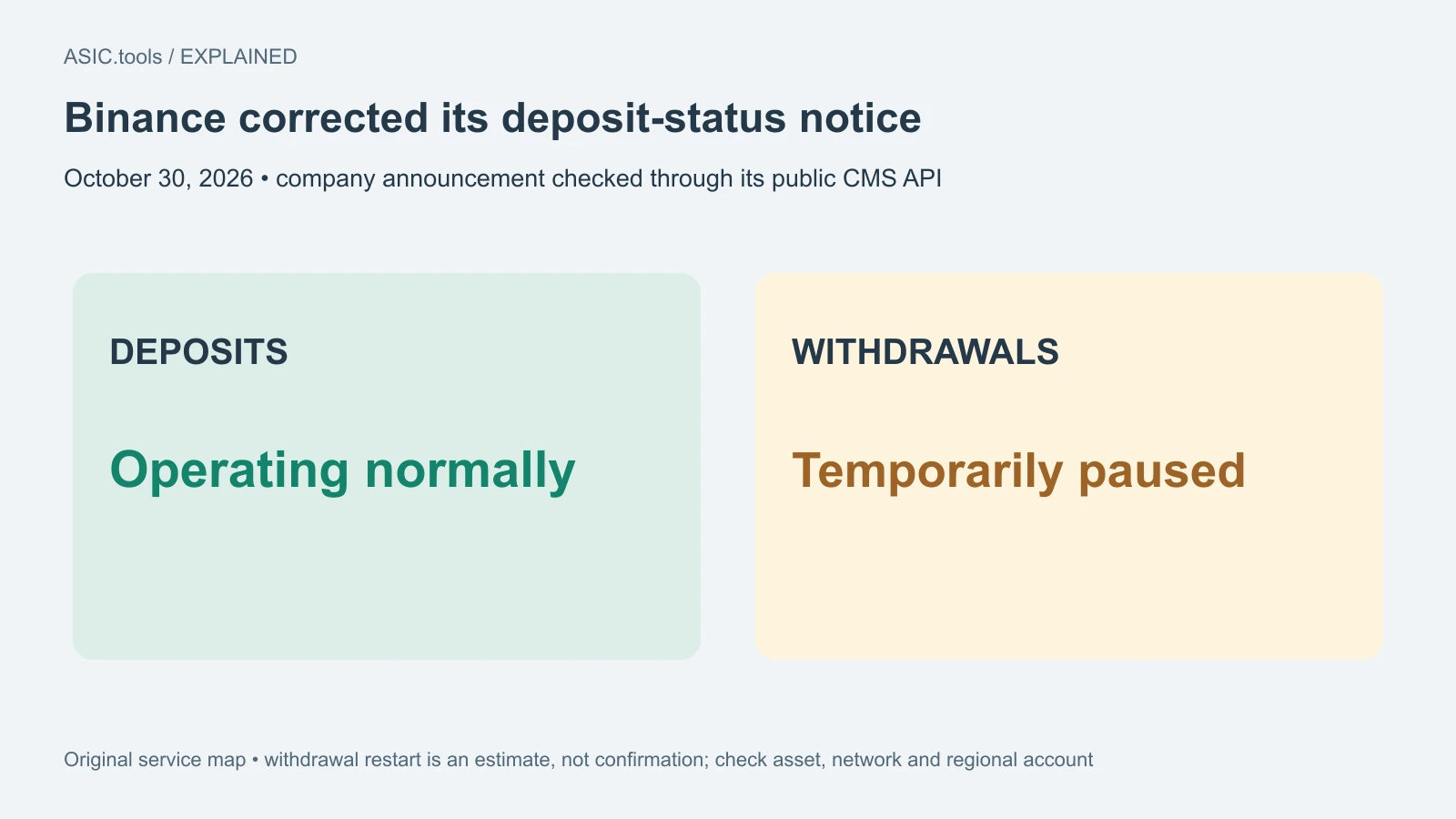
The exchange’s corrected October 30 notice separates normal deposits from paused withdrawals. For mining payouts, a credited exchange balance and funds available for withdrawal are different things.
The corrected notice matters more than an early screenshot
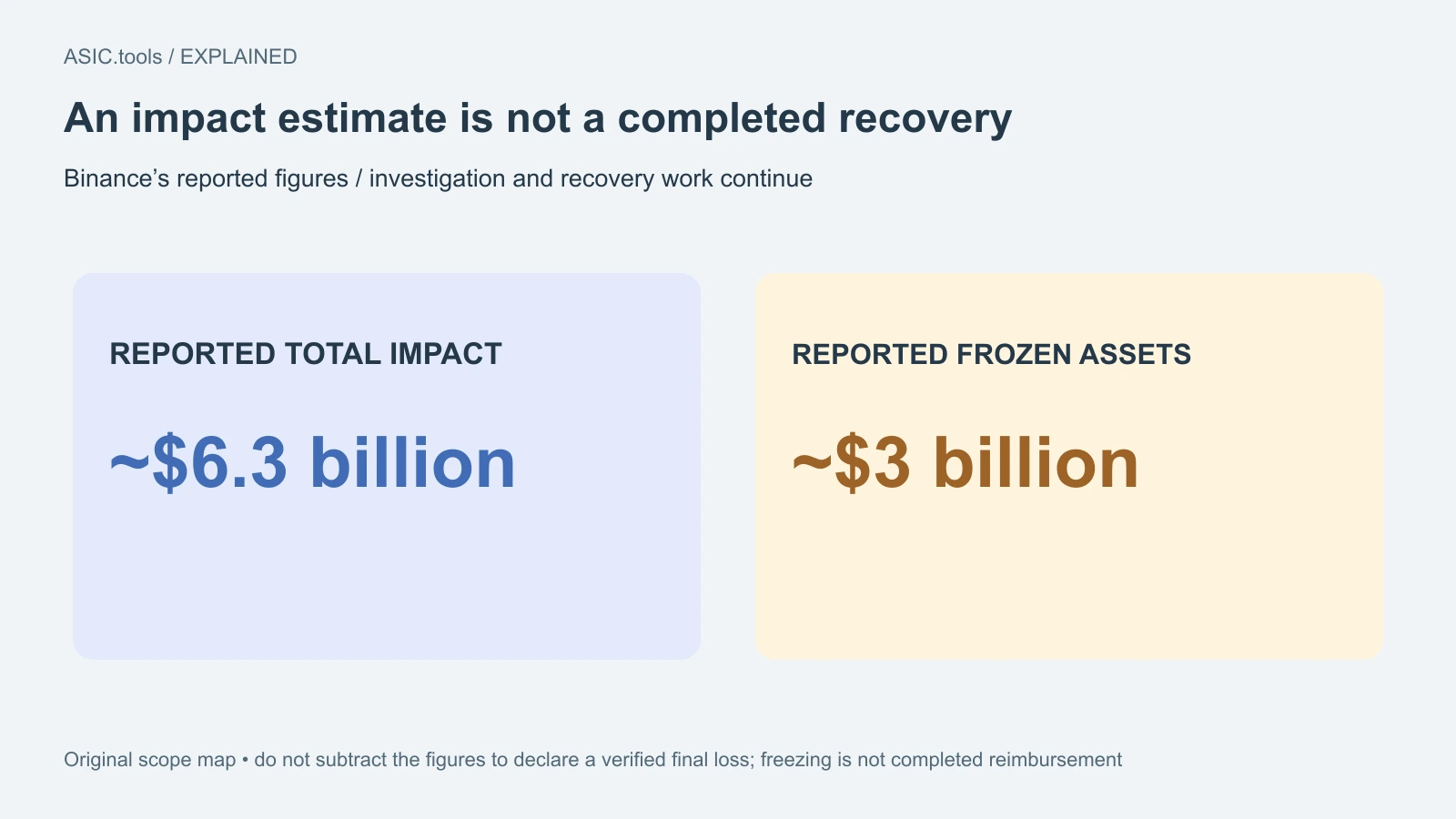
Binance said on October 30 that a security incident had an estimated impact of about $6.3 billion and that roughly $3 billion of affected assets had been frozen on-chain. Its updated announcement says deposits remain unaffected and operate normally, while withdrawals are temporarily suspended during security checks. These are the exchange’s reported estimates and service status, not an independent audit by this site.
Earlier versions of the notice described deposits and withdrawals together. The official document now explicitly corrects the deposit wording. A miner choosing where a pool payout will arrive should use that correction rather than an old screenshot: receiving a deposit and being able to withdraw it are separate services. Check the applicable asset, network and regional account status before making a fresh transfer.
The investigation is not a completed root-cause report
The initial announcement described a possible compromise of a DevOps engineer’s laptop, followed by access to a service container and unauthorized withdrawal requests. DevOps staff operate software delivery and infrastructure. Binance’s later updates describe additional breach points and a more complex attack. The preliminary laptop explanation should not be presented as a fully established one-person cause.
Binance says it has found no evidence of wallet private-key leakage and plans a detailed technical report after verification. That statement describes the investigation so far; it does not prove the entire incident was harmless or establish what every user should conclude about every custody arrangement. The exchange also says it revoked the affected address authorization and is working with law enforcement and blockchain-intelligence partners.
Coverage promises and frozen assets are different measures
Binance promises to cover all losses using its Secure Asset Fund for Users, known as SAFU, and company funds. It also promises an updated proof-of-reserves report after remediation. Those are the company’s commitments. A promise to compensate, a published reserve report and a completed withdrawal are different observations, and the announcement does not turn them into the same event.
The roughly $3 billion frozen figure should not be read as cash already returned to each affected account. Nor does subtracting it from the $6.3 billion estimate establish a final loss: asset recovery, valuation and settlement are still separate questions. For an ordinary miner, the immediate practical issue is access to operating money, even where the platform says customers will not bear the losses.
A pool payment can arrive before the money is usable
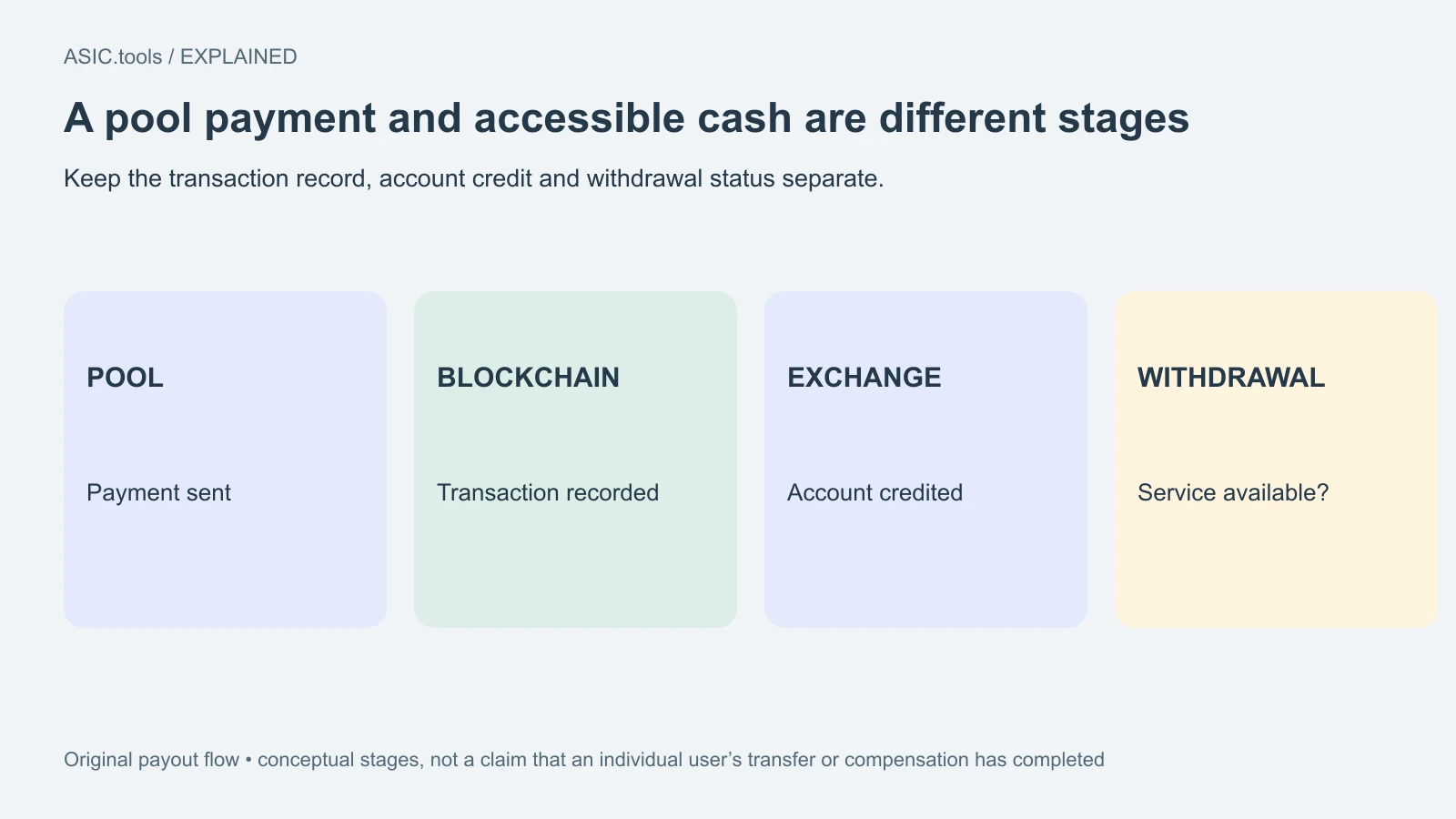
A mining pool may pay a blockchain address according to its own schedule, while an exchange separately credits a customer account and controls withdrawal availability. A chain transaction hash can show the pool sent funds; it does not by itself show that the exchange has credited them, that all required confirmations are complete or that the customer can withdraw them.
Before changing a payout address, review the pool’s change rules, minimum payout and any waiting period. Verify ownership and the network of the intended destination. Keeping records of the payout transaction and the exchange credit helps distinguish a delayed pool payment from a custody-service restriction. This report does not claim that every pool must stop paying Binance addresses or that a new destination automatically solves every withdrawal problem.
Treat a reopening estimate as an estimate
In its service update, Binance said it expected withdrawals to resume within 48 hours. That is a forecast from the statement, not confirmation that the service has reopened or a countdown starting whenever a reader opens this article. The checked announcement still describes withdrawals as paused. Exact availability must be confirmed in the account and subsequent official notices, including any regional differences.
For a miner paying electricity or hosting bills, an exchange balance that cannot be transferred should not be counted as cash already available for today’s invoice. Separate expected mining revenue, credited balances and funds actually accessible for payment. The security incident did not change Bitcoin’s block-production rules; it affected a service through which some miners receive, trade or move their proceeds.
Use the exchange’s established app or independently reached official support channels. A message offering to unlock withdrawals, move funds to a special safe address or collect a recovery phrase does not become trustworthy because it refers to a real incident. The useful action is to verify service status and account records, not follow a new transfer instruction supplied by a stranger.
Normal deposits describe service availability, not a recommendation to increase the amount held on an exchange during the incident. A pool destination change also affects future payments; it does not itself release an existing balance whose withdrawal is restricted. Keep those two decisions separate when planning the next electricity or hosting payment.
A displayed balance converted to dollars is a valuation, not proof that the same amount has been transferred to a bank or an external wallet. Preserve the coin amount, transaction record and relevant service-status date. This makes it easier to explain an operational cash gap without blaming the mining protocol for a restriction imposed by the custody service.
Source: Binance ↗ · Official service update reproduced by Binance News ↗ · Official Binance announcement account ↗ · Binance Japan separate service-status notice ↗
Mining calculator ↗