The Vault Holding buys four Antminers to test a second mining site
Source report: 2026-09-14 · Editorial analysis published: 2026-09-15
Royalty Management announced a four-unit Antminer pilot, over 20 acres of potential expansion and possible power below $0.06/kWh. Commercial scale remains conditional.
Analysis and practical implications
This section is our analysis and illustrative calculations, separate from the source report.
Four machines are a validation step
Royalty Management announced on September 14 that its wholly owned subsidiary The Vault Holding acquired four Antminer units for a testing program at a second potential digital-infrastructure site. The confirmed event is the acquisition of trial equipment. The company has not reported a large operating fleet or a completed commercial expansion. It describes potential access to electricity below $0.06/kWh and more than 20 acres for possible growth, with expansion depending on testing, engineering, infrastructure, approvals and investment.
The exact Antminer model is not disclosed
The source calls the equipment next-generation Antminers without identifying a model, factory profile, control board, power demand or hashrate. Accordingly, this news does not add a guessed device to the ASIC catalogue. A model name matters because four machines can impose very different electrical and cooling requirements. A useful follow-up would identify the exact units, wall-power measurements and accepted pool hashrate. Until those details are available, neither site capacity nor expected bitcoin production can be derived from the machine count alone.
Potential electricity pricing needs a defined boundary
The quoted sub-six-cent figure is a possible energy advantage, not a public binding tariff for readers. For a separate arithmetic illustration, four hypothetical machines each drawing 3.5 kW would consume 336 kWh per day at uninterrupted load. At exactly $0.06/kWh, that equals $20.16 in daily electricity cost. The example neither identifies the purchased devices nor estimates their revenue. A commercial comparison would also require fixed charges, auxiliary cooling, maintenance, availability and the duration and conditions of the energy agreement.
Land and power become capacity only through engineering
More than 20 acres provides room for potential expansion, but acreage cannot be converted directly into an ASIC count. The limiting constraint might be generation, distribution equipment, cooling, noise, access or maintenance space. The issuer describes an opportunity without traditional grid constraints; that does not by itself identify the generation technology, fuel supply or contractual reliability. Those specifications remain outside the announcement. Operators evaluating a similar site should distinguish land available for development from power actually delivered to commissioned equipment.
What a useful four-unit test can establish
The company intends to examine power consumption, efficiency, cooling, uptime, maintenance and site economics. To make such a pilot informative, keep a timestamped record of wall energy, accepted work, temperatures, interruptions and service actions. Compare the same operating intervals rather than pairing a best-day hashrate with a monthly electricity average. These are editorial measurement recommendations. Four units can reveal basic installation and operating problems, but they cannot alone demonstrate the thermal, electrical or staffing performance of a much larger facility.
Scale the evidence alongside the deployment
A phased plan should associate each additional batch with its own power budget, commissioning results and maintenance capacity. A pilot can work well while later expansion meets a different bottleneck, so multiplying four-unit results into a full-site profit projection would hide assumptions. Before treating a new phase as operating capacity, look for equipment delivery, energized circuits and measured performance. Future disclosures should also state whether expenditure is approved, contracted or merely under consideration; these describe different commitments and should not be combined.
A second tariff scenario makes the comparison concrete
Keep the earlier hypothetical 336 kWh daily consumption unchanged and use $0.055/kWh as a second illustrative tariff. Daily electricity would then be $18.48, a $1.68 difference from the six-cent case, or $50.40 over 30 identical days. These are alternative assumptions, not a reported contract. The exercise shows why a pilot should retain the meter readings, billing terms and operating period used in a comparison. A small energy-price advantage can be quantified, but it must still be weighed against repairs, downtime and the cost of developing the site before drawing a commercial conclusion.
What changes the status of this story
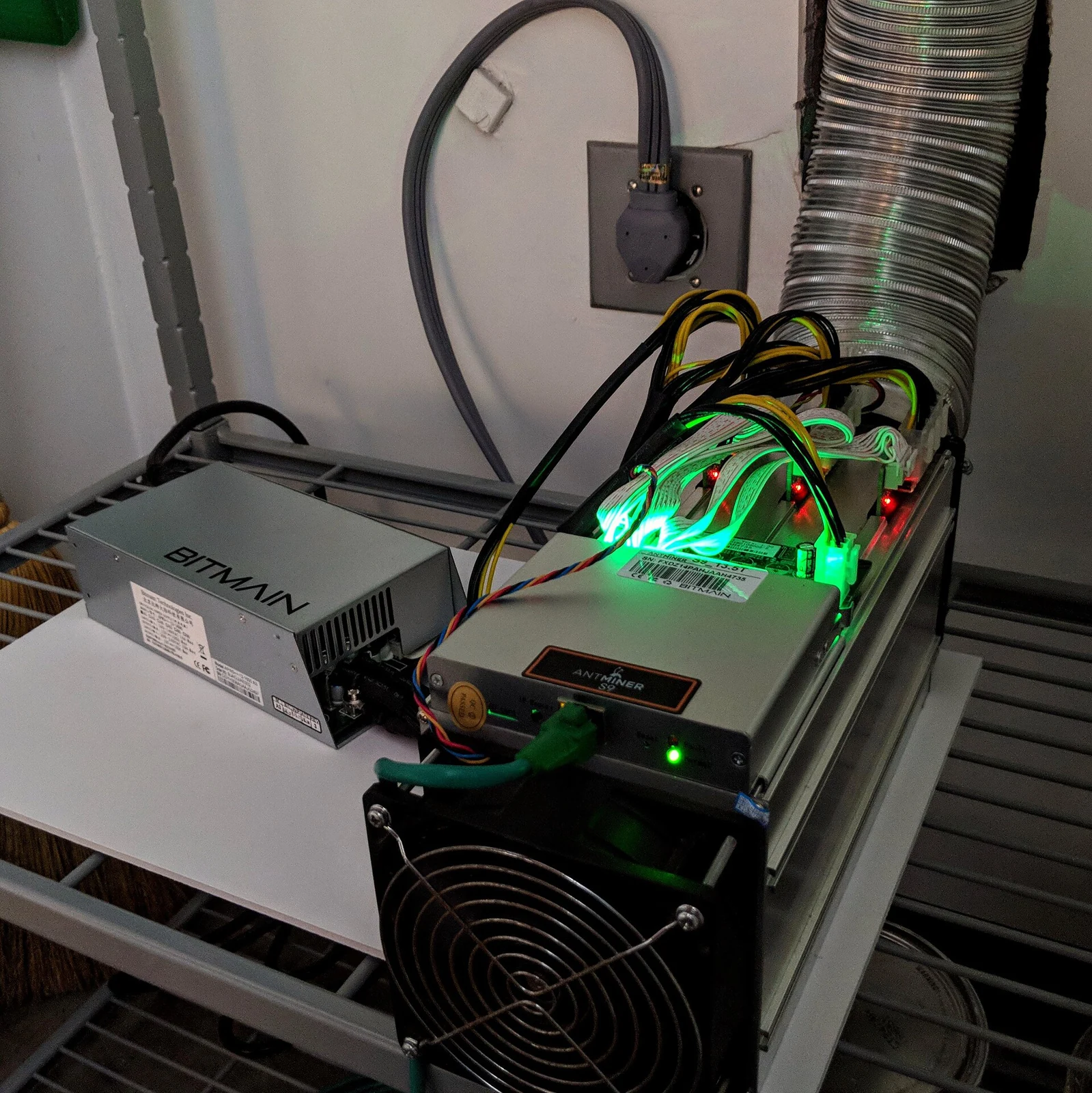
The next meaningful evidence would be pilot results, identified hardware, a defined power arrangement and an approved expansion stage. The September 14 release supports a testing-stage classification, with possible phased growth after validation. ASIC.tools has not independently inspected the site, and the archive photograph is not a picture of these trial units. The practical lesson is to use a small installation to collect reproducible operating data before spending for scale, while keeping potential land and electricity advantages separate from demonstrated commercial output.
Source: Royalty Management / NewMediaWire ↗
Mining calculator ↗