UltimusPool ends its Bitcoin mining service
Source checked: 2026-11-06 · Editorial analysis published: 2026-11-06
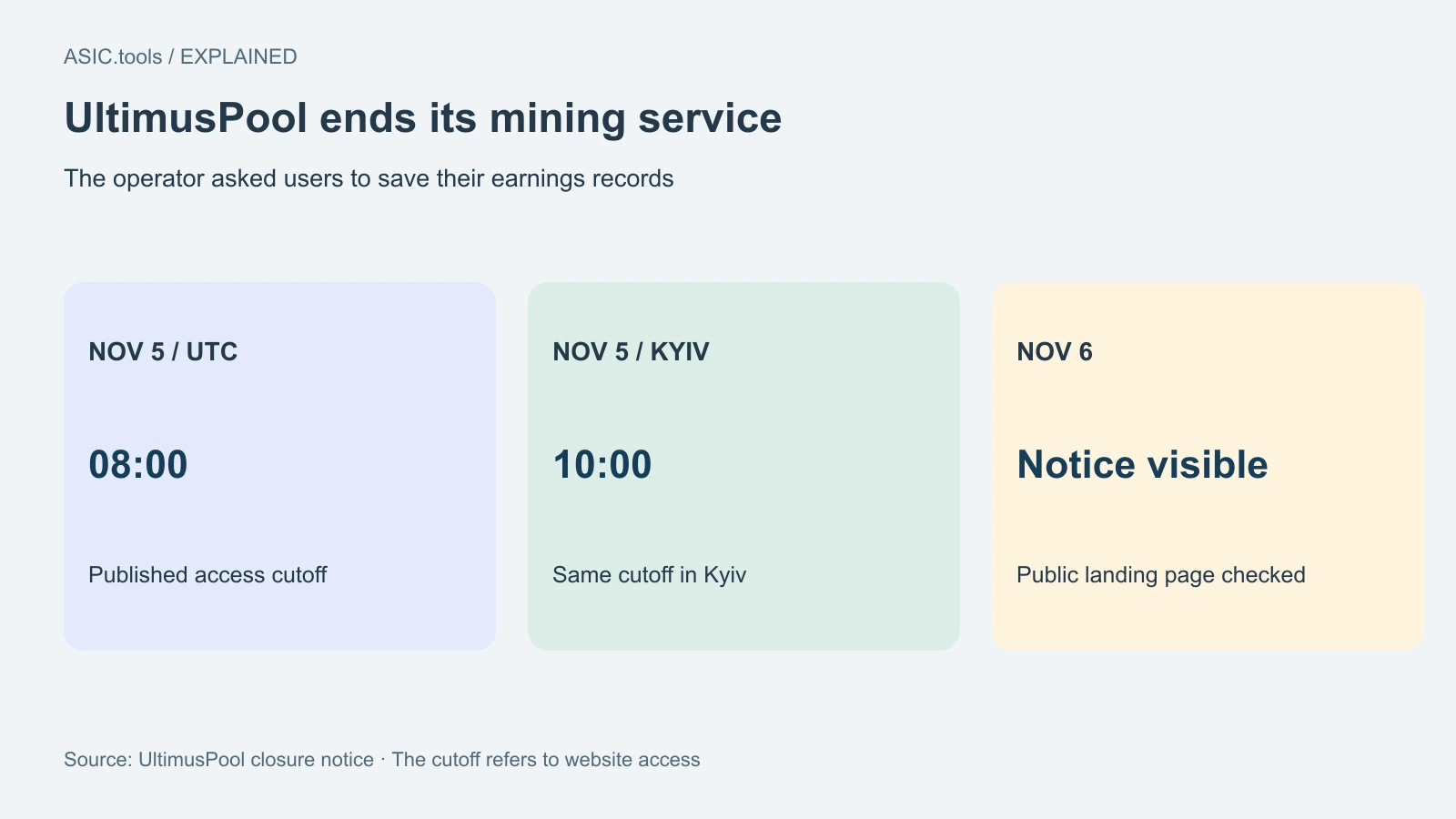
The operator confirms the shutdown. Its notice gave November 5 at 08:00 UTC as the website access cutoff and asked users to save earnings records.
The operator has confirmed the closure
UltimusPool says its mining service has ended. The Bitcoin pool named November 5 at 08:00 UTC as the cutoff for website access and asked users to save their earnings data. That was 10:00 in Kyiv. A mining pool groups the computing work of multiple machines and handles the accounting for the miners who supply it.
On November 6 the public homepage still displayed the operator’s closure notice. That page is a public source for the announcement. Access to worker records and individual payouts depends on the account service and payment history. The notice dates the website cutoff and gives no exact timestamp for the last accepted mining job.
There are two tasks for a miner affected by the closure. One is to get the machine submitting useful work again. The other is to account for the earnings already recorded at UltimusPool. A switch in the first task leaves the second with the original operator and the wallet or exchange where payment was supposed to arrive.
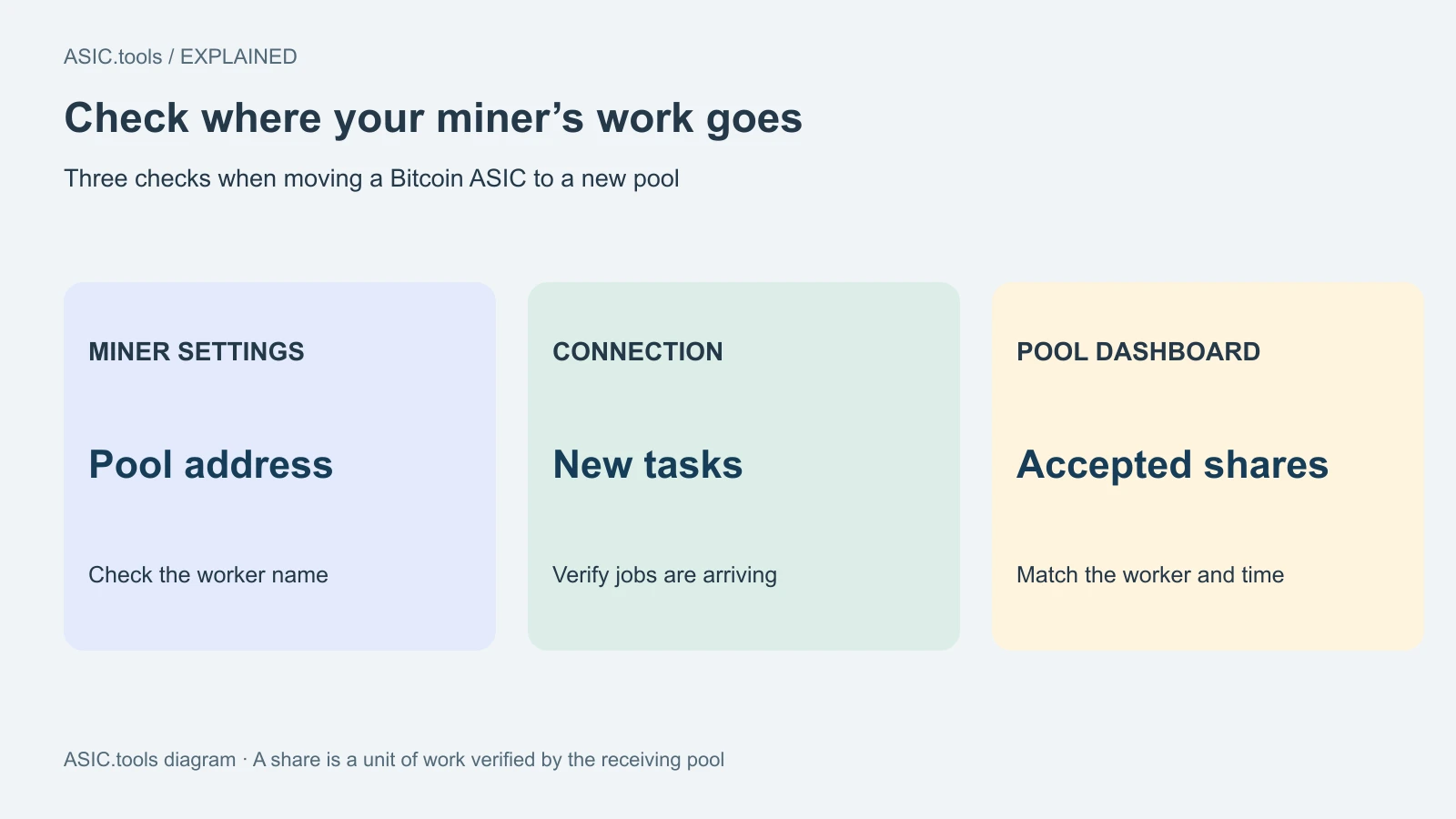
Check which pool is receiving the work
A pool address stored in the miner’s control panel tells the machine where to ask for jobs. The worker name lets the pool assign submitted work to the right account. Both belong to the pool configuration, so using another provider means checking its own address, worker format and connection instructions. An ASIC built for Bitcoin uses SHA-256, the algorithm its chips are designed to run.
A backup pool is a second destination the machine can use when the first is unavailable. A site with several machines can check the new settings on one worker first. The dashboard can then show whether it connected, whether jobs arrived and whether the receiving pool actually credited its shares. A share is a unit of work the pool checks and counts.
The last check matters when the miner’s local display still shows a speed. That display can reflect what the chips are calculating while the pool view shows what the service has accepted. Match the times on the two screens and look for the new worker name. A saved backup URL can be stale or tied to an account that is no longer in use.
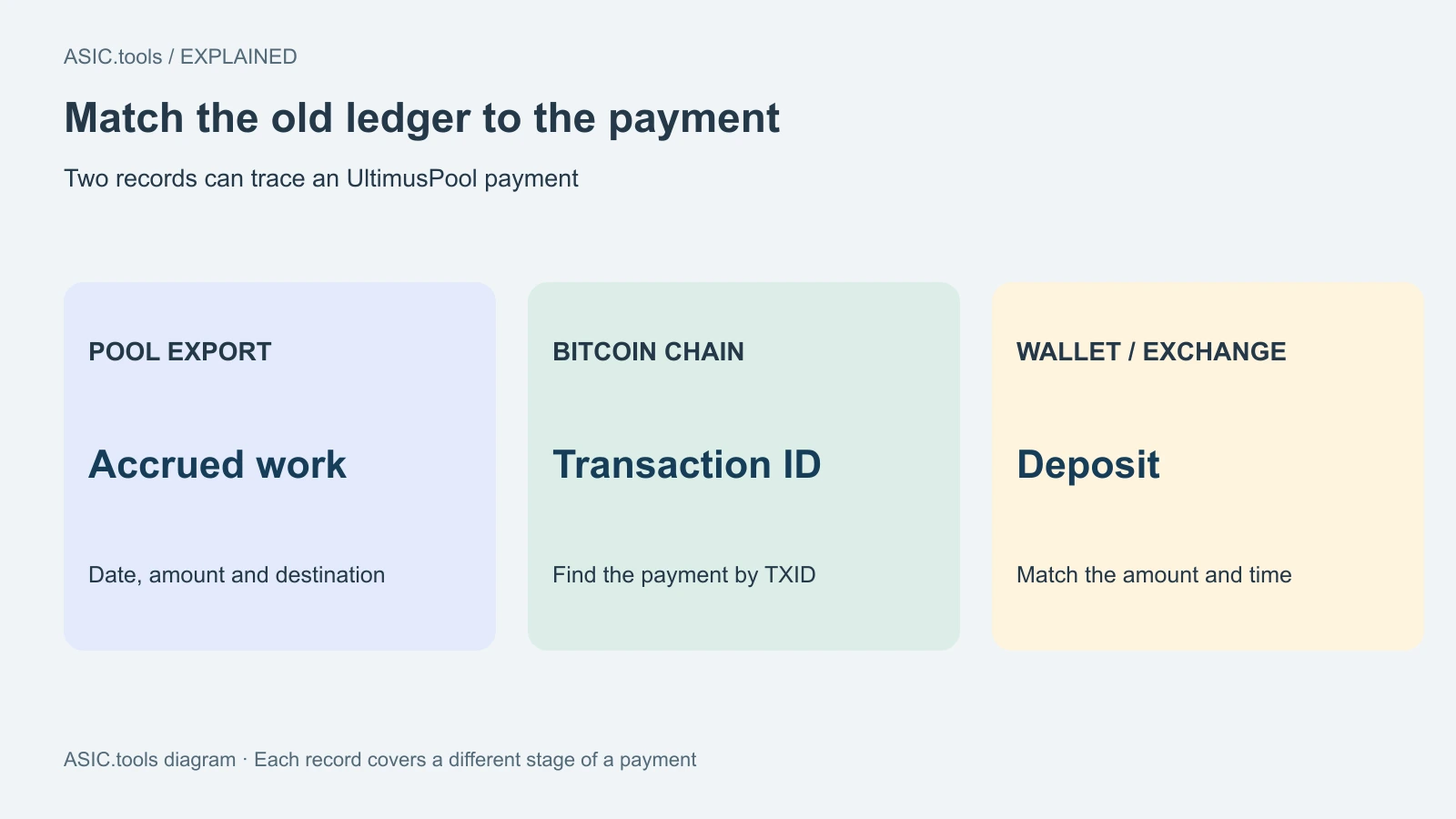
Reconcile the balance with a payout record
A pool earnings export and a wallet transaction answer different parts of the same question. The export can show what a worker earned and which payment the operator recorded. A transaction identifier, or TXID, lets you look up the payment on the Bitcoin chain. Where payment went to an exchange, the exchange’s deposit history shows when it credited the funds to your account.
Keep the payout date, amount, destination and TXID together if those fields are available. Compare them with the matching entry in your wallet or exchange. When there are several payments, match by identifier and amount before totaling them. The pool can credit work and send its payment at different times, so the date alone may be a poor match.
The closure notice asks miners to export their earnings. It gives no general schedule for remaining balances in the visible text. Someone who saved the records can identify the exact balance or payout in question. Someone with a gap can use their own prior statements and official account correspondence to establish what is missing.
Keep access and records separate
A question about a specific payout belongs with the official operator channel. Start with your saved correspondence or the contact listed on the operator’s own domain. A TXID and the dates of the entries give support a way to identify a payment. Keep credentials and wallet recovery words private, even when a message uses the name or logo of a familiar service.
An export saved locally is also useful for bookkeeping. Keep the original file and a copy with your reconciliation notes. If the portal is unavailable, mark the missing entries so you can distinguish an unresolved item from an amount already seen in your wallet. That record helps if a hosting provider configured the pool on your behalf.
After switching, review accepted work and the first credited balance at the receiving pool. Write down when each worker moved. Then the gap around the closure is visible in the operating record, and you can separate time spent waiting for jobs from power actually used during the change.
What to ask a hosting provider
If your miner sits at a hosting site, check who controls its pool settings. One arrangement lets you edit them remotely. Another leaves the changes to the operator. In the second case, the machine serial number and the worker name give the operator a way to match its inventory to the account where mining work should appear.
For a shared shipment of machines, ask for the switch time and new worker status per device or per batch. A screenshot that only shows the total hashrate can conceal a machine that stayed on an obsolete address. If the pool records at worker level, compare each worker with the inventory and confirm that the receiving account is the one named in your hosting agreement.
An account export can also be useful long after the move. If the old pool used a different time zone, label it before combining statements. A payment issued just after midnight in one zone may appear on the previous day in another. Keep the original timestamp and add a second column for the time zone used in your own ledger. This is especially helpful when the hosting provider and wallet report on different days.
Source: UltimusPool closure notice ↗ · Dated pool review citing the closure notice ↗
Mining calculator ↗