Stark Power agrees to buy a 262 MW plant with a planned four-hour battery
Source report: 2026-10-08 · Editorial analysis published: 2026-10-12
The October 8 agreement covers Cottage Grove’s operating gas plant and a future 80 MW / 320 MWh battery. Closing is expected in Q4 2026; battery operation is targeted for 2028.

Analysis and practical implications
This section is our analysis and illustrative calculations, separate from the source report.
Agreement signed, acquisition not yet closed
Stark Power announced a definitive agreement on October 8 to acquire the Cottage Grove energy campus in Minnesota from Ultra Capital and Panamint Capital. The release describes an operating 262 MW natural-gas combined-cycle plant and a co-located 80 MW / 320 MWh battery project. Closing is expected in the fourth quarter of 2026, subject to conditions; the battery’s commercial-operation target is 2028.
Those stages must remain separate. A signed acquisition agreement is more concrete than an expression of interest, but it does not mean ownership has already transferred. An operating generating asset can be part of a transaction that is still awaiting closing. Likewise, a battery associated with the same site can remain a development project. The current report does not present the acquisition as completed or the proposed storage system as already supplying power.
Existing generation and planned storage have different roles
The campus is interconnected to MISO. The release says the generating plant currently has a contract with Northern States Power Company and will transition in December 2027 to a 15-year tolling agreement with Basin Electric Power Cooperative. It also supplies steam to an adjacent 3M site. The planned battery has a separate 15-year tolling agreement with Northern States Power Company.
This structure is relevant to digital-infrastructure operators because physical proximity to generation does not imply that the output is freely available for a new load. Existing contracts and steam obligations must be evaluated alongside electrical capacity. A power plant can serve an established commercial function while future storage adds another service. The announcement does not identify a new mining farm, a dedicated hyperscaler offtaker or a confirmed allocation of this capacity to ASIC equipment.
What four-hour storage means
The simple nameplate ratio is 320 MWh divided by 80 MW, which equals four hours. Megawatts describe a rate of power delivery; megawatt-hours describe an amount of energy. This calculation helps readers understand the announced storage sizing without confusing battery capacity with generator output. It is a nominal ratio, not an independently tested guarantee that the project can deliver its full rating for four hours under every operating condition.
Usable energy can depend on the permitted state-of-charge range, losses, reserve settings and the conditions of an actual discharge. The ratio also says nothing by itself about how fast the battery can recharge or how frequently it can repeat that cycle. Those questions require additional project specifications and operating rules. For a facility planner, discharge duration and charging availability must both be evaluated before storage is counted toward a continuity requirement.
Why 262 MW plus 80 MW is a misleading headline
Adding the plant’s generation rating to the battery’s power rating gives an arithmetic sum, but it does not establish a continuously available 342 MW energy source. A battery stores energy supplied from elsewhere and has a finite inventory for each discharge. Simultaneous export can also be constrained by dispatch conditions, contracts and interconnection limits. The release does not provide enough detail to certify an unrestricted combined output at that sum.
This distinction prevents a common infrastructure mistake: counting the same energy once when it is produced and again when it is later discharged from storage. Generation and storage may complement one another, but their contribution depends on the intended service and time horizon. A planner should specify whether the target is short peak support, energy shifting or sustained supply, then assess the complete arrangement against that defined requirement.
An existing interconnection is not unlimited new-load permission
The company plans to connect the future battery through the plant’s existing grid interconnection. That can be a useful starting point for development, yet an existing connection is not evidence that every new operating configuration has already been approved. The release itself identifies development risks. A shared location or connection should therefore be understood as part of the project plan, not an unconditional right to add arbitrary generation, storage or customer demand.
For an ASIC operator, the comparable due-diligence question is which load can actually be energized under a documented service arrangement. Nameplate generating capacity, permitted export and a customer’s firm supply are not interchangeable figures. Network studies, protection settings and commercial allocation may constrain how infrastructure is used. This article does not infer a bypass of grid obligations or a guaranteed tariff advantage from the fact that the assets will share a site.
The financial boundary of the announcement
The release refers to an $85 million corporate credit facility previously secured with Bank Hapoalim. It does not identify that figure as the price paid for Cottage Grove. Treating a credit facility as the acquisition value would mix financing capacity with transaction consideration. No undisclosed purchase price, project return or electricity cost is calculated here, because the release does not supply the inputs needed to establish those numbers.
Long-term contracts can make a proposed asset easier to assess, but their presence alone is not proof of a particular profit margin. An evaluation would still need contract terms, fuel and maintenance obligations, capital expenditure and financing conditions. Similarly, a battery’s power and energy ratings do not establish its revenue. Different contracted services can impose different availability, cycling and performance requirements even on storage systems with the same advertised dimensions.
Milestones to watch through 2028
The immediate milestone is the expected transaction closing during Q4 2026. For the battery, later milestones would include development approvals, construction, commissioning and the targeted commercial operation in 2028. A future operation date should remain a target until the relevant work is completed. An update about closing the purchase should not automatically be interpreted as confirmation that the storage project has also reached operation.
Operators can use this sequence as a way to evaluate infrastructure announcements without collapsing their timelines. Each milestone changes a different uncertainty: ownership, construction readiness, technical performance or commercial service. Evidence should be attached to the stage it actually confirms. The same discipline applies when a mining campus advertises planned megawatts; prospective capacity should not enter a live profitability estimate as if equipment were already running on it.
Why the campus is relevant to mining and data infrastructure
The proposed campus illustrates how generation and storage can be combined within a broader infrastructure business while retaining different technical and contractual roles. For miners, the useful lesson is to compare power quantity, duration, availability and allocation together. For AI hosting, a generation asset is likewise only one part of a deployment that also requires suitable compute, cooling and connectivity. No new ASIC model or firmware follows from this transaction.
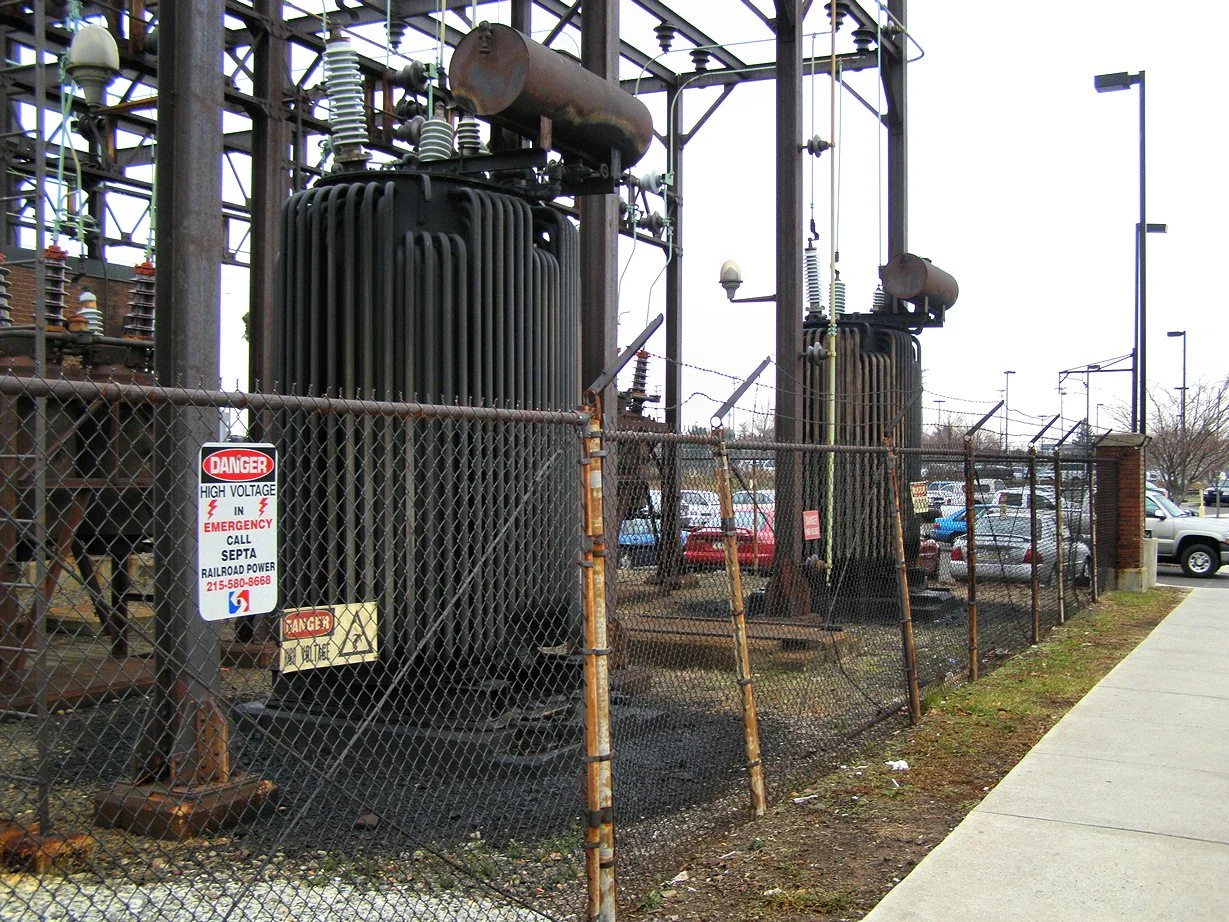
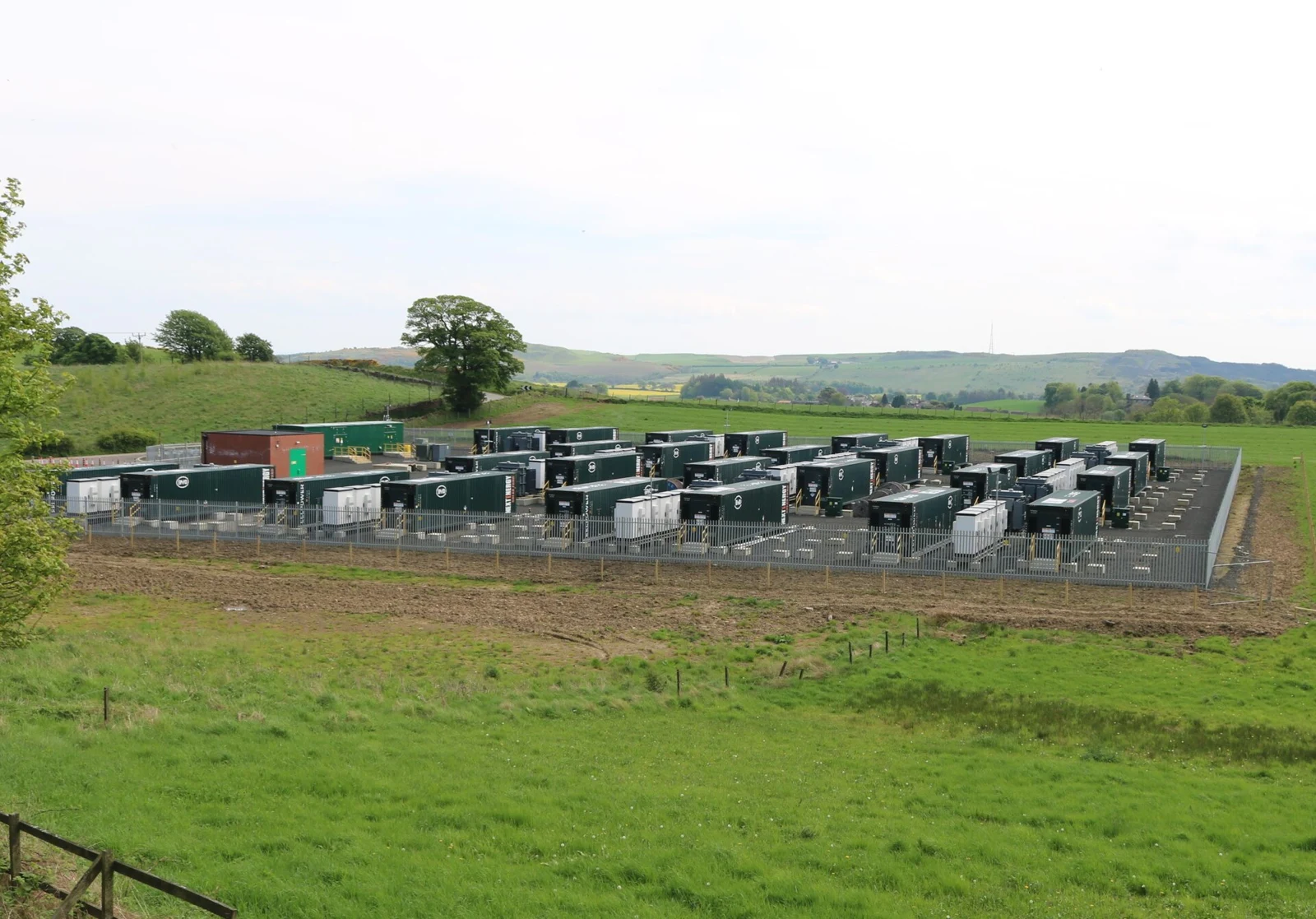
The accompanying licensed archival photographs show the Minooka combined-cycle plant in Illinois and the Camilla battery-storage facility in Scotland. They illustrate the two asset types and are not photographs of Cottage Grove or the unbuilt battery described in the announcement. The dated issuer release supports the transaction facts; the unit calculations and planning distinctions are ASIC.tools analysis. Future coverage will distinguish an actual closing or commissioning update from the current agreement and development targets.
Source: Stark Power / PRNewswire ↗
Mining calculator ↗