solo-pool-rs publishes a test release for running a Bitcoin solo pool at home
Source report: 2026-11-15 · Editorial analysis published: 2026-11-16
The November 15 release candidate works alongside a Bitcoin node. It accepts Stratum V1 and encrypted Stratum V2 extended channels on the same port.
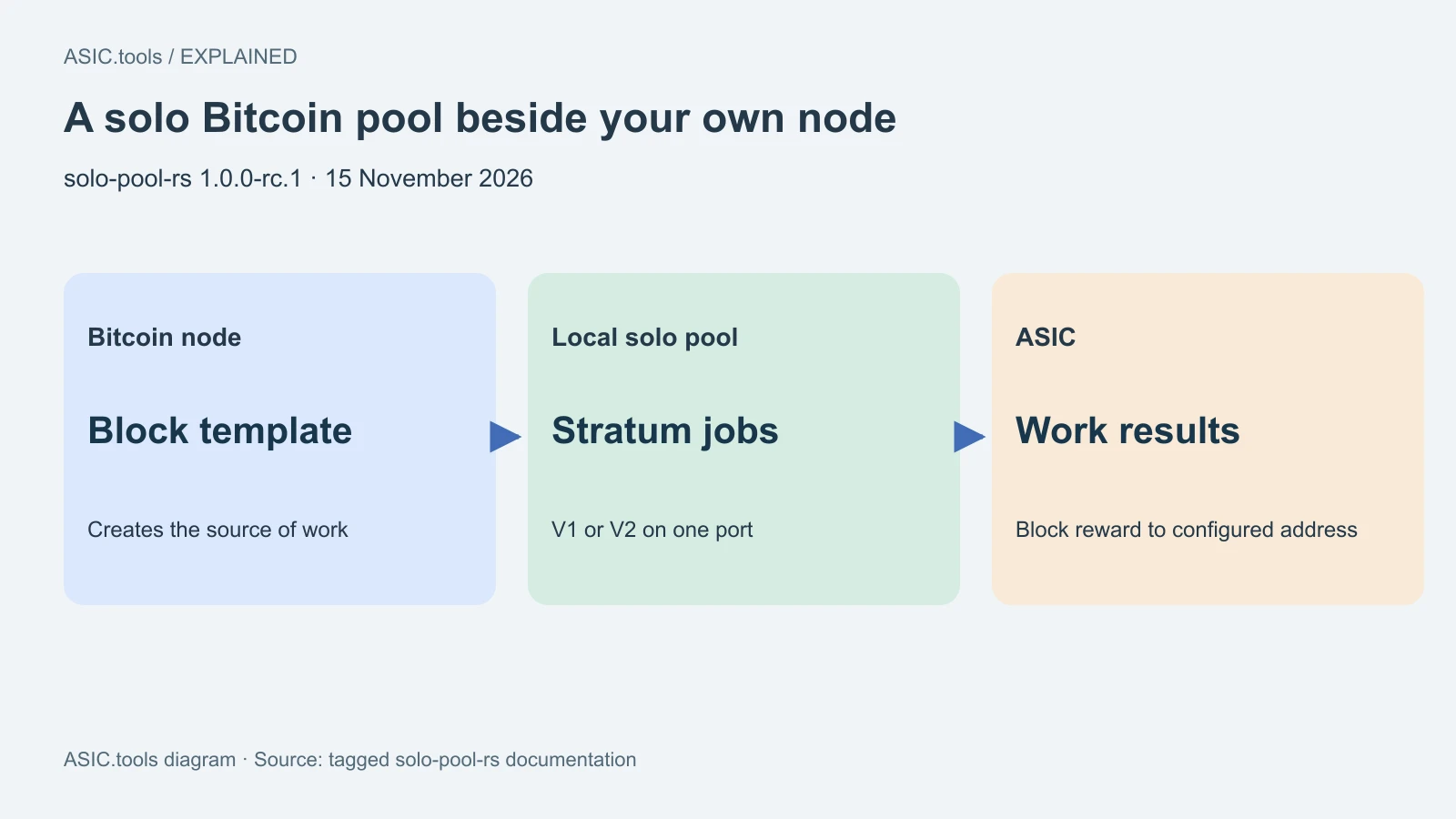
A solo pool beside your own node
On November 15, the solo-pool-rs project published 1.0.0-rc.1. It marks this as a release candidate, a build for testing before a final version. The open-source program coordinates solo Bitcoin mining beside a node the operator controls. The release lists a Docker image and Linux packages for x86-64 and ARM64. A home miner can now test this release on a separate setup and compare it with the hosted pool they already use.
The Bitcoin node supplies a block template, meaning the parts from which a candidate block is made. The pool turns that into jobs for the mining machines. If a machine finds a valid block, the program submits it to the node. The design pays the whole block reward to the Bitcoin address configured by the operator, with no pool fee and no split between workers. This is one operator’s reward arrangement. Adding another person’s device does not create a separate payout account for that device.
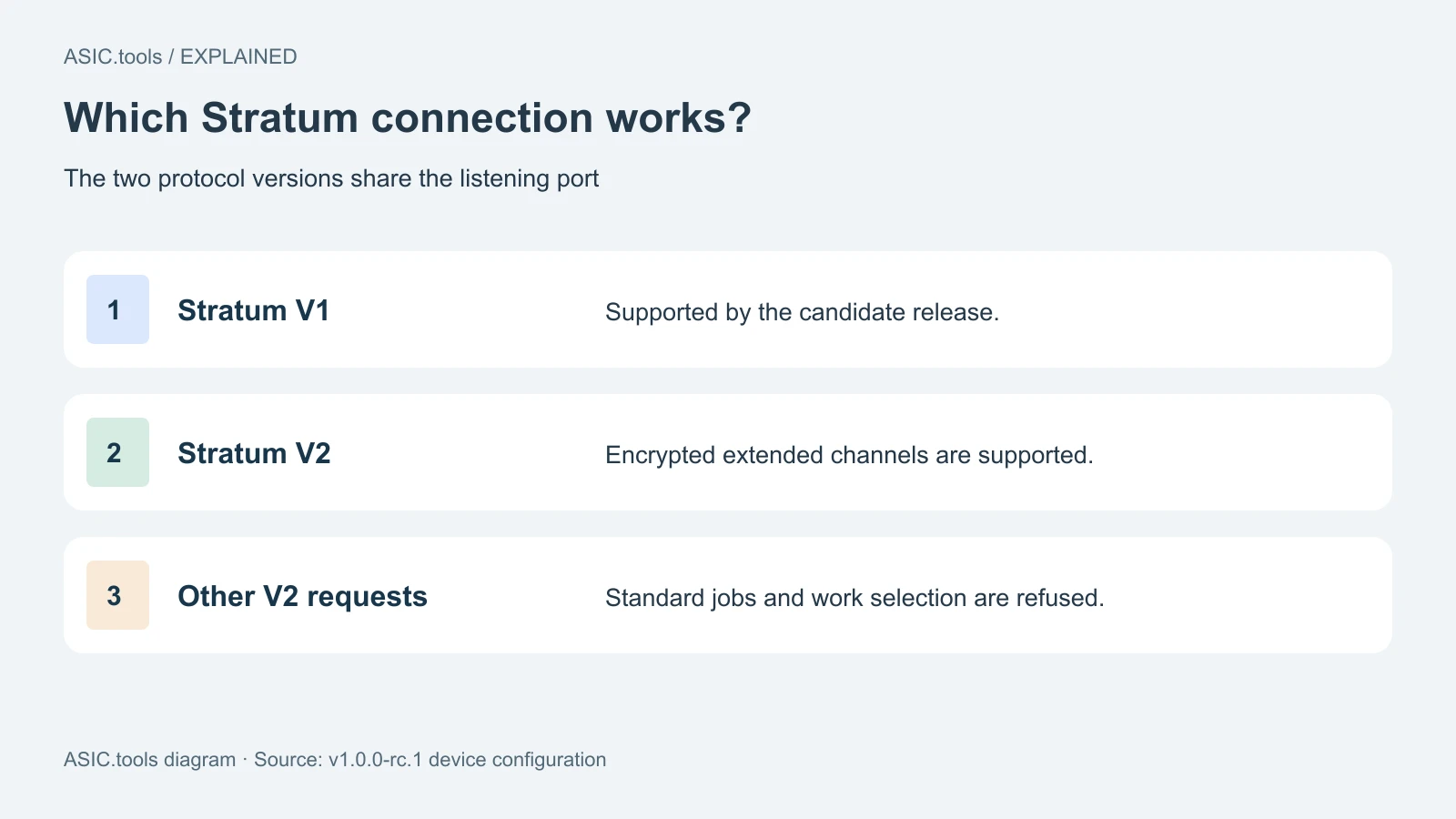
Two kinds of Stratum on one port
Stratum is the language a pool and miner use to exchange jobs and results. The tagged documentation says the same listening port detects Stratum V1 and encrypted Stratum V2. For V2 it supports extended channels, a particular kind of mining session. It rejects requests for standard jobs or miner work selection. Anyone testing V2 on a Bitaxe should check that its firmware is set for an extended channel and check the job status after connecting.
An accepted share is a result good enough for the pool’s easier target. It tells you the machine can communicate and is submitting work. A winning block must meet Bitcoin’s harder target. The software documents a local regtest procedure, where the operator can test a full block submission and the reward address without waiting for a mainnet win. A regtest result verifies the local pipeline. It does not measure how often the device will win on mainnet. The repository shows this automated check for both Stratum versions.
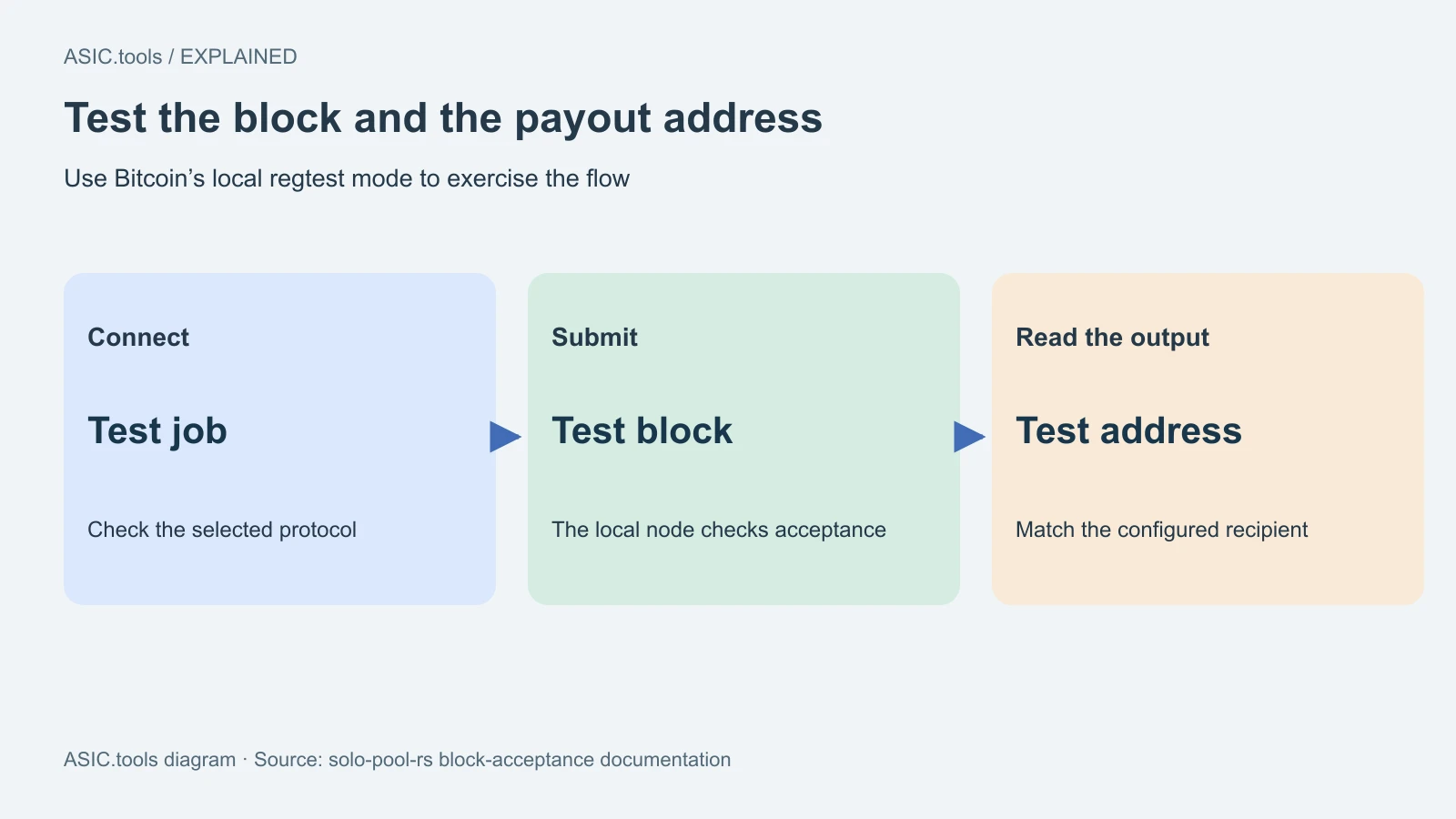
Owning the node means checking more than the miner
Before accepting work from the pool, make sure its node is synchronized with the intended network. Then check that a new block leads to a fresh job and that the miner continues sending accepted work. The project documents a dashboard with per-worker reports and a live hashrate history. That gives the operator something more useful to observe than a single speed reported by a device.
The pool relies on the node’s block notifications and also polls it as a fallback. Keep the node’s management connection private and use the pool from the local network when testing at home. If there is an existing fallback endpoint on the miner, confirm that you can tell which one it actually uses. A dashboard that refreshes and a miner that is connected do not prove they are working together.
What zero pool fees change
Keeping the whole reward matters if the local pool finds a block. It does not alter network difficulty or the number of attempts a given ASIC can make. A small home miner can go a long time without a block. People who need more regular receipts can compare the variability of solo mining with the accounting and fees of a shared pool.
The useful milestone for this release is the ability to test both supported connection modes with your own node and reward address. Record the software version, which protocol was used and whether the test node accepted a block. That tells you much more about readiness than an installer that simply completes.
Source: solo-pool-rs ↗ · Version-tagged setup documentation ↗ · GitHub release metadata ↗
Mining calculator ↗