QSDM activates its PULSE pool payout rule, with no settlements yet in public stats
Source checked: 2026-11-28 · Editorial analysis published: 2026-11-28
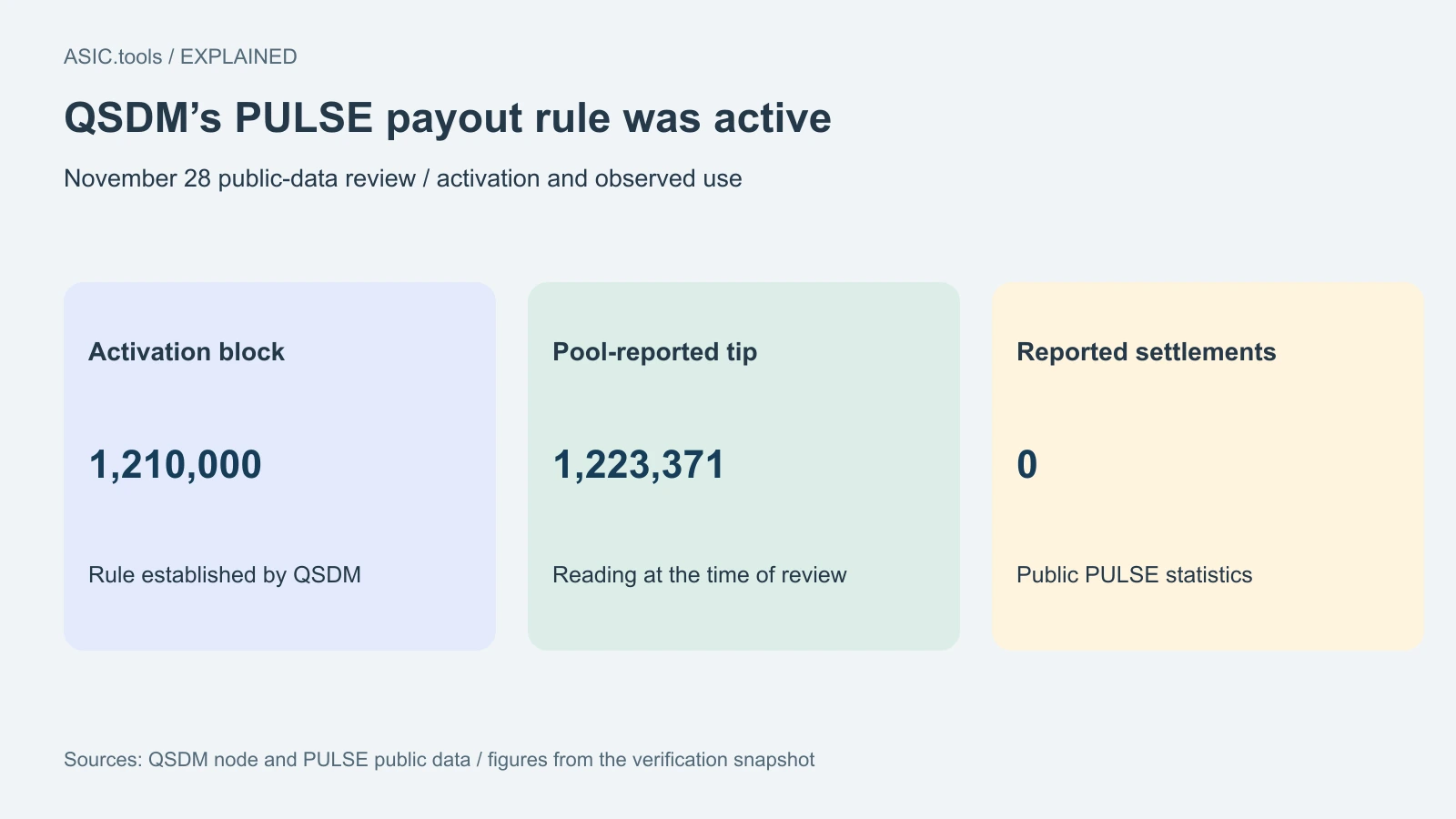
The project’s November 28 data showed the rule active from block 1,210,000. PULSE listed a 1% fee under a 3% network cap, but the public panel reported zero settlements at the time of review.
A payout rule is active, and the pool is still at zero settlements
On November 28, QSDM’s public network status and PULSE pool data showed that its new payout rule was active from block 1,210,000. The PULSE panel reported zero settlements at the time of review. For a GPU miner, that means the project has enabled the way the network can pay pool members, while the published records have yet to show that pool making a payout.
The update concerns QSDM’s Cell token, known as CELL. It is a different network from Bitcoin. The public panel is useful for separating a rule that has switched on from a payment that has actually happened. Those milestones can fall on different days. The first is visible in the blockchain rules and the second in a settlement record or wallet history.
The pool feed reported a chain tip of 1,223,371 in the snapshot used here. That is above the activation block. The separate public node status also marked PULSE active. The figures are dated readings from the project’s services.
How the project says a pool payout works
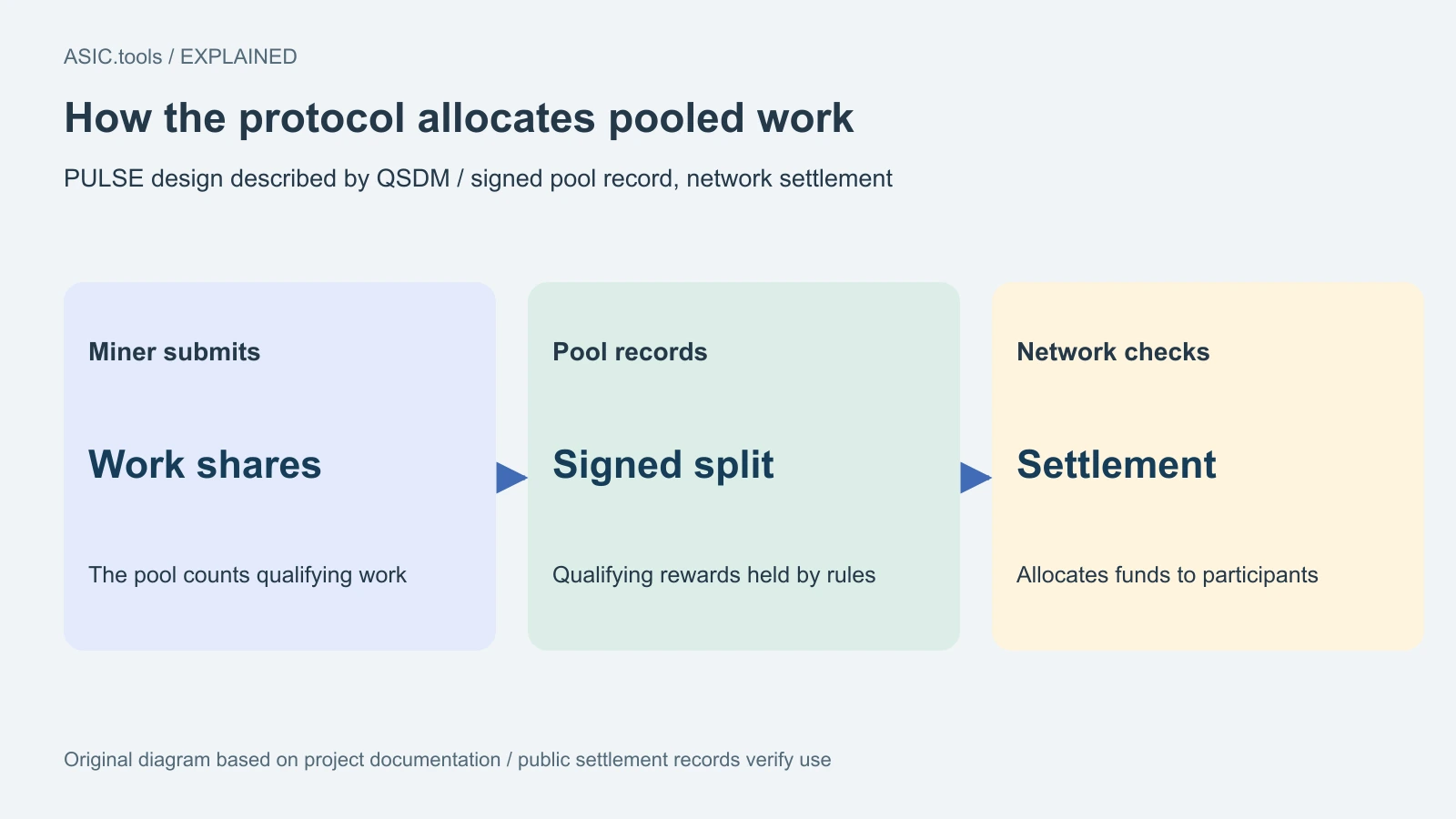
A pool keeps track of work from many miners. According to QSDM, qualifying pooled rewards wait under a rule enforced by the network. The pool signs a record of which work counts, and the network checks the settlement and allocates the amounts to members. In this design the funds wait under a rule without a private spending key. The operator still plays a role in accounting for the work.
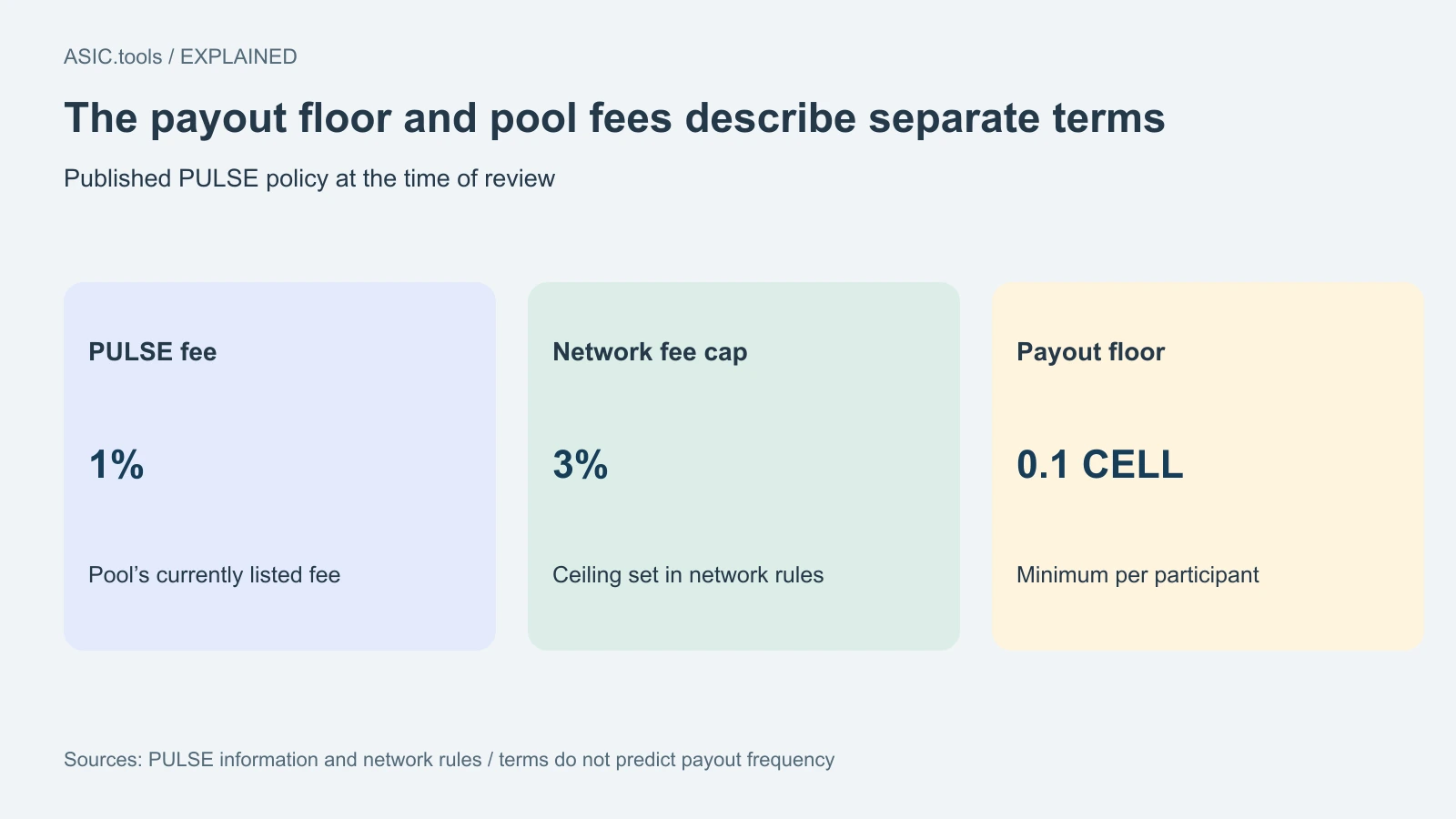
PULSE’s public data listed its current fee at 1% and the network ceiling at 3%. The pool’s published minimum payout is 0.1 CELL. Smaller amounts carry forward under the stated rules. The project documentation also describes a reclaim path for rewards left unsettled after 8,640 blocks. These figures describe the published terms. Seeing a balance paid under those terms requires a recorded settlement or a successful reclaim.
The reclaim period is counted in blocks. At the project’s ten-second target per block, 8,640 blocks would take about a day. Actual time follows block production. For a record you can check later, keep the height where the wait starts along with the date.
Read the reward numbers by layer
From the same block height, the project lists the gross block reward at 4.56 CELL, with 85% earmarked for the miner and 15% for public funds. That works out to 3.876 CELL for the miner portion before any applicable pooled allocation and fee. The split in the network’s reward and the fee a particular pool charges are separate items. A pool member gets a share of qualifying work, rather than the full miner portion from every block.
As with other accounting rules, it helps to separate work submitted, work accepted and funds confirmed. A receipt can show that a pool recognized work. The network settlement shows what was allocated, and wallet history shows what reached an address. In the November 28 snapshot, the public pool statistics also showed zero accepted shares and zero miners in the previous ten minutes. That time-limited view cannot establish future participation or payout frequency.
The payout floor applies to the participant, not to the whole block reward. For illustration, two already credited amounts of 0.06 and 0.05 CELL would total 0.11 CELL. That arithmetic crosses 0.1 CELL. The example gives no expected size or frequency for actual credits.
What the snapshot tells a miner
An operator assessing any new pool can compare its stated terms with its reported settlements. When public records appear, check the height and the credited amount, and compare them with the wallet’s own history. A quoted percentage says little about when a particular account will reach the minimum. Profitability also depends on the miner’s hardware, use of electricity and whether they can exchange the tokens at a price they actually receive.
The project’s threshold has already been passed according to its public data. The operating result to watch is the first visible settlement and whether the record agrees with what miners actually receive. Both steps matter when a new settlement mechanism moves from release notes to use.
Public activity can be checked without sending coins or installing software: the panel has separate counters for accepted work and confirmed settlements. A later nonzero value would answer a different question from today’s activation flag. An individual miner still needs the matching payout record.
Source: QSDM network and PULSE pool ↗ · QSDM dated protocol changelog ↗ · QSDM network status API ↗ · PULSE public pool statistics ↗ · PULSE published fee and activation information ↗
Mining calculator ↗