New Zealand’s new tariff-data rules make electricity plans easier to identify
Source report: 2026-10-30 · Editorial analysis published: 2026-10-31
Rules effective October 30 introduce plan identification codes and cover still-active legacy plans. Home miners can compare the actual contract with their operating hours; broader billing reforms have a later implementation deadline.
A plan’s exact identity now matters more
New Zealand’s electricity-plan information rules took effect on October 30. Retailers must assign unique identification codes to the plans covered by the Code and provide a customer’s applicable plan information on request. For someone running a miner at home, this addresses a very ordinary problem: a familiar marketing name or an old welcome email may not identify the rates currently charged at the meter.
The Electricity Authority’s October 30 notice also confirms the EIEP14A format for responses to consumer or agent requests for product information. This is a standard way of exchanging plan details, not software that changes a miner’s power use. The latest technical amendment allows more characters in some fields. Its practical purpose is to carry the information accurately, not create a new electricity discount.
Old plans and equipment conditions belong in the comparison
The amended rules cover generally available plans and plans no longer on general sale that remain active for existing customers. That makes a retained old contract relevant to a comparison even when its offer page has disappeared. Under clause 11.32G, requested product information is normally due within five business days; an agreed alternative format can also involve a different agreed timeframe and a reasonable extra-format cost.
A related clarification effective the same day recognises conditions based on electricity end-use, equipment or load characteristics. An advertised electric-vehicle or solar plan therefore needs its eligibility conditions read alongside the price. A miner is not an electric vehicle simply because both can consume power at night. Access to information does not remove the supplier’s conditions or guarantee that every household can sign every plan.
Compare the whole household at the intended hours
A continuously running ASIC can change which plan suits the home. Ask for the plan code, current unit rates, daily fixed charge, time windows and any relevant conditions, then combine them with actual meter data. Compare the household before and after adding the device. A low overnight rate can be offset by more expensive daytime use, a larger fixed charge or an expiring discount.
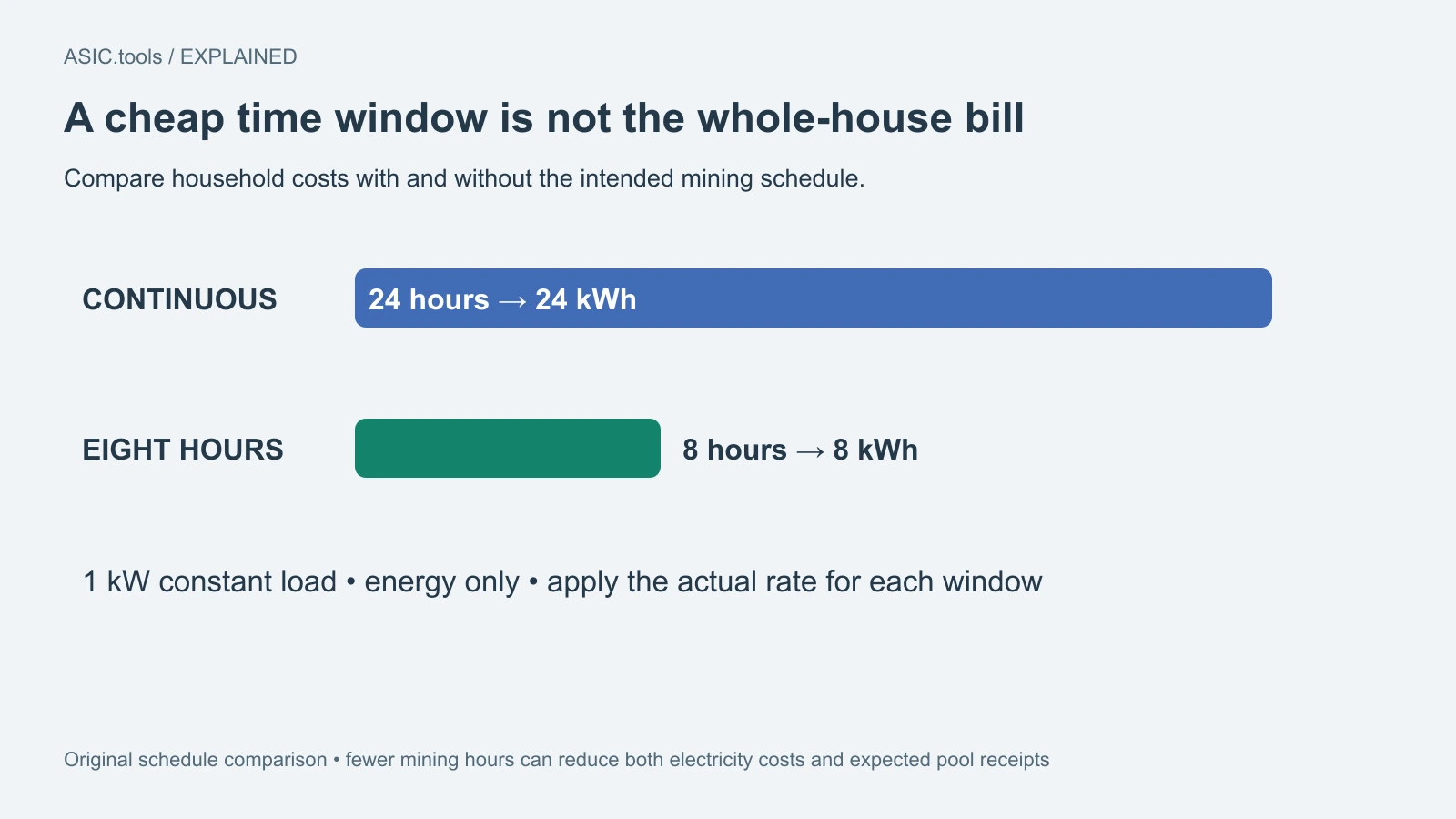
For scale, a constant 1 kW load uses 24 kWh over a full day, or 8 kWh if it runs for eight hours. These are energy quantities, not quoted New Zealand prices or promised earnings. Apply the actual rate to each operating window. Fewer mining hours can reduce electricity costs and revenue together, so a cheaper daily bill alone does not establish that the new schedule improves profit.
The broader billing rollout has a separate deadline
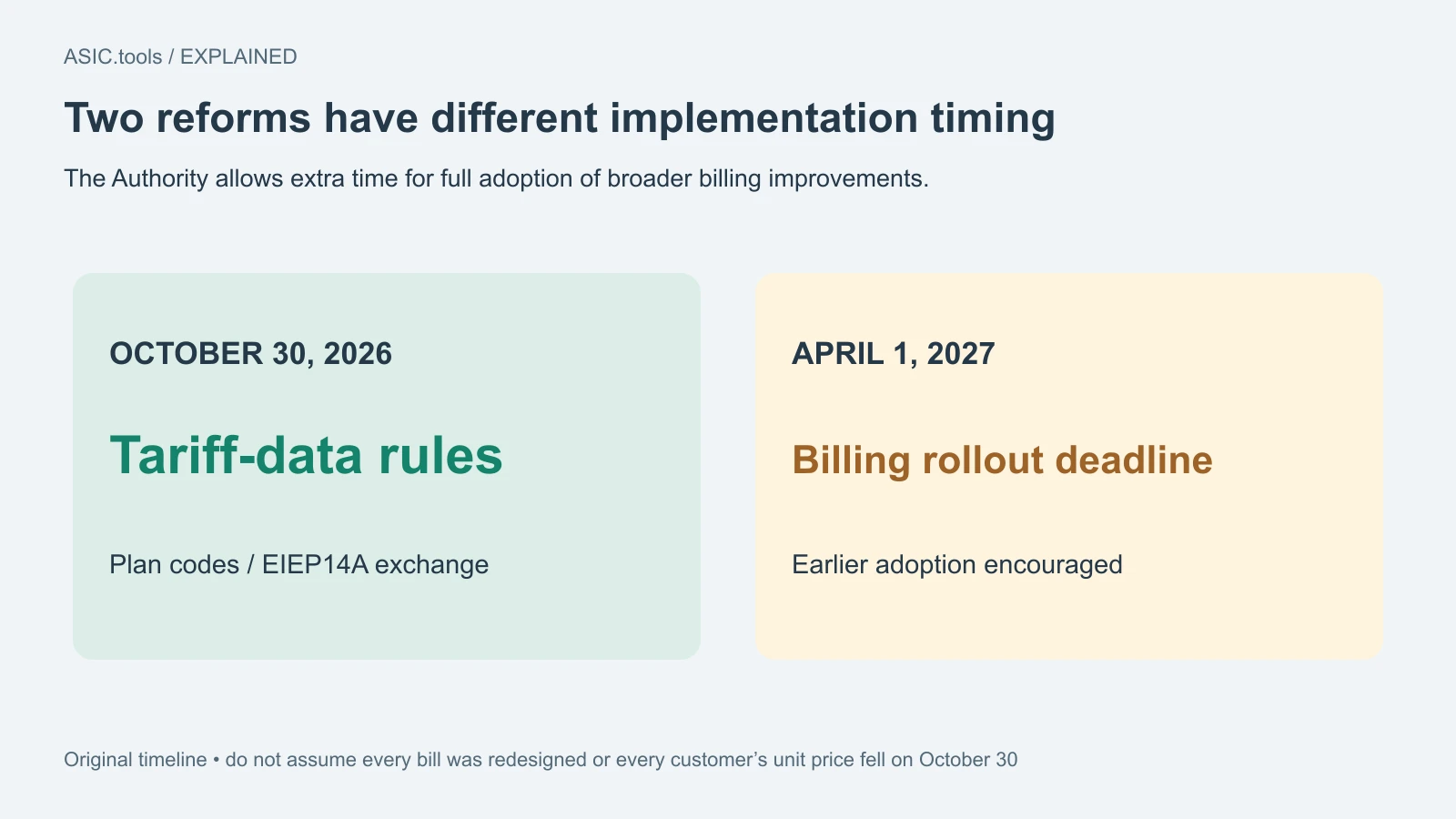
Do not assume that every electricity bill was redesigned on October 30. The Authority’s August implementation update gives power companies until April 1, 2027 to fully introduce the broader billing improvements, while encouraging earlier adoption. These reforms include clearer bills, annual checks for better plans within the retailer’s own offering and limits on most back bills. They should not be confused with a completed market-wide search for the cheapest supplier.
A current tariff-information request and a future billing feature answer different questions. The former can establish which contract to model now; the latter may make the bill easier to read when the supplier implements it. Keep the supplier’s confirmation and effective date with the calculation. Neither the rule’s commencement nor a new layout proves a specific customer’s unit price has fallen.
Use the information before changing the mining schedule
If a comparison service requests your consumption history, check who is asking and the scope of the authorisation. The Code distinguishes publicly requested product information from access to a customer’s own data and provides for authorised agents. Sharing the correct meter history for a defined comparison does not require handing over a wallet recovery phrase, pool password or remote access to the ASIC.
Save the plan code, rate schedule and the measured consumption used in the comparison. Enter the resulting electricity assumptions into the calculator separately from expected pool receipts. The new rules make it easier to ask a precise question about a household contract; the useful outcome for a miner is a calculation matched to real hours and conditions, rather than a decision based on the largest discount printed in an advertisement.
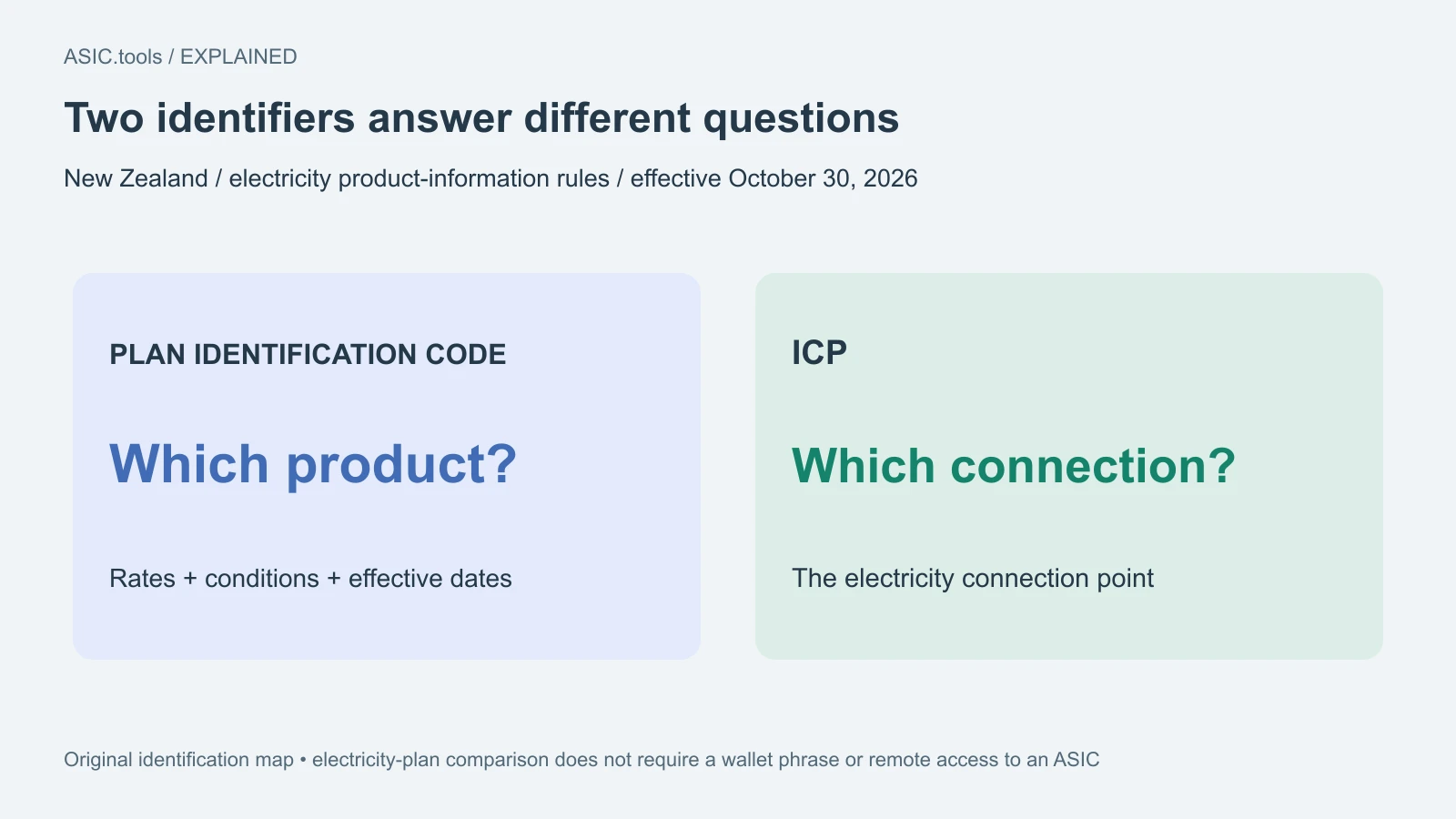
The plan code and the ICP are different identifiers. The plan code identifies the product, while the ICP identifies the electricity connection point. A tariff comparison needs the right product attached to the right connection; it does not need a cryptocurrency address to identify the electricity contract. Keep customer-specific meter data within the authorisation you actually intend to give.
After receiving the details, check that the comparison covers the whole relevant contract period. A promotional rate that ends partway through the expected mining schedule needs its later price considered too. Keep an initial estimate and a later actual-bill check. That separates the benefit of more accurate information from a claim that a supplier switch or a change of mining hours has already saved money.
There is one extra check if the comparison uses the standard exchange file rather than a normal household bill: EIEP14A lists tariff rates excluding GST and represents discounts separately. GST is New Zealand’s goods and services tax. Confirm how the comparison service combines tax, discounts and regular charges before treating a raw field as the final price you will pay.
Source: Electricity Authority ↗ · Current Code Part11, clauses11.32AA–11.32G ↗ · Improving Access to Product Information amendment ↗ · Clarifying Retail Tariff Plans amendment ↗ · Separate billing reform implementation deadline ↗
Mining calculator ↗