Why short pool comparisons mislead
Source report: 2026-08-05 · Editorial analysis published: 2026-09-10
Payout variance can distort a short trial. Compare reward methods, fees and longer measurement periods before drawing conclusions.

Analysis and practical implications
This section is our analysis and illustrative calculations, separate from the source report.
A pool comparison is a measurement problem
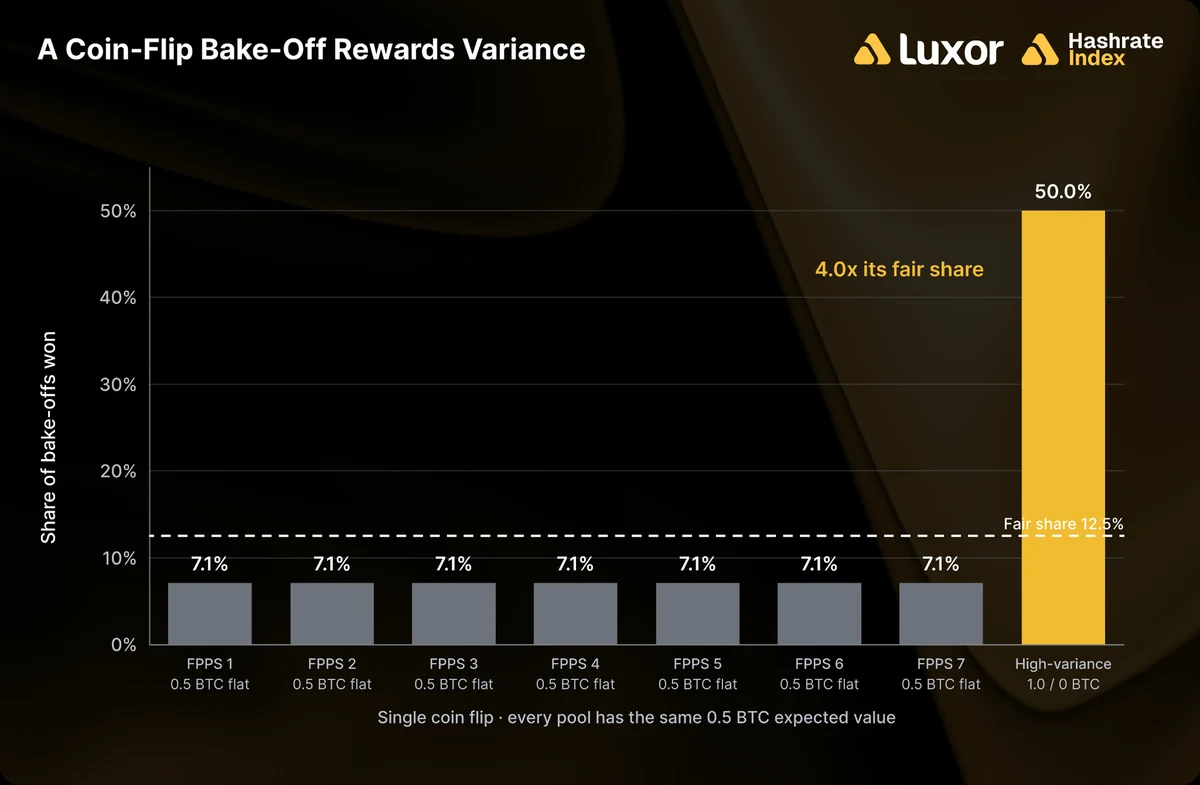
Choosing a pool by running several candidates for a short period feels straightforward: divide the fleet, compare receipts and move to the largest payout. The difficulty is that receipts can contain random variation and may reflect different reward methods. A short comparison can reward a favorable sequence of events rather than a better long-run service.
Begin by defining what is being compared. The reward method, fee treatment, minimum payout, settlement timing and treatment of transaction fees all matter. Two account balances recorded on the same day may not cover the same amount of accepted work or the same settlement period.
Match the fleets before comparing the pools
A fair test uses comparable equipment and operating conditions. If one group contains less reliable machines or runs in a hotter part of the building, the result may describe the fleet allocation rather than the pool. Record downtime, rejected work and connection problems for each group.
Use accepted work as a denominator when examining payouts. A group that produces more valid work should normally earn more, but the additional receipts do not establish that its pool is better. Separating work delivered from money settled makes the comparison easier to explain and less sensitive to accidental differences in machine operation.
Use a reconciliation sheet rather than one screenshot
For each test interval, record accepted work, the applicable reward method, fees, credited rewards and actual withdrawals. Mark unpaid balances separately. This prevents a payment threshold from appearing as a loss and a delayed settlement from appearing as a sudden improvement.
An illustrative example makes the issue clear: if one pool has settled six days while another has settled seven, comparing only withdrawn funds creates a timing bias. Extending the observation window or aligning settlement periods can resolve that problem. It cannot eliminate all uncertainty, but it prevents an avoidable accounting mistake.
Include operational quality in the decision
A pool is also an operating dependency. Reliable connectivity, useful account records, support responsiveness and clear payout rules have value even when a short trial cannot distinguish small differences in expected rewards. Document connection incidents and the time required to resolve them.
The final decision should state the evidence and its limits. A longer comparison with matched fleets is stronger than a brief contest based on wallet receipts alone. If a result is within the normal variation of the measurement, avoid presenting it as proof of superior long-run payout. The objective is a dependable service choice, not a winner selected by a noisy interval.
Source: Hashrate Index / Luxor ↗
Mining calculator ↗