Malaysia reports 823 mining machines seized in Manjung power theft cases
Source report: 2026-11-16 · Editorial analysis published: 2026-11-17
A November 16 parliamentary reply lists 65 raids across seven areas. Officials explained why finding equipment is only one part of proving who ran an illegal connection.
The figure covers seven areas, not one raid
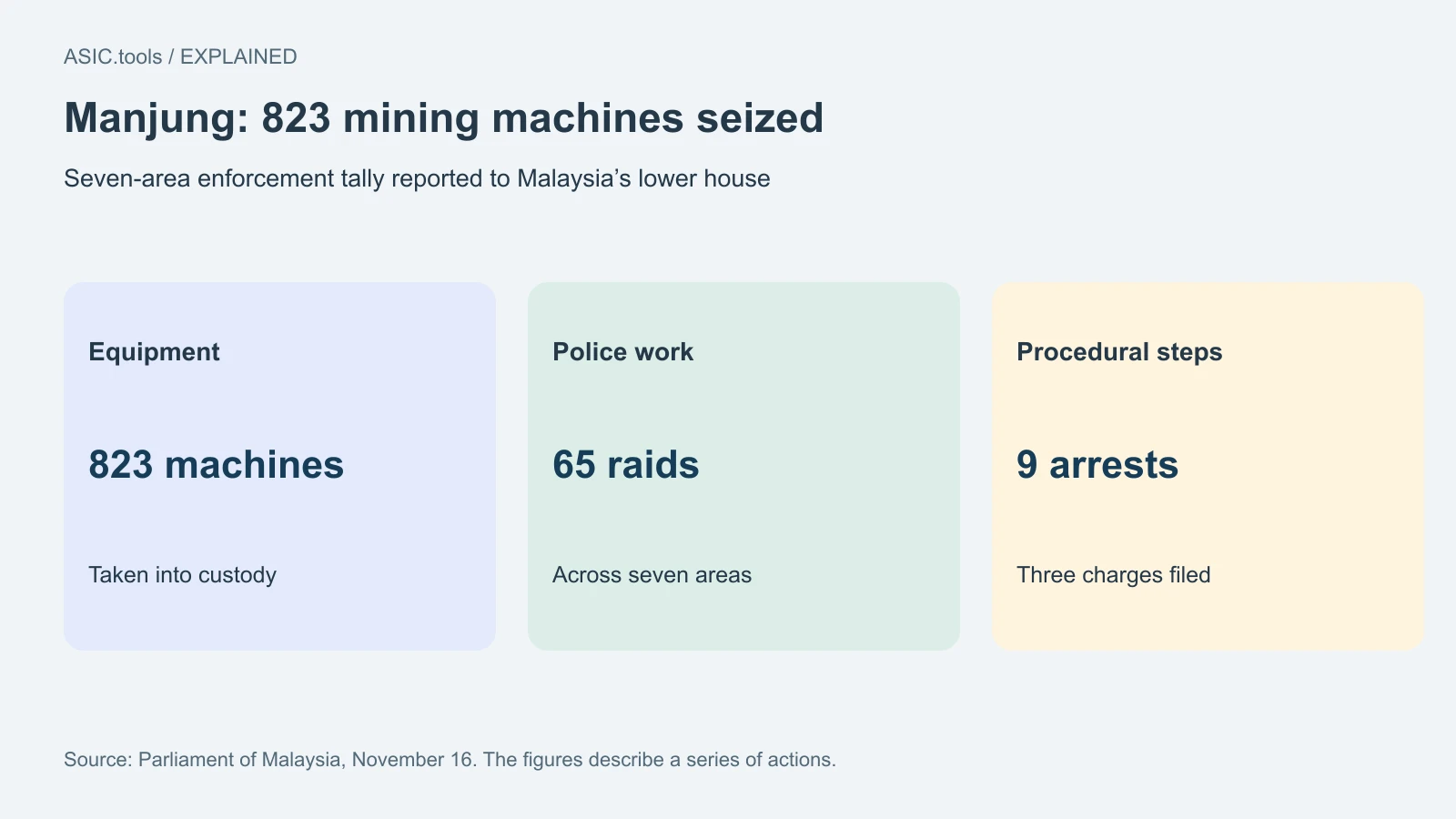
A Malaysian deputy home minister told the lower house on November 16 that police seized 823 mining machines in 65 raids across seven areas of Manjung, a district in Perak. Shamsul Anuar Nasarah reported nine arrests and three charges filed for that set of cases. The number of seized machines is an aggregate disclosed in parliament, rather than the result of a single operation on the day.
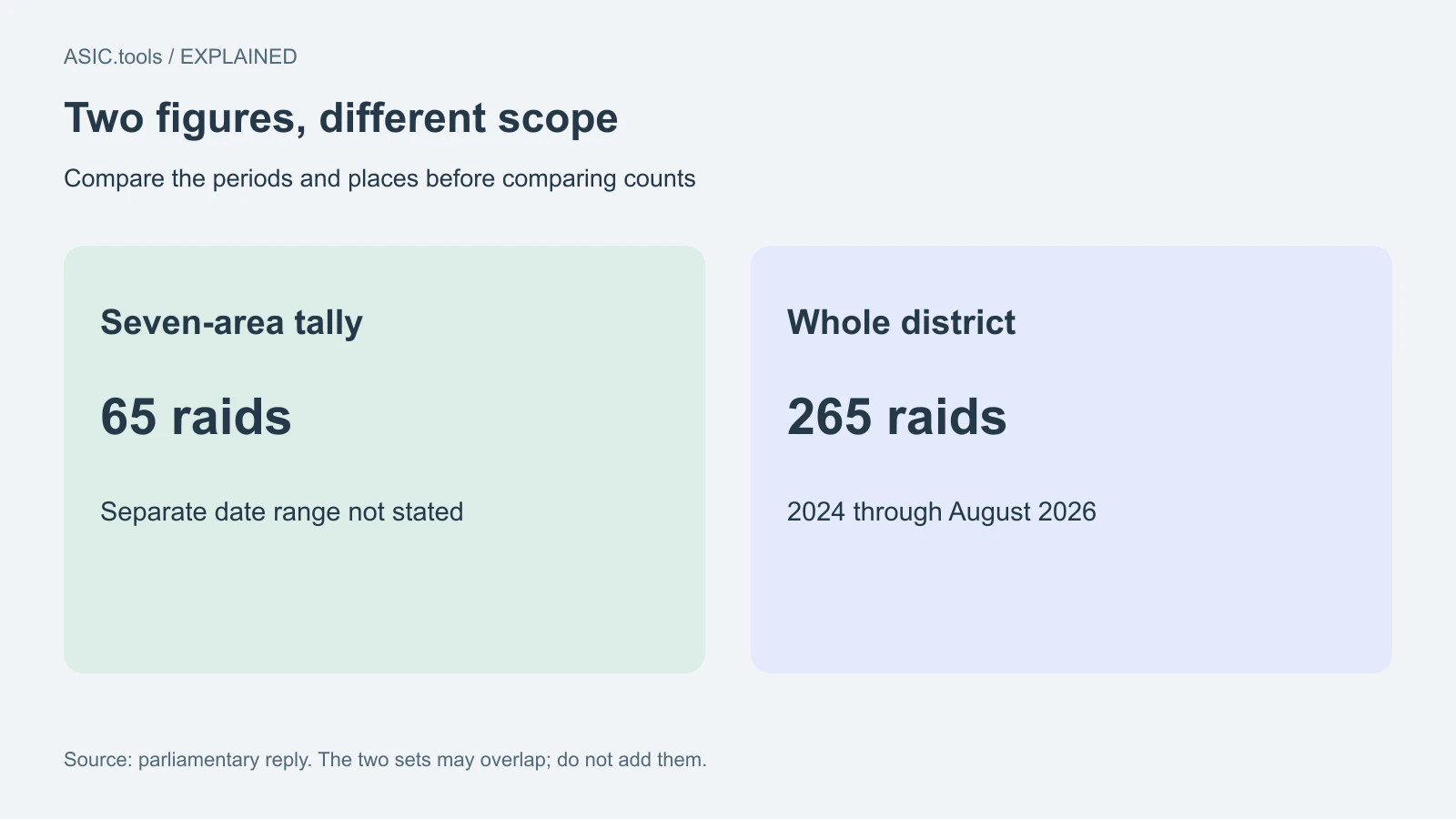
In the same answer he gave a separate figure for the whole district from 2024 through August 2026: 265 raids, 43 arrests and 26 people charged. The parliamentary record does not set out a separate date range for the seven-area figures. Adding the two sets would risk counting the same activity more than once. Neither set says how much electricity was taken or what the machines actually mined.
What the investigation is about
The deputy minister said unauthorized use of electricity, meter changes and wiring changes in these operations can cost the utility money and raise the risk of fire. Police and the utility Tenaga Nasional Berhad have been working together in the district. The issue described in parliament is whether particular premises used an unlawful power connection, who controlled the operation, and who received the proceeds.
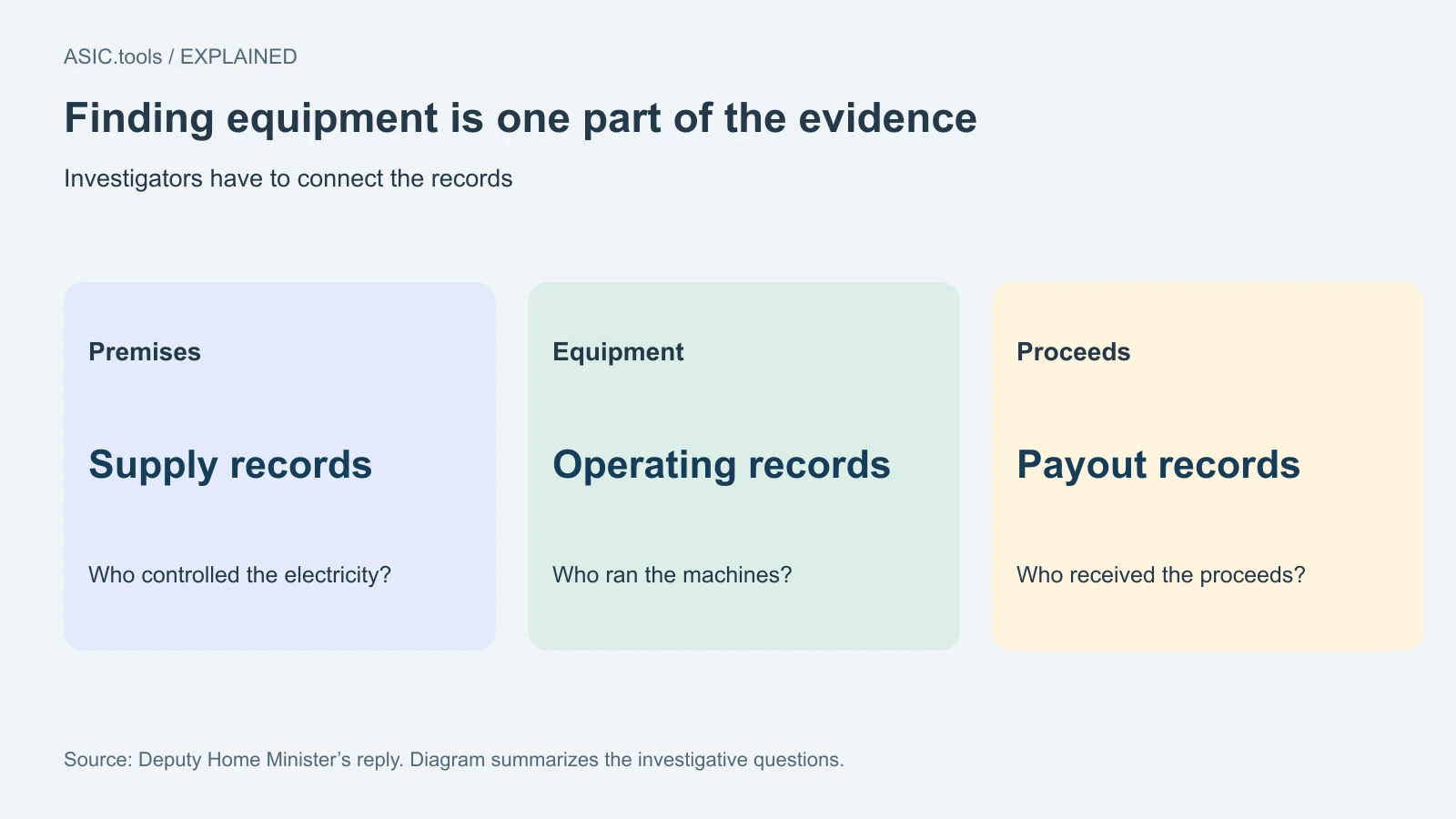
Mining hardware is evidence that can be inspected, but finding it does not show who ordered the connection or got paid. A room may belong to one person, its electricity account to another, and the machines to an operator who rents the space. The deputy minister said investigators need evidence connecting the suspects, premises, electricity, operating activity and proceeds. That is why the number of machines, arrests and charges describes three different stages.
Why the wallet is a different clue
Authorities also look at transaction and financial records. Shamsul Anuar said obtaining platform records or ownership information can take more work when a wallet operator or provider is overseas. A public address can show that coins moved. It does not, by itself, name the person who had access to a machine, an account or a service.
The answer said police had recorded no corruption cases involving enforcement officers in connection with these operations, and would examine complaints and evidence. That is a statement about the police record cited in parliament. It does not turn allegations into proven cases or settle who is responsible for the mining operations under investigation.
What to verify before hosting elsewhere
This distinction matters even if you run a single legal machine in someone else’s building. Ask who supplies and bills the power, where you can see the meter readings relevant to your machine, and who is allowed to move or disconnect it. Keep the equipment handover record and the account that actually receives your pool payouts. A low hosting price is easier to evaluate when it comes with records you can check.
If you own the premises, keep the electricity account and tenancy records up to date and ask the utility to investigate unexpected changes rather than inspecting wiring yourself. Meter data can help explain consumption during the dates in question. Equipment and pool records answer other questions. Keeping those records separate helps avoid treating a bill or a wallet transfer as proof of everything else.
How to read the numbers next time
If a later report announces a new raid, compare where and when it took place with the areas in this parliamentary answer. A district-wide update and a report from one address may cover overlapping events. Where scope and timing are unclear, it is safer to keep the totals apart than claim a new district-wide number.
The same logic applies to power and mining statistics. A count of boxes says how much equipment was taken into custody. Without its models, settings and actual runtime, it cannot tell you electricity use or mining output. The fresh information here is the seven-area tally and the ministry’s explanation of what investigators still need to establish.
What the records can and cannot tell you
When an electricity bill jumps, first match the bill’s dates and meter identifier to the premises. Ask the supplier or property manager for a traceable explanation. A meter reading can show a change in consumption, but on its own it cannot identify which load caused it or who operated that load.
For a machine placed with a host, tie the handover record to the actual worker name in your pool account. That gives you a way to reconcile three dates: when the machine arrived, when power billing began and when the first work was accepted. Keep a separate record of arrangements for accessing or removing equipment. Those are practical checks a reader can make without drawing conclusions about an investigation in another country.
Source: Parliament of Malaysia ↗ · Bernama — parliamentary reply and enforcement figures ↗ · RTM — account of the Dewan Rakyat session ↗
Mining calculator ↗