INTERPOL reports more than 2,000 mining devices seized in Angola
Source report: 2026-10-22 · Editorial analysis published: 2026-10-26
An October 22 report describes two illegal mining centers, nine arrests and six illegal power transformation stations. The wider operation’s $105 million recovery is not an Angola mining total.
Equipment and electrical infrastructure were seized
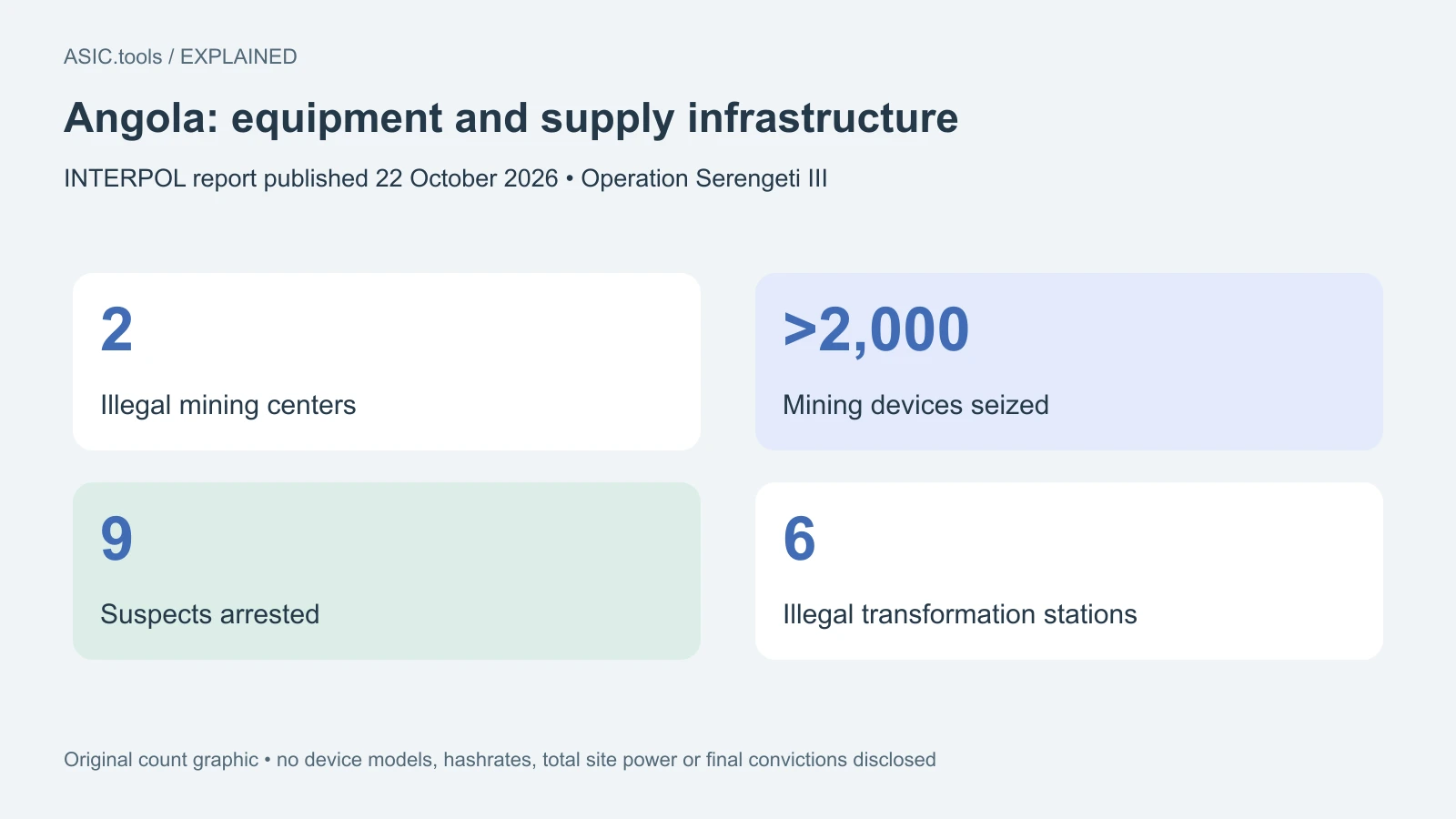
INTERPOL’s October 22 report says investigators dismantled two illegal cryptocurrency mining centers in Angola, arrested nine suspects and seized more than 2,000 mining devices. It also lists six illegal power transformation stations, with the seized electrical infrastructure alone valued at more than $1 million.
The account highlights the physical side of a mining operation: machines need a supply system, not just an internet connection and a wallet address. In this case the authorities describe both the centers and their electrical infrastructure as illegal. The report does not give a universal judgment about mining elsewhere or about every service offering hosting.
It does not identify the devices’ manufacturers, individual hashrates, power consumption or the sites’ total electrical demand. More than 2,000 devices cannot be converted into a reliable megawatt total without those facts. We also cannot infer a particular Bitcoin output, profitability or energy-loss figure from the equipment count alone.
The operation happened before the announcement
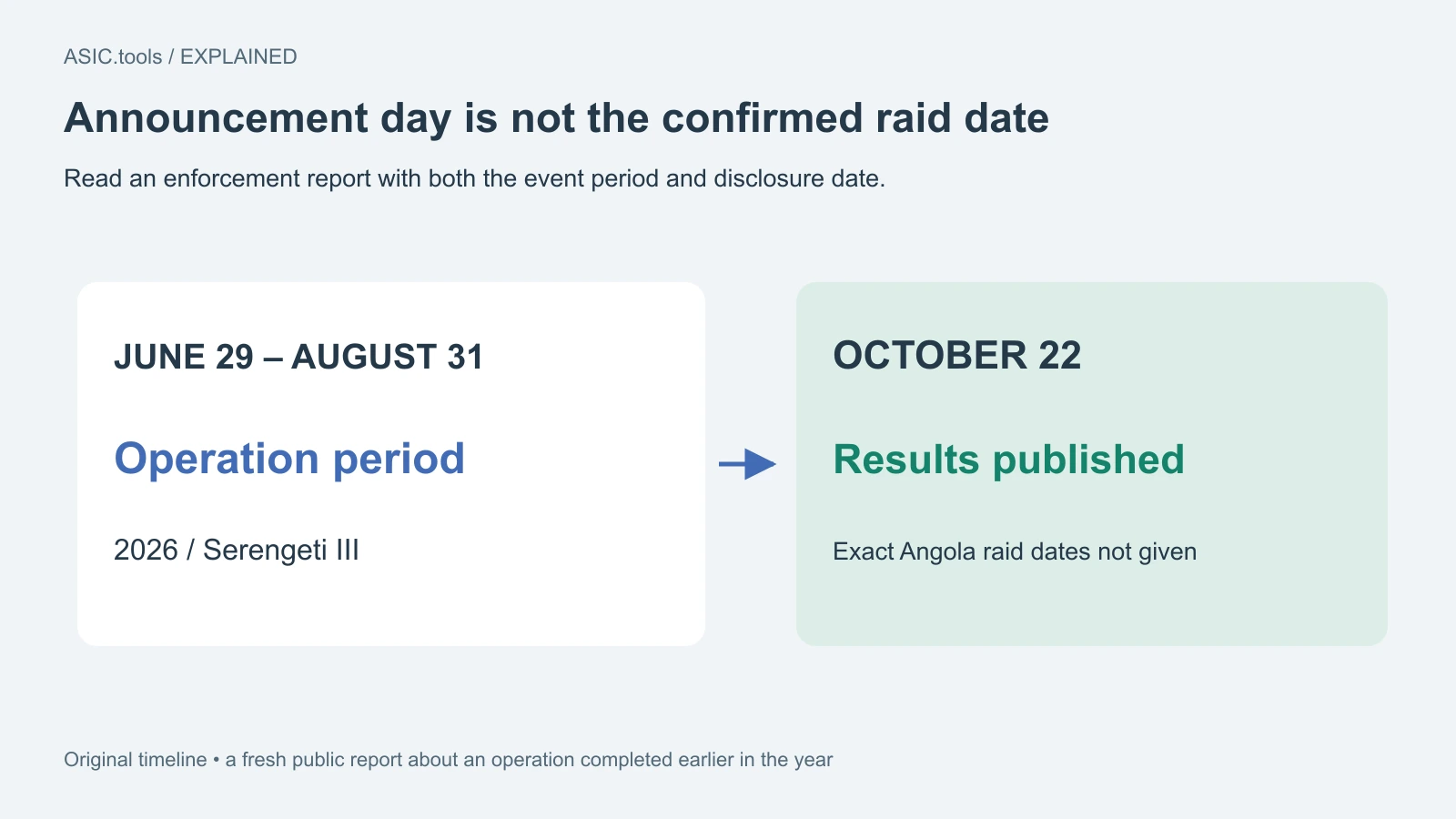
The wider Operation Serengeti III ran from June 29 to August 31, 2026, under INTERPOL coordination. Its results were announced on October 22. That distinguishes the period of enforcement work from the date the public received the report. The release does not give the exact raid date for each Angolan center.
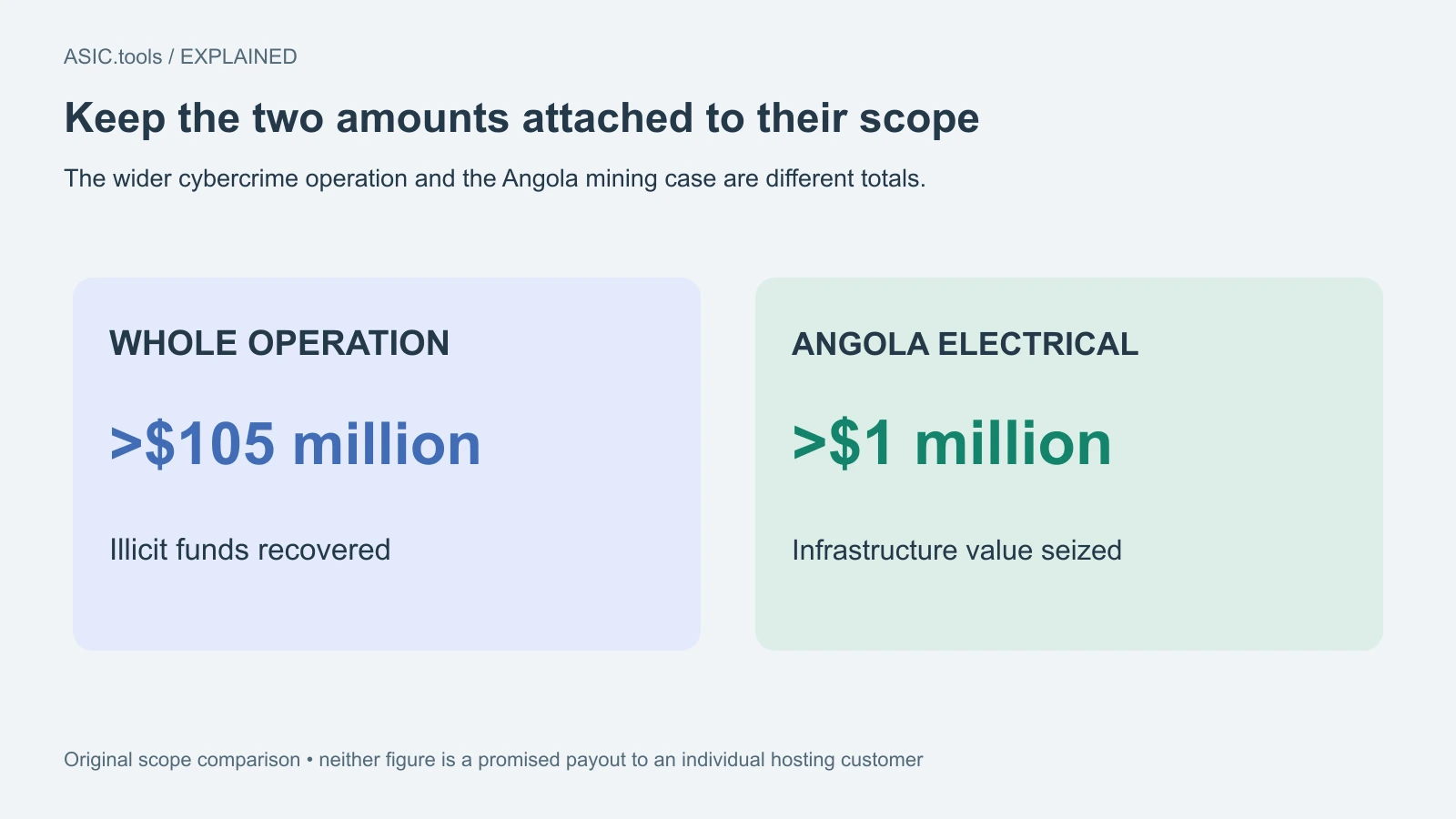
Across 21 participating countries, the organization reported 1,462 arrests, 10,909 malicious networks disrupted and more than $105 million in illicit funds recovered. Those are totals for an operation covering several types of cybercrime, including fraud, ransomware and business email compromise.
The $105 million is therefore not the value of the Angolan mining machines, the electricity used there or a fund promised to mining customers. The separate figure of more than $1 million refers to the seized electrical infrastructure in Angola. Keeping the scopes separate prevents a much larger but incorrect mining headline.
The participating-country list also includes the United States alongside 20 African countries. Calling the total “21 African countries” would therefore be inaccurate. In Angola the release attributes the dismantling and seizures to investigators; INTERPOL describes its coordination role across the wider operation. Its international scope helps explain why the headline totals combine different national cases instead of describing one mining raid.
A low hosting quote needs a real power arrangement
For someone considering remote hosting, the practical question is what supports the quoted electricity offer. A low number in an advertisement does not show the connection arrangement, the party paying the supplier or who controls the site’s electrical infrastructure. Those are tangible questions that can be asked before shipping equipment.
A written hosting offer should make the location, contracting party, electricity charging method and responsibility for interruptions understandable. A customer can ask for evidence relevant to the proposed supply and verify it with the identified parties. The INTERPOL report itself does not certify or blacklist any unrelated commercial provider.
This is different from trying to assess a site from photographs of racks. A photograph can show that machines exist while saying little about the right to operate the electrical connection or the customer’s ability to recover equipment. An infrastructure claim needs supporting records rather than a familiar-looking miner or a promise of unusually cheap electricity.
Separate a criminal investigation from a customer remedy
INTERPOL describes people arrested as suspects. An arrest is not a conviction, and the public report does not supply the final court outcome for each person. Several investigations from the operation remain active. Readers should preserve that stage of the process when repeating the story.
The release also does not announce compensation for a particular hosting customer, a public sale of these machines or a way to reclaim equipment through a fee paid to a stranger. Recovery of illicit funds across a police operation and money returned to an individual customer are different events.
If someone uses a real enforcement headline to offer a private recovery service, verify the claimed authority through an official channel opened independently. A request for wallet recovery words, an advance payment or remote access is not authenticated by attaching a genuine news link. The report is information, not an authorization for a third party to handle a reader’s assets.
The lesson is about the whole installation
The Angola disclosure shows why a mining installation should be assessed as equipment, electrical supply and an operating business together. Device specifications can help estimate consumption, but they do not establish the status of a site or the protections in a hosting contract. Conversely, a company name alone does not verify what happens to the hardware.
For a small owner, useful records include the device’s identity, the agreed location, who has custody, how electricity is measured and what the agreement says about interruption or return. These are practical ways to understand an arrangement; the international report does not settle the rules of a different jurisdiction or a specific dispute.
The fresh disclosure is the October 22 INTERPOL report about an operation that ended in August. It offers confirmed published counts and a clear infrastructure connection, while leaving device details and individual outcomes unknown. We have not filled those gaps with invented ASIC models, consumption figures or guaranteed recovery claims.
Source: INTERPOL ↗
Mining calculator ↗