Missouri data-center plan combines on-site atomic power and heat reuse
Source report: 2026-09-09 · Editorial analysis published: 2026-09-14
Island Roadhouse describes a 154 MW Phase 1 design targeting 2034. It remains a long-term plan, not an operating facility or grid connection.
Analysis and practical implications
This section is our analysis and illustrative calculations, separate from the source report.
A design disclosure with a 2034 target
Island Roadhouse Data Centers published details on September 9 for a planned low-water, atomic-powered data-center campus in Missouri. Phase 1 is designed for up to 154 MW of sellable IT load and targets commercial operation in 2034; a second expansion phase is part of the master plan. The long horizon is essential context. The release describes engineering intent and a business model, not a commissioned campus, an operating reactor or 154 MW already contracted to customers. A project tracker should record design disclosed, capacity planned and target year separately from permits, construction and operation.
Power is planned behind the meter
The company says on-site generation would carry the computing load and the atomic-served core behind the meter, with no planned export to the public grid. Its planning basis uses advanced atomic reactors in an N+1 configuration for reactor-level redundancy. Heat would be converted to electricity through an indirect, closed supercritical-carbon-dioxide Brayton cycle. These are design choices reported by the developer. The release does not identify an operating reactor, a final reactor vendor, an approved license or completed power-conversion equipment, so none of those future elements should be marked delivered.
Cooling aims to reduce direct water use
High-density halls are designed around closed-loop, warm-water direct-to-chip liquid cooling, with dry heat rejection as the primary and ultimate heat sink. The company describes a low-water design and says it has an annual water-use-effectiveness planning target, but the announcement does not publish the numeric target. Thermal energy storage is presented as an optimization asset, and no grid-scale battery is planned. Closed loop does not mean zero water under every operating condition; readers need final equipment, climate assumptions and measured WUE after commissioning before comparing the site with another campus.
Waste heat is offered as an optional product
Island Roadhouse plans a campus thermal network through which third-party industrial, agricultural or other users could reserve capacity and buy metered thermal energy. Those users would finance, build, own and operate their own facilities. The data center is designed to reject all required heat without depending on an external buyer, making reuse an optimization rather than a condition for safe operation. This distinction is important: the September release does not announce a signed heat customer or revenue. Waste-heat value belongs in a forecast only after temperature, distance, availability, contracts and demand are specified.
Why the architecture matters to miners
Mining and AI facilities both face power-delivery and cooling constraints, even though their hardware and commercial loads differ. Behind-the-meter generation may reduce dependence on a grid connection, while warm-water loops and dry coolers can address dense heat loads with less direct water use. But atomic generation brings its own licensing, fuel, safety, construction and schedule requirements. The company’s release cites national queue and data-center energy studies to explain its design motivation. Those references provide context; they do not grant this Missouri project approval or prove that on-site generation will meet its 2034 date.
Milestones that would change the project status
Useful next evidence includes a named site and controlling land rights, reactor and technology partners, regulatory filings, environmental and local approvals, financing, customer contracts, engineering completion, procurement, construction start and staged commissioning. The 154 MW figure should move from planned to contracted only when binding customer documents support it, and from planned to energized only after equipment receives power. A Phase 2 should remain unquantified unless a later filing supplies capacity. Repeated presentations of the same master plan must not be counted as additional infrastructure.
Evidence boundary and image context
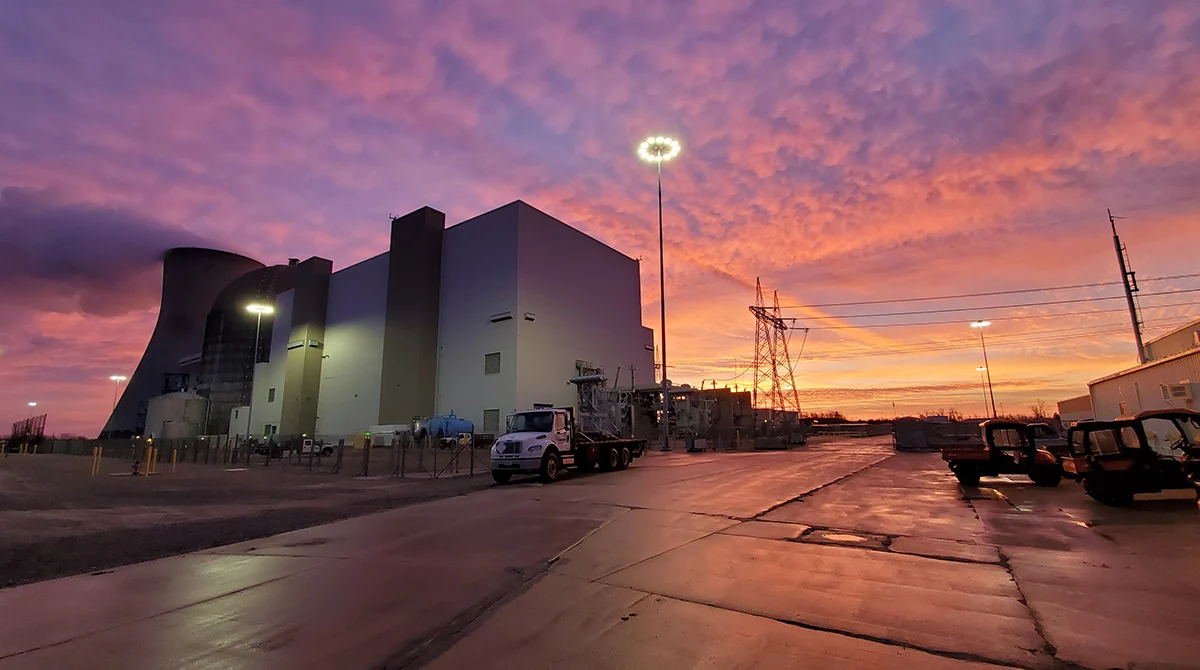
The primary source is Island Roadhouse’s September 9 company release distributed by PR Newswire. ASIC.Tools reports its design and targets but has not independently verified the site, regulatory path, reactor technology, customer demand or economics. The accompanying licensed photograph shows Missouri’s existing Callaway nuclear station only as geographic and atomic-energy context; it is not the proposed campus or its planned reactor. This article makes no claim that the developer is affiliated with Callaway. The key conclusion remains bounded: a developer disclosed an integrated design with a 2034 target, and every construction and operating step is still future evidence.
Source: Island Roadhouse Data Centers / PR Newswire ↗
Mining calculator ↗