HIVE’s BUZZ HPC teams up with ProCogia for sovereign AI
Source report: 2026-09-16 · Editorial analysis published: 2026-09-17
Dedicated Canadian GPU capacity and applied-AI services are a new commercial partnership, not an ASIC upgrade or disclosed new MW.
Analysis and practical implications
This section is our analysis and illustrative calculations, separate from the source report.
The partnership and its date
HIVE’s September 16 statement says BUZZ HPC and ProCogia will combine Canadian GPU capacity with applied-AI services. The corporate page also carries a September 15 header; we use the statement’s dateline and disclose that discrepancy. The release does not state the new agreement’s value or dedicated GPU count.

Infrastructure and an application layer do different jobs
The source describes two complementary roles: GPU infrastructure and the engineering needed to turn that capacity into usable AI services. Our editorial assessment is that this addresses a commercial gap often hidden in hardware announcements. Installing a server does not prepare a customer’s data, integrate access controls or define a reliable workflow. An application partner can supply those steps while the infrastructure operator supplies compute. The result still needs evidence of deployment and customer acceptance. A mining operator assessing diversification should budget separately for hardware operations and the software/service layer instead of assuming one automatically creates the other.
A two-way relationship needs separate commercial records
In the release’s model, ProCogia obtains dedicated capacity and also serves BUZZ customers. Our accounting question is whether an invoice represents infrastructure supplied, software work performed or a joint sale. These flows should not be counted twice simply because two companies discuss the same customer. A hypothetical channel relationship might contain a referral, a resale margin and a direct hosting charge; each is different from total end-customer spending. Separate the billed entity, service period and cash collected. This makes later revenue comparisons more useful than adding every announced opportunity together.
Sovereignty requires a delivery checklist
Our operational interpretation of sovereign computing is a set of verifiable arrangements: where data is processed and backed up, who administers systems, which parties may access it and what subcontractors do. A Canadian location label alone cannot answer all of those questions. An enterprise must define its own requirements and confirm the deployed service meets them. This is an assessment framework, not a legal conclusion about the partnership. For a miner entering GPU hosting, jurisdiction and customer documentation become service inputs alongside cooling and power; keeping them outside the capacity spreadsheet leaves a major delivery gap.
GPU services do not come from flashing an ASIC
This announcement concerns a different computing business from SHA-256 mining. A Bitcoin ASIC’s specialized design does not become a general AI accelerator through a firmware update. Existing land, power procurement and operating experience may be reusable, but networking, cooling density, storage, software and customer support need their own design. Our catalogue therefore does not attach this partnership as new firmware or extra hashrate to HIVE-related miners. A diversification comparison should itemize reusable site assets and replacement infrastructure separately before estimating any conversion cost.
Utilization and payment are different metrics
In our hypothetical example, a 100-GPU environment offers 2,400 GPU-hours per day. If 60% of that time is billable, the billing base is 1,440 GPU-hours, not 2,400. No such GPU count or utilization was announced for this agreement; the arithmetic illustrates why installed capacity, reserved capacity and paid use must be distinguished. The rate also needs a defined unit, and collected cash may lag billing. Support costs and electricity belong in the operating comparison. This makes a partnership’s demand potential visible without treating it as an already measured margin.
Application delivery introduces another acceptance layer
A hardware acceptance test and an application acceptance test are different. In a hypothetical enterprise deployment, GPUs may be available while an integration still fails a customer’s accuracy, latency or access-control requirement. Define those acceptance criteria before equating compute readiness with service completion. A new application may also require version management, monitoring and a support handover. These are original editorial questions for a computing operator, not claims about either partner’s achieved performance. For miners evaluating hosting, they explain why an AI workload needs a service process beyond the familiar machine-online indicator.
What the next operating disclosure should show
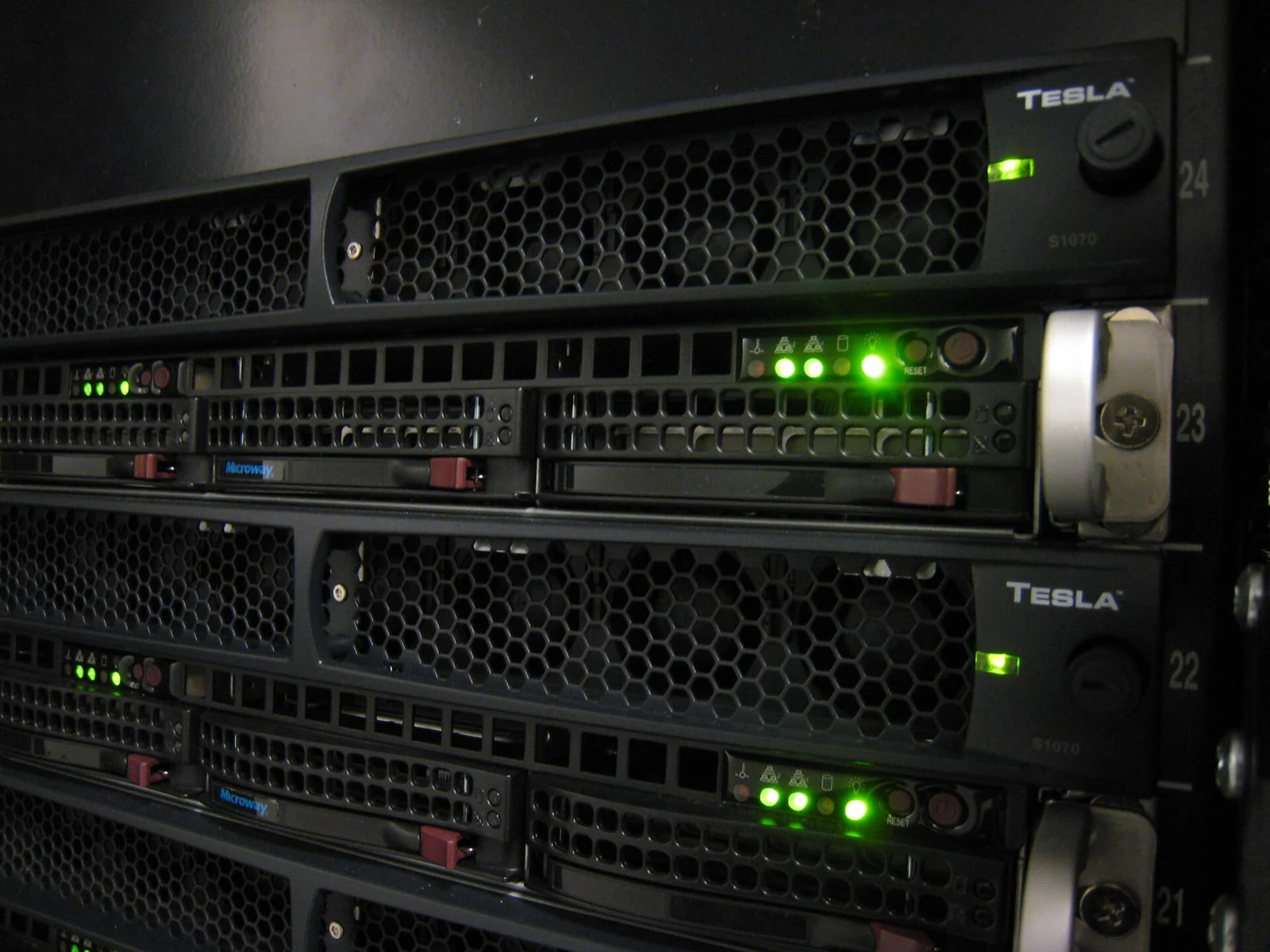
Watch for deployed capacity, accepted production workloads, contract economics and recognized revenue specific to this relationship. An older agreement, a group-wide development pipeline or a different customer’s contract cannot fill the missing fields for ProCogia. Distinguish customer acquisition, reserved hardware and actual cash-generating use. When later evidence appears, retain the original date and append the newly confirmed stage rather than rewrite history. The two archival photographs illustrate computing infrastructure; they are not pictures of ProCogia’s deployment or BUZZ’s current customer systems. This is a new partnership story, separate from HIVE’s earlier mining-production updates.
Use comparable units when evaluating diversification
A miner’s TH/s, a GPU-hour and a data center’s MW are not interchangeable revenue units. Start from a defined service and holding period. Include new equipment, networking, power, software labor and customer support in each scenario. Keep the same boundary when comparing an existing mining site with a proposed computing service; excluding integration from one side gives a misleading advantage. Apply measured inputs where available and label unknowns. This method turns the partnership into a useful benchmark for business-model questions while keeping its undisclosed economics outside our profitability calculator.
Source: HIVE Digital Technologies ↗
Mining calculator ↗