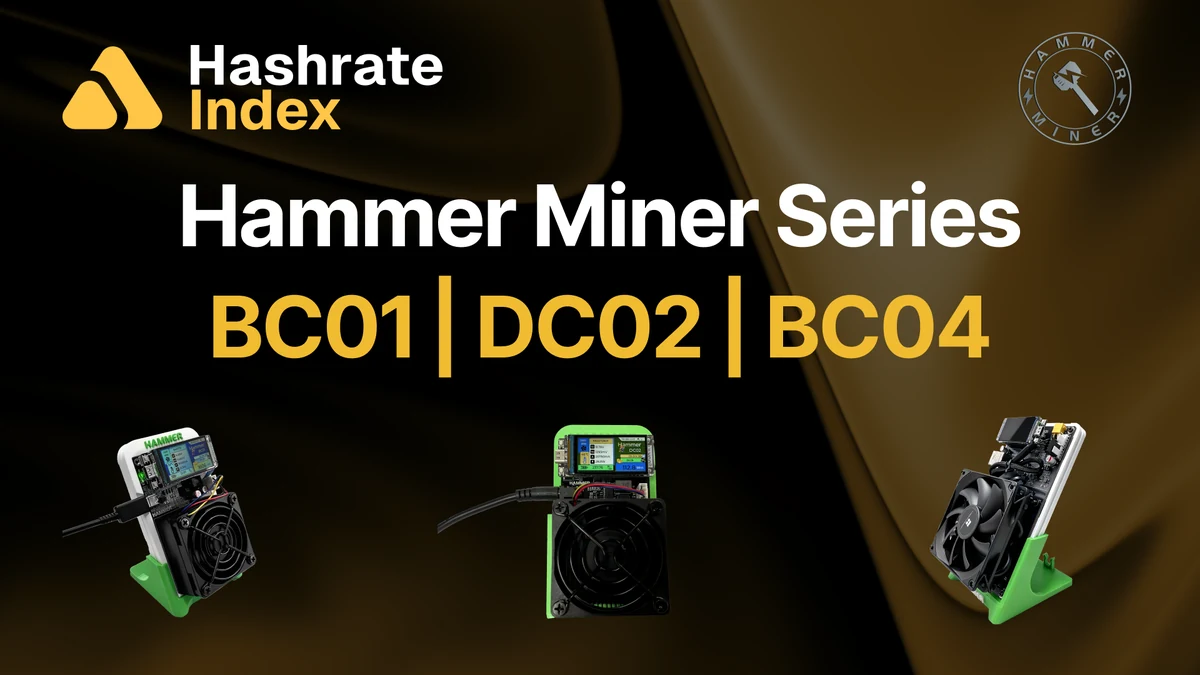
Hammer expands the home-mining lineup
Source report: 2026-08-26 · Editorial analysis published: 2026-09-10
The overview covers compact SHA-256 and Scrypt miners. Solo block discoveries remain rare events, not predictable household income.
Analysis and practical implications
This section is our analysis and illustrative calculations, separate from the source report.
Home mining has several different objectives
A desktop miner may be bought to learn how pools work, experiment with firmware, contribute a small amount of hashing capacity or attempt solo mining. These goals should not be mixed with a claim of predictable household income. A device can be useful as an educational machine even if its expected receipts do not cover local electricity costs.
Before choosing a compact miner, write down the intended use. Learning favors accessible controls and clear documentation. Quiet continuous operation favors low heat output and acceptable sound at the actual operating profile. A solo experiment requires understanding the probability of finding a block and accepting long periods without a reward.
Check the algorithm before the headline hashrate
Hashrate numbers from different algorithms cannot be ranked on one scale. A Scrypt device and a SHA-256 device perform different work. Converting the displayed unit from gigahashes to terahashes does not make them interchangeable. First choose the network or mining application, then compare machines designed for that algorithm.
The same caution applies to software screenshots. A local device can display generated work while a pool rejects some of it. For a meaningful test, compare the device status with accepted work reported by the pool over a sufficient period. A momentary peak on the screen does not establish the long-run output of the machine.
A small electricity bill still needs arithmetic
As a purely illustrative example, a 100-watt device operating continuously consumes 2.4 kWh each day. At an assumed rate of 0.10 dollars per kWh, the direct electricity cost is 0.24 dollars a day, or 7.20 dollars over 30 days. This example is not a specification or profitability estimate for a Hammer model; it shows how to calculate the operating expense of any small device.
Measure consumption at the wall when possible. A power adapter may draw more than the electronics receive, and aggressive settings may change both heat and efficiency. Include the network adapter or additional cooling if those devices exist only to support the miner. Small omitted loads can be a significant fraction of a small machine's total consumption.
Design the experiment around something observable
For a first home-mining project, keep the configuration simple. Record the factory setting, the chosen pool, measured watts, temperature and accepted work before making changes. Change one setting at a time and keep a way to restore the earlier configuration. This produces a useful learning record regardless of the market outcome.
A successful hobby project can demonstrate stable operation, teach pool configuration or provide data for comparing profiles. Finding a solo block is a different kind of result and cannot be scheduled. Treat promotional stories about rare wins as anecdotes, then decide whether the educational or hobby value of the device is enough for your own budget.
Source: Hashrate Index / Luxor ↗
Mining calculator ↗