US winter grid outlook: normal supply looks adequate, extreme cold still matters for miners
Source report: 2026-11-19 · Editorial analysis published: 2026-11-21
The November 19 FERC staff report separates adequate normal winter resources from regional fuel, import and weather risks. A power price alone does not guarantee uninterrupted mining.
Winter planning needs more than an average temperature
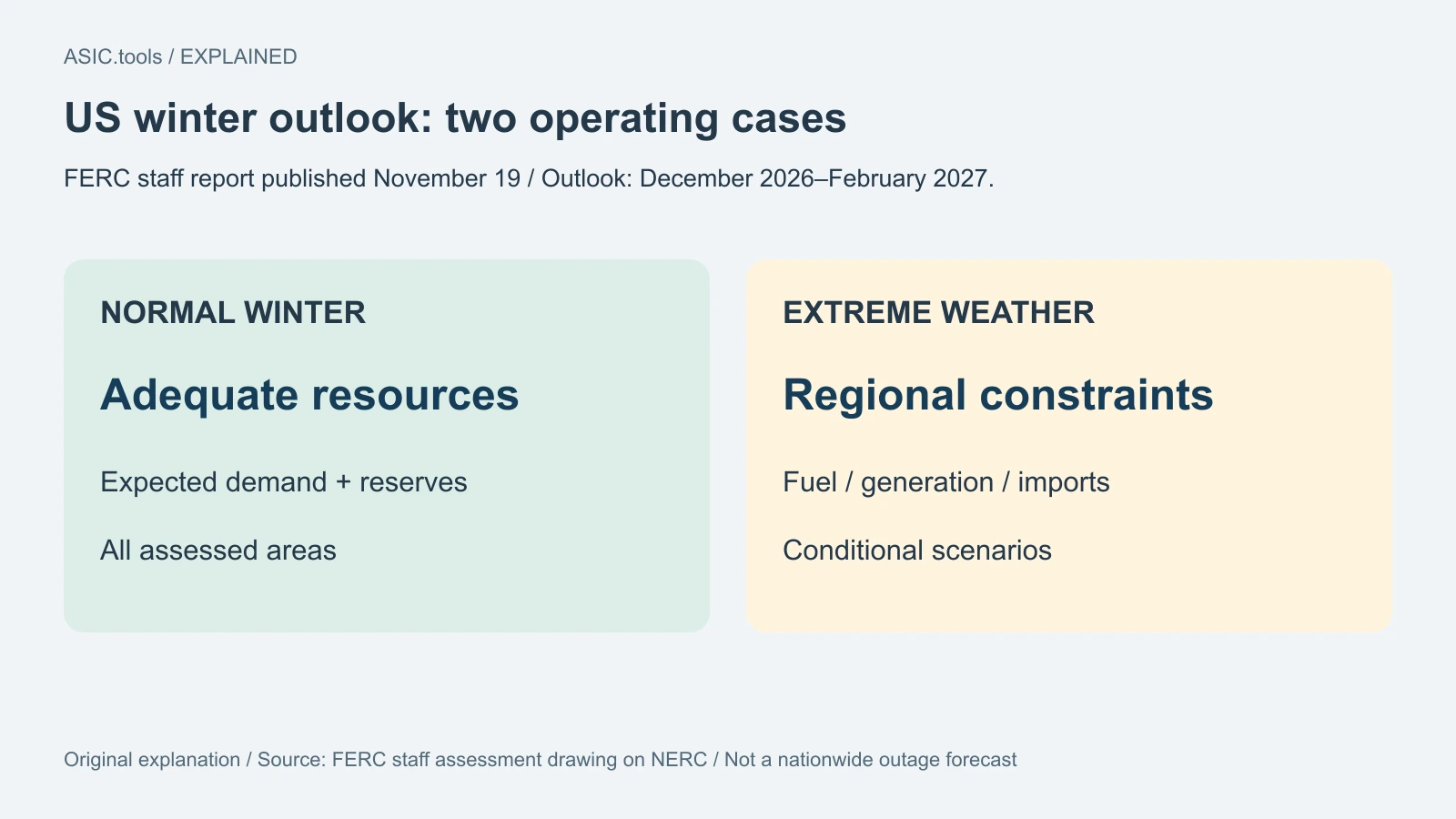
A new FERC staff assessment says electricity resources should cover normal winter demand across the assessed areas, while extreme weather can still create regional problems. Published on 19 November, the outlook covers December 2026 through February 2027. For miners using US grid power, the useful distinction is between having a supply contract and being able to run through every stressed hour.
FERC is the US Federal Energy Regulatory Commission; this document is a staff report, not a guarantee or a decision by every commissioner. Its reliability discussion draws on NERC, the North American Electric Reliability Corporation. Resource additions, delayed retirements and improved cold-weather generator performance have helped the outlook, but a better overall position does not remove local fuel or transmission limits.
Normal conditions and extreme conditions are different cases
The report says all assessment areas are expected to have enough generating resources for normal winter demand and operating reserves. Reserves are spare capacity kept available to handle unexpected events. That baseline should stay beside the warning: the report does not predict that the whole country will face routine rolling blackouts this winter.
During widespread extreme cold, electricity demand can rise while generators become unavailable or produce less, and neighbouring systems may have less power to export. A generally warmer seasonal average does not rule out a short, severe cold episode. The assessment therefore treats normal operating expectations and difficult-weather scenarios separately rather than describing one guaranteed outcome for every day.
The named regions face different pressures
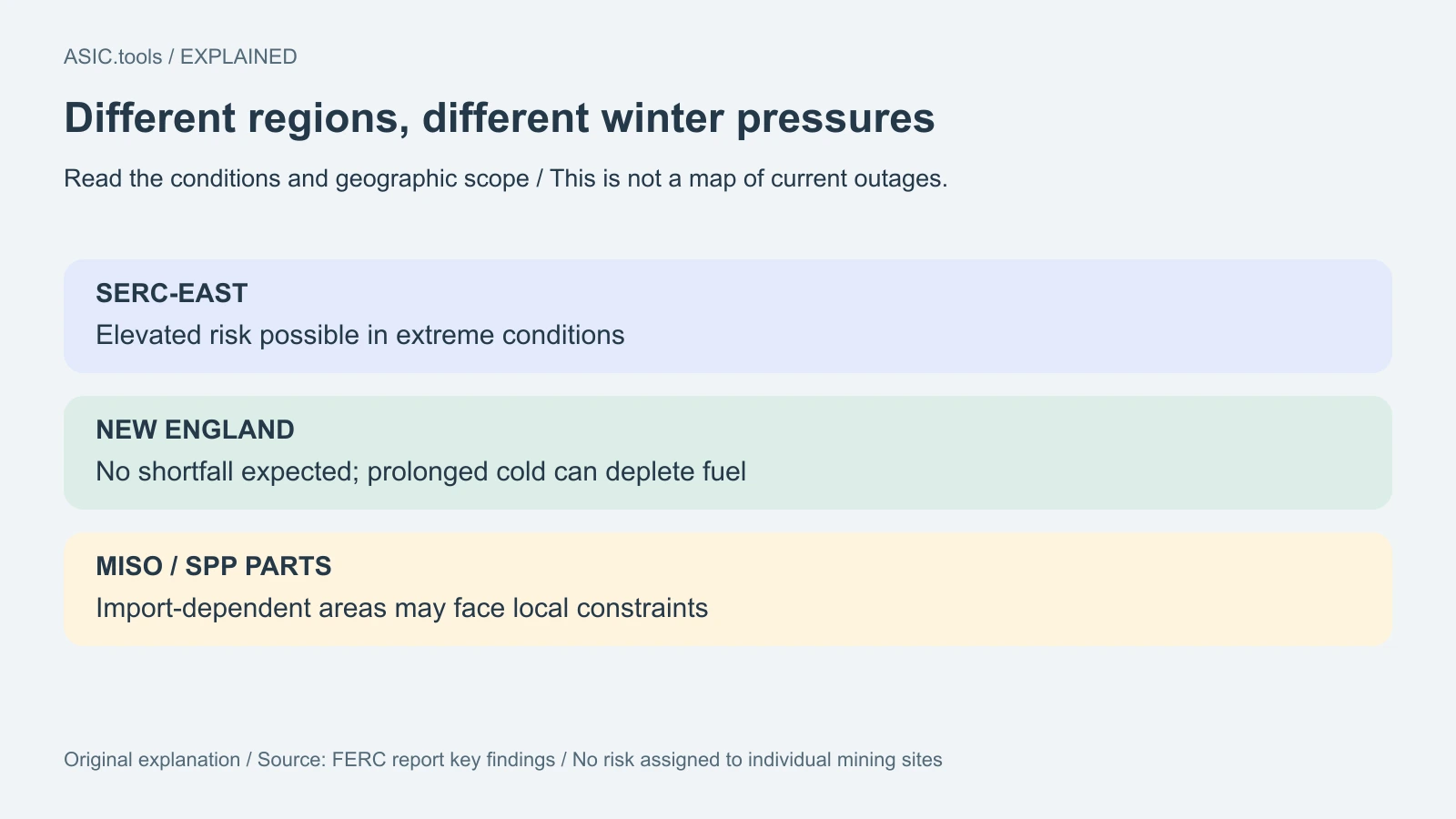
SERC-East is identified as potentially facing elevated risk under extreme conditions. New England's issue is different: although supply shortfalls are not expected, prolonged severe weather could combine unexpectedly high demand and generator outages with rapid depletion of stored fuel. Neither statement is a dated outage notice for an individual address.
Import-dependent portions of the MISO and Southwest Power Pool systems may face local operational shortfalls in extreme weather. These are named regional systems and parts of them, not a claim that every site throughout their footprints has the same risk. For a hosted miner, the site's location and actual utility arrangements matter more than a broad national headline.
Fuel and water can limit available electricity
The staff report highlights low water levels and drought as constraints on western hydropower and on Hydro-Québec imports into New York and New England. A generator's installed rating is not necessarily the power it can supply in the relevant hour. Water availability, fuel delivery and transmission can each limit usable supply even when the equipment itself still exists.
Fuel-oil and dual-fuel generation may be especially important in Northeast peak periods. As historical context, the report says oil generation supplied roughly 40% of New England's net generation in one peak hour on 25 January 2026. That is a past operating observation, not a forecast that oil will provide 40% throughout the coming winter. Replenishment during a long cold event matters as well as stocks at its start.
What miners can check before the season
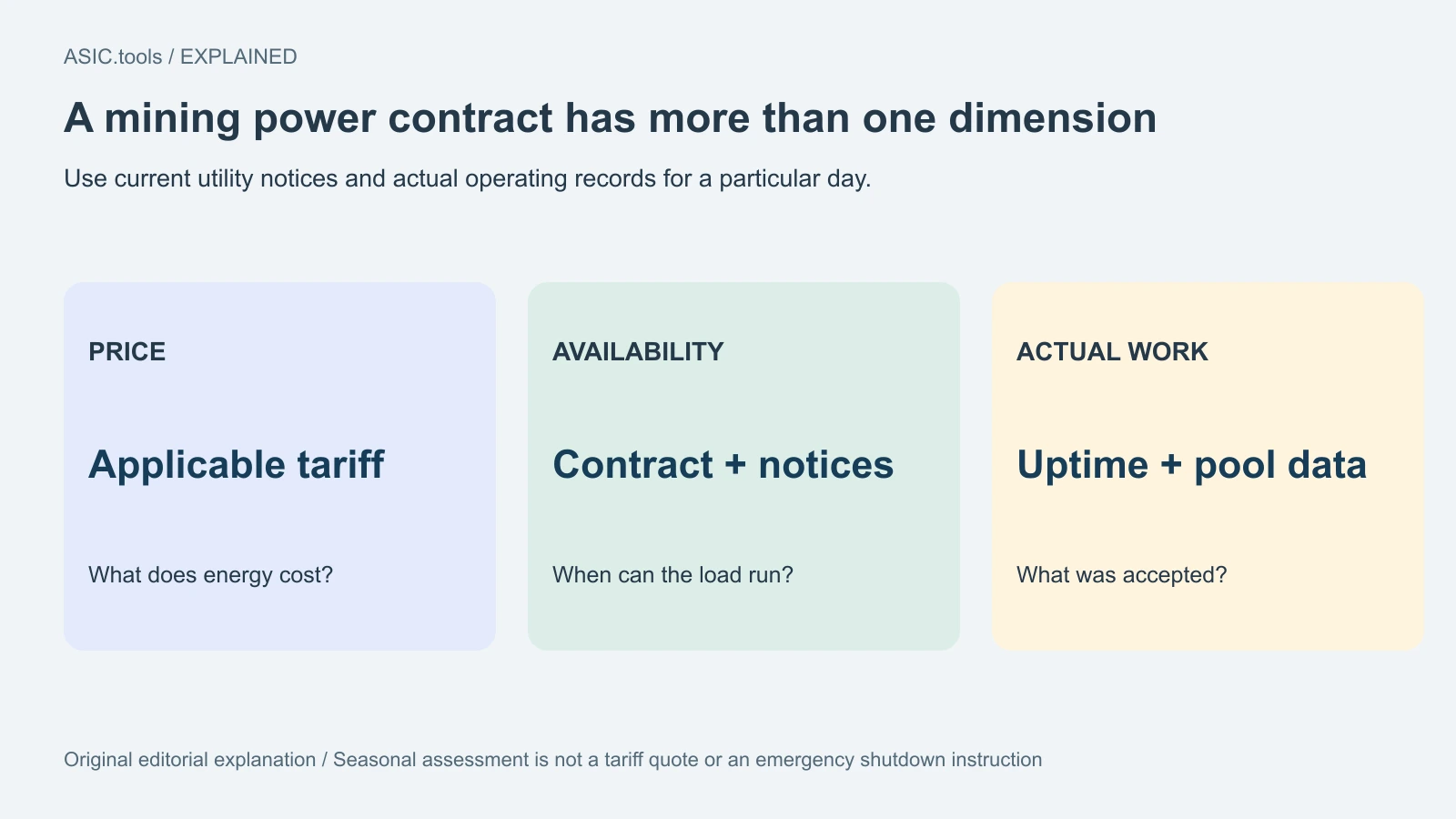
A mining contract's electricity price and its permission to keep drawing power are different questions. Check whether the arrangement allows curtailment, how the operator communicates a reduction and how actual running time is recorded. A tariff quote by itself does not establish uninterrupted operation, and the report does not supply the terms of a particular hosting agreement.
For a home miner, the relevant live information comes from the local utility and grid notices, alongside the normal shutdown procedure for the equipment. For a hosted device, ask which records show its accepted work and operating time during a restriction. These are practical checks drawn from the report's scenarios; they do not require improvised electrical connections or treating a seasonal assessment as an emergency command.
A dated outlook, not today's outage map
This new report is useful because it separates adequate normal resources from vulnerabilities during exceptional conditions. It does not give a universal winter electricity tariff, an exact outage timetable or a guaranteed number of mining hours. Lower expected gas prices at many hubs also do not automatically determine a household or hosting bill.
Our three original diagrams show the two operating cases, the different regional constraints and a miner's distinction between price, availability and actual work. They are explanatory graphics, not copied risk maps or photographs of a current outage. Keep the report's 19 November publication date and December–February scope in view, then use current local notices to assess an actual operating day.
Source: FERC staff / NERC ↗ · FERC market assessments and publication date ↗ · NERC winter reliability announcement, November 18 ↗
Mining calculator ↗