BitFuFu and Finloop launch HASH, a BTC-denominated mining-linked note
Source report: 2026-10-15 · Editorial analysis published: 2026-10-15
The October 15 announcement introduces a tokenized note linked to mining output for eligible investors. It does not publish a guaranteed yield, a new ASIC specification or an increase in network hashrate.
Analysis and practical implications
This section is our analysis and illustrative calculations, separate from the source report.
A new financial wrapper around mining activity
BitFuFu and Finloop announced Hashrate Token, or HASH, on October 15. The companies describe it as an on-chain note linked to the economic output of Bitcoin mining, with returns denominated in BTC. This is a product launch, distinct from BitFuFu’s September operating report published earlier this week. It is not an announcement that Bitcoin has changed its consensus rules or that HASH is a newly mined native Bitcoin asset.
The stated arrangement uses professionally operated infrastructure and hashrate supplied as a service, rather than requiring investors to manage miners. Finloop acts as tokenization agent through its FinRWA Platform, supporting issuance and token lifecycle functions. Access is limited to eligible investors and remains subject to qualification, jurisdiction, KYC/AML and other requirements. Those restrictions should remain attached to any description of the launch; a public press release is not proof of unrestricted retail access.
Economic exposure is different from operating a machine
A mining-linked note, a hashrate service and ownership of a physical ASIC represent different positions in an operating chain. A machine owner can inspect a device, select settings within its limits and contract for hosting. A service customer relies on contractual performance. A note holder additionally needs the terms that connect that service’s economic output to the instrument’s payments and investor rights.
The announcement does not identify a new ASIC model, per-token physical serial number or a hardware purchase by every holder. It therefore provides no basis for adding HASH as a device in a mining calculator or assigning it watts and TH/s as if it were a miner. A useful product record would instead separate the underlying service, distribution formula, fees, duration and investor entitlement. Unknown fields remain unknown until the governing documentation supplies them.
BTC denomination is not a fixed BTC yield
Recording a payment in BTC specifies its denomination; it does not determine how much BTC will be earned. Mining output depends on the work actually accepted, the relevant network and the arrangement’s costs and allocation. A token balance alone cannot establish a share of block rewards unless the contractual mapping is known. No fixed annual return or guaranteed production schedule is disclosed in the launch release.
The currency used to report performance is a separate choice. In an illustrative calculation, a 0.001 BTC distribution is still 0.001 BTC whether a hypothetical exchange price is $60,000 or $80,000. Its translated value would be $60 or $80 respectively. These are chosen arithmetic inputs, not a current Bitcoin quote or a HASH payment forecast. BTC-denominated distributions do not eliminate changes in fiat valuation or determine the value at which the instrument itself can be transferred.
On-chain records and operating evidence answer different questions
The companies say profit distributions will be recorded on-chain for transparency. A ledger entry can help establish that a particular transfer was recorded. Verifying mining economics also requires the link between the underlying work, its settlement and the amount allocated to holders. A payment record alone is not a complete measurement of machine uptime, accepted shares, power cost or every deduction made before distribution.
For reconciliation, the useful sequence is a defined measurement period, evidence of the contracted service, pool settlement, permitted costs, allocation and the resulting transfer. Each step has a different unit and boundary. Even a perfectly visible final payment would not, by itself, explain a difference between gross mining receipts and distributed profit. The release does not provide a full operating reconciliation dataset, so that transparency claim should not be presented as an independent audit of every input.
Transfers do not establish a liquid exit market
Finloop’s described lifecycle support includes minting, burning and transfers, with cross-chain integration among its stated roles. These are infrastructure functions. Transfer capability does not automatically establish exchange listing, continuous market depth, an executable bid or a fixed redemption price. Investor eligibility can also remain relevant when a token moves between holders rather than being issued initially.
The launch release supplies no complete public schedule of trading venues, transfer spreads or redemption windows. A reporting record should distinguish a technical ability to move a token from a contractual right to redeem and from an actual market transaction. No blockchain name, exchange availability or instant cash-out promise is inferred here. Subsequent documents could clarify those features without changing what was confirmed in the initial announcement.
The cost boundary determines what a payment represents
Gross output, operating profit and a holder’s distribution are separate amounts. As a hypothetical example, 0.010 BTC in gross receipts minus 0.003 BTC in costs leaves 0.007 BTC before any further allocation specified by a contract. This arithmetic is not the HASH cost model: the release does not publish the inputs needed to construct one. The example shows why a headline reference to mining returns cannot substitute for a complete payment waterfall.
Electricity, hosting, maintenance, pool charges, service charges and instrument-level costs must not be silently assumed to be included in one quoted rate. Equally, no particular charge should be invented merely because it occurs in another mining arrangement. The relevant evidence would identify which costs are deductible, when conversion occurs if costs are paid in another currency, and which party bears a difference. Without that boundary, comparisons with self-operated mining would mix unlike cash flows.
Token issuance is not new network computing capacity
Issuing a claim linked to mining economics can change financing and distribution without turning on additional miners. Bitcoin network hashrate measures computational work, not the number of financial tokens or their aggregate face value. The new HASH announcement does not quantify incremental installed or energized capacity. It should therefore not be added to a network hashrate total or counted as a newly commissioned farm.
For ASIC operators, the practical relevance is the expanding set of commercial structures around existing mining services. Any later capacity update still needs its own date, operating scope and measured units. A service being represented on-chain does not change the hash algorithm, power specification or firmware requirement of the machines doing the work. Our hardware catalogue and device profitability assumptions are not revised on the basis of token issuance alone.
What remains to be documented
The confirmed event is the launch of a BTC-denominated, mining-linked tokenized note with Finloop’s described infrastructure role and restricted eligibility. The next useful evidence would define the product’s duration, allocation and deduction rules, underlying service measurement, holder rights and distribution history. Those details would permit comparison with the announcement without treating marketing descriptions as completed operating results.
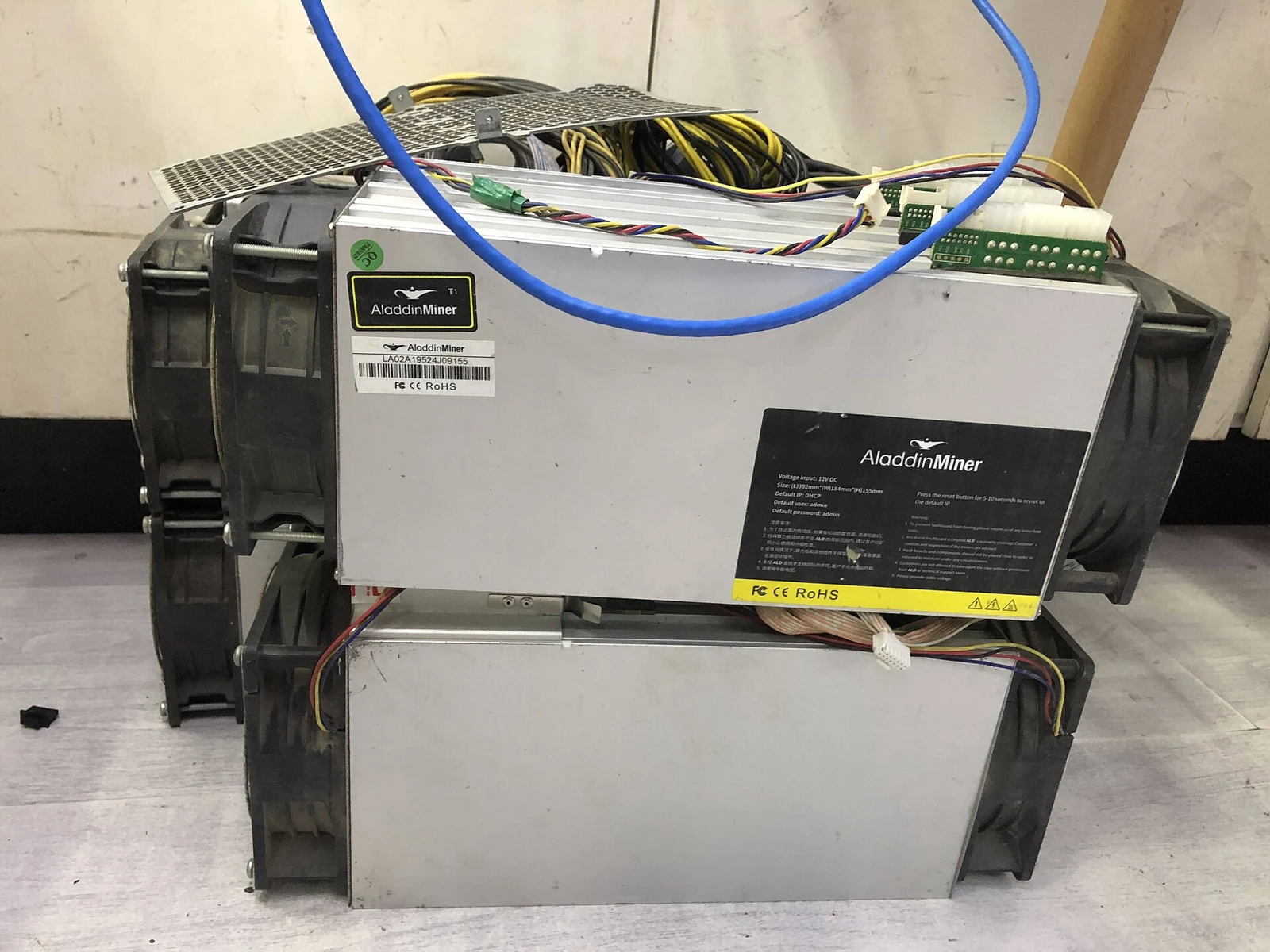
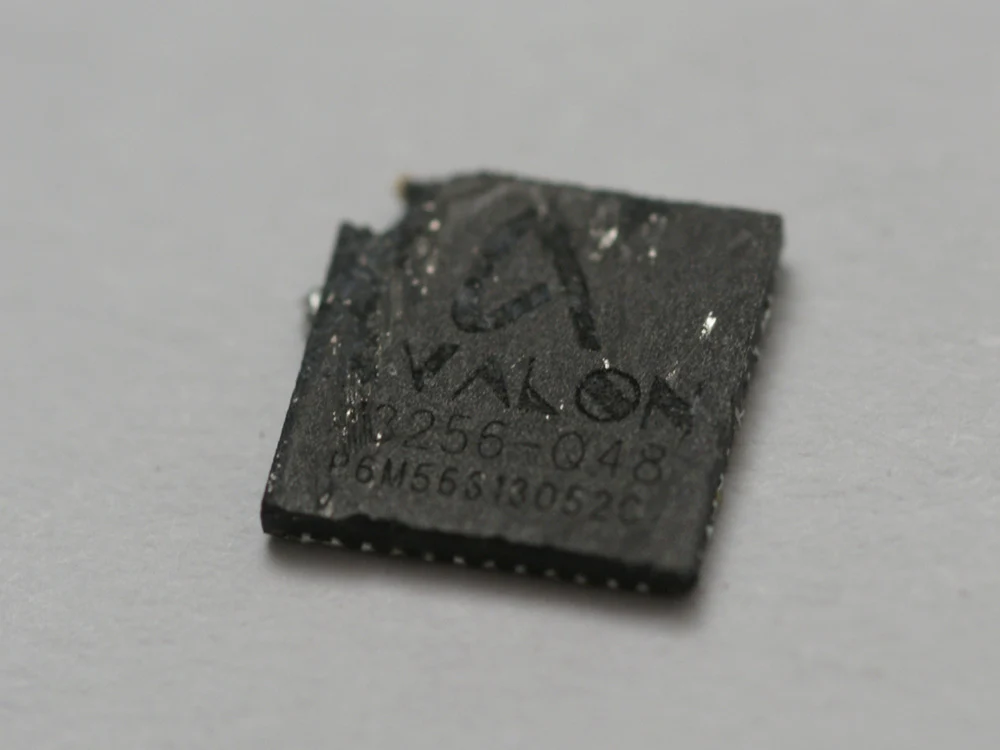
The photographs are archival illustrations of mining and digital-asset infrastructure, not images of a verified HASH deployment or evidence of tokens held by any pictured operator. Calculations above are explicitly hypothetical. Neither the product name nor on-chain recording creates a guaranteed yield. Keeping the instrument, the service and the physical mining fleet separate allows future reporting to track what actually changes at each layer.
Source: BitFuFu / GlobeNewswire ↗
Mining calculator ↗